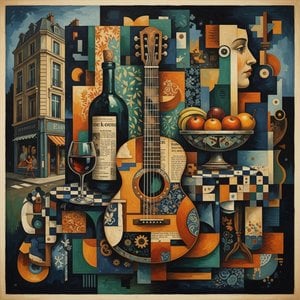
A Simple Meal: An Expressionist Masterpiece
Pablo Picasso’s “A Simple Meal,” etched in 1904 during his pivotal Blue Period, is far more than a depiction of two figures sharing a meager repast. It's a raw and profoundly moving exploration of human vulnerability, hardship, and the quiet dignity found within shared struggle. This artwork, now rendered as a meticulously hand-painted reproduction, offers a window into Picasso’s genius and the emotional depth he brought to his work during this intensely personal period.

Composition & Technique: A Study in Angular Form
The composition of “A Simple Meal” is strikingly direct. The two figures, a man and a woman, dominate the frame, positioned close together – a deliberate gesture suggesting intimacy born of shared adversity. Picasso’s masterful use of etching technique—scratching lines into a metal plate and then meticulously transferring them to paper—creates an astonishing level of detail and texture. Notice the extensive hatching and cross-hatching, particularly evident in their faces and hands. These techniques aren't merely representational; they actively contribute to the artwork’s emotional impact, building up layers of gray tones that simulate rough skin and worn clothing, amplifying the sense of poverty and despair.
Symbolism & Emotional Resonance: Shadows of Melancholy
The sparse arrangement of objects – a bottle of wine, bowl, cup, fork, and knife – transcends mere still life. They become potent symbols of scarcity and deprivation. The figures’ gaunt appearances and downcast expressions convey a palpable sense of sadness, resignation, or perhaps even despair. Picasso deliberately flattened the perspective, eliminating depth to create a direct, almost confrontational connection with the viewer. This technique intensifies the emotional impact, forcing us to engage directly with the subjects' plight. The lighting, originating from an unseen source, casts dramatic shadows that further emphasize the angularity of their forms, reinforcing the artwork’s overall mood of melancholy and unease.
Historical Context & Artistic Significance: A Blue Period Revelation
"A Simple Meal" is a quintessential example of Picasso's Blue Period (1901-1904), a time deeply influenced by personal tragedy – the death of his sister, prematurely. This period saw him exploring themes of poverty, isolation, and human suffering with an unflinching honesty. The monochromatic palette—a carefully controlled range of grays—was not simply aesthetic; it was a deliberate choice to evoke a sense of somberness and emotional intensity. As one of the last works from this era, “A Simple Meal” offers a poignant glimpse into Picasso’s artistic evolution and his profound engagement with the human condition. Its enduring power lies in its ability to resonate with viewers across generations, prompting reflection on themes of hardship, resilience, and the quiet beauty found even in moments of despair.



 Vista previa
 Encargar reproducción pintada a mano
 Compartir
 Compartir
 Ver detalles
 Guía
Guía

 Descargar
 Ver artículos similares
 Radiografía
 Presentación de diapositivas
 Estadísticas


 Leer más






































 La opción de vidrio solo está disponible en tamaños inferiores a 110 cm.