x
Ver en contextoVer en contexto Vista previa en RAVista previa en RA Comprar pintura hecha a mano Comprar pintura hecha a manoComprar imagen Comprar imagen EnviarEnviar
DetallesDetalles Añadir a favoritos Añadir a favoritos DescargarDescargar SimilaresSimilares RadiografíaRadiografía Presentación de diapositivasPresentación de diapositivas

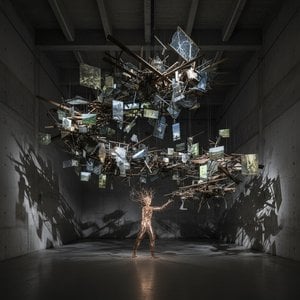
The Anti-Clock Project

Explore Nidhal Chamekh’s ‘The Anti-Clock Project’ (2015). A haunting installation questioning monuments & political history. Somatic forms, resin figures & powerful symbolism. Acquire this unique artwork.

Nidhal Chamekh: artista tunecino reconocido internacionalmente por sus dibujos y esculturas que exploran temas de memoria y resistencia, destacando obras como 'El Proyecto Anti-Reloj' y presentaciones en eventos culturales clave.

Giclée / Impresión de arte

Impresiones giclée o en lienzo de calidad de museo con producción rápida y opciones de acabado flexibles. (Comprar pintura hecha a mano Comprar pintura hecha a manoComprar imagen Comprar imagen)

P118B $10
P118H $10
P118W $10
P438Z $10
P508JH $12
P508YH $12
P805H $10
P805Z $10
P919BZ $10
P919G $10
P919XJ $10
P959ZH $10
P968JZ $12
W106C $8
W218G $10
W218JH $8
W218Y $10
W307PJ $10
W316G $10
W316PJ $8
W316Y $10
W398PJ $8
W4111J $10
W500HY $15
W500JH $15
W692G $12
W849H $8
W940BG $15
W953PJ $8

Estándar
a medida
CM
INCH

Elija entre nuestros tamaños predefinidos que respetan las proporciones originales de la obra.

ancho
altura

Puede introducir sus propias dimensiones para adaptarse a un marco o espacio específico. Si el tamaño seleccionado no coincide con las proporciones de la imagen original, recortaremos la obra de arte o extenderemos la imagen con un borde con efecto espejo o de color sólido. Se enviará una maqueta digital para su aprobación antes de que comience la producción.
Tenga en cuenta que la vista previa en pantalla no refleja el recorte o la extensión real. Solo la maqueta mostrará con precisión la composición final.
Aunque existen tamaños personalizados, recomendamos seleccionar una dimensión de la lista predefinida para preservar las proporciones originales.

Envío a todo el mundo () en 2 semanas en lugar de las 4/5 semanas estándar. (4 septiembre)

why_choose_icon
Envío exprés gratuito a todo el mundo
why_choose_icon
Lienzo de lino de alta calidad
why_choose_icon
Seguro de envío total
why_choose_icon
Garantía de reembolso de impuestos aduaneros
why_choose_icon
Garantía de fidelidad cromática exacta
why_choose_icon
Política de devolución de 60 días (solo por defectos)
why_choose_icon
Garantía de devolución del 100% del dinero
why_choose_icon
Descuento por cantidad

Precio total

$ 68

reproduction

The Anti-Clock Project

Giclée / Impresión de arte

Dimensiones de la reproducción

-

Precio total final

$ 68

Datos clave

  • Subject or theme: Political upheaval
  • Artistic style: Somatic drawing
  • Movement: Contemporary Art
  • Notable elements: Resin figures, maps
  • Medium: Painting/Installation
  • Year: 2015

Test de arte

Cada pregunta tiene una única respuesta correcta.

Pregunta 1:
What is the primary subject matter explored in Nidhal Chamekh’s ‘The Anti-Clock Project’?
Pregunta 2:
The painting features resin figures with what characteristic element?
Pregunta 3:
Nidhal Chamekh’s artistic background includes studies at which institutions?
Pregunta 4:
What historical event is referenced through the imagery of anatomical sketches and Arabic script within ‘The Anti-Clock Project’?
Pregunta 5:
According to the provided text, what is a key theme explored through Chamekh’s use of ‘somatic forms’?

The Weight of Monuments: Nidhal Chamekh’s “The Anti-Clock Project”

Nidhal Chamekh's "The Anti-Clock Project," created in 2015, isn’t merely a painting; it’s an unsettling meditation on memory, resistance, and the enduring scars of political upheaval. Emerging from a lineage deeply rooted in Tunisian activism – his family’s history intertwined with prominent figures challenging established power structures – Chamekh channels this legacy into a powerfully evocative visual language. The work immediately commands attention, not through overt grandeur, but through a carefully constructed tension between scale and detail, between the monumental and the intimately rendered.

At its core, “The Anti-Clock Project” presents a stark tableau: a pristine white table dominates the composition, bearing a meticulously detailed map or blueprint. This isn’t a conventional cartographic representation; rather, it feels like a schematic of urban decay, a fragmented landscape hinting at forgotten histories and unresolved conflicts. Surrounding this central element are carefully positioned resin figures – unsettlingly lifelike, almost anatomical in their precision – each carrying a weighty symbol: a gold-plated 9mm bullet affixed to the tip of a severed human finger. These aren’t idealized representations; they possess a raw, visceral quality, conveying both vulnerability and defiant strength.

Somatic Forms and Resin's Silent Testimony

Chamekh’s artistic signature lies in his masterful use of somatic forms – figures that seem to emerge from the body itself. He employs resin extensively, lending an almost fossilized quality to these sculpted elements. This technique isn’t simply about creating three-dimensional objects; it's a deliberate choice to imbue the figures with a sense of permanence and resilience, mirroring the enduring nature of memory and trauma. The cool, smooth surface of the resin contrasts sharply with the implied fragility of the human forms, amplifying the work’s emotional impact.

The meticulous detail evident in each figure – from the subtle curve of a finger to the precise rendering of a facial expression – speaks volumes about Chamekh's dedication to his craft. He doesn’t shy away from depicting difficult subjects; instead, he confronts them head-on with an unflinching honesty that is both unsettling and profoundly moving.

Echoes of Revolution: Symbolism and Historical Context

“The Anti-Clock Project” directly references the 2011 Arab Spring uprisings in Tunisia and across the Middle East. The title itself – “Anti-Clock Project” – subtly suggests a disruption of linear time, a rejection of established narratives, and an insistence on confronting the past. The inclusion of Arabic script alongside the anatomical sketches further anchors the work within its historical context, referencing the voices silenced by political repression.

The imagery—the severed fingers, the bullets, the maps—evokes the brutal realities of revolution: loss, violence, and the long-lasting consequences of conflict. It’s a poignant reminder that revolutions don't simply erase the past; they often leave behind a legacy of trauma and uncertainty. The reference to the fruit vendor who self-immolated in December 2010 – an act of desperation that ignited the Tunisian revolution – is particularly resonant, highlighting the personal sacrifices made in the pursuit of freedom.

A Haunting Resonance: Emotional Impact and Artistic Legacy

“The Anti-Clock Project” transcends mere representation; it’s a deeply felt exploration of human experience. The work possesses a haunting resonance that lingers long after viewing, prompting reflection on themes of memory, identity, and the enduring struggle for justice. Chamekh's ability to combine technical mastery with profound emotional depth establishes him as a significant voice within contemporary art.

Reproductions of this powerful piece offer an opportunity to bring its evocative imagery into any space, serving as a constant reminder of history’s complexities and the importance of bearing witness to difficult truths. It's a work that demands attention, invites dialogue, and ultimately compels us to confront our own understanding of the world.


Biografía del artista

Nidhal Chamekh: Exploring Memory and Resistance Through Somatic Drawing

Nidhal Chamekh, born in Menzel Bouarab, Tunisia in 1985, stands as a compelling figure within contemporary visual art. His artistic practice delves into profound questions concerning power dynamics, personal identity, and the enduring impact of historical narratives—themes consistently woven throughout his drawings and installations. From his formative years studying at the Institut Supérieur des Beaux-Arts Tunis to his doctoral research at Sorbonne Université in Paris, Chamekh’s intellectual journey has been intrinsically linked to a rigorous engagement with artistic theory and practice. His work distinguishes itself through its distinctive approach—a preoccupation with somatic forms, often rendered in resin figures that evoke a sense of physicality and vulnerability against monumental landscapes or architectural structures. These pieces aren't merely aesthetically striking; they serve as conduits for exploring complex ideas about remembrance and confronting uncomfortable truths. Chamekh’s artistic vision draws inspiration from diverse sources, including psychoanalysis and critical theory, informing his exploration of the subconscious and challenging conventional interpretations of history. Chamekh’s exhibitions have garnered international acclaim, showcasing his talent in prestigious venues such as the Musée d'Art Moderne de Paris, le musée national de Carthage, and notably, participation in the Venice Biennale. These engagements underscore not only his artistic prowess but also his commitment to fostering dialogue about pressing social and political concerns. His installations frequently utilize symbolic imagery—often referencing ancient monuments—to provoke contemplation on legacies of colonialism and oppression. A significant achievement is undoubtedly “The Anti-Clock Project” (2015), an ambitious installation that interrogates the role of monuments in shaping collective memory and perpetuating narratives of dominance. The project’s meticulous craftsmanship, combining resin figures with expansive landscapes, powerfully communicates a critique of historical representations and invites viewers to reconsider their perspectives on power relations. Similarly, “De quoi rêvent les martyrs 2,” drawing 1, exemplifies Chamekh's dedication to exploring the human condition through evocative imagery and sculptural forms. Today, Nidhal Chamekh resides and operates in Paris, France, continuing to push boundaries within artistic discourse while maintaining a steadfast commitment to conveying narratives that resonate with urgency and sensitivity. His work remains relevant as it confronts issues of cultural heritage and challenges viewers to confront uncomfortable realities—a testament to his enduring contribution to the realm of contemporary art.
  • Notable Exhibitions: Musée d'Art Moderne de Paris, National Museum of Carthage, Venice Biennale
  • Education: Institut Supérieur des Beaux-Arts Tunis; Sorbonne Université (PhD in Visual Arts)
  • Influences: Psychoanalysis; Critical Theory
## Early Life and Artistic Beginnings Nidhal Chamekh’s artistic trajectory commenced at a young age, demonstrating an innate inclination towards creative expression. Graduating from the École Supérieure des Beaux-Arts Tunis instilled in him a foundational understanding of artistic principles and techniques—a grounding that would prove invaluable throughout his subsequent academic pursuits. Simultaneously, his enrollment at Sorbonne Université propelled him into a rigorous intellectual environment where he honed his analytical skills and deepened his engagement with critical theory. This dual formative experience shaped his worldview and fueled his determination to explore complex themes through visual media. ## Artistic Style and Technique Chamekh’s distinctive artistic style centers around the manipulation of somatic forms—often depicted in resin figures that convey a palpable sense of physicality and vulnerability against monumental landscapes or architectural structures. These sculptures aren't merely decorative; they serve as powerful vehicles for conveying ideas about remembrance and confronting uncomfortable truths. His approach draws inspiration from psychoanalytic concepts, examining how subconscious impulses influence artistic creation and challenging conventional interpretations of history. The careful selection of materials—particularly resin—highlights his commitment to precision and textural detail, mirroring the meticulous observation characteristic of his artistic process. ## Exhibitions and Recognition His exhibitions have garnered international acclaim, securing prominent positions within esteemed institutions such as MAC Lyon, Bamako Encounters Photography Biennial, Venice Biennale, Yinchuan Biennial, and numerous others across Europe and Asia. These engagements underscore not only his artistic talent but also his dedication to fostering dialogue about pressing social and political concerns—a commitment reflected in the thematic depth of his installations and drawings. Furthermore, his artworks have been recognized by prestigious collections worldwide, including FRAC Centre Orléans, British Museum London, Blachère Foundation France, Hood Museum Art Dartmouth U.S.A., Barjeel Foundation Sharjah UAE, Kadist Art Foundation Paris France and Centre National Des Arts Plastiques CNAP Paris France. ## Major Achievements and Continuing Relevance “The Anti-Clock Project” stands as a testament to Chamekh’s ambition—a monumental installation that interrogates the role of monuments in shaping collective memory and perpetuating narratives of dominance. This project exemplifies his ability to engage with complex historical issues while simultaneously exploring aesthetic considerations, demonstrating his unwavering commitment to artistic innovation and critical reflection. Nidhal Chamekh continues to contribute meaningfully to contemporary art discourse, prompting viewers to confront uncomfortable realities and fostering a deeper understanding of cultural heritage—a legacy that ensures his enduring significance within the visual arts landscape.
Nidhal Chamekh

Nidhal Chamekh

1985 - , Tunisia

Datos clave

  • Artistic Movement Or Style: Contemporary drawing & installations
  • Date Of Birth: 1985
  • Full Name: nidhal chamekh
  • Nationality: Tunisian
  • Notable Artworks: ['The Anti-Clock Project']
  • Place Of Birth: Menzel Bouarab, Tunisia