Ver en contextoVer en contexto Vista previa en RAVista previa en RA Comprar pintura hecha a mano Comprar pintura hecha a manoCambiar a imagen digital Cambiar a imagen digital EnviarEnviar
DetallesDetalles Añadir a favoritos Añadir a favoritos DescargarDescargar SimilaresSimilares RadiografíaRadiografía Presentación de diapositivasPresentación de diapositivas EstadísticasEstadísticas

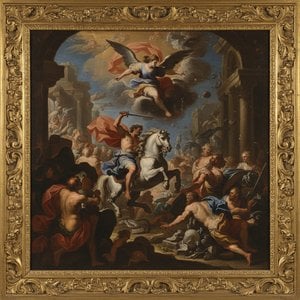
Two Girls Accompanied by Cupid

The painting depicts two women accompanied by Cupid, embodying classical ideals of beauty and innocence. Nicolas Poussin's masterful composition captures the serenity of the outdoor setting and celebrates maternal tenderness.

Explora las obras maestras de Nicolás Poussin (1594-1665), un destacado pintor barroco francés. Descubre sus composiciones clásicas, escenas históricas y mitológicas, y paisajes serenos – influyendo a artistas como David y Cézanne. #Poussin #ArteBarroco #

Giclée / Impresión de arte

Impresiones giclée o en lienzo de calidad de museo con producción rápida y opciones de acabado flexibles. (Comprar pintura hecha a mano Comprar pintura hecha a manoCambiar a imagen digital Cambiar a imagen digital)

P118B $10
P118H $10
P118W $10
P438Z $10
P508JH $12
P508YH $12
P805H $10
P805Z $10
P919BZ $10
P919G $10
P919XJ $10
P959ZH $10
P968JZ $12
W106C $8
W218G $10
W218JH $8
W218Y $10
W307PJ $10
W316G $10
W316PJ $8
W316Y $10
W398PJ $8
W4111J $10
W500HY $15
W500JH $15
W692G $12
W849H $8
W940BG $15
W953PJ $8

Estándar
a medida
CM
INCH

Elija entre nuestros tamaños predefinidos que respetan las proporciones originales de la obra.

ancho
altura

Puede introducir sus propias dimensiones para adaptarse a un marco o espacio específico. Si el tamaño seleccionado no coincide con las proporciones de la imagen original, recortaremos la obra de arte o extenderemos la imagen con un borde con efecto espejo o de color sólido. Se enviará una maqueta digital para su aprobación antes de que comience la producción.
Tenga en cuenta que la vista previa en pantalla no refleja el recorte o la extensión real. Solo la maqueta mostrará con precisión la composición final.
Aunque existen tamaños personalizados, recomendamos seleccionar una dimensión de la lista predefinida para preservar las proporciones originales.

Envío a todo el mundo () en 2 semanas en lugar de las 4/5 semanas estándar. (14 septiembre)

why_choose_icon
Envío exprés gratuito a todo el mundo
why_choose_icon
Lienzo de lino de alta calidad
why_choose_icon
Seguro de envío total
why_choose_icon
Garantía de reembolso de impuestos aduaneros
why_choose_icon
Garantía de fidelidad cromática exacta
why_choose_icon
Política de devolución de 100 días (solo por defectos)
why_choose_icon
Garantía de devolución del 100% del dinero
why_choose_icon
Descuento por cantidad

Precio total

$ 68

reproduction

Two Girls Accompanied by Cupid

Giclée / Impresión de arte

Dimensiones de la reproducción

-

Precio total final

$ 68

Datos clave

  • Medium: Oil on Canvas
  • Movement: Baroque
  • Subject or theme: Love and Fertility
  • Notable elements or techniques: Allegorical Composition; Drapery; Classical Mythology
  • Dimensions: 283 × 375 cm
  • Year: 1640
  • Artist: Nicolas Poussin

Test de arte

Cada pregunta tiene una única respuesta correcta.

Pregunta 1:
What artistic movement is Nicolas Poussin's “Two Girls Accompanied by Cupid” primarily associated with?
Pregunta 2:
The painting depicts two women, one holding a baby. What is the significance of this imagery within the context of Baroque art?
Pregunta 3:
Nicolas Poussin spent most of his artistic career in Rome. Why was this location crucial for developing his style?
Pregunta 4:
What technique is commonly employed by Nicolas Poussin in his paintings, contributing to their luminous quality?
Pregunta 5:
“Two Girls Accompanied by Cupid” exemplifies the Baroque fascination with dramatic composition and emotional intensity. Describe how this is achieved in the painting.

A Vision of Innocence and Divine Grace: Exploring Nicolas Poussin’s “Two Girls Accompanied by Cupid”

The painting "Two Girls Accompanied by Cupid," attributed to Nicolas Poussin, stands as a cornerstone of French Baroque art—a testament to the artist's mastery of classical ideals blended seamlessly with emotive expression. Completed around 1645-1646, it resides within the Musée du Louvre in Paris and continues to captivate audiences with its serene beauty and profound symbolic depth. This essay delves into the multifaceted layers of this iconic artwork, examining its subject matter, stylistic innovations, artistic technique, historical significance, and enduring emotional resonance.

Subject Matter: A Pastoral Ideal

At first glance, “Two Girls Accompanied by Cupid” presents a deceptively simple tableau: two young women standing amidst lush foliage—specifically olive trees—with one cradling a baby in her arms. However, beneath this pastoral surface lies an intricate tapestry of mythological allusion. The figures embody the Virgin Mary and Saint Anne, representing humility and maternal devotion – concepts central to Christian iconography. Cupid, the Roman god of love, delicately intervenes, showering them with blossoms symbolizing fertility and renewal. This deliberate juxtaposition elevates the scene beyond mere depiction; it speaks to themes of divine grace, spiritual purity, and the promise of eternal life—a hallmark of Poussin’s artistic philosophy.

Style and Technique: Baroque Refinement

Poussin's style exemplifies the Baroque aesthetic – characterized by dramatic lighting, meticulous detail, and a calculated sense of grandeur. Unlike the turbulent dynamism prevalent in other Baroque canvases, “Two Girls Accompanied by Cupid” exudes tranquility through masterful chiaroscuro—the interplay between light and shadow—creating an ethereal atmosphere that draws viewers into the scene’s contemplative mood. The artist employs painstaking brushwork to render textures with astonishing realism, capturing the velvety softness of olive leaves and the delicate folds of fabric. Furthermore, Poussin utilizes pyramidal composition – a technique borrowed from Renaissance artists like Raphael – to stabilize the image and guide the eye towards the central figures, reinforcing their importance within the narrative framework.

Historical Context: Rome’s Artistic Ascendancy

Poussin's artistic journey culminated in his relocation to Rome during the papal patronage of Cardinal Mazarin—a period witnessing an unprecedented flourishing of classical art and scholarship. The rediscovery of ancient texts and sculptures fueled a renewed interest in humanist ideals, prompting artists like Poussin to reinterpret mythological narratives through the lens of Christian theology. “Two Girls Accompanied by Cupid” reflects this intellectual climate, embodying the Baroque conviction that beauty could elevate the soul and inspire contemplation—a sentiment deeply resonant with the spiritual fervor of the era. It stands as a powerful emblem of Rome’s artistic dominance during Mazarin's reign, showcasing the transformative influence of classical antiquity on European art.

Symbolism: Blossoms of Hope and Divine Intervention

The olive trees themselves symbolize peace and prosperity—traditionally associated with Jerusalem and representing divine blessing upon Mary and Saint Anne. The blossoms raining down upon the women signify fertility and rebirth – mirroring the Virgin Mary’s conception and foreshadowing the arrival of Christ. Cupid's presence underscores the notion that love, guided by divine grace, is instrumental in achieving spiritual fulfillment. Each element within the painting contributes to a complex symbolic system designed to convey profound theological truths—a testament to Poussin’s erudition and artistic ambition.

Emotional Impact: A Balm for the Soul

Ultimately, “Two Girls Accompanied by Cupid” transcends mere visual representation; it evokes an emotional response rooted in contemplation and reverence. The painting's serene beauty inspires feelings of tranquility, compassion, and spiritual aspiration—capturing the essence of Christian piety. Its masterful technique – particularly chiaroscuro – creates a palpable sense of atmosphere, transporting viewers to a timeless pastoral landscape imbued with divine grace. As a result, this artwork continues to resonate powerfully with audiences today, serving as an enduring reminder of the transformative power of art to nourish the soul and illuminate the human condition.

Biografía del artista

vida temprana y formación

nicolás poussin, nacido en junio de 1594, fue la quintaesencia de la pintura barroca francesa clásica. A pesar de pasar la mayor parte de su carrera en Roma, permaneció profundamente arraigado en las tradiciones artísticas francesas. Sus primeros días como pintor estuvieron envueltos en incertidumbre, pero ya en 1612 había iniciado estudios formales en París, absorbiendo influencias de artistas menos conocidos antes de ser atraído a Roma en 1624.

estilo artístico e influencias

El estilo estético de Poussin, celebrado por su composición coherente y priorización de la linealidad, sentó un precedente que influyó en maestros como jacques-luís david y paul cézanne bien hasta el siglo XX. Su estilo distintivo se cristalizó a través de obras maestras como la muerte de germanicus y su seminal serie de los siete sacramentos.

obras notables y museos

legado e impacto

La lealtad de Poussin permaneció en Roma, donde finalmente se centró en incorporar paisajes expansivos a su arte. Su madurez como artista está encapsulada en obras como Orión ciego buscando el sol y las estaciones, que anunciaron una era de composición rigurosa impregnada de la belleza serena del mundo natural.

explore más con WahooArt.com

descubra las obras maestras del musée france e inicie su viaje al mundo de la pintura barroca francesa con musée picasso, musée des beaux-arts de carcassonne y otros museos notables. Visite la página de nicolás poussin en WahooArt.com para explorar más de sus obras y aprender sobre el contexto en el que fueron creadas.

referencias

Nicolás Poussin

Nicolás Poussin

1594 - 1665 , Francia

Datos clave

  • Artistas Influenciados:
    • Jacques-Louis David
    • Paul Cézanne
  • Artistas Que Influyeron:
    • Rafael
    • Tiziano
  • Fecha De Muerte: 1665
  • Fecha De Nacimiento: Junio de 1594
  • Lugar De Nacimiento: Le Havre, Francia
  • Movimiento Artístico: Barroco clásico
  • Nacionalidad: Francés
  • Nombre Completo: Nicolás Poussin
  • Obras Notables:
    • La Muerte de Germanicus
    • Los Siete Sacramentos
    • Una Carretera Romana
    • Orion Ciego Buscando el Sol
    • Las Estaciones
Explore obras de arte organizadas por temas, estilos y características.