Vista previa Vista previa en RA Cambiar a formato impreso Ver versión en imagen digital Compartir
Ver detalles Guía Añadir a favoritos Descargar Ver artículos similares Radiografía Presentación de diapositivas Estadísticas

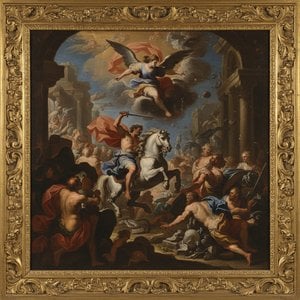
Sleeping Venus, surprised by Satyr

Explore Nicolas Poussin’s masterful Baroque depiction of Venus startled by Satyr – a serene forest scene brimming with classical beauty and mythological intrigue. Admire the artist's meticulous attention to detail and timeless elegance; bring this iconic artwork into your home.

Explora las obras maestras de Nicolás Poussin (1594-1665), un destacado pintor barroco francés. Descubre sus composiciones clásicas, escenas históricas y mitológicas, y paisajes serenos – influyendo a artistas como David y Cézanne. #Poussin #ArteBarroco #

Reproducción al óleo hecha a mano

Óleo sobre lienzo pintado a mano en el tamaño y marco de su elección, realizado por encargo por nuestros artistas. ( Cambiar a formato impreso Ver versión en imagen digital)

P118B $10
P118H $10
P118W $10
P438Z $10
P508JH $12
P508YH $12
P805H $10
P805Z $10
P919BZ $10
P919G $10
P919XJ $10
P959ZH $10
P968JZ $12
W106C $8
W218G $10
W218JH $8
W218Y $10
W307PJ $10
W316G $10
W316PJ $8
W316Y $10
W398PJ $8
W4111J $10
W500HY $15
W500JH $15
W692G $12
W849H $8
W940BG $15
W953PJ $8

Estándar
personalizado
CM
INCH

Elija entre nuestros tamaños predefinidos que respetan las proporciones originales de la obra.

ancho
altura

Puede ingresar sus propias dimensiones para adaptarse a un marco o espacio específico. Si el tamaño seleccionado no coincide con las proporciones de la imagen original, recortaremos la obra o extenderemos la pintura con elementos adicionales pintados a mano. Se le enviará una maqueta digital para su aprobación antes de comenzar la producción.
Tenga en cuenta que la vista previa en pantalla no refleja el recorte o la extensión reales. Solo la maqueta mostrará con precisión la composición final.
Si bien existen tamaños personalizados, recomendamos seleccionar una dimensión de la lista predefinida para preservar las proporciones originales.

Ejemplos de lo que se puede personalizar: Reemplace el rostro con una foto del cliente; Agregue una mascota (por ejemplo, cambie un gato por un perro); Incluya un mensaje oculto en el fondo; Cambie el paisaje o los elementos del fondo.
Tras realizar el pedido, el equipo de WahooArt.com enviará un correo electrónico al cliente para solicitar instrucciones y proporcionarle una vista previa del boceto.

Envío a todo el mundo () en 3-4 semanas en lugar de las 5 semanas estándar. (26 septiembre). Sin comprometer la calidad.

why_choose_icon
Envío exprés gratuito a todo el mundo
why_choose_icon
Lienzo de lino de alta calidad
why_choose_icon
Seguro de envío completo
why_choose_icon
Garantía de reembolso de impuestos aduaneros
why_choose_icon
Garantía de fidelidad cromática exacta
why_choose_icon
Política de devolución de 100 días (solo por defectos)
why_choose_icon
Garantía de devolución del 100% del dinero
why_choose_icon
Oferta por volumen

Precio total

$ 272

reproduction

Sleeping Venus, surprised by Satyr

Técnica de reproducción

Tamaño de la reproducción

-

Precio total

$ 272

Datos clave

  • Medium: Oil on canvas
  • Movement: Baroque
  • Notable elements or techniques: Classical composition; Atmospheric perspective
  • Artist: Nicolas Poussin
  • Artistic style: Neoclassical
  • Subject or theme: Mythology; Venus and Satyr
  • Year: 1626

A Moment Frozen in Time: The Enchanted World of Poussin

In the quietude of a lush, verdant forest, a scene of profound vulnerability and sudden movement unfolds within Nicolas Poussin’s 1626 masterpiece, Sleeping Venus, Surprised by Satyr. This captivating canvas serves as more than just a mythological depiction; it is an invitation into a carefully constructed narrative where the serenity of divine slumber meets the playful intrusion of primal instinct. As the goddess of love and beauty rests amidst the soft foliage, her peaceful state is abruptly interrupted by the presence of Silenus, a mischievous satyr whose arrival shatters the stillness. This juxtaposition creates a dramatic tension that has captivated viewers for centuries, offering a window into the delicate balance between idyllic peace and the untamed forces of nature.

The painting stands as a testament to the enduring power of classical ideals translated through the lens of Baroque artistry. Poussin, a master of the French Baroque style, utilizes a pyramidal composition to guide the viewer’s eye upward toward the luminous form of Venus. This structural choice does not merely organize the figures; it elevates the goddess, imbuing her with a sense of purity and divine grace that contrasts sharply with the earthy, mischievous energy of the satyr. For the discerning collector or interior designer, this work offers a sophisticated focal point, bringing a sense of classical grandeur and intellectual depth to any curated space.

Mastery of Light and Illusionistic Technique

To gaze upon this work is to witness Poussin’s extraordinary command over chiaroscuro. The artist employs dramatic contrasts between light and shadow to sculpt the physical forms of the figures, lending them a palpable weight and presence. Through the meticulous layering of pigments, he achieves an astonishing realism that breathes life into the skin of Venus and the rugged textures of the forest floor. His technique reflects his deep immersion in the Roman art scene, where he perfected the use of quadratura—an illusionistic approach that creates a sense of depth far beyond the physical boundaries of the canvas.

There is a rhythmic quality to Poussin’s brushwork, heavily influenced by the Venetian masters like Titian. While his later works would become known for their rigorous order and clarity, this early Roman period piece retains a certain sensuousness and fluid movement. The way light filters through the canopy to touch the sleeping goddess creates an atmosphere that is both ethereal and grounded. This masterful manipulation of light and shadow does not just illuminate the scene; it directs the emotional pulse of the painting, oscillating between the soft glow of innocence and the encropping shadows of disruption.

Symbolism and the Eternal Allure of Myth

Beyond its technical brilliance, the painting is a rich tapestry of mythological allusion and symbolic meaning. Venus, in her slumber, represents the archetype of vulnerability and the untouched beauty of the soul. In contrast, the satyrs embody the untamed, often chaotic, impulses of human desire. This tension between the divine and the animalistic was a central fascination of the 17th-century artistic consciousness, reflecting a period caught between the structured morality of the era and the burgeoning interest in poésie érotique.

For those seeking to adorn their homes with art that inspires conversation and reflection, this reproduction offers an unparalleled opportunity. It is a piece that speaks to the complexity of the human experience—the way beauty can be interrupted, and how nature itself holds both peace and passion. Owning a high-quality reproduction of such a monumental work allows one to bring a fragment of classical history into the modern era, providing a timeless elegance that resonates with anyone who finds beauty in the intersection of myth, light, and human emotion.


Biografía del artista

vida temprana y formación

nicolás poussin, nacido en junio de 1594, fue la quintaesencia de la pintura barroca francesa clásica. A pesar de pasar la mayor parte de su carrera en Roma, permaneció profundamente arraigado en las tradiciones artísticas francesas. Sus primeros días como pintor estuvieron envueltos en incertidumbre, pero ya en 1612 había iniciado estudios formales en París, absorbiendo influencias de artistas menos conocidos antes de ser atraído a Roma en 1624.

estilo artístico e influencias

El estilo estético de Poussin, celebrado por su composición coherente y priorización de la linealidad, sentó un precedente que influyó en maestros como jacques-luís david y paul cézanne bien hasta el siglo XX. Su estilo distintivo se cristalizó a través de obras maestras como la muerte de germanicus y su seminal serie de los siete sacramentos.

obras notables y museos

legado e impacto

La lealtad de Poussin permaneció en Roma, donde finalmente se centró en incorporar paisajes expansivos a su arte. Su madurez como artista está encapsulada en obras como Orión ciego buscando el sol y las estaciones, que anunciaron una era de composición rigurosa impregnada de la belleza serena del mundo natural.

explore más con WahooArt.com

descubra las obras maestras del musée france e inicie su viaje al mundo de la pintura barroca francesa con musée picasso, musée des beaux-arts de carcassonne y otros museos notables. Visite la página de nicolás poussin en WahooArt.com para explorar más de sus obras y aprender sobre el contexto en el que fueron creadas.

referencias

Nicolás Poussin

Nicolás Poussin

1594 - 1665 , Francia

Datos clave

  • Artistas Influenciados:
    • Jacques-Louis David
    • Paul Cézanne
  • Artistas Que Influyeron:
    • Rafael
    • Tiziano
  • Fecha De Muerte: 1665
  • Fecha De Nacimiento: Junio de 1594
  • Lugar De Nacimiento: Le Havre, Francia
  • Movimiento Artístico: Barroco clásico
  • Nacionalidad: Francés
  • Nombre Completo: Nicolás Poussin
  • Obras Notables:
    • La Muerte de Germanicus
    • Los Siete Sacramentos
    • Una Carretera Romana
    • Orion Ciego Buscando el Sol
    • Las Estaciones
Explore obras de arte organizadas por temas, estilos y características.