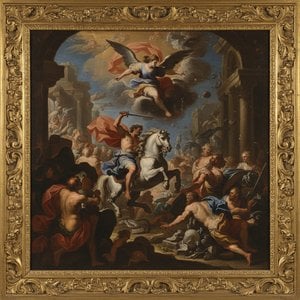
El Triunfo de Flora (1631) by Nicolás Poussin, hand-painted oil painting reproduction by a master artist
Ver en contexto Vista previa en RA Cambiar a impresiones Cambiar a imagen digital Enviar
Detalles Guía Añadir a favoritos Descargar Similares Radiografía Presentación de diapositivas Q&A Estadísticas

El Triunfo de Flora Hand-painted oil painting reproduction

Dimensiones
165.0 x 241.0 cm

Admira "El Triunfo de Flora", una obra maestra barroca de Nicolas Poussin que celebra la primavera y la belleza clásica en el Museo del Louvre.

Explora las obras maestras de Nicolás Poussin (1594-1665), un destacado pintor barroco francés. Descubre sus composiciones clásicas, escenas históricas y mitológicas, y paisajes serenos – influyendo a artistas como David y Cézanne. #Poussin #ArteBarroco #

Reproducción al óleo hecha a mano

Óleo sobre lienzo pintado a mano en el tamaño y marco de su elección, realizado por encargo por nuestros artistas. ( Cambiar a impresiones Cambiar a imagen digital)

Corner sample of the P118B picture frame: poliestireno moldeado, 5 cm wide and 3 cm thick
P118B €10
Corner sample of the P118H picture frame: poliestireno moldeado, 5 cm wide and 3 cm thick
P118H €10
Corner sample of the P118W picture frame: poliestireno moldeado, 5 cm wide and 3 cm thick
P118W €10
Corner sample of the P438Z picture frame: poliestireno moldeado, 5.5 cm wide and 3.5 cm thick
P438Z €10
Corner sample of the P508JH picture frame: poliestireno moldeado, 7 cm wide and 3.5 cm thick
P508JH €12
Corner sample of the P508YH picture frame: poliestireno moldeado, 7 cm wide and 3.5 cm thick
P508YH €12
Corner sample of the P805H picture frame: poliestireno moldeado, 5 cm wide and 3.5 cm thick
P805H €10
Corner sample of the P805Z picture frame: poliestireno moldeado, 5 cm wide and 3.5 cm thick
P805Z €10
Corner sample of the P919BZ picture frame: poliestireno moldeado, 7 cm wide and 3.5 cm thick
P919BZ €10
Corner sample of the P919G picture frame: poliestireno moldeado, 7 cm wide and 3.5 cm thick
P919G €10
Corner sample of the P919XJ picture frame: poliestireno moldeado, 7 cm wide and 3.5 cm thick
P919XJ €10
Corner sample of the P959ZH picture frame: poliestireno moldeado, 5 cm wide and 3 cm thick
P959ZH €10
Corner sample of the P968JZ picture frame: poliestireno moldeado, 6 cm wide and 4 cm thick
P968JZ €12
Corner sample of the W106C picture frame: madera maciza, 5 cm wide and 3 cm thick
W106C €8
Corner sample of the W218G picture frame: madera maciza, 5 cm wide and 3 cm thick
W218G €10
Corner sample of the W218JH picture frame: madera maciza, 5 cm wide and 3 cm thick
W218JH €8
Corner sample of the W218Y picture frame: madera maciza, 5 cm wide and 3 cm thick
W218Y €10
Corner sample of the W307PJ picture frame: madera maciza, 6 cm wide and 3 cm thick
W307PJ €10
Corner sample of the W316G picture frame: madera maciza, 6 cm wide and 3 cm thick
W316G €10
Corner sample of the W316PJ picture frame: madera maciza, 6 cm wide and 3 cm thick
W316PJ €8
Corner sample of the W316Y picture frame: madera maciza, 6 cm wide and 3 cm thick
W316Y €10
Corner sample of the W398PJ picture frame: madera maciza, 5 cm wide and 3 cm thick
W398PJ €8
Corner sample of the W4111J picture frame: madera maciza, 6.5 cm wide and 3.5 cm thick
W4111J €10
Corner sample of the W500HY picture frame: madera maciza, 7 cm wide and 5 cm thick
W500HY €15
Corner sample of the W500JH picture frame: madera maciza, 7 cm wide and 5 cm thick
W500JH €15
Corner sample of the W692G picture frame: madera maciza, 8 cm wide and 4 cm thick
W692G €12
Corner sample of the W849H picture frame: madera maciza, 5 cm wide and 3 cm thick
W849H €8
Corner sample of the W940BG picture frame: madera maciza, 7.5 cm wide and 4.5 cm thick
W940BG €15
Corner sample of the W953PJ picture frame: madera maciza, 6 cm wide and 3.5 cm thick
W953PJ €8

Tamaño estándar
a medida
CM
INCH

Elija entre nuestros tamaños predefinidos que respetan las proporciones originales de la obra.

ancho
altura

Indique el ancho y el alto que necesite para adaptarse a su marco o pared. Al tratarse de una obra pintada a mano, si requiere un tamaño con una proporción distinta, el artista puede pintar un poco más alrededor de la imagen o recortarla ligeramente; usted elige. Le enviaremos una maqueta digital para su aprobación antes de comenzar la pintura. La imagen que se muestra en esta página no refleja el resultado real; solo la maqueta lo hace.

Ejemplos de lo que se puede personalizar: Reemplace el rostro con una foto del cliente; Agregue una mascota (por ejemplo, cambie un gato por un perro); Incluya un mensaje oculto en el fondo; Cambie el paisaje o los elementos del fondo.
Tras realizar el pedido, el equipo de WahooArt.com enviará un correo electrónico al cliente para solicitar instrucciones y proporcionarle una vista previa del boceto.

Envío a todo el mundo () en 3-4 semanas en lugar de las 5 semanas estándar. (1 noviembre). Sin comprometer la calidad.

Envío exprés gratuito a todo el mundo
Lienzo de lino de alta calidad
Seguro de envío total
Garantía de reembolso de aranceles aduaneros
Garantía de fidelidad cromática exacta
Política de devolución de 100 días (solo por defectos)
Garantía de devolución del 100% del dinero
Descuento por cantidad

Precio total

€ 242

El Triunfo de Flora

Técnica de reproducción

Dimensiones de la reproducción

-

Precio total final

€ 242

Datos clave

  • Artist: Nicolas Poussin
  • Dimensions: 165 x 241 cm
  • Medium: Óleo sobre lienzo
  • Subject or theme: Mitología romana
  • Notable elements or techniques: Claroscuro
  • Location: Musee du Louvre, París

Test de conocimientos artísticos

Cada pregunta tiene una única respuesta correcta.

Pregunta 1:
¿Quién fue el encargado de realizar esta pintura?
Pregunta 2:
¿En qué movimiento artístico se encuentra principalmente este cuadro?
Pregunta 3:
¿Qué diosa romana representa la figura central en esta obra?
Pregunta 4:
¿Cuál es una técnica artística utilizada por Poussin para crear profundidad y dimensión?
Pregunta 5:
¿Dónde se encuentra actualmente esta pintura?

The Triumph of Flora

Nicolas Poussin’s “The Triumph of Flora,” completed between 1627 and 1628, stands as an emblem of Baroque idealism—a masterful distillation of classical mythology into a breathtaking visual narrative. Currently housed in the Musée du Louvre in Paris, this monumental oil painting transcends mere decoration; it embodies a profound meditation on rebirth, fecundity, and divine grace.

Historical Context and Inspiration

Commissioned by Cardinal Luigi Alessandro Omodei—a young man embarking on his ecclesiastical journey—the artwork reflects the fervent piety of its era. Poussin drew heavily upon Greek mythology, specifically the myth of Chloris’s transformation into Flora, the goddess of flowers and springtime. This tale served as a springboard for exploring themes of metamorphosis, beauty, and the triumph of life over death—concepts central to Renaissance humanist thought.

Composition and Symbolism

Poussin’s compositional genius is immediately apparent. The scene unfolds within a meticulously crafted landscape dominated by an ancient oak tree, symbolizing resilience and longevity. At its base stand figures representing Ajax and Narcissus, offering Flora garlands of flowers—a gesture laden with symbolic significance, signifying respect for the goddess and acknowledging her dominion over nature. Venus, radiant in the upper right corner, embodies love and fertility, subtly reinforcing the overarching theme of renewal.

Artistic Techniques

Poussin’s mastery of technique is undeniable. He employs *chiaroscuro*, a dramatic interplay of light and shadow, to sculpt the figures and create depth within the landscape—drawing viewers' eyes upwards towards Venus and emphasizing the grandeur of the oak tree. The artist’s brushstrokes are delicate yet confident, capturing the luminous quality of the flowers and conveying an exquisite sense of atmosphere. Color palettes are restrained but harmonious, prioritizing tonal gradations over bold hues to achieve a serene and contemplative mood.

Relevance and Legacy

"The Triumph of Flora" continues to inspire artists and captivate audiences today. Its influence can be seen in subsequent Baroque paintings—particularly those exploring pastoral landscapes and mythological narratives. More broadly, it represents the apex of classical French art—a testament to Poussin’s ability to synthesize intellectual contemplation with artistic virtuosity. The painting's enduring appeal lies in its timeless beauty and its profound exploration of fundamental human concerns: hope, faith, and the promise of eternal life.

Reproductions Available

For those wishing to experience the splendor of “The Triumph of Flora” firsthand, high-quality oil painting reproductions are available at WahooArt.com. These meticulously crafted prints capture the essence of Poussin’s original masterpiece—allowing art enthusiasts to adorn their homes with a piece of artistic history.

Other Works by Nicolas Poussin

  • The Rape of the Sabine Women: A dramatic depiction of Roman mythology exploring themes of violence and resistance.
  • Et in Arcadia Ego: This enigmatic landscape painting contemplates mortality amidst pastoral beauty—a poignant reminder of human vulnerability.
  • L’Enlèvement des Sabines: Another mythological scene showcasing heroism and romantic longing—executed with remarkable precision and emotional resonance.

These paintings, alongside “The Triumph of Flora,” demonstrate Poussin's versatility and artistic genius—solidifying his place as one of the most influential painters of his time.

Preguntas y respuestas

¿A qué movimiento artístico pertenece "El Triunfo de Flora" de Nicolás Poussin?

"El Triunfo de Flora" es una obra de Baroque Classicism. El movimiento indica la tradición artística a la que pertenece la obra.

¿Es "El Triunfo de Flora" representativo de la temática habitual de Nicolás Poussin?

Los temas recurrentes de Nicolás Poussin incluyen classical mythology inspiration, religious symbolism dominance, cardinal omodei patronage, roman baroque style, louvre masterpiece legacy; "El Triunfo de Flora" se centra en mythology, flora, roman gods, springtime, classical art, chariot scene, allegory.

¿Cómo se combinan el contraste y la armonía en "El Triunfo de Flora"?

En "El Triunfo de Flora", un Contraste máximo contraste se combina con una Gran unidad cromática armonía.


Biografía del artista

vida temprana y formación

nicolás poussin, nacido en junio de 1594, fue la quintaesencia de la pintura barroca francesa clásica. A pesar de pasar la mayor parte de su carrera en Roma, permaneció profundamente arraigado en las tradiciones artísticas francesas. Sus primeros días como pintor estuvieron envueltos en incertidumbre, pero ya en 1612 había iniciado estudios formales en París, absorbiendo influencias de artistas menos conocidos antes de ser atraído a Roma en 1624.

estilo artístico e influencias

El estilo estético de Poussin, celebrado por su composición coherente y priorización de la linealidad, sentó un precedente que influyó en maestros como jacques-luís david y paul cézanne bien hasta el siglo XX. Su estilo distintivo se cristalizó a través de obras maestras como la muerte de germanicus y su seminal serie de los siete sacramentos.

obras notables y museos

legado e impacto

La lealtad de Poussin permaneció en Roma, donde finalmente se centró en incorporar paisajes expansivos a su arte. Su madurez como artista está encapsulada en obras como Orión ciego buscando el sol y las estaciones, que anunciaron una era de composición rigurosa impregnada de la belleza serena del mundo natural.

explore más con WahooArt.com

descubra las obras maestras del musée france e inicie su viaje al mundo de la pintura barroca francesa con musée picasso, musée des beaux-arts de carcassonne y otros museos notables. Visite la página de nicolás poussin en WahooArt.com para explorar más de sus obras y aprender sobre el contexto en el que fueron creadas.

referencias

Nicolás Poussin

Nicolás Poussin

1594 - 1665 , Francia

Datos clave

  • Artistas Influenciados:
    • Jacques-Louis David
    • Paul Cézanne
  • Artistas Que Influyeron:
    • Rafael
    • Tiziano
  • Fecha De Muerte: 1665
  • Fecha De Nacimiento: Junio de 1594
  • Lugar De Nacimiento: Le Havre, Francia
  • Movimiento Artístico: Barroco clásico
  • Nacionalidad: Francés
  • Nombre Completo: Nicolás Poussin
  • Obras Notables:
    • La Muerte de Germanicus
    • Los Siete Sacramentos
    • Una Carretera Romana
    • Orion Ciego Buscando el Sol
    • Las Estaciones
Explore obras de arte organizadas por temas, estilos y características.