Ver en contexto Vista previa en RA Comprar pintura hecha a mano Cambiar a imagen digital Enviar
Detalles Guía Añadir a favoritos Descargar Similares Radiografía Presentación de diapositivas Estadísticas

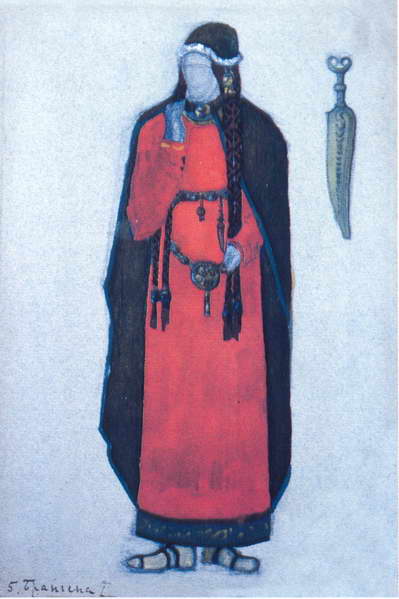
Brangena

Nicholas Roerich’s "Brangena" presents a striking Art Nouveau woman in red with a knife, juxtaposed against a vintage clock – an enigmatic scene steeped in symbolism and spirit. Explore this captivating artwork by the renowned Russian artist and bring its timeless beauty into your space.

Explora el arte cautivador de Nicolás Roerich (1874-1947): Simbolismo, paisajes himalayos y pinturas místicas. Diseños para los Ballets Russes y defensor de la preservación cultural.

Giclée / Impresión de arte

Impresiones giclée o en lienzo de calidad de museo con producción rápida y opciones de acabado flexibles. ( Comprar pintura hecha a mano Cambiar a imagen digital)

Corner sample of the P118B picture frame: poliestireno moldeado, 5 cm wide and 3 cm thick
P118B €10
Corner sample of the P118H picture frame: poliestireno moldeado, 5 cm wide and 3 cm thick
P118H €10
Corner sample of the P118W picture frame: poliestireno moldeado, 5 cm wide and 3 cm thick
P118W €10
Corner sample of the P438Z picture frame: poliestireno moldeado, 5.5 cm wide and 3.5 cm thick
P438Z €10
Corner sample of the P508JH picture frame: poliestireno moldeado, 7 cm wide and 3.5 cm thick
P508JH €12
Corner sample of the P508YH picture frame: poliestireno moldeado, 7 cm wide and 3.5 cm thick
P508YH €12
Corner sample of the P805H picture frame: poliestireno moldeado, 5 cm wide and 3.5 cm thick
P805H €10
Corner sample of the P805Z picture frame: poliestireno moldeado, 5 cm wide and 3.5 cm thick
P805Z €10
Corner sample of the P919BZ picture frame: poliestireno moldeado, 7 cm wide and 3.5 cm thick
P919BZ €10
Corner sample of the P919G picture frame: poliestireno moldeado, 7 cm wide and 3.5 cm thick
P919G €10
Corner sample of the P919XJ picture frame: poliestireno moldeado, 7 cm wide and 3.5 cm thick
P919XJ €10
Corner sample of the P959ZH picture frame: poliestireno moldeado, 5 cm wide and 3 cm thick
P959ZH €10
Corner sample of the P968JZ picture frame: poliestireno moldeado, 6 cm wide and 4 cm thick
P968JZ €12
Corner sample of the W106C picture frame: madera maciza, 5 cm wide and 3 cm thick
W106C €8
Corner sample of the W218G picture frame: madera maciza, 5 cm wide and 3 cm thick
W218G €10
Corner sample of the W218JH picture frame: madera maciza, 5 cm wide and 3 cm thick
W218JH €8
Corner sample of the W218Y picture frame: madera maciza, 5 cm wide and 3 cm thick
W218Y €10
Corner sample of the W307PJ picture frame: madera maciza, 6 cm wide and 3 cm thick
W307PJ €10
Corner sample of the W316G picture frame: madera maciza, 6 cm wide and 3 cm thick
W316G €10
Corner sample of the W316PJ picture frame: madera maciza, 6 cm wide and 3 cm thick
W316PJ €8
Corner sample of the W316Y picture frame: madera maciza, 6 cm wide and 3 cm thick
W316Y €10
Corner sample of the W398PJ picture frame: madera maciza, 5 cm wide and 3 cm thick
W398PJ €8
Corner sample of the W4111J picture frame: madera maciza, 6.5 cm wide and 3.5 cm thick
W4111J €10
Corner sample of the W500HY picture frame: madera maciza, 7 cm wide and 5 cm thick
W500HY €15
Corner sample of the W500JH picture frame: madera maciza, 7 cm wide and 5 cm thick
W500JH €15
Corner sample of the W692G picture frame: madera maciza, 8 cm wide and 4 cm thick
W692G €12
Corner sample of the W849H picture frame: madera maciza, 5 cm wide and 3 cm thick
W849H €8
Corner sample of the W940BG picture frame: madera maciza, 7.5 cm wide and 4.5 cm thick
W940BG €15
Corner sample of the W953PJ picture frame: madera maciza, 6 cm wide and 3.5 cm thick
W953PJ €8

Tamaño estándar
a medida
CM
INCH

Elija entre nuestros tamaños predefinidos que respetan las proporciones originales de la obra.

ancho
altura

Introduzca el ancho y el alto que necesite para adaptarse a su marco o pared. Una impresión solo puede recortarse, nunca hacerse más grande que la imagen original, por lo que un tamaño con una forma distinta perderá parte de la obra. Le enviaremos una maqueta digital para su aprobación antes de realizar cualquier impresión. La imagen que se muestra en esta página no refleja el recorte real; solo la maqueta lo hace.

Envío a todo el mundo () en 2 semanas en lugar de las 4/5 semanas estándar. (27 octubre)

Envío exprés gratuito a todo el mundo
Lienzo de lino de alta calidad
Seguro de envío total
Garantía de reembolso de aranceles aduaneros
Garantía de fidelidad cromática exacta
Política de devolución de 100 días (solo por defectos)
Garantía de devolución del 100% del dinero
Descuento por cantidad

Precio total

€ 60

Brangena

Giclée / Impresión de arte

Dimensiones de la reproducción

-

Precio total final

€ 60

Nicholas Roerich's "Brangena": A Portrait of Mystery and Spiritual Seeking

Nicholas Roemerich’s “Brangena,” painted in 1912, is more than just a portrait; it’s an immersive experience, a visual echo of the artist’s lifelong fascination with symbolism, spirituality, and the profound connection between art and human consciousness. This striking image, depicting a woman adorned in crimson and holding a knife, immediately draws the viewer into a realm of enigmatic beauty and quiet contemplation. The painting's vintage aesthetic, firmly rooted in the Art Nouveau movement, lends it an air of timelessness, suggesting that its themes – power, vulnerability, and perhaps even sacrifice – resonate across generations.

Subject and Composition: A Woman at the Crossroads

The central figure is a woman presented with a striking combination of strength and fragility. Her red attire, a color historically associated with passion, royalty, and danger, immediately commands attention. The presence of a knife in her hands – a potent symbol throughout art history – introduces an element of ambiguity. Is she wielding power? Is she defending herself? Or is the knife a tool for transformation, representing a deliberate act of creation or destruction? The addition of a clock on the right side of the canvas adds another layer of complexity. Clocks are universally recognized as symbols of time, mortality, and the relentless march forward. Its placement suggests a confrontation with these concepts, perhaps reflecting the woman’s own contemplation of her role within them.

Artistic Technique and Style: Echoes of Art Nouveau

Roerich's masterful technique is evident in the meticulous rendering of textures – the flowing fabric of the dress, the polished surface of the knife, and the intricate details of the clock. His brushwork is characterized by a smooth, almost ethereal quality, typical of the Art Nouveau style that was gaining prominence at the time. This movement emphasized organic forms, decorative patterns, and a sense of harmony between nature and human design. Roerich’s use of color is particularly noteworthy; the deep reds and muted tones create a dramatic contrast, intensifying the emotional impact of the scene. The overall composition adheres to Art Nouveau principles, prioritizing flowing lines and an elegant, almost dreamlike quality.

Historical Context and Symbolism: Roerich’s Spiritual Journey

"Brangena" was created during a pivotal period in Roerich's life – a time when he was deeply engaged with esoteric philosophies and the search for universal symbols. His work frequently incorporated elements of ancient mythology, religious iconography, and his own personal spiritual beliefs. The title "Brangena," derived from an ancient Siberian legend, suggests a connection to shamanistic traditions and the exploration of altered states of consciousness. This painting can be interpreted as a visual representation of this journey – a quest for knowledge, a confrontation with mortality, and ultimately, a striving towards enlightenment. Roerich believed that art possessed the power to unlock hidden dimensions of reality, and “Brangena” exemplifies this conviction.

Emotional Impact and Collector’s Appeal

“Brangena” possesses an undeniable emotional resonance. Its enigmatic subject matter invites viewers to engage in a personal dialogue with the painting, prompting questions about identity, purpose, and the nature of existence. This work's enduring appeal lies not only in its aesthetic beauty but also in its profound symbolism and Roerich’s deeply held spiritual beliefs. A hand-painted reproduction offers an exceptional opportunity to bring this captivating artwork into your home or office, adding a touch of mystery, sophistication, and intellectual depth to any space. It is a piece that will undoubtedly spark conversation and inspire contemplation for years to come.

Preguntas y respuestas

¿Es Nicolás Roerich, autor de "Brangena", conocido por otros nombres?

Nicolás Roerich también es conocido por los nombres N. Roerich, Nikolai Konstantínovich Roerich.

¿Para qué se recomienda una reproducción de "Brangena" de Nicolás Roerich?

Se recomienda una reproducción de "Brangena" de Nicolás Roerich para Pieza de impacto, basándose en el tema, la atmósfera y los colores de la obra.

¿Los colores de "Brangena" son intensos o suaves?

La intensidad cromática de "Brangena" es Equilibrado. La intensidad describe la fuerza con la que se perciben los colores.


Biografía del artista

Nicholas Roerich: Vida, Arte y Legado

Primeros Años y Educación

  • Nikolai Konstantinovich Roerich nació el 9 de octubre de 1874 en San Petersburgo, Rusia.
  • Su padre, un notario alemán del Báltico, y su madre, una mujer rusa, fomentaron una temprana apreciación por las artes en él.
  • Roerich estudió tanto derecho como arte simultáneamente, matriculándose en la Universidad de San Petersburgo y la Academia Imperial de Artes en 1893.
  • Recibió el título de “Artista” en 1897 y un título de abogado al año siguiente.

Deseos Artísticos e Influencias

  • El desarrollo artístico de Roerich fue significativamente influenciado por el Simbolismo Ruso, un movimiento que enfatizaba la espiritualidad y la profundidad emocional.
  • Se involucró con la sociedad “Arte del Mundo” de Serguéi Diáguilev, eventualmente convirtiéndose en su presidente desde 1910 hasta 1916.
  • Su trabajo temprano mostró una fascinación por la arqueología y el diseño teatral, lo que llevó a colaboraciones en producciones para los Ballets Russes.
  • También se vio influenciado por apócrifos y escrituras secretistas medievales como el Libro de la Paloma.

Colaboración con los Ballets Russes

  • Los diseños de Roerich para los Ballets Russes fueron muy elogiados, particularmente su trabajo en Príncipe Igor de Alexander Borodin (1909) e El Ritual de la Primavera de Igor Stravinsky (1913).
  • Sus diseños escénicos combinaban la investigación histórica con el arte imaginativo, creando producciones visualmente impresionantes.
  • Esta colaboración lo estableció como una figura destacada en el diseño teatral a principios del siglo XX.

Desarrollo Artístico y Temas

  • Las pinturas de Roerich evolucionaron para incorporar temas cada vez más místicos y espirituales, reflejando su creciente interés en la Teosofía y las religiones orientales.

  • Su serie Estudios Arquitectónicos (1904–1905) demostró su destreza arquitectónica y su compromiso con la preservación del patrimonio cultural.
  • Motivos recurrentes en su obra incluyen paisajes majestuosos, ciudades antiguas y figuras religiosas como San Panteleimon y Kuan Yin.
  • A menudo representaba el Himalaya, una región que tenía un profundo significado espiritual para él.

Logros y Reconocimientos Principales

  • Roerich fue un defensor dedicado de la protección del arte y la arquitectura durante los tiempos de guerra.
  • Sus esfuerzos llevaron a la creación del Pacto Roerich (1935), un tratado internacional para la preservación de objetos culturales, lo que le valió múltiples nominaciones al Premio Nobel de la Paz.
  • Viajó extensamente por Asia Central, realizando investigaciones arqueológicas y documentando culturas antiguas.
  • Su obra se exhibe en importantes colecciones museísticas en todo el mundo, incluida la Galería de Pinturas Estatal de Astrakhan.

Significado Histórico y Legado

  • El impacto de Nicholas Roerich en el arte y la cultura rusos es inmensurable.
  • Puenteó la brecha entre la expresión artística y la exploración espiritual, influyendo a generaciones de artistas e intelectuales.
  • Su compromiso con la preservación cultural sigue siendo relevante hoy en día, destacando la importancia de proteger nuestro patrimonio compartido.
  • El legado de Roerich se extiende más allá de sus pinturas; es recordado como un artista visionario, erudito y humanitario.
Nicolás Roerich

Nicolás Roerich

1874 - 1947 , Rusia

Datos clave

  • Artistas Que Influyeron:
    • León Tolstói
    • Arjip Kuindzhi
  • Fecha De Muerte: 13 de diciembre de 1947
  • Fecha De Nacimiento: 9 de octubre de 1874
  • Influenciado A Artistas: ['Artistas e intelectuales']
  • Lugar De Nacimiento: San Petersburgo, Rusia
  • Movimiento Artístico: Simbolismo Ruso
  • Nacionalidad: Ruso
  • Nombre Completo: Nicolás Roerich
  • Obras Notables:
    • Camino al Kailas 4
    • Monte de cinco tesoros
    • Puente de Gloria
    • Lago de las Nagas
    • Tempe-jal-tzen-baykin
Explore obras de arte organizadas por temas, estilos y características.


































