


Óleo sobre lienzo pintado a mano en el tamaño y marco de su elección, realizado por encargo por nuestros artistas. ( Comprar impresión Comprar imagen)





























Elija entre nuestros tamaños predefinidos que respetan las proporciones originales de la obra.

Puede ingresar sus propias dimensiones para adaptarse a un marco o espacio específico. Si el tamaño seleccionado no coincide con las proporciones de la imagen original, recortaremos la obra o extenderemos la pintura con elementos adicionales pintados a mano. Se le enviará una maqueta digital para su aprobación antes de comenzar la producción.
Tenga en cuenta que la vista previa en pantalla no refleja el recorte o la extensión reales. Solo la maqueta mostrará con precisión la composición final.
Si bien existen tamaños personalizados, recomendamos seleccionar una dimensión de la lista predefinida para preservar las proporciones originales.
Envío a todo el mundo () en 3-4 semanas en lugar de las 5 semanas estándar. (6 septiembre). Sin comprometer la calidad.


Basse cour
Dimensiones de la reproducción
To gaze upon Nicasius Bernaerts's Basse cour is to step directly into the sun-dappled, earthy heart of 17th-century Flemish rural life. This painting is far more than a mere collection of fowl; it is a vibrant celebration of agricultural abundance and domestic prosperity. The composition bursts with life, featuring a lively gathering of chickens whose varied plumage—from deep blacks to creamy golds—captures the very essence of spirited existence. Bernaerts has masterfully arranged these subjects in an informal tableau, allowing each bird its moment in the spotlight while maintaining a cohesive, natural energy across the canvas.
Technically, this work is a testament to the meticulous skill of the Flemish Baroque period. Bernaerts employed oil paint on panel, a medium that allowed him to achieve an astonishing level of verisimilitude. Observe the feathers: they are not simply painted; they seem to possess weight and softness. The artist’s handling of texture—the overlapping barbs, the sheen on a rooster's elaborate crest—is breathtakingly realistic. While the overall perspective maintains a certain flatness characteristic of the era, it is counterbalanced by the palpable depth achieved through Bernaerts's nuanced understanding of light. A soft, diffused illumination seems to emanate from an unseen source, gently highlighting the contours and rich colors of the plumage against the muted, dark background.
Historically, the subject matter itself carries significant weight. The term Basse cour refers not just to a simple yard, but often to an exhibition or display of prized poultry—a visible marker of wealth, status, and successful husbandry in the Dutch Golden Age context. Owning such a piece was akin to displaying one's connection to the land and its bounty. The chickens, therefore, become potent symbols: they speak of reliable sustenance, the cyclical nature of life, and the quiet, enduring prosperity that underpinned much of the era’s mercantile success.
For the modern collector or designer, this reproduction offers an unparalleled opportunity to infuse a space with historical narrative and organic warmth. The palette—dominated by rich ochres, warm browns, and muted grays—is inherently grounding, making it a perfect focal point for rooms seeking an antique, cultivated atmosphere. Whether displayed in a formal hall or a cozy study, the Basse cour invites contemplation of nature’s intricate beauty. It is art that whispers tales of bygone markets and skilled craftsmanship, transforming a simple wall into a gallery celebrating life's most humble, yet magnificent, details.


1620 - 1678 , Países Bajos

Explore the dramatic brilliance of the Flemish Baroque movement. Discover how masters like Peter Paul Rubens utilized chiaroscuro and dynamic composition to redefine art history through light, shadow, and unparalleled emotion.

Discover the enduring allure of oil on panel painting. Explore the technical mastery, historical significance, and luminous depth that define this prestigious medium, from Renaissance masters to modern fine art reproductions for discerning collectors.
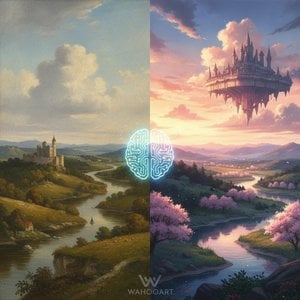
Transform your photos into high-octane action anime masterpieces with WahooArt. Our expert artists blend AI innovation with traditional oil painting to create premium, hand-painted pop culture legacies for your home. Experience museum-quality craftsmanship and a 100% satisfaction guarantee.

 Ver en contexto
 Enviar
 Compartir
 Detalles

 Descargar
 Similares
 Radiografía
 Presentación de diapositivas


 Ver más







 La opción de vidrio solo está disponible en tamaños inferiores a 110 cm.


