Vista previa Vista previa en RA Encargar reproducción pintada a mano Ver versión en imagen digital Compartir
Ver detalles Guía Añadir a favoritos Descargar Ver artículos similares Radiografía Presentación de diapositivas Estadísticas

[Untitled]

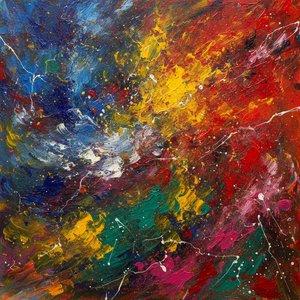
Explore Miné Okubo's poignant abstract painting 'Untitled,' created during WWII incarceration and reflecting resilience through bold colors and symbolic figures—a powerful testament to artistic expression amidst adversity.

Miné Okubo (1912-2001): Artista estadounidense japonesa famosa por 'Ciudadano 13660', que documenta los campos de internamiento durante la Segunda Guerra Mundial. Explora sus dibujos, el realismo social y su poderoso comentario.

La obra de arte que se muestra en esta página está protegida por las leyes de propiedad intelectual, lo que significa que no podemos crear ni vender legalmente una reproducción idéntica. Esta protección se hace cumplir en virtud de acuerdos internacionales como el Convenio de Berna y por las leyes nacionales, incluidas aquellas establecidas por el Ley de derechos de autor de los EE. UU. - Título 17.

Este método cumple plenamente con las normativas de derechos de autor, ya que no implica la copia ni la duplicación de la obra protegida. En su lugar, se trata de una reinterpretación creativa: una nueva pintura influenciada por la original, pero que no es idéntica a ella.

Giclée / Impresión de arte

Impresiones giclée o en lienzo de calidad de museo con producción rápida y opciones de acabado flexibles. ( Encargar reproducción pintada a mano Ver versión en imagen digital)

Corner sample of the P118B picture frame: moulded polystyrene, 5 cm wide and 3 cm thick
P118B €10
Corner sample of the P118H picture frame: moulded polystyrene, 5 cm wide and 3 cm thick
P118H €10
Corner sample of the P118W picture frame: moulded polystyrene, 5 cm wide and 3 cm thick
P118W €10
Corner sample of the P438Z picture frame: moulded polystyrene, 5.5 cm wide and 3.5 cm thick
P438Z €10
Corner sample of the P508JH picture frame: moulded polystyrene, 7 cm wide and 3.5 cm thick
P508JH €12
Corner sample of the P508YH picture frame: moulded polystyrene, 7 cm wide and 3.5 cm thick
P508YH €12
Corner sample of the P805H picture frame: moulded polystyrene, 5 cm wide and 3.5 cm thick
P805H €10
Corner sample of the P805Z picture frame: moulded polystyrene, 5 cm wide and 3.5 cm thick
P805Z €10
Corner sample of the P919BZ picture frame: moulded polystyrene, 7 cm wide and 3.5 cm thick
P919BZ €10
Corner sample of the P919G picture frame: moulded polystyrene, 7 cm wide and 3.5 cm thick
P919G €10
Corner sample of the P919XJ picture frame: moulded polystyrene, 7 cm wide and 3.5 cm thick
P919XJ €10
Corner sample of the P959ZH picture frame: moulded polystyrene, 5 cm wide and 3 cm thick
P959ZH €10
Corner sample of the P968JZ picture frame: moulded polystyrene, 6 cm wide and 4 cm thick
P968JZ €12
Corner sample of the W106C picture frame: solid wood, 5 cm wide and 3 cm thick
W106C €8
Corner sample of the W218G picture frame: solid wood, 5 cm wide and 3 cm thick
W218G €10
Corner sample of the W218JH picture frame: solid wood, 5 cm wide and 3 cm thick
W218JH €8
Corner sample of the W218Y picture frame: solid wood, 5 cm wide and 3 cm thick
W218Y €10
Corner sample of the W307PJ picture frame: solid wood, 6 cm wide and 3 cm thick
W307PJ €10
Corner sample of the W316G picture frame: solid wood, 6 cm wide and 3 cm thick
W316G €10
Corner sample of the W316PJ picture frame: solid wood, 6 cm wide and 3 cm thick
W316PJ €8
Corner sample of the W316Y picture frame: solid wood, 6 cm wide and 3 cm thick
W316Y €10
Corner sample of the W398PJ picture frame: solid wood, 5 cm wide and 3 cm thick
W398PJ €8
Corner sample of the W4111J picture frame: solid wood, 6.5 cm wide and 3.5 cm thick
W4111J €10
Corner sample of the W500HY picture frame: solid wood, 7 cm wide and 5 cm thick
W500HY €15
Corner sample of the W500JH picture frame: solid wood, 7 cm wide and 5 cm thick
W500JH €15
Corner sample of the W692G picture frame: solid wood, 8 cm wide and 4 cm thick
W692G €12
Corner sample of the W849H picture frame: solid wood, 5 cm wide and 3 cm thick
W849H €8
Corner sample of the W940BG picture frame: solid wood, 7.5 cm wide and 4.5 cm thick
W940BG €15
Corner sample of the W953PJ picture frame: solid wood, 6 cm wide and 3.5 cm thick
W953PJ €8

Estándar
personalizado
CM
INCH

Elija entre nuestros tamaños predefinidos que respetan las proporciones originales de la obra.

ancho
altura

Puede introducir sus propias dimensiones para adaptarse a un marco o espacio específico. Si el tamaño seleccionado no coincide con las proporciones de la imagen original, recortaremos la obra de arte o extenderemos la imagen con un borde con efecto espejo o de color sólido. Se enviará una maqueta digital para su aprobación antes de que comience la producción.
Tenga en cuenta que la vista previa en pantalla no refleja el recorte o la extensión real. Solo la maqueta mostrará con precisión la composición final.
Aunque existen tamaños personalizados, recomendamos seleccionar una dimensión de la lista predefinida para preservar las proporciones originales.

Envío a todo el mundo () en 2 semanas en lugar de las 4/5 semanas estándar. (9 octubre)

Envío exprés gratuito a todo el mundo
Lienzo de lino de alta calidad
Seguro de envío completo
Garantía de reembolso de impuestos aduaneros
Garantía de fidelidad cromática exacta
Política de devolución de 100 días (solo por defectos)
Garantía de devolución del 100% del dinero
Oferta por volumen

Precio total

€ 59

[Untitled]

Giclée / Impresión de arte

Tamaño de la reproducción

-

Precio total

€ 59

Datos clave

  • Title: Untitled
  • Influences: Expressionism
  • Artist: Miné Okubo
  • Year: 1969
  • Notable elements or techniques: Bold brushstrokes, vibrant color palette
  • Subject or theme: Conceptual art
  • Medium: Painting

Cuestionario de arte

Cada pregunta tiene una única respuesta correcta.

Pregunta 1:
What is the predominant color in Miné Okubo’s painting?
Pregunta 2:
The artist's signature 'Okubo' indicates that this artwork was created during:
Pregunta 3:
What artistic movement is Miné Okubo’s style most closely associated with?
Pregunta 4:
The painting depicts a figure resembling:
Pregunta 5:
What is the significance of the black and white figures contrasted against the red background?

A Symphony of Crimson and Resilience

In the vast landscape of twentieth-century American art, few works possess the visceral, haunting power of Miné Okubo’s 1969 masterpiece, "Untitled." At first glance, the viewer is met with an overwhelming surge of color—a dominant, fiery red that saturates the canvas, demanding immediate attention. This is not merely a decorative choice; it is an emotional landscape. The painting serves as a profound testament to the Japanese American experience during the dark era of World War II internment. Through her expressive use of pigment, Okubo transforms a moment of historical trauma into a universal contemplation on identity and survival. For the discerning collector or interior designer, this piece offers more than visual impact; it provides a deep, narrative soul that can anchor a room with both warmth and gravity.

The technique employed in "Untitled" leans heavily into the traditions of Expressionism, where the artist’s internal psyche is laid bare through movement and texture. Okubo eschews the sterile precision of realism, opting instead for loose, energetic brushstrokes that pulse with life. The application of paint often features a thick impasto, creating a tactile surface that mirrors the physical and psychological hardships endured by those in the relocation centers. This textured approach allows light to catch the ridges of the pigment, adding a three-dimensional dynamism to the work. Against this turbulent red sea, the central figures emerge in stark black and white, their monochromatic forms acting as silent witnesses to the surrounding intensity. The contrast is sharp and deliberate, emphasizing the vulnerability of the human spirit when caught in the tides of historical upheaval.

Symbolism and the Echoes of History

To gaze upon "Untitled" is to engage in a dialogue with history. Okubo, a survivor of the Topaz War Relocation Center in Utah, channeled her memories of displacement into this abstract composition. The interplay between the humanoid figures and more fluid, organic shapes—some of which suggest the movement of aquatic life—creates a sense of flux and instability. This fluidity can be interpreted as the loss of groundedness experienced by families uprooted from their homes. The red backdrop, while evocative of passion and the burning desire for freedom, also carries the weight of anger and the blood of a fractured community. It is a color that both protects and consumes.

For those looking to integrate such a powerful work into a curated space, "Untitled" offers an unparalleled opportunity to introduce narrative depth. Whether placed in a modern gallery setting or as a focal point in a sophisticated residential study, the painting invites endless interpretation. It is a piece that rewards long periods of contemplation, offering new layers of meaning with every viewing. As a high-quality reproduction, it captures the raw, emotive essence of Okubo’s original vision, allowing the legacy of her resilience to breathe within contemporary interiors, reminding us all of the enduring power of memory and the indomitable strength of the human heart.

Preguntas y respuestas

¿A qué artista se le atribuye "[Untitled]"?

"[Untitled]" fue creada por Miné Okubo. La información en esta página describe la obra original de Miné Okubo.

¿Qué tipo de colores utiliza "[Untitled]"?

"[Untitled]" de Miné Okubo utiliza una paleta de colores Dark. La paleta resume el carácter cromático general de la obra.

¿Es "[Untitled]" representativo de lo que Miné Okubo solía crear?

Entre los temas recurrentes de Miné Okubo —expressionist roots, trauma narrative, resilience symbolism, american experience, artist legacy— "[Untitled]" aporta su propio enfoque sobre abstraction, surrealism, fish symbolism, human figure, color palette, black white contrast, resilience.

¿Qué edad tenía Miné Okubo cuando se creó "[Untitled]"?

Miné Okubo tenía 57 años cuando creó "[Untitled]" en 1969. La edad se calcula a partir del año de nacimiento del artista, 1912.

¿En qué año se creó "[Untitled]"?

"[Untitled]" data de 1969. La fecha sitúa la obra dentro de la trayectoria de Miné Okubo y de su época.

¿Dónde puedo comprar una reproducción pintada a mano de "[Untitled]" de Miné Okubo?

Puede solicitar una reproducción pintada a mano de "[Untitled]" de Miné Okubo directamente en esta página: una reproducción al óleo pintada a mano sobre lienzo de lino, realizada bajo pedido.

¿Dónde debería colgarse una reproducción de "[Untitled]" de Miné Okubo?

El formato Portrait de "[Untitled]" de Miné Okubo es ideal para un Living Room. El formato y el espacio orientan conjuntamente la ubicación de una reproducción.


Biografía del artista

Miné Okubo: Vida, Arte y Legado

Primeros Años y Educación

  • Nacimiento: 27 de junio de 1912 en Riverside, California, hija de padres inmigrantes japoneses.
  • Okubo demostró un talento temprano para el arte, alentada por su familia.
  • Estudió arte formalmente, asistiendo a la Universidad de California, Berkeley, y posteriormente viajando a Europa en 1938 para continuar sus estudios.
  • Su tiempo en Suiza se vio interrumpido por las crecientes tensiones políticas que precedieron a la Segunda Guerra Mundial.

Internamiento y Respuesta Artística

  • Tras el ataque a Pearl Harbor, Okubo, junto con su hermano Benji, fueron removidos por la fuerza de sus hogares e internados en los campos de concentración japoneses americanos.
  • Primero enviados al Tanforan Assembly Center en 1942, luego fueron trasladados al Topaz War Relocation Center en Utah.
  • Durante su confinamiento, Okubo comenzó un proyecto notable: documentó meticulosamente la vida cotidiana dentro de los campos a través de más de 2.000 dibujos y bocetos.

  • Estas obras capturaron las duras realidades de la existencia en el campo, las condiciones de vida hacinadas, los procesos burocráticos, el impacto emocional y la resiliencia de los internados.

Ciudadano 13660: Un Testimonio Poderoso

  • Después de su liberación en 1944, Okubo compiló una selección de 198 dibujos y texto acompañante en un libro titulado Ciudadano 13660.
  • Publicado en 1946, el libro se considera una obra fundamental que documenta la experiencia del internamiento japonés americano.
  • El título hace referencia a su número asignado dentro del sistema de internamiento, enfatizando el aspecto deshumanizador de la reubicación forzada.
  • Los dibujos se caracterizan por su directividad, honestidad y profundidad emocional, ofreciendo un registro visual conmovedor de un capítulo oscuro en la historia americana.

Carrera Post-Guerra y Desarrollo Artístico

  • Okubo se trasladó a Nueva York City después de la guerra, donde continuó su carrera artística.
  • Trabajó como artista independiente, creando ilustraciones para revistas y libros, y también realizó proyectos de murales.
  • Su estilo evolucionó con el tiempo, pero mantuvo constantemente un enfoque en el comentario social y los temas humanísticos.
  • Okubo recibió numerosos premios y reconocimientos a lo largo de su carrera, incluyendo subvenciones del Fondo Nacional para las Artes.

Influencias y Legado

  • La obra de Okubo fue influenciada por el movimiento Social Realista, que enfatizaba la representación de los problemas sociales y la vida cotidiana con un enfoque en el realismo.
  • Se inspiró en artistas como Käthe Kollwitz, conocida por sus poderosas representaciones del sufrimiento humano.
  • Su legado reside en su valiente documentación de la experiencia del internamiento y su contribución a crear conciencia sobre los derechos civiles y la justicia social.
  • “Ciudadano 13660” sigue siendo un documento histórico vital y continúa resonando con el público actual, sirviendo como un recordatorio de la importancia de la vigilancia contra la discriminación y el prejuicio.

Muerte y Remembrance

  • Miné Okubo falleció el 10 de febrero de 2001, dejando atrás un poderoso cuerpo de trabajo que continúa inspirando y educando.
  • Su arte se conserva en numerosas colecciones públicas y privadas, asegurando que su historia y mensaje perduren para las generaciones venideras.
Miné Okubo

Miné Okubo

1912 - 2001 , Estados Unidos de América

Datos clave

  • Artistic Movement Or Style: Social Realism
  • Artists Or Movements Influenced By This Artist: ['Diego Rivera']
  • Artists Who Influenced This Artist: ['Käthe Kollwitz']
  • Date Of Birth: Jun 27, 1912
  • Date Of Death: Feb 10, 2001
  • Full Name: Miné Okubo
  • Nationality: American
  • Notable Artworks:
    • Citizen 13660
    • Interior of Mine and Toku
  • Place Of Birth: Riverside, USA
Explore obras de arte organizadas por temas, estilos y características.