Ver en contexto Vista previa en RA Cambiar a impresiones Cambiar a imagen digital Enviar
Detalles Guía Añadir a favoritos Descargar Similares Radiografía Presentación de diapositivas Q&A Estadísticas

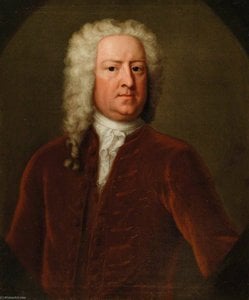
Sir Thomas Mansel Hand-painted oil painting reproduction

Este retrato de Sir Thomas Mansel, obra maestra del pintor Michael Dahl I, captura la dignidad y autoridad del noble inglés en una composición elegante y detallada.

Descubre a Michael Dahl (1659-1743), retratista sueco clave en Inglaterra. Sus elegantes retratos de la aristocracia y la realeza británica son una joya del Barroco.

Reproducción al óleo hecha a mano

Óleo sobre lienzo pintado a mano en el tamaño y marco de su elección, realizado por encargo por nuestros artistas. ( Cambiar a impresiones Cambiar a imagen digital)

Corner sample of the P118B picture frame: poliestireno moldeado, 5 cm wide and 3 cm thick
P118B €10
Corner sample of the P118H picture frame: poliestireno moldeado, 5 cm wide and 3 cm thick
P118H €10
Corner sample of the P118W picture frame: poliestireno moldeado, 5 cm wide and 3 cm thick
P118W €10
Corner sample of the P438Z picture frame: poliestireno moldeado, 5.5 cm wide and 3.5 cm thick
P438Z €10
Corner sample of the P508JH picture frame: poliestireno moldeado, 7 cm wide and 3.5 cm thick
P508JH €12
Corner sample of the P508YH picture frame: poliestireno moldeado, 7 cm wide and 3.5 cm thick
P508YH €12
Corner sample of the P805H picture frame: poliestireno moldeado, 5 cm wide and 3.5 cm thick
P805H €10
Corner sample of the P805Z picture frame: poliestireno moldeado, 5 cm wide and 3.5 cm thick
P805Z €10
Corner sample of the P919BZ picture frame: poliestireno moldeado, 7 cm wide and 3.5 cm thick
P919BZ €10
Corner sample of the P919G picture frame: poliestireno moldeado, 7 cm wide and 3.5 cm thick
P919G €10
Corner sample of the P919XJ picture frame: poliestireno moldeado, 7 cm wide and 3.5 cm thick
P919XJ €10
Corner sample of the P959ZH picture frame: poliestireno moldeado, 5 cm wide and 3 cm thick
P959ZH €10
Corner sample of the P968JZ picture frame: poliestireno moldeado, 6 cm wide and 4 cm thick
P968JZ €12
Corner sample of the W106C picture frame: madera maciza, 5 cm wide and 3 cm thick
W106C €8
Corner sample of the W218G picture frame: madera maciza, 5 cm wide and 3 cm thick
W218G €10
Corner sample of the W218JH picture frame: madera maciza, 5 cm wide and 3 cm thick
W218JH €8
Corner sample of the W218Y picture frame: madera maciza, 5 cm wide and 3 cm thick
W218Y €10
Corner sample of the W307PJ picture frame: madera maciza, 6 cm wide and 3 cm thick
W307PJ €10
Corner sample of the W316G picture frame: madera maciza, 6 cm wide and 3 cm thick
W316G €10
Corner sample of the W316PJ picture frame: madera maciza, 6 cm wide and 3 cm thick
W316PJ €8
Corner sample of the W316Y picture frame: madera maciza, 6 cm wide and 3 cm thick
W316Y €10
Corner sample of the W398PJ picture frame: madera maciza, 5 cm wide and 3 cm thick
W398PJ €8
Corner sample of the W4111J picture frame: madera maciza, 6.5 cm wide and 3.5 cm thick
W4111J €10
Corner sample of the W500HY picture frame: madera maciza, 7 cm wide and 5 cm thick
W500HY €15
Corner sample of the W500JH picture frame: madera maciza, 7 cm wide and 5 cm thick
W500JH €15
Corner sample of the W692G picture frame: madera maciza, 8 cm wide and 4 cm thick
W692G €12
Corner sample of the W849H picture frame: madera maciza, 5 cm wide and 3 cm thick
W849H €8
Corner sample of the W940BG picture frame: madera maciza, 7.5 cm wide and 4.5 cm thick
W940BG €15
Corner sample of the W953PJ picture frame: madera maciza, 6 cm wide and 3.5 cm thick
W953PJ €8

Tamaño estándar
a medida
CM
INCH

Elija entre nuestros tamaños predefinidos que respetan las proporciones originales de la obra.

ancho
altura

Indique el ancho y el alto que necesite para adaptarse a su marco o pared. Al tratarse de una obra pintada a mano, si requiere un tamaño con una proporción distinta, el artista puede pintar un poco más alrededor de la imagen o recortarla ligeramente; usted elige. Le enviaremos una maqueta digital para su aprobación antes de comenzar la pintura. La imagen que se muestra en esta página no refleja el resultado real; solo la maqueta lo hace.

Ejemplos de lo que se puede personalizar: Reemplace el rostro con una foto del cliente; Agregue una mascota (por ejemplo, cambie un gato por un perro); Incluya un mensaje oculto en el fondo; Cambie el paisaje o los elementos del fondo.
Tras realizar el pedido, el equipo de WahooArt.com enviará un correo electrónico al cliente para solicitar instrucciones y proporcionarle una vista previa del boceto.

Envío a todo el mundo () en 3-4 semanas en lugar de las 5 semanas estándar. (30 octubre). Sin comprometer la calidad.

Envío exprés gratuito a todo el mundo
Lienzo de lino de alta calidad
Seguro de envío total
Garantía de reembolso de aranceles aduaneros
Garantía de fidelidad cromática exacta
Política de devolución de 100 días (solo por defectos)
Garantía de devolución del 100% del dinero
Descuento por cantidad

Precio total

€ 240

Sir Thomas Mansel

Técnica de reproducción

Dimensiones de la reproducción

-

Precio total final

€ 240

Datos clave

  • Dimensions: 210 x 144 cm
  • Artistic style: Baroque influence; Restrained aesthetic
  • Notable elements or techniques: Glazes; Detailed depiction of clothing and features.
  • Medium: Oil paint on canvas

Test de conocimientos artísticos

Cada pregunta tiene una única respuesta correcta.

Pregunta 1:
¿Quién pintó este retrato?
Pregunta 2:
¿Cuál es el estilo artístico predominante en esta obra?
Pregunta 3:
¿Qué símbolo importante aparece en la imagen?
Pregunta 4:
¿De qué época proviene esta pintura?
Pregunta 5:
¿Qué técnica pictórica se utilizó para crear este retrato?

Sir Thomas Mansel (1667–1723), 1st Baron Mansel of Margam

Michael Dahl’s portrait of Sir Thomas Mansel stands as a testament to the grandeur and formality of Georgian England, capturing not merely likeness but also embodying the status and authority demanded by aristocratic society. Painted around 1698-1700, this masterpiece exemplifies the Baroque influence persisting in Northern European art while simultaneously embracing a restrained aesthetic characteristic of its time.

Composition and Technique

  • Central Figure: Dahl meticulously positioned Sir Thomas Mansel at the heart of the canvas, dominating the frame with his commanding presence. The three-quarter pose conveys dignity and confidence, directing the viewer’s gaze towards his face – a focal point illuminated by diffused lighting that highlights subtle facial expressions.
  • Spatial Arrangement: The composition prioritizes depth through layering clothing and contrasting the luminous figure against a dark, indistinct background. This technique creates an illusion of space, drawing attention to Mansel's stature within the aristocratic milieu.
  • Brushwork & Glazes: Dahl employed soft brushstrokes blended seamlessly to achieve remarkable textural realism – particularly evident in the folds of Mansel’s opulent robes. The use of glazes contributes to luminosity and depth, enhancing the painting’s overall richness and capturing the subtle nuances of fabric texture.

Color Palette and Symbolism

The color palette is dominated by rich reds – predominantly in Mansel's coat and lining – complemented by creams and browns that establish a stately ambiance. Touches of white and grey provide tonal balance, subtly emphasizing the contours of the figure and reinforcing the painting’s formal character.

  • The Crown & Scepter: The inclusion of a crown atop a table behind Mansel serves as a potent symbol of nobility and royal lineage. Similarly, his grasp of a scepter underscores his position as a leader within the peerage – emblems of power and prestige deeply ingrained in the visual language of the era.
  • Emotional Resonance: Dahl’s portrayal conveys an air of solemn seriousness, reflecting Mansel's responsibilities as a statesman and embodying the virtues expected of aristocratic men. The painting transcends mere representation; it communicates an emotional depth that speaks to the viewer’s understanding of social hierarchy and moral obligation.

Historical Context & Artistic Style

Dahl’s work aligns with the broader artistic trends of the Baroque period, albeit tempered by a preference for elegance and restraint. Influenced by Caravaggio's dramatic chiaroscuro technique, Dahl nevertheless avoids excessive ornamentation, prioritizing clarity and precision in his depiction of Mansel’s likeness and attire.

  • Influence of Baroque: The subtle interplay of light and shadow—characteristic of Baroque painting—adds to the portrait’s visual impact.
  • Georgian Aesthetic: Dahl's style embodies the refined sensibilities of Georgian England, prioritizing meticulous detail and conveying a sense of aristocratic grandeur.

This artwork remains an enduring symbol of power, status, and artistic mastery—a captivating glimpse into the opulent world of 18th-century Britain.

Preguntas y respuestas

¿Es "Sir Thomas Mansel" más bien clara o más bien oscura en su conjunto?

Los valores registrados para "Sir Thomas Mansel" de Michael Dahl son: sombra profunda de brillo y Oscuro de luminancia.

¿Qué técnica y dimensiones tiene la obra original "Sir Thomas Mansel" de Michael Dahl?

La obra original "Sir Thomas Mansel" de Michael Dahl es una pieza de Óleo sobre lienzo con unas dimensiones de 210 x 144 cm. La técnica y el tamaño describen la obra original.

¿Qué artista y qué estilo definen a "Sir Thomas Mansel"?

"Sir Thomas Mansel" fue creada por Michael Dahl bajo el estilo Baroque Classicism. El artista y el movimiento definen la tradición de la obra.


Biografía del artista

Michael Dahl: Vida y Legado

Michael Dahl (1659-1743) fue un destacado pintor de retratos sueco que logró un reconocimiento significativo durante su larga carrera, principalmente en Inglaterra. Se convirtió en uno de los pintores suecos más conocidos internacionalmente de su época, celebrado por sus retratos aristocráticos y su dominio del estilo barroco.

Primeros Años y Educación

Nacido en Estocolmo, Suecia, alrededor de 1659 (las fuentes varían entre 1658 y 1659), el viaje artístico de Michael Dahl comenzó con un fuerte apoyo familiar. Su madre, Catarina Dahl, se cree que hizo considerables sacrificios para asegurar que recibiera una educación de calidad, reconociendo su talento inherente. Inicialmente estudió bajo Martin Hannibal en 1674, quien había sido traído a Suecia por David Klöcker Ehrenstrahl para establecer una academia de retratos.

  • Hannibal proporcionó una formación fundamental antes de que Dahl pasara a estudiar directamente con Ehrenstrahl, lo que indicaba su promesa como estudiante.
  • Esta temprana educación sentó las bases para su futura especialización en el retrato.

Viaje a Inglaterra y Desarrollo Artístico

En 1682, Dahl emprendió un viaje educativo extendido por Europa con un pasaporte que permitía viajar. Primero llegó a Londres, donde estuvo bajo la tutela de Robert White, un hábil grabador y pintor. Esta conexión demostró ser invaluable, ya que Dahl ayudó a White con proyectos de grabado, incluido un retrato del rey Carlos XI de Suecia.

  • Una influencia clave fue Godfrey Kneller, quien le enseñó a Dahl sobre las realidades del mercado artístico y cómo satisfacer la demanda pública, un marcado contraste con el enfoque más centrado en la corte de Ehrenstrahl.
  • Dahl también estudió junto a Henry Tilson, con quien planeó viajes a París, Venecia y Roma.

Roma y Conversión Religiosa

Después de tiempo en París, Dahl llegó a Roma, donde la exiliada Reina Cristina de Suecia jugó un papel crucial en su carrera. Para obtener acceso a círculos influyentes y patrocinio papal, Dahl se convirtió al catolicismo por insistencia de la Reina Cristina. Esta conversión abrió puertas a oportunidades, incluido pintar retratos de la propia Reina y presentar su trabajo al Papa Inocencio XI, quien le otorgó una medalla de oro.

Carrera Madura y Obras Notables

Dahl regresó a Inglaterra y se estableció como un retratista muy solicitado. Se hizo conocido por su estilo elegante y refinado, capturando el estatus y la personalidad de sus modelos aristocráticos. Sus retratos se caracterizan por colores ricos, texturas detalladas y una sensación de grandeza.

  • Pintó numerosas figuras prominentes, incluyendo a la Reina Ana, el Príncipe Jorge de Dinamarca y miembros de la nobleza inglesa.
  • Obras notables incluyen retratos del Sir William Carew, John Churchill (1er Duque de Marlborough) y Sir Robert Walpole.
  • Su retrato triple del 2º Conde de Burlington, el 1er Duque de Kingston upon Hull y el 3º Barón Berkeley of Stratton es un ejemplo particularmente impresionante de su habilidad en el retrato de grupo.

Influencias y Legado

El estilo artístico de Dahl fue moldeado por una mezcla de influencias suecas, italianas e inglesas. Absorbió las habilidades técnicas de Hannibal y Ehrenstrahl, aprendió astucia comercial de Kneller y se benefició del sistema de patrocinio en Roma. Su trabajo refleja la estética barroca prevaleciente durante su tiempo, pero con un refinamiento único.

  • Influyó en generaciones posteriores de pintores de retratos con su estilo elegante y pericia técnica.
  • Los retratos de Dahl proporcionan valiosas perspectivas sobre las vidas y apariencias de la aristocracia inglesa durante la primera parte del siglo XVIII.

Significado Histórico

El éxito de Michael Dahl como artista sueco que trabajó principalmente en Inglaterra destaca la naturaleza internacional del intercambio artístico durante el período barroco. Navegó con éxito por diferentes contextos culturales y se estableció como un retratista líder, dejando atrás un legado de exquisitas pinturas que continúan siendo admiradas hoy en día.

Michael Dahl

Michael Dahl

1658 - 1743 , Suecia

Datos clave

  • Artistas Que Influyeron:
    • Martin Hannibal
    • David Ehrenstrahl
    • Godfrey Kneller
  • Fecha De Muerte: 1743
  • Fecha De Nacimiento: c. 1659
  • Lugar De Nacimiento: Estocolmo, Suecia
  • Movimiento Artístico: Barroco
  • Nacionalidad: Sueco
  • Nombre Completo: Michael Dahl
  • Obras Notables:
    • Retrato de la Reina Ana
    • Retrato de la Reina Cristina
Explore obras de arte organizadas por temas, estilos y características.