Ver en contexto Vista previa en RA Comprar pintura hecha a mano Cambiar a imagen digital Enviar
Detalles Guía Añadir a favoritos Descargar Similares Radiografía Presentación de diapositivas Q&A Estadísticas

Cocktail Party- Three

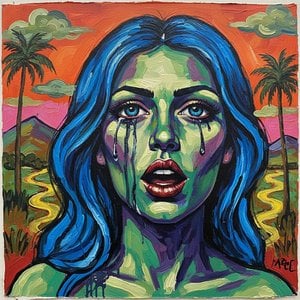
Explore Maxwell Bates’ ‘Cocktail Party-Three’! A vibrant 1967 oil painting showcasing prairie life & modernism. Bold colors, dynamic figures & unique perspective – a captivating piece.

Un influyente pintor expresionista canadiense conocido por obras como Cocktail Party- Three, Maxwell Bennett Bates combinó energía modernista con texturas audaces que te invitan a descubrir su vibrante legado visual.

La obra de arte que se muestra en esta página está protegida por las leyes de propiedad intelectual, lo que significa que no podemos crear ni vender legalmente una reproducción idéntica. Esta protección se hace cumplir en virtud de acuerdos internacionales como el Convenio de Berna y por las leyes nacionales, incluidas aquellas establecidas por el Ley de derechos de autor de los EE. UU. - Título 17.

Este método cumple plenamente con las normativas de derechos de autor, ya que no implica la copia ni la duplicación de la obra protegida. En su lugar, se trata de una reinterpretación creativa: una nueva pintura influenciada por la original, pero que no es idéntica a ella.

Giclée / Impresión de arte

Impresiones giclée o en lienzo de calidad de museo con producción rápida y opciones de acabado flexibles. ( Comprar pintura hecha a mano Cambiar a imagen digital)

Corner sample of the P118B picture frame: poliestireno moldeado, 5 cm wide and 3 cm thick
P118B €10
Corner sample of the P118H picture frame: poliestireno moldeado, 5 cm wide and 3 cm thick
P118H €10
Corner sample of the P118W picture frame: poliestireno moldeado, 5 cm wide and 3 cm thick
P118W €10
Corner sample of the P438Z picture frame: poliestireno moldeado, 5.5 cm wide and 3.5 cm thick
P438Z €10
Corner sample of the P508JH picture frame: poliestireno moldeado, 7 cm wide and 3.5 cm thick
P508JH €12
Corner sample of the P508YH picture frame: poliestireno moldeado, 7 cm wide and 3.5 cm thick
P508YH €12
Corner sample of the P805H picture frame: poliestireno moldeado, 5 cm wide and 3.5 cm thick
P805H €10
Corner sample of the P805Z picture frame: poliestireno moldeado, 5 cm wide and 3.5 cm thick
P805Z €10
Corner sample of the P919BZ picture frame: poliestireno moldeado, 7 cm wide and 3.5 cm thick
P919BZ €10
Corner sample of the P919G picture frame: poliestireno moldeado, 7 cm wide and 3.5 cm thick
P919G €10
Corner sample of the P919XJ picture frame: poliestireno moldeado, 7 cm wide and 3.5 cm thick
P919XJ €10
Corner sample of the P959ZH picture frame: poliestireno moldeado, 5 cm wide and 3 cm thick
P959ZH €10
Corner sample of the P968JZ picture frame: poliestireno moldeado, 6 cm wide and 4 cm thick
P968JZ €12
Corner sample of the W106C picture frame: madera maciza, 5 cm wide and 3 cm thick
W106C €8
Corner sample of the W218G picture frame: madera maciza, 5 cm wide and 3 cm thick
W218G €10
Corner sample of the W218JH picture frame: madera maciza, 5 cm wide and 3 cm thick
W218JH €8
Corner sample of the W218Y picture frame: madera maciza, 5 cm wide and 3 cm thick
W218Y €10
Corner sample of the W307PJ picture frame: madera maciza, 6 cm wide and 3 cm thick
W307PJ €10
Corner sample of the W316G picture frame: madera maciza, 6 cm wide and 3 cm thick
W316G €10
Corner sample of the W316PJ picture frame: madera maciza, 6 cm wide and 3 cm thick
W316PJ €8
Corner sample of the W316Y picture frame: madera maciza, 6 cm wide and 3 cm thick
W316Y €10
Corner sample of the W398PJ picture frame: madera maciza, 5 cm wide and 3 cm thick
W398PJ €8
Corner sample of the W4111J picture frame: madera maciza, 6.5 cm wide and 3.5 cm thick
W4111J €10
Corner sample of the W500HY picture frame: madera maciza, 7 cm wide and 5 cm thick
W500HY €15
Corner sample of the W500JH picture frame: madera maciza, 7 cm wide and 5 cm thick
W500JH €15
Corner sample of the W692G picture frame: madera maciza, 8 cm wide and 4 cm thick
W692G €12
Corner sample of the W849H picture frame: madera maciza, 5 cm wide and 3 cm thick
W849H €8
Corner sample of the W940BG picture frame: madera maciza, 7.5 cm wide and 4.5 cm thick
W940BG €15
Corner sample of the W953PJ picture frame: madera maciza, 6 cm wide and 3.5 cm thick
W953PJ €8

Tamaño estándar
a medida
CM
INCH

Elija entre nuestros tamaños predefinidos que respetan las proporciones originales de la obra.

ancho
altura

Introduzca el ancho y el alto que necesite para adaptarse a su marco o pared. Una impresión solo puede recortarse, nunca hacerse más grande que la imagen original, por lo que un tamaño con una forma distinta perderá parte de la obra. Le enviaremos una maqueta digital para su aprobación antes de realizar cualquier impresión. La imagen que se muestra en esta página no refleja el recorte real; solo la maqueta lo hace.

Envío a todo el mundo () en 2 semanas en lugar de las 4/5 semanas estándar. (30 octubre)

Envío exprés gratuito a todo el mundo
Lienzo de lino de alta calidad
Seguro de envío total
Garantía de reembolso de aranceles aduaneros
Garantía de fidelidad cromática exacta
Política de devolución de 100 días (solo por defectos)
Garantía de devolución del 100% del dinero
Descuento por cantidad

Precio total

€ 60

Cocktail Party- Three

Giclée / Impresión de arte

Dimensiones de la reproducción

-

Precio total final

€ 60

Datos clave

  • Medium: Oil on canvas
  • Notable elements or techniques: Flattened perspective, thick brushstrokes
  • Title: Cocktail Party- Three
  • Artistic style: Fauvism, Figurative Expressionism
  • Influences: Max Beckmann, Art Nouveau

Test de conocimientos artísticos

Cada pregunta tiene una única respuesta correcta.

Pregunta 1:
What artistic style is most evident in the painting 'Cocktail Party- Three'?
Pregunta 2:
Which characteristic describes the use of color in this artwork?
Pregunta 3:
How does the artist approach perspective in this piece?
Pregunta 4:
What medium was used to create 'Cocktail Party- Three'?
Pregunta 5:
What is the primary subject matter of the painting?

A Symphony of Modernist Chaos: Exploring Cocktail Party- Three

In the vibrant, swirling energy of Cocktail Party- Three, created in 1967, we encounter the masterful hand of Maxwell Bennett Bates at the height of his expressive powers. This oil on canvas is not merely a depiction of a social gathering; it is a profound exploration of human interaction through the lens of Canadian modernism. The scene unfolds as a crowded, dynamic assembly where figures overlap and intertwine, creating a sense of movement that feels almost breathless. As one gazes upon the composition, there is an immediate sensation of being swept into the thick of a social event—an art gallery opening or a lively soirée where the air is heavy with conversation, observation, and the subtle tension of shared space.

Bates, a pivotal figure who brought European modernist sensibilities to the Canadian prairies, utilizes a style that leans heavily toward figurative expressionism. The painting eschews the polite boundaries of realism in favor of a bold, Fauvist-inspired palette. Intense, saturated colors collide across the canvas, driving the viewer's eye through a labyrinth of simplified forms and flattened perspectives. There is no singular light source to guide us; instead, a generalized, atmospheric glow illuminates the subjects, casting shadows that serve more to define emotional weight than physical depth. This deliberate distortion of space creates an immersive, almost dreamlike quality, where the boundaries between individuals and their environment begin to blur.

The Texture of Human Connection

Technically, the work is a triumph of texture and tactile energy. Bates employs thick, visible brushstrokes that build up layers of pigment, lending a sculptural quality to the figures. This impasto-like application does more than just create depth; it mirrors the psychological complexity of the subject matter. The heavy application of paint captures the "broken up" forms and shifting planes that became Bates's signature, allowing the viewer to feel the physical presence of the crowd. Every stroke contributes to a sense of dynamism, suggesting that the figures are caught in a fleeting moment of transition—a snapshot of life that is simultaneously chaotic and deeply structured.

Beyond the surface beauty lies a deeper layer of symbolic resonance. Within this crowded social landscape, one can detect themes of alienation and the complexities of human relationships. While the characters are physically close, many appear lost in their own private thoughts, observing others or retreating into internal monologues. This creates a poignant contrast between the outward vibrancy of the "cocktail party" and the inward solitude of the individual. For the collector or interior designer, this piece offers more than just a splash of color; it provides a sophisticated narrative anchor for a room, inviting contemplation on the nature of community and the beautiful, messy reality of social existence.

Whether displayed in a contemporary gallery setting or as a centerpiece in a curated residential collection, Cocktail Party- Three serves as a testament to Bates's ability to distill the essence of an era. It is a work that demands attention, rewarding the observer with every subsequent viewing through its intricate interplay of color, form, and emotion.

Preguntas y respuestas

¿Qué tamaño de reproducción se sugiere para "Cocktail Party- Three" de Maxwell Bennett Bates?

El tamaño de impresión recomendado para "Cocktail Party- Three" de Maxwell Bennett Bates es Large.

¿Qué tan intensos son los colores en "Cocktail Party- Three" de Maxwell Bennett Bates?

Los colores en "Cocktail Party- Three" de Maxwell Bennett Bates tienen una intensidad Balanced.

¿Qué tamaño debería elegir para imprimir "Cocktail Party- Three" en mi habitación?

Para un Restaurant, se recomienda imprimir "Cocktail Party- Three" en un tamaño de Large.


Biografía del artista

Una vida de forma y expresión

Maxwell Bennett Bates fue un hombre de disciplinas duales, navegando con igual maestría el mundo estructurado de la arquitectura y los reinos emotivos y arremolinados de la pintura expresionista. Nacido en Calgary, Alberta, su viaje artístico comenzó mucho antes que su carrera arquitectónica profesional; obras como In the Kitchen surgieron cuando tenía apenas quince años y unos pocos meses. Como hijo de William Stanley Bates, un destacado arquitecto responsable de hitos como el Edificio Burns, Maxwell estuvo inmerso en los principios del diseño desde una edad temprana. Eventualmente siguió este camino, trabajando en la firma arquitectónica de su padre y contribuyendo a estructuras significativas como la Catedral de St. Mary.

Sin embargo, fue a través del lienzo donde Bates encontró verdaderamente su voz, aportando una profunda sensibilidad modernista europea a las praderas canadienses. Su formación en el Instituto Provincial de Tecnología y Arte en Calgary le proporcionó una habilidad técnica fundamental, pero su espíritu buscaba horizontes más amplios. En 1931, se trasladó a Inglaterra, un período de inmenso crecimiento personal y artístico donde vivió una vida de lucha y descubrimiento, llegando incluso a mantenerse como vendedor de aspiradoras mientras exhibía su trabajo en la Galería Wertheim. Durante este tiempo, se relacionó con figuras influyentes como Barbara Hepworth y Victor Pasmore, absorbiendo las florecientes corrientes modernistas que más tarde definirían su lenguaje pictórico.

El lenguaje del caos modernista

La evolución artística de Bates estuvo marcada por un alejamiento de los límites corteses del realismo. Su obra se caracteriza a menudo por una energía vibrante y arremolinada que explora la interacción humana a través del lente del modernismo canadiense y el expresionismo figurativo. En obras maestras como Cocktail Party- Three, se puede presenciar la cúspide de su poder expresivo. La composición no se limita a representar una reunión social; crea una sinfonía de movimiento donde las figuras se superponen y se entrelazan en una danza vertiginosa. Inspirándose en paletas de influencia fauvista, utilizó colores intensos y saturados que colisionan en el lienzo para guiar la mirada del espectador a través de un laberinto de formas simplificadas.

La técnica empleada por Bates era profundamente táctil. Favorecía pinceladas gruesas y visibles, con una aplicación de pigmento similar al impasto que otorgaba una cualidad escultórica a sus sujetos. Esta textura pesada servía como espejo de la complejidad psicológica de sus temas, donde las perspectivas planas y la ausencia de una fuente de luz única creaban una atmósfera inmersiva y onírica. En sus manos, los límites entre los individuos y su entorno comenzaron a desdibujarse, capturando la esencia misma de la conexión humana y las sutiles tensiones del espacio compartido.

Legado y reconocimiento

A lo largo de su vida, la obra de Bates resonó mucho más allá de las fronteras de Alberta. Sus experiencias como prisionero de guerra en Turingia durante la Segunda Guerra Mundial añadieron una capa de profunda profundidad a su perspectiva, un período que más tarde plasmó en sus escritos. A medida que su carrera progresaba, su arte encontró hogar en prestigiosas instituciones de todo Canadá y el extranjero, entre ellas:

  • The Mackenzie Art Gallery
  • The Winnipeg Art Gallery
  • The Vancouver Art Gallery
  • The Art Gallery of Greater Victoria

Sus contribuciones al panorama artístico canadiense fueron reconocidas formalmente mediante honores como la Orden de Canadá y su membresía en la Real Academia Canadiense de las Artes. Ya fuera a través de la precisión arquitectónica de una catedral o las formas emotivas y fragmentadas de una pintura al óleo expresionista, Maxwell Bennett Bates permanece como una figura fundamental que tendió un puente entre la disciplina estructural y la energía pura y desenfrenada del arte moderno.

Maxwell Bennett Bates

Maxwell Bennett Bates

1906 - 1980 , Canadá

Datos clave

  • Artistic Movement Or Style: Pintor expresionista
  • Artists Who Influenced This Artist:
    • Max Beckmann
    • Lars Jonson Haukaness
    • Abraham Rattner
  • Date Of Birth: 1906
  • Date Of Death: 1980
  • Full Name: Maxwell Bennett Bates
  • Nationality: Canadiense
  • Notable Artworks:
    • Cocktail Party- Three
    • In the Kitchen
    • Cock and Hen
    • Autumn in Saanich
    • Garden Party
  • Place Of Birth: Calgary, Canadá