Asesoría de arte gratuita

x
Encargar reproducción Encargar reproducciónComprar imagen en alta resolución Comprar imagen en alta resolución EnviarEnviar
DetallesDetalles Añadir a favoritos Añadir a favoritos DescargarDescargar SimilaresSimilares Rayos XRayos X Presentación de diapositivasPresentación de diapositivas

untitled (8230)

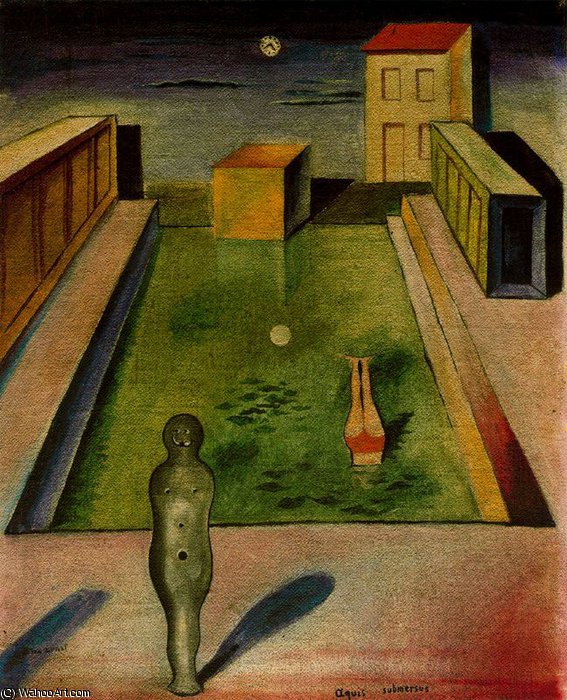
Surrealist Max Ernst’s ‘untitled (8230)’ captures an enigmatic urban tableau featuring a solitary man contemplating a ball amidst architectural surroundings—a testament to Dada and Surrealism's exploration of subconscious imagery, inviting you to experience this captivating artwork.

¡Explora el mundo surrealista de Max Ernst (1891-1976), un pionero del Dada y el Surrealismo! Descubre sus innovadoras técnicas de frottage, collages y pinturas oníricas con aves, paisajes y temas psicológicos. #MaxErnst #Surrealismo #Dada

Giclée / Impresión de arte

Impresión giclée o en lienzo de calidad de museo con producción rápida y opciones de acabado flexibles.

P118B $10
P118H $10
P118W $10
P438Z $10
P508JH $12
P508YH $12
P805H $10
P805Z $10
P919BZ $10
P919G $10
P919XJ $10
P959ZH $10
P968JZ $12
W106C $8
W218G $10
W218JH $8
W218Y $10
W307PJ $10
W316G $10
W316PJ $8
W316Y $10
W398PJ $8
W4111J $10
W500HY $15
W500JH $15
W692G $12
W849H $8
W940BG $15
W953PJ $8

Standard
custom
CM
INCH

Elija entre nuestros tamaños predefinidos que respetan las proporciones originales de la obra.

ancho
altura

Puede introducir sus propias dimensiones para adaptarse a un marco o espacio específico. Si el tamaño seleccionado no coincide con las proporciones de la imagen original, recortaremos la obra de arte o extenderemos la imagen con un borde con efecto espejo o de color sólido. Se enviará una maqueta digital para su aprobación antes de que comience la producción.
Tenga en cuenta que la vista previa en pantalla no refleja el recorte o la extensión real. Solo la maqueta mostrará con precisión la composición final.
Aunque existen tamaños personalizados, recomendamos seleccionar una dimensión de la lista predefinida para preservar las proporciones originales.

Entrega mundial () en 2 semanas en lugar de las 4/5 semanas estándar. (2 julio)

why_choose_icon
Envío exprés gratuito a todo el mundo
why_choose_icon
Lienzo de lino de alta calidad
why_choose_icon
Seguro de envío total
why_choose_icon
Garantía de reembolso de impuestos aduaneros
why_choose_icon
Garantía de fidelidad de color
why_choose_icon
Política de devolución de 60 días (solo por defectos)
why_choose_icon
Garantía de devolución del 100% del dinero
why_choose_icon
Descuento por pedido múltiple

Precio total

-

reproduction

untitled (8230)

Giclée / Impresión de arte

Tamaño de la reproducción

-

Precio total final

-

Datos clave

  • Artist: Max Ernst
  • Artistic style: Surrealism
  • Movement: Surrealism
  • Subject or theme: Man by a pool with ball
  • Title: untitled (8230)

Test de arte

Solo hay una respuesta correcta para cada pregunta.

Pregunta 1:
What artistic movement is Max Ernst most closely associated with?
Pregunta 2:
The scene described in the artwork has an overall feel that suggests what kind of setting?
Pregunta 3:
Which element is central to the composition, drawing the viewer's eye near the center of the image?
Pregunta 4:
Max Ernst's early academic studies were broad, encompassing fields such as philosophy and literature. This suggests his art was deeply informed by:
Pregunta 5:
The presence of multiple figures in the background, along with objects like vases, contributes to the painting's overall mood by creating a sense of:

Descripción de la obra

The Enigmatic Stillness of Surreal Encounter

To stand before this untitled work by Max Ernst is to step across a threshold into a dreamscape rendered with meticulous, yet unsettling, grace. The composition immediately arrests the viewer's gaze, drawing us into an ambiguous moment suspended between action and contemplation. At its heart lies a tranquil pool of water, a classic surrealist motif that often mirrors the subconscious mind—deep, reflective, and capable of holding untold secrets. A solitary man stands near this liquid mirror, his posture suggesting a pause, a breath taken just before an inevitable interaction with the floating ball within the depths. It is a tableau vivant built from psychological tension.

A Tapestry Woven by Surrealist Vision

Max Ernst, a pioneer whose career spanned Dadaism and the height of Surrealism, never painted merely what he saw; he painted what he felt in the echoing chambers of his own mind. This painting embodies that spirit—a refusal to adhere to the logic of the everyday. The backdrop, hinting at an urban environment with its structured buildings, clashes beautifully with the dreamlike quality of the foreground. Notice the peripheral figures: they are present, yet indistinct, observers caught within the periphery of the main action. These background elements, alongside the strategically placed vases, function less as mere decoration and more as anchors to a reality that is simultaneously real and utterly imagined. Ernst invites us not just to look, but to question the very nature of what we perceive.

Symbolism in Water and Object

The symbolism here is rich for the discerning collector. The water itself has always been a potent symbol—of rebirth, emotion, and the unknown depths of self-knowledge. The ball, floating upon its surface, acts as a focal point of potential energy; it represents an object of desire, a challenge, or perhaps even a lost memory waiting to be retrieved. Consider the interplay between the man and this sphere: is he contemplating play, or confronting something unavoidable? Ernst masterfully uses these simple objects—the ball, the water, the figures—to construct profound philosophical questions about human interaction, isolation, and the nature of chance encounters in life.

Technique and Emotional Resonance for Your Space

For those considering bringing this evocative piece into your home or gallery, understanding its texture is key. While the original technique speaks to Ernst's experimental mastery—a blend of meticulous detail with dreamlike fluidity—the reproduction captures that essential *mood*. The interplay between the solid architecture and the liquid mystery provides a perfect counterpoint for interior design; it adds intellectual depth without overwhelming a room. This artwork doesn't just decorate a wall; it catalyzes conversation. It whispers tales of psychological exploration, making it an ideal centerpiece for a sophisticated collector or a designer aiming to infuse a space with artistic narrative and profound contemplation.

Obras similares


Biografía del artista

Max Ernst: Una Vida en el Surrealismo

Juventud y Educación

  • Nacido: 1 de abril de 1891, en Brühl, Alemania.
  • El padre de Ernst, Philipp Ernst, era maestro de sordos y pintor aficionado, fomentando el interés temprano de Max por el arte.
  • Estudió filosofía, historia del arte, literatura, psicología y psiquiatría en la Universidad de Bonn desde 1909.
  • Esta diversa formación académica influyó profundamente en sus posteriores exploraciones artísticas.

Desarrollo Artístico e Influencias

  • Un momento decisivo fue la exposición Sonderbund en Colonia (1912), donde conoció obras de Pablo Picasso, Vincent van Gogh, y Paul Gauguin.
  • En 1914, conoció a Hans Arp, comenzando una amistad que duró toda la vida e influyó significativamente en su trayectoria artística.
  • La Primera Guerra Mundial impactó profundamente a Ernst; sus experiencias como soldado llevaron al desencanto y a una visión crítica de la sociedad.
  • Se sintió influenciado por las obras de Sigmund Freud, explorando temas de la mente inconsciente en su arte.

Dada y Surrealismo

  • Ernst se convirtió en una figura clave del grupo Dada de Colonia después de la Primera Guerra Mundial, rechazando las convenciones artísticas tradicionales.
  • Pionero en técnicas innovadoras como frottage (frotar lápiz sobre superficies texturizadas) y grattage (raspar pintura para revelar capas subyacentes).
  • En la década de 1920, se unió al movimiento Surrealista en París, colaborando con artistas como Paul Éluard.
  • Su obra durante este período exploró imágenes oníricas y temas psicológicos.

Obras Principales y Técnicas

  • Frottage: Una técnica utilizada para crear texturas e imágenes inesperadas, ejemplificada en muchas de sus obras.
  • Collage: Ernst empleó con frecuencia el collage, combinando elementos dispares para crear composiciones surrealistas.
  • Obras Notables:
    • La Ciudad Entera
    • Euclides
    • De Esto Ninguno Debería Saber
    • Bosque y Paloma
  • Sus pinturas a menudo presentan imágenes simbólicas, incluyendo pájaros (particularmente su alter ego Loplop), paisajes y yuxtaposiciones inquietantes.

Vida Tardía y Legado

  • Ernst se trasladó a Estados Unidos durante la Segunda Guerra Mundial, continuando pintando y experimentando con nuevas técnicas.
  • Regresó a Francia después de la guerra y permaneció activo hasta su muerte el 1 de abril de 1976, en París.
  • Significado Histórico: Las contribuciones de Max Ernst a Dada y Surrealismo fueron innovadoras. Desafió las normas artísticas, exploró la mente subconsciente e inventó técnicas innovadoras que continúan inspirando a los artistas de hoy en día.
  • Sigue siendo una de las figuras más importantes e influyentes del arte del siglo XX.


Max Ernst

Max Ernst

1891 - 1976 , Alemania

Datos clave

  • Artistas Influenciados: ['Muchos artistas posteriores']
  • Artistas Que Influyeron:
    • Pablo Picasso
    • Vincent van Gogh
    • Paul Gauguin
    • Sigmund Freud
  • Fecha De Muerte: 1 de abril de 1976
  • Fecha De Nacimiento: 1 de abril de 1891
  • Lugar De Nacimiento: Brühl, Alemania
  • Movimiento Artístico: Dadaísmo y Surrealismo
  • Nacionalidad: Alemán/Americano/Francés
  • Nombre Completo: Max Ernst
  • Obras Notables:
    • La Ciudad Entera
    • Euclides
    • Bosque y Paloma
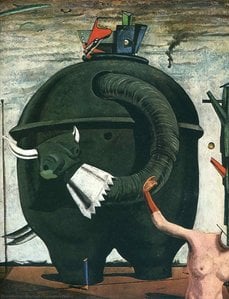
    • El Elefante de Célebes
Explore obras de arte organizadas por temas, estilos y características.