La obra de arte que se muestra en esta página está protegida por las leyes de propiedad intelectual, lo que significa que no podemos crear ni vender legalmente una reproducción idéntica. Esta protección se hace cumplir en virtud de acuerdos internacionales como el Convenio de Berna y por las leyes nacionales, incluidas aquellas establecidas por el Ley de derechos de autor de los EE. UU. - Título 17.
Como una alternativa respetuosa y legal, ofrecemos obras de arte personalizadas y pintadas a mano inspiradas en la original. Nuestros expertos y profesionales del arte estudian cuidadosamente el estilo, el sentimiento y la esencia artística de la obra original para crear una pieza nueva y única que evoque la misma sensación, siendo al mismo tiempo una creación original por derecho propio.
Este método cumple plenamente con las normativas de derechos de autor, ya que no implica la copia ni la duplicación de la obra protegida. En su lugar, se trata de una reinterpretación creativa: una nueva pintura influenciada por la original, pero que no es idéntica a ella.

Óleo sobre lienzo pintado a mano en el tamaño y marco de su elección, realizado por encargo por nuestros artistas. ( Cambiar a formato impreso
Ver versión en imagen digital)
Elija entre nuestros tamaños predefinidos que respetan las proporciones originales de la obra.
Type the width and the height you need, to fit your frame or your wall. This is hand-painted, so for a size with a different shape the artist can paint a bit more around the picture, or cut a bit — you choose. We send you a digital mockup to approve before the painting starts. The picture shown on this page does not show the real result — only the mockup does.
Envío a todo el mundo () en 3-4 semanas en lugar de las 5 semanas estándar. (14 octubre). Sin comprometer la calidad.
untitled (2967)
Tamaño de la reproducción
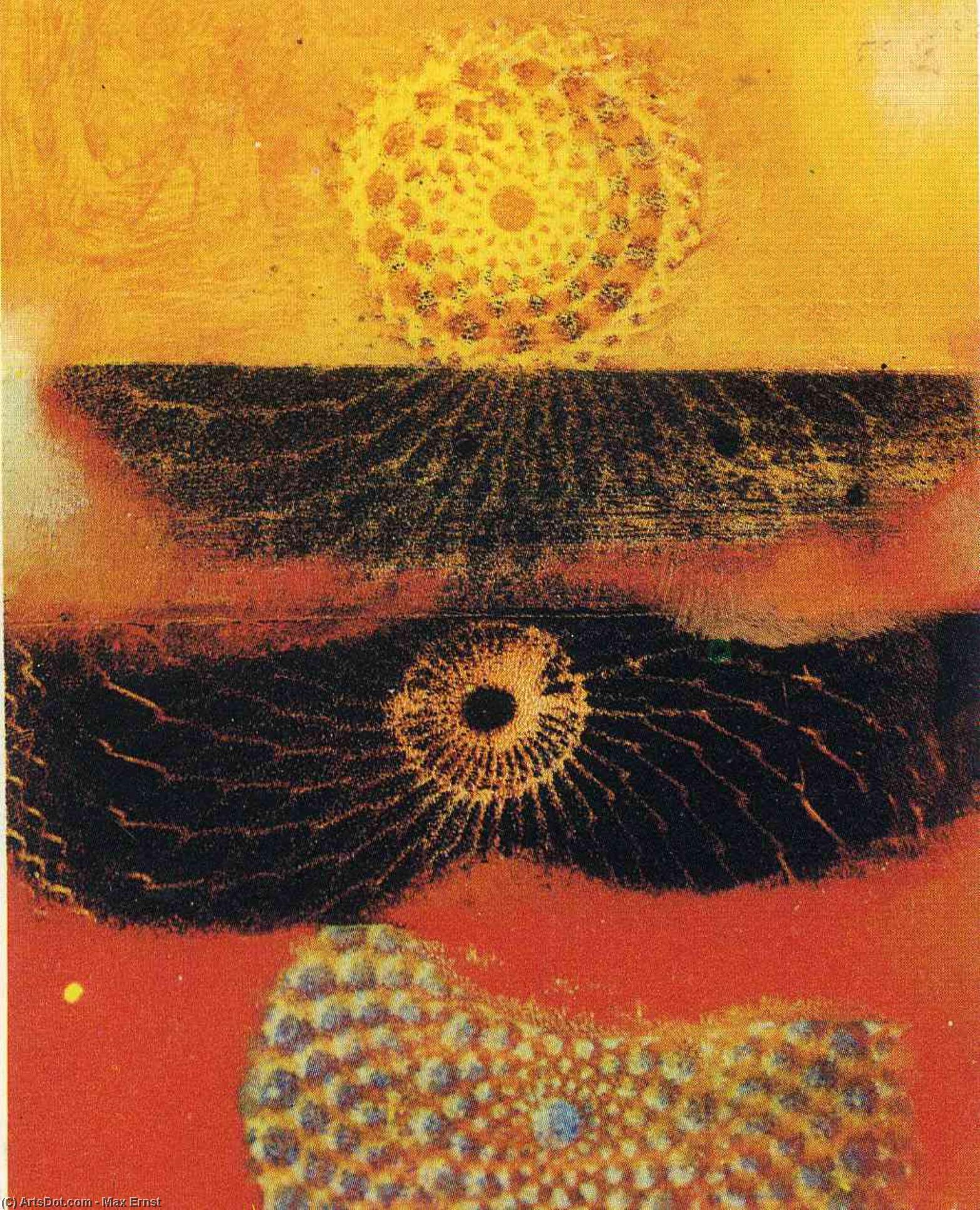
Max Ernst’s “Untitled (2967)” is not merely a depiction of a sun; it’s an immersion into the subconscious, a visual echo of the anxieties and wonders that defined the Surrealist movement. Painted by one of the 20th century's most influential artists, this work embodies Ernst’s lifelong fascination with dreams, mythology, and the unsettling beauty of the unseen. The painting immediately draws the eye to its central vortex – a colossal black hole rendered in stark black against a vibrant, almost hallucinatory, yellow backdrop. This isn’t a simple representation of celestial bodies; it's an exploration of void, of absence, and perhaps, of the unknowable depths within ourselves.
The inclusion of a bird, soaring towards the central sun, adds another layer of complexity to this enigmatic work. The bird can be interpreted as a symbol of aspiration, perhaps even a desperate attempt to reach for enlightenment or understanding within the face of overwhelming darkness. The sun itself, rendered as a black hole, is profoundly unsettling. It represents not just light and warmth but also the potential for destruction, oblivion, and the infinite unknown. This duality – attraction and repulsion – is central to the Surrealist project: embracing both beauty and terror.
"Untitled (2967)" possesses a powerful emotional resonance that continues to captivate viewers today. It’s a painting that demands contemplation, inviting us to confront our own fears, desires, and the mysteries of existence. The work's unsettling beauty taps into a primal sense of wonder and curiosity, mirroring the human impulse to explore the boundaries of perception and understanding. This reproduction offers an opportunity to bring this profound artwork into your space, allowing its evocative imagery to stimulate thought and inspire contemplation.
El ambiente general de "untitled (2967)" de Max Ernst es Mystical. Esta atmósfera describe la esencia general de la obra.
La guía de "untitled (2967)" es la página Guía de la obra: una ficha imprimible que muestra la pieza con su pie de foto, línea de crédito y tabla de identidad (artista, fechas, técnica, tamaño original, colección).
"untitled (2967)" fue creada por Max Ernst. La información en esta página describe la obra original de Max Ernst.
1891 - 1976 , Alemania