Vista previa Vista previa en RA Cambiar a formato impreso Ver versión en imagen digital Compartir
Ver detalles Guía Añadir a favoritos Descargar Ver artículos similares Radiografía Presentación de diapositivas Estadísticas

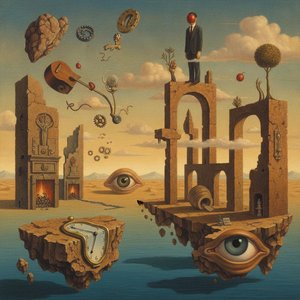
untitled (2316)

A hauntingly beautiful descent into a dreamscape featuring a plunging figure by Surrealist master Max Ernst captures the profound anxieties of the WWII era and invites you to explore this enigmatic psychological masterpiece.

¡Explora el mundo surrealista de Max Ernst (1891-1976), un pionero del Dada y el Surrealismo! Descubre sus innovadoras técnicas de frottage, collages y pinturas oníricas con aves, paisajes y temas psicológicos. #MaxErnst #Surrealismo #Dada

La obra de arte que se muestra en esta página está protegida por las leyes de propiedad intelectual, lo que significa que no podemos crear ni vender legalmente una reproducción idéntica. Esta protección se hace cumplir en virtud de acuerdos internacionales como el Convenio de Berna y por las leyes nacionales, incluidas aquellas establecidas por el Ley de derechos de autor de los EE. UU. - Título 17.

Como una alternativa respetuosa y legal, ofrecemos obras de arte personalizadas y pintadas a mano inspiradas en la original. Nuestros expertos y profesionales del arte estudian cuidadosamente el estilo, el sentimiento y la esencia artística de la obra original para crear una pieza nueva y única que evoque la misma sensación, siendo al mismo tiempo una creación original por derecho propio.

Este método cumple plenamente con las normativas de derechos de autor, ya que no implica la copia ni la duplicación de la obra protegida. En su lugar, se trata de una reinterpretación creativa: una nueva pintura influenciada por la original, pero que no es idéntica a ella.

Reproducción al óleo hecha a mano

Óleo sobre lienzo pintado a mano en el tamaño y marco de su elección, realizado por encargo por nuestros artistas. ( Cambiar a formato impreso Ver versión en imagen digital)

Corner sample of the P118B picture frame: poliestireno moldeado, 5 cm wide and 3 cm thick
P118B 10
Corner sample of the P118H picture frame: poliestireno moldeado, 5 cm wide and 3 cm thick
P118H 10
Corner sample of the P118W picture frame: poliestireno moldeado, 5 cm wide and 3 cm thick
P118W 10
Corner sample of the P438Z picture frame: poliestireno moldeado, 5.5 cm wide and 3.5 cm thick
P438Z 10
Corner sample of the P508JH picture frame: poliestireno moldeado, 7 cm wide and 3.5 cm thick
P508JH 12
Corner sample of the P508YH picture frame: poliestireno moldeado, 7 cm wide and 3.5 cm thick
P508YH 12
Corner sample of the P805H picture frame: poliestireno moldeado, 5 cm wide and 3.5 cm thick
P805H 10
Corner sample of the P805Z picture frame: poliestireno moldeado, 5 cm wide and 3.5 cm thick
P805Z 10
Corner sample of the P919BZ picture frame: poliestireno moldeado, 7 cm wide and 3.5 cm thick
P919BZ 10
Corner sample of the P919G picture frame: poliestireno moldeado, 7 cm wide and 3.5 cm thick
P919G 10
Corner sample of the P919XJ picture frame: poliestireno moldeado, 7 cm wide and 3.5 cm thick
P919XJ 10
Corner sample of the P959ZH picture frame: poliestireno moldeado, 5 cm wide and 3 cm thick
P959ZH 10
Corner sample of the P968JZ picture frame: poliestireno moldeado, 6 cm wide and 4 cm thick
P968JZ 12
Corner sample of the W106C picture frame: madera maciza, 5 cm wide and 3 cm thick
W106C 8
Corner sample of the W218G picture frame: madera maciza, 5 cm wide and 3 cm thick
W218G 10
Corner sample of the W218JH picture frame: madera maciza, 5 cm wide and 3 cm thick
W218JH 8
Corner sample of the W218Y picture frame: madera maciza, 5 cm wide and 3 cm thick
W218Y 10
Corner sample of the W307PJ picture frame: madera maciza, 6 cm wide and 3 cm thick
W307PJ 10
Corner sample of the W316G picture frame: madera maciza, 6 cm wide and 3 cm thick
W316G 10
Corner sample of the W316PJ picture frame: madera maciza, 6 cm wide and 3 cm thick
W316PJ 8
Corner sample of the W316Y picture frame: madera maciza, 6 cm wide and 3 cm thick
W316Y 10
Corner sample of the W398PJ picture frame: madera maciza, 5 cm wide and 3 cm thick
W398PJ 8
Corner sample of the W4111J picture frame: madera maciza, 6.5 cm wide and 3.5 cm thick
W4111J 10
Corner sample of the W500HY picture frame: madera maciza, 7 cm wide and 5 cm thick
W500HY 15
Corner sample of the W500JH picture frame: madera maciza, 7 cm wide and 5 cm thick
W500JH 15
Corner sample of the W692G picture frame: madera maciza, 8 cm wide and 4 cm thick
W692G 12
Corner sample of the W849H picture frame: madera maciza, 5 cm wide and 3 cm thick
W849H 8
Corner sample of the W940BG picture frame: madera maciza, 7.5 cm wide and 4.5 cm thick
W940BG 15
Corner sample of the W953PJ picture frame: madera maciza, 6 cm wide and 3.5 cm thick
W953PJ 8

Estándar
personalizado
CM
INCH

Elija entre nuestros tamaños predefinidos que respetan las proporciones originales de la obra.

ancho
altura

Puede ingresar sus propias dimensiones para adaptarse a un marco o espacio específico. Si el tamaño seleccionado no coincide con las proporciones de la imagen original, recortaremos la obra o extenderemos la pintura con elementos adicionales pintados a mano. Se le enviará una maqueta digital para su aprobación antes de comenzar la producción.
Tenga en cuenta que la vista previa en pantalla no refleja el recorte o la extensión reales. Solo la maqueta mostrará con precisión la composición final.
Si bien existen tamaños personalizados, recomendamos seleccionar una dimensión de la lista predefinida para preservar las proporciones originales.

Ejemplos de lo que se puede personalizar: Reemplace el rostro con una foto del cliente; Agregue una mascota (por ejemplo, cambie un gato por un perro); Incluya un mensaje oculto en el fondo; Cambie el paisaje o los elementos del fondo.
Tras realizar el pedido, el equipo de WahooArt.com enviará un correo electrónico al cliente para solicitar instrucciones y proporcionarle una vista previa del boceto.

Envío a todo el mundo () en 3-4 semanas en lugar de las 5 semanas estándar. (13 octubre). Sin comprometer la calidad.

Envío exprés gratuito a todo el mundo
Lienzo de lino de alta calidad
Seguro de envío completo
Garantía de reembolso de impuestos aduaneros
Garantía de fidelidad cromática exacta
Política de devolución de 100 días (solo por defectos)
Garantía de devolución del 100% del dinero
Oferta por volumen

Precio total

€ 235

untitled (2316)

Técnica de reproducción

Tamaño de la reproducción

-

Precio total

€ 235

Datos clave

  • Notable elements or techniques: Frottage, Grattage
  • Movement: Surrealism
  • Artistic style: Dreamlike
  • Medium: Painting
  • Location: Private Collection

Cuestionario de arte

Cada pregunta tiene una única respuesta correcta.

Pregunta 1:
Which artistic techniques did Max Ernst employ to achieve his distinctive aesthetic in this work?
Pregunta 2:
During which historical period was 'untitled (2316)' painted?
Pregunta 3:
What does the painting depict regarding the solitary figure?
Pregunta 4:
Where was Max Ernst born?
Pregunta 5:
What is the subject of the two shadowy figures located at the cliff edge?

A Descent into the Subconscious: The Enigma of Max Ernst’s Untitled (2316)

In the hauntingly beautiful tableau of Max Ernst’s “untitled (2316),” viewers are invited to step through a portal into a realm where logic dissolves and the boundaries of the psyche blur. Painted during the tumultuous years between 1940 and 1945, this Surrealist masterpiece serves as a profound exploration of the subconscious mind. The painting captures a dramatic, singular moment: a solitary figure plunging downwards into deep, dark water. This descent is immediately evocative of vulnerability and surrender, a visceral image that strikes at the heart of human anxiety. Above this falling form, two shadowy figures cling precariously to a rocky cliff edge, their presence suggesting a desperate, perhaps futile, attempt at resistance against an overwhelming and inevitable force.

The emotional weight of the piece is inextricably linked to its historical moment. Created amidst the global upheaval of World War II, the artwork reflects the pervasive fears of destruction and mortality that defined the era. Yet, beyond the historical tension, Ernst utilizes the language of Surrealism to delve into deeper psychological truths. Influenced by the psychoanalytic theories of Sigmund Freud, Ernst crafts a scene that functions as a dreamscape, where the water represents not just a physical element, but the fluid, mysterious depths of the human experience and the transformative power of confronting one's own fears.

Mastery of Texture and Technique

What distinguishes “untitled (2316)” is Ernst’s rejection of traditional, smooth painting methods in favor of a tactile, experimental approach. He employs a masterful blend of frottage and grattage to achieve an aesthetic that feels both ethereal and grounded in physical reality. Through frottage—the process of rubbing textures onto a surface—Ernst generates random, organic patterns that provide the compositional inspiration for his dreamlike landscapes. This is complemented by grattage, where paint is scraped across the canvas to expose underlying layers and create evocative, weathered effects.

This deliberate manipulation of texture adds a layer of physical depth to the surreal imagery, making the rocky landscape and the churning water feel tangibly present. For the discerning collector or interior designer, a high-quality reproduction of this work offers more than just visual interest; it provides a sophisticated conversation piece. The interplay of light, shadow, and complex textures brings an arresting energy to any contemporary space, serving as an enduring emblem of artistic innovation and a window into the profound mysteries of the human soul.

Preguntas y respuestas

¿Los colores de "untitled (2316)" se ven intensos o suaves?

La intensidad cromática de "untitled (2316)" es Balanced. La intensidad describe la fuerza con la que se perciben los colores.

¿De qué está hecho "untitled (2316)" y en qué estilo se encuentra?

En "untitled (2316)", la técnica de Oil On Canvas se encuentra con el movimiento Surrealist Movement.

¿Quién creó "untitled (2316)" y a qué estilo pertenece?

Max Ernst creó "untitled (2316)" dentro del movimiento Surrealist Movement.

¿Es "untitled (2316)" de Max Ernst una obra de arte reconocida?

El nivel de popularidad registrado para "untitled (2316)" de Max Ernst es Iconic.

¿Qué tipo de obra de arte es "untitled (2316)" de Max Ernst?

"untitled (2316)" de Max Ernst está clasificada como WallArt. La categoría describe el tipo de obra de arte que es el original.

¿Cómo se sitúa históricamente "untitled (2316)"?

Históricamente, "untitled (2316)" es una obra Surrealist Movement de la más amplia era Modern.

¿Qué estado de ánimo y emoción expresa "untitled (2316)" de Max Ernst?

El estado de ánimo capturado en "untitled (2316)" de Max Ernst es Dramatic, y su tono emocional es Dramatic.

¿Puedo pedir una reproducción al óleo de "untitled (2316)"?

Las copias pintadas a mano de "untitled (2316)" de Max Ernst se venden en este sitio web: una reproducción al óleo pintada a mano sobre lienzo de lino, las cuales pueden solicitarse desde esta página.


Biografía del artista

Max Ernst: Una Vida en el Surrealismo

Juventud y Educación

  • Nacido: 1 de abril de 1891, en Brühl, Alemania.
  • El padre de Ernst, Philipp Ernst, era maestro de sordos y pintor aficionado, fomentando el interés temprano de Max por el arte.
  • Estudió filosofía, historia del arte, literatura, psicología y psiquiatría en la Universidad de Bonn desde 1909.
  • Esta diversa formación académica influyó profundamente en sus posteriores exploraciones artísticas.

Desarrollo Artístico e Influencias

  • Un momento decisivo fue la exposición Sonderbund en Colonia (1912), donde conoció obras de Pablo Picasso, Vincent van Gogh, y Paul Gauguin.
  • En 1914, conoció a Hans Arp, comenzando una amistad que duró toda la vida e influyó significativamente en su trayectoria artística.
  • La Primera Guerra Mundial impactó profundamente a Ernst; sus experiencias como soldado llevaron al desencanto y a una visión crítica de la sociedad.
  • Se sintió influenciado por las obras de Sigmund Freud, explorando temas de la mente inconsciente en su arte.

Dada y Surrealismo

  • Ernst se convirtió en una figura clave del grupo Dada de Colonia después de la Primera Guerra Mundial, rechazando las convenciones artísticas tradicionales.
  • Pionero en técnicas innovadoras como frottage (frotar lápiz sobre superficies texturizadas) y grattage (raspar pintura para revelar capas subyacentes).
  • En la década de 1920, se unió al movimiento Surrealista en París, colaborando con artistas como Paul Éluard.
  • Su obra durante este período exploró imágenes oníricas y temas psicológicos.

Obras Principales y Técnicas

  • Frottage: Una técnica utilizada para crear texturas e imágenes inesperadas, ejemplificada en muchas de sus obras.
  • Collage: Ernst empleó con frecuencia el collage, combinando elementos dispares para crear composiciones surrealistas.
  • Obras Notables:
    • La Ciudad Entera
    • Euclides
    • De Esto Ninguno Debería Saber
    • Bosque y Paloma
  • Sus pinturas a menudo presentan imágenes simbólicas, incluyendo pájaros (particularmente su alter ego Loplop), paisajes y yuxtaposiciones inquietantes.

Vida Tardía y Legado

  • Ernst se trasladó a Estados Unidos durante la Segunda Guerra Mundial, continuando pintando y experimentando con nuevas técnicas.
  • Regresó a Francia después de la guerra y permaneció activo hasta su muerte el 1 de abril de 1976, en París.
  • Significado Histórico: Las contribuciones de Max Ernst a Dada y Surrealismo fueron innovadoras. Desafió las normas artísticas, exploró la mente subconsciente e inventó técnicas innovadoras que continúan inspirando a los artistas de hoy en día.
  • Sigue siendo una de las figuras más importantes e influyentes del arte del siglo XX.

Max Ernst

Max Ernst

1891 - 1976 , Alemania

Datos clave

  • Artistas Influenciados: ['Muchos artistas posteriores']
  • Artistas Que Influyeron:
    • Pablo Picasso
    • Vincent van Gogh
    • Paul Gauguin
    • Sigmund Freud
  • Fecha De Muerte: 1 de abril de 1976
  • Fecha De Nacimiento: 1 de abril de 1891
  • Lugar De Nacimiento: Brühl, Alemania
  • Movimiento Artístico: Dadaísmo y Surrealismo
  • Nacionalidad: Alemán/Americano/Francés
  • Nombre Completo: Max Ernst
  • Obras Notables:
    • La Ciudad Entera
    • Euclides
    • Bosque y Paloma
    • El Elefante de Célebes
Explore obras de arte organizadas por temas, estilos y características.