

La obra de arte que se muestra en esta página está protegida por las leyes de propiedad intelectual, lo que significa que no podemos crear ni vender legalmente una reproducción idéntica. Esta protección se hace cumplir en virtud de acuerdos internacionales como el Convenio de Berna y por las leyes nacionales, incluidas aquellas establecidas por el Ley de derechos de autor de los EE. UU. - Título 17.
Este método cumple plenamente con las normativas de derechos de autor, ya que no implica la copia ni la duplicación de la obra protegida. En su lugar, se trata de una reinterpretación creativa: una nueva pintura influenciada por la original, pero que no es idéntica a ella.
Impresiones giclée o en lienzo de calidad de museo con producción rápida y opciones de acabado flexibles. ( Comprar pintura hecha a mano Cambiar a imagen digital)





























Elija entre nuestros tamaños predefinidos que respetan las proporciones originales de la obra.

Introduzca el ancho y el alto que necesite para adaptarse a su marco o pared. Una impresión solo puede recortarse, nunca hacerse más grande que la imagen original, por lo que un tamaño con una forma distinta perderá parte de la obra. Le enviaremos una maqueta digital para su aprobación antes de realizar cualquier impresión. La imagen que se muestra en esta página no refleja el recorte real; solo la maqueta lo hace.
Envío a todo el mundo () en 2 semanas en lugar de las 4/5 semanas estándar. (9 noviembre)
Landscape 1
Dimensiones de la reproducción
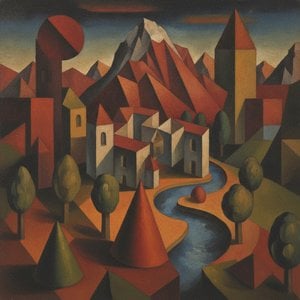
Max Ernst’s “Landscape,” painted in 1957, isn't merely a depiction of a rural scene; it’s an embodiment of the core tenets of Surrealist art – a deliberate disruption of rational thought and a fascination with the subconscious mind. This striking piece showcases Ernst’s signature blend of Cubism and Dada influences, resulting in an image that feels both meticulously crafted and profoundly unsettling.
Beyond its visual appeal lies a rich tapestry of symbolic references. Ernst’s use of geometric shapes—particularly angular rocks and abstracted tree trunks—reflects the Surrealists' preoccupation with dismantling traditional representations. These forms aren’t meant to mirror reality but rather to evoke psychological states, mirroring the fragmented perceptions inherent in dreams.
Painted during the height of Surrealism’s influence—a movement born from disillusionment with postwar Europe— “Landscape” speaks to a broader philosophical concern: the exploration of irrationality and the confrontation with anxieties surrounding societal change. Ernst, deeply impacted by Freud’s psychoanalytic theories, sought to liberate art from the constraints of logic, prioritizing intuition and dreamlike imagery.
"Landscape" transcends its formal elements to convey a profound sense of solitude and wonder. It captures the quiet contemplation of someone encountering something extraordinary—a hidden beauty or an unspoken truth—within the seemingly mundane expanse of nature. Ernst’s enduring contribution to art history lies in his unwavering commitment to artistic experimentation and his courageous exploration of the human psyche, cementing “Landscape” as a cornerstone of Surrealist aesthetics.
"Landscape 1" de Max Ernst se clasifica como Recognized y pertenece al movimiento Surrealist Landscape.
Existe una página de Estadísticas para "Landscape 1". En ella se detallan las visitas mensuales de la obra y de otras piezas del artista, con desgloses por país e idioma.
El color dominante de "Landscape 1" de Max Ernst es Putty (#d0d1a8).

Max Ernst llegó al mundo el 2 de abril de 1891 en Brühl, Alemania. Se crió en el seno de una familia católica de clase media, siendo el tercero de nueve hermanos. Su crianza estuvo marcada por la atmósfera tranquila y disciplinada de su hogar, donde su padre, Philipp, se desempeñaba como maestro de sordos. Philipp era también un pintor aficionado, y fue a través de él que el joven tuvo su primer encuentro con las herramientas y la práctica del arte.
Hacia 1909, mientras era estudiante en la Universidad de Bonn, Max Ernst comenzó a pintar. Este periodo temprano de su vida estuvo caracterizado por un interés creciente por el mundo visual, aunque su camino acabaría expandiéndose mucho más allá del lienzo. Se convirtió en un hombre de múltiples medios, trabajando como pintor, escultor, grabador, artista gráfico y poeta. Sus primeros años no trataron tanto de encontrar una dirección única, sino de una curiosidad inquieta sobre cómo representar el mundo y la mente.
El camino de Max Ernst hacia el arte estuvo moldeado por una profunda curiosidad sobre la mente humana y las estructuras del pensamiento. Durante su estancia en la Universidad de Bonn, no se centró únicamente en el pincel y el lienzo; por el contrario, dedicó su tiempo a estudiar filosofía, historia del arte, literatura, psicología y psiquiatría. Estas disciplinas le proporcionaron un marco para comprender el mundo que trascendía la mera estética. Le interesaban las razones subyacentes de la existencia, buscando entender la mecánica de la psique y la historia de la expresión humana. Esta base intelectual le permitiría, más tarde, superar la representación tradicional y explorar las capas más ocultas e irracionales de la experiencia.
Sus primeros años estuvieron marcados por una creciente conexión con la comunidad artística en Alemania. En 1911, pasó a formar parte del grupo Die Rheinischen Expressionisten. Este periodo de su vida se definió por la búsqueda de un nuevo lenguaje visual. Un punto de inflexión crucial ocurrió en 1912, cuando visitó la exposición Sonderbund en Colonia. El encuentro con las obras de Pablo Picasso, Vincent van Gogh y Paul Gauguin transformó su perspectiva. Estos artistas le ofrecieron una vía para romper con las normas establecidas. Se sintió atraído por sus enfoques, lo que le ayudó a trazar el rumbo hacia la experimentación radical que definiría su carrera.
El estallido de la Gran Guerra fracturó fundamentalmente la trayectoria de la vida de Max Ernst. Fue reclutado para el servicio militar, pasando cuatro años como soldado en las líneas del frente. Al desempeñarse como artillero, se enfrentó a las brutales realidades tanto del frente oriental como del occidental. La experiencia fue mucho más que una mera interrupción de sus estudios; supuso un profundo choque psicológico. El caos y la destrucción que presenció lo dejaron profundamente conmocionado, fomentando un escepticismo duradero hacia el mundo moderno y sus órdenes establecidas.
El trauma del conflicto fue tan absoluto que pareció borrar su antiguo ser. En su propia autobiografía, escribió sobre esta muerte interna con una claridad asombrosa, afirmando que Max Ernst murió el 1 de agosto de 1914. Este sentimiento de pérdida y la desilusión que le siguió lo impulsarían, eventualmente, hacia las expresiones radicales y antirracionales de los movimientos que vendrían después.
El caos de la Gran Guerra dejó en Max Ernst un profundo escepticismo hacia las estructuras del mundo moderno. Para 1919, este desencanto encontró su voz en Colonia, donde unió fuerzas con Hans Arp y Johannes Theodor Baargeld para fundar el grupo Dada de Colonia. Fue un período de creación intensa e inquieta. Junto a sus nuevos compañeros, ayudó a lanzar revistas efímeras como Der Strom e die Schammade, utilizando la palabra impresa para desafiar los límites de lo que el arte tenía permitido ser. Fue una época de cambios radicales, tanto en su producción creativa como en su vida privada, al casarse con Luise Straus, una estudiante de historia del arte, en 1919.
Durante estos años, Max Ernst comenzó a alejarse de la pintura tradicional, encontrando un nuevo lenguaje en el arte del ensamblaje. Produjo sus primeros collages en 1919, trabajando con fragmentos de imágenes para crear algo completamente distinto a sus partes originales. Un ejemplo temprano y notable de este periodo es Fiat modes, un portafolio de litografías que demostraba su creciente interés por estas composiciones fragmentadas. Estos experimentos no eran meras elecciones estilísticas; eran una forma de navegar por un mundo que ya no se sentía coherente ni racional.
Hacia 1922, la energía inquieta que había alimentado sus años dadaístas encontró un nuevo hogar cuando Max Ernst se trasladó a Francia. Se integró en los círculos intelectuales de París, hallando un sentido de pertenencia entre los surrealistas. Se convirtió en parte de un grupo muy unido liderado por André Breton, un círculo que buscaba cartografiar los territorios extraños e inexplorados de la mente humana. Esta fue una época de intensa colaboración y propósito compartido, donde los límites de lo que el arte podía representar se expandían hacia el reino de los sueños y el inconsciente.
Su presencia en este círculo estuvo marcada por un profundo compromiso con la palabra escrita y la imagen visual. Colaboró con Paul Éluard en la revista Littérature, un proyecto que ayudó a definir el alcance del movimiento. Estos años se caracterizaron por una búsqueda constante de nuevas formas de visualizar lo irracional. En 1924, su curiosidad lo llevó mucho más allá de las calles de París cuando viajó a Indochina, una experiencia que añadió nuevas capas a su cada vez más amplio mundo de visión.
Max Ernst fue un experimentador incansable que buscaba eludir el control de la mente consciente. Con frecuencia, recurría al accidente para hallar su imaginería, lo que le llevó a desarrollar el frottage, un método en el que colocaba papel sobre superficies texturizadas y frotaba con lápiz o carboncillo. Este sencillo acto de frotar permitía que formas inesperadas emergieran de la veta de la madera o de los relieves de una hoja. Expandió esta idea con el grattage, un proceso mediante el cual raspaba la pintura sobre el lienzo para revelar las texturas de los objetos situados debajo. Estos métodos le permitieron crear paisajes que se sentían, a la vez, orgánicos y extraños.
Su interés por lo irracional también lo condujo hacia la decalcomanía. Al presionar la pintura de una superficie a otra, lograba distorsiones oníricas y efectos de capas que parecían haber surgido directamente de un sueño. También fue un maestro del collage, ensamblando cuidadosamente elementos dispares —como ilustraciones científicas o recortes de revistas— en composiciones que desafiaban nuestra percepción de la realidad. Max Ernst no se limitaba a pintar una escena; la construía a partir de fragmentos del mundo que lo rodeaba.
Una extraña y personal fijación con las aves acompañó a Max Ernst a lo largo de su vida. No se trataba de un mero interés por la naturaleza, sino de una preocupación profundamente arraigada que surgió de un recuerdo de su infancia. Recordaba un momento en el que su mascota favorita murió exactamente en el mismo instante en que nacía su hermana menor. Esta coincidencia pareció fundir la idea de la vida y la muerte en su mente, convirtiendo a las aves en símbolos que portaban tanto presagios como misterio. A menudo las veía como criaturas capaces de tender un puente entre la experiencia humana y lo sobrenatural.
Esta fascinación acabó tomando una forma física, casi psicológica, a través de un alter ego freudiano con apariencia de ave al que llamó Loplop. Este personaje era más que un motivo recurrente; era un guía a través de los paisajes de su mente. Loplop hizo su primera aparición formal en su novela de collage de 1929, La Femme 100 Têtes. En esa obra, el ave actuaba como un narrador, guiando al lector a través de una serie de imágenes ensambladas y realidades fragmentadas. A través de Loplop, Max Ernst encontró una forma de personificar los impulsos irracionales del subconsciente, dando un rostro —o un pico— a aquellas partes de sí mismo que desafiaban la lógica.
Las sombras de la Segunda Guerra Mundial terminaron por alcanzar incluso el santuario del artista en Francia. En 1938, el clima político se volvió drásticamente en su contra, y fue internado en el Camp des Milles, cerca de Aix-en-Provence. Este periodo de confinamiento supuso una carga pesada, especialmente cuando el régimen nazi lo designó como un extranjero indeseable. La incertidumbre de su situación creció a medida que la guerra se intensificaba, forzándolo a tomar la decisión de dejar atrás la vida que había construido en Europa.
Un camino hacia la seguridad se abrió gracias a la ayuda de Peggy Guggenheim. En 1941, huyó a Nueva York, llegando a una ciudad que se estaba convirtiendo en un refugio para muchos de sus contemporáneos. Este traslado fue más que un simple cambio de escenario; fue un desplazamiento total. Él y Guggenheim se casaron en 1942, encontrando un sentido de estabilidad el uno en el otro en medio del caos de la época. Durante su estancia en los Estados Unidos, continuó experimentando con sus métodos, hallando nuevas formas de traducir las texturas del subconsciente al lienzo.
Tras años de residir en los Estados Unidos, Max Ernst regresó a París en 1953. Este retorno a sus raíces marcó un periodo de reconocimiento significativo para toda una vida de experimentación constante. En 1954, fue galardonado con el Gran Premio de Pintura en la 27ª Bienal de Venecia. Su presencia en el panorama artístico se mantuvo firme y vibrante, mientras continuaba explorando los límites de su lenguaje visual incluso en sus años de madurez.
Su curiosidad insaciable lo llevó a menudo hacia materiales que evocaban una dualidad entre lo frágil y lo permanente. En 1966, creó un juego de ajedrez de cristal titulado Immortel. Esta obra reflejaba su capacidad para hallar la magia en las propiedades físicas de los objetos, de forma muy similar a las texturas que había pasado décadas descubriendo mediante el frotado y el raspado. Max Ernst permaneció activo en su búsqueda creativa hasta su fallecimiento en París, el 1 de abril de 1976.
Rastrear los vestigios de la imaginación inquieta de Max Ernst requiere un viaje a través de varios de los centros culturales más importantes del mundo. En Venecia, la Colección Peggy Guggenheim alberga piezas que reflejan su profunda conexión con el círculo surrealista. Su presencia también se siente en las salas del Metropolitan Museum of Art, donde sus experimentos con la textura y la forma se preservan para aquellos que estudian las transformaciones de principios del siglo XX.
Los viajeros también pueden encontrarse con su obra en Edimburgo, en la National Galleries of Scotland, cuya colección ofrece la oportunidad de contemplar su visión de cerca. Otros tesoros significativos se encuentran en la Staatsgalerie Stuttgart y en el Tel Aviv Museum of Art, asegurando que su influencia permanezca accesible en distintos continentes. Estas instituciones mantienen vivo su legado físico, permitiéndonos apreciar las superficies reales que él raspó y frotó para hallar su imaginería.

1891 - 1976 , Alemania
Explore the profound evolution of Cubist landscapes. Discover how masters like Braque and Picasso redefined perspective through geometric mastery, transforming nature into an intellectual mosaic of form and light for the discerning modern art collector.
 Ver en contexto
 Enviar
 Compartir
 Detalles
 Guía
Guía

 Descargar
 Similares
 Radiografía
 Presentación de diapositivas
 Preguntas y respuestas
 Estadísticas
 Ver más









 La opción de vidrio solo está disponible en tamaños inferiores a 110 cm.


