Vista previa Vista previa en RA Cambiar a formato impreso Ver versión en imagen digital Compartir
Ver detalles Guía Añadir a favoritos Descargar Ver artículos similares Radiografía Presentación de diapositivas Estadísticas

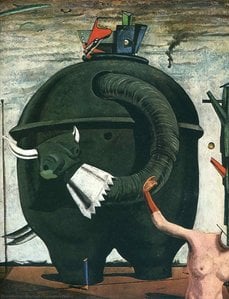
Dadá-Gaugin

Max Ernst’s surreal "Dadá-Gaugin" depicts enigmatic figures within a complex, dreamlike scene reflecting the artist's intellectual and psychological explorations of the early 20th century. Discover this captivating artwork and bring its unique vision home.

¡Explora el mundo surrealista de Max Ernst (1891-1976), un pionero del Dada y el Surrealismo! Descubre sus innovadoras técnicas de frottage, collages y pinturas oníricas con aves, paisajes y temas psicológicos. #MaxErnst #Surrealismo #Dada

La obra de arte que se muestra en esta página está protegida por las leyes de propiedad intelectual, lo que significa que no podemos crear ni vender legalmente una reproducción idéntica. Esta protección se hace cumplir en virtud de acuerdos internacionales como el Convenio de Berna y por las leyes nacionales, incluidas aquellas establecidas por el Ley de derechos de autor de los EE. UU. - Título 17.

Como una alternativa respetuosa y legal, ofrecemos obras de arte personalizadas y pintadas a mano inspiradas en la original. Nuestros expertos y profesionales del arte estudian cuidadosamente el estilo, el sentimiento y la esencia artística de la obra original para crear una pieza nueva y única que evoque la misma sensación, siendo al mismo tiempo una creación original por derecho propio.

Este método cumple plenamente con las normativas de derechos de autor, ya que no implica la copia ni la duplicación de la obra protegida. En su lugar, se trata de una reinterpretación creativa: una nueva pintura influenciada por la original, pero que no es idéntica a ella.

Reproducción al óleo hecha a mano

Óleo sobre lienzo pintado a mano en el tamaño y marco de su elección, realizado por encargo por nuestros artistas. ( Cambiar a formato impreso Ver versión en imagen digital)

Corner sample of the P118B picture frame: moulded polystyrene, 5 cm wide and 3 cm thick
P118B 10
Corner sample of the P118H picture frame: moulded polystyrene, 5 cm wide and 3 cm thick
P118H 10
Corner sample of the P118W picture frame: moulded polystyrene, 5 cm wide and 3 cm thick
P118W 10
Corner sample of the P438Z picture frame: moulded polystyrene, 5.5 cm wide and 3.5 cm thick
P438Z 10
Corner sample of the P508JH picture frame: moulded polystyrene, 7 cm wide and 3.5 cm thick
P508JH 12
Corner sample of the P508YH picture frame: moulded polystyrene, 7 cm wide and 3.5 cm thick
P508YH 12
Corner sample of the P805H picture frame: moulded polystyrene, 5 cm wide and 3.5 cm thick
P805H 10
Corner sample of the P805Z picture frame: moulded polystyrene, 5 cm wide and 3.5 cm thick
P805Z 10
Corner sample of the P919BZ picture frame: moulded polystyrene, 7 cm wide and 3.5 cm thick
P919BZ 10
Corner sample of the P919G picture frame: moulded polystyrene, 7 cm wide and 3.5 cm thick
P919G 10
Corner sample of the P919XJ picture frame: moulded polystyrene, 7 cm wide and 3.5 cm thick
P919XJ 10
Corner sample of the P959ZH picture frame: moulded polystyrene, 5 cm wide and 3 cm thick
P959ZH 10
Corner sample of the P968JZ picture frame: moulded polystyrene, 6 cm wide and 4 cm thick
P968JZ 12
Corner sample of the W106C picture frame: solid wood, 5 cm wide and 3 cm thick
W106C 8
Corner sample of the W218G picture frame: solid wood, 5 cm wide and 3 cm thick
W218G 10
Corner sample of the W218JH picture frame: solid wood, 5 cm wide and 3 cm thick
W218JH 8
Corner sample of the W218Y picture frame: solid wood, 5 cm wide and 3 cm thick
W218Y 10
Corner sample of the W307PJ picture frame: solid wood, 6 cm wide and 3 cm thick
W307PJ 10
Corner sample of the W316G picture frame: solid wood, 6 cm wide and 3 cm thick
W316G 10
Corner sample of the W316PJ picture frame: solid wood, 6 cm wide and 3 cm thick
W316PJ 8
Corner sample of the W316Y picture frame: solid wood, 6 cm wide and 3 cm thick
W316Y 10
Corner sample of the W398PJ picture frame: solid wood, 5 cm wide and 3 cm thick
W398PJ 8
Corner sample of the W4111J picture frame: solid wood, 6.5 cm wide and 3.5 cm thick
W4111J 10
Corner sample of the W500HY picture frame: solid wood, 7 cm wide and 5 cm thick
W500HY 15
Corner sample of the W500JH picture frame: solid wood, 7 cm wide and 5 cm thick
W500JH 15
Corner sample of the W692G picture frame: solid wood, 8 cm wide and 4 cm thick
W692G 12
Corner sample of the W849H picture frame: solid wood, 5 cm wide and 3 cm thick
W849H 8
Corner sample of the W940BG picture frame: solid wood, 7.5 cm wide and 4.5 cm thick
W940BG 15
Corner sample of the W953PJ picture frame: solid wood, 6 cm wide and 3.5 cm thick
W953PJ 8

Estándar
personalizado
CM
INCH

Elija entre nuestros tamaños predefinidos que respetan las proporciones originales de la obra.

ancho
altura

Puede ingresar sus propias dimensiones para adaptarse a un marco o espacio específico. Si el tamaño seleccionado no coincide con las proporciones de la imagen original, recortaremos la obra o extenderemos la pintura con elementos adicionales pintados a mano. Se le enviará una maqueta digital para su aprobación antes de comenzar la producción.
Tenga en cuenta que la vista previa en pantalla no refleja el recorte o la extensión reales. Solo la maqueta mostrará con precisión la composición final.
Si bien existen tamaños personalizados, recomendamos seleccionar una dimensión de la lista predefinida para preservar las proporciones originales.

Ejemplos de lo que se puede personalizar: Reemplace el rostro con una foto del cliente; Agregue una mascota (por ejemplo, cambie un gato por un perro); Incluya un mensaje oculto en el fondo; Cambie el paisaje o los elementos del fondo.
Tras realizar el pedido, el equipo de WahooArt.com enviará un correo electrónico al cliente para solicitar instrucciones y proporcionarle una vista previa del boceto.

Envío a todo el mundo () en 3-4 semanas en lugar de las 5 semanas estándar. (10 octubre). Sin comprometer la calidad.

Envío exprés gratuito a todo el mundo
Lienzo de lino de alta calidad
Seguro de envío completo
Garantía de reembolso de impuestos aduaneros
Garantía de fidelidad cromática exacta
Política de devolución de 100 días (solo por defectos)
Garantía de devolución del 100% del dinero
Oferta por volumen

Precio total

€ 234

Dadá-Gaugin

Técnica de reproducción

Tamaño de la reproducción

-

Precio total

€ 234

Datos clave

  • Movement: Surrealism
  • Artist: Max Ernst
  • Subject or theme: Intrigue, mystery
  • Title: Dadá-Gaugin
  • Artistic style: Complex composition

Unveiling "Dadá-Gaugin": A Surrealist Labyrinth by Max Ernst

Max Ernst’s “Dadá-Gaugin” is not merely a painting; it's an immersion into the fractured psyche of the early 20th century. Executed in a style that seamlessly blends the dreamlike logic of Dada with the evocative symbolism of Gauguin, this work presents a disorienting tableau of figures within a deliberately ambiguous space. The scene unfolds as two men stand poised before a monumental doorway, one drawn into an unseen inner room while the other remains rooted in the present. This initial pairing immediately establishes a tension – a struggle between observation and engagement, perhaps even a confrontation with the unknown.

  • Subject Matter: The painting’s subject matter is deliberately obscure, resisting easy interpretation. It's not a narrative scene in the traditional sense but rather a collection of fragmented experiences rendered visible. The figures themselves are secondary to the overall atmosphere and the unsettling feeling they evoke.
  • Style & Technique: Ernst employs his signature techniques – frottage (rubbing) and decalcomania – to create textures and patterns that contribute to the painting’s dreamlike quality. These processes, often involving chance encounters with materials, introduce an element of spontaneity and unpredictability, mirroring the chaotic nature of the subconscious.
  • Historical Context: “Dadá-Gaugin” was created during a period of profound social and political upheaval following World War I. The Dada movement, born from this disillusionment, rejected logic and reason in favor of irrationality and absurdity. Ernst’s work reflects this spirit, challenging conventional notions of representation and inviting viewers to question their own perceptions.

Decoding the Symbolism: A Journey into the Unconscious

The painting's power lies not just in its visual impact but also in its rich symbolic content. The doorway itself is a potent symbol, representing transition, passage, and perhaps even death – a threshold between conscious awareness and the realm of dreams or the unconscious. The two men before it can be interpreted as archetypes: one representing reason and observation, the other, intuition and imagination. The scattered figures in the background further contribute to this sense of disorientation, suggesting a multitude of perspectives and experiences.

  • The Potted Plant & Decorative Elements: The inclusion of a potted plant and a vase adds an element of domesticity to the scene, yet their presence feels strangely out of place, contributing to the overall sense of unease. These objects could symbolize fertility, life, or perhaps even the artificiality of modern society.
  • Color Palette: Ernst’s use of muted earth tones – browns, greens, and ochres – creates a somber and contemplative mood. The limited color palette enhances the painting's sense of mystery and reinforces its connection to the subconscious.

Max Ernst: A Life Immersed in the Surreal

Born Maximilian Maria Ernst in 1891, Max Ernst’s artistic trajectory was marked by a relentless pursuit of innovation and experimentation. His early years were shaped by his father's influence – a teacher of the deaf who instilled in him both sensitivity and a rebellious spirit. This duality would become a cornerstone of Ernst’s artistic vision, informing his exploration of psychological themes and challenging established aesthetic conventions.

Ernst’s academic background—spanning philosophy, art history, literature, psychology, and psychiatry—provided him with a unique intellectual framework for his work. He wasn't simply interested in replicating reality; he sought to uncover the hidden truths of the human psyche through artistic means. His embrace of techniques like frottage and decalcomania allowed him to tap into this subconscious realm, creating images that are both unsettling and profoundly evocative.

Emotional Impact & Artistic Value

"Dadá-Gaugin" possesses a haunting beauty that continues to captivate viewers today. Its ambiguous nature invites contemplation and encourages multiple interpretations. This painting is more than just a reproduction; it’s an opportunity to own a piece of art history, a testament to Max Ernst's genius and his pioneering role in the development of Surrealism. A hand-painted reproduction offers a tangible connection to this seminal work, allowing you to bring its enigmatic power into your home or office.

Preguntas y respuestas

¿Cuál es el formato de "Dadá-Gaugin"?

El formato de "Dadá-Gaugin" es Landscape. Esto resulta útil al planificar dónde se colocará una reproducción.

¿De qué manera el estilo de "Dadá-Gaugin" se relaciona con la época de su creador?

En "Dadá-Gaugin" de Max Ernst, el movimiento Surrealist Movement se encuentra con la era Edad Moderna.

¿Está "Dadá-Gaugin" disponible como una impresión de bellas artes?

"Dadá-Gaugin" está disponible como una impresión de bellas artes sobre lienzo de algodón o papel de lienzo de archivo. Los pedidos se realizan en esta página, en el tamaño de su elección.

¿Cómo se combinan el contraste y la armonía en "Dadá-Gaugin"?

El análisis cromático de "Dadá-Gaugin" de Max Ernst registra un Bold contraste y una Discordant Palette armonía.

¿Cuál es el tono predominante de "Dadá-Gaugin" de Max Ernst?

Un tono Golden Yellow Range recorre "Dadá-Gaugin" de Max Ernst.

¿Dónde puedo comprar una reproducción pintada a mano de "Dadá-Gaugin" de Max Ernst?

Las copias pintadas a mano de "Dadá-Gaugin" de Max Ernst se venden en este sitio web: una reproducción al óleo pintada a mano sobre lienzo de lino, las cuales pueden solicitarse desde esta página.

¿Quién es el artista detrás de "Dadá-Gaugin"?

"Dadá-Gaugin" fue creada por Max Ernst. La información en esta página describe la obra original de Max Ernst.


Biografía del artista

Max Ernst: Una Vida en el Surrealismo

Juventud y Educación

  • Nacido: 1 de abril de 1891, en Brühl, Alemania.
  • El padre de Ernst, Philipp Ernst, era maestro de sordos y pintor aficionado, fomentando el interés temprano de Max por el arte.
  • Estudió filosofía, historia del arte, literatura, psicología y psiquiatría en la Universidad de Bonn desde 1909.
  • Esta diversa formación académica influyó profundamente en sus posteriores exploraciones artísticas.

Desarrollo Artístico e Influencias

  • Un momento decisivo fue la exposición Sonderbund en Colonia (1912), donde conoció obras de Pablo Picasso, Vincent van Gogh, y Paul Gauguin.
  • En 1914, conoció a Hans Arp, comenzando una amistad que duró toda la vida e influyó significativamente en su trayectoria artística.
  • La Primera Guerra Mundial impactó profundamente a Ernst; sus experiencias como soldado llevaron al desencanto y a una visión crítica de la sociedad.
  • Se sintió influenciado por las obras de Sigmund Freud, explorando temas de la mente inconsciente en su arte.

Dada y Surrealismo

  • Ernst se convirtió en una figura clave del grupo Dada de Colonia después de la Primera Guerra Mundial, rechazando las convenciones artísticas tradicionales.
  • Pionero en técnicas innovadoras como frottage (frotar lápiz sobre superficies texturizadas) y grattage (raspar pintura para revelar capas subyacentes).
  • En la década de 1920, se unió al movimiento Surrealista en París, colaborando con artistas como Paul Éluard.
  • Su obra durante este período exploró imágenes oníricas y temas psicológicos.

Obras Principales y Técnicas

  • Frottage: Una técnica utilizada para crear texturas e imágenes inesperadas, ejemplificada en muchas de sus obras.
  • Collage: Ernst empleó con frecuencia el collage, combinando elementos dispares para crear composiciones surrealistas.
  • Obras Notables:
    • La Ciudad Entera
    • Euclides
    • De Esto Ninguno Debería Saber
    • Bosque y Paloma
  • Sus pinturas a menudo presentan imágenes simbólicas, incluyendo pájaros (particularmente su alter ego Loplop), paisajes y yuxtaposiciones inquietantes.

Vida Tardía y Legado

  • Ernst se trasladó a Estados Unidos durante la Segunda Guerra Mundial, continuando pintando y experimentando con nuevas técnicas.
  • Regresó a Francia después de la guerra y permaneció activo hasta su muerte el 1 de abril de 1976, en París.
  • Significado Histórico: Las contribuciones de Max Ernst a Dada y Surrealismo fueron innovadoras. Desafió las normas artísticas, exploró la mente subconsciente e inventó técnicas innovadoras que continúan inspirando a los artistas de hoy en día.
  • Sigue siendo una de las figuras más importantes e influyentes del arte del siglo XX.

Max Ernst

Max Ernst

1891 - 1976 , Alemania

Datos clave

  • Artistas Influenciados: ['Muchos artistas posteriores']
  • Artistas Que Influyeron:
    • Pablo Picasso
    • Vincent van Gogh
    • Paul Gauguin
    • Sigmund Freud
  • Fecha De Muerte: 1 de abril de 1976
  • Fecha De Nacimiento: 1 de abril de 1891
  • Lugar De Nacimiento: Brühl, Alemania
  • Movimiento Artístico: Dadaísmo y Surrealismo
  • Nacionalidad: Alemán/Americano/Francés
  • Nombre Completo: Max Ernst
  • Obras Notables:
    • La Ciudad Entera
    • Euclides
    • Bosque y Paloma
    • El Elefante de Célebes
Explore obras de arte organizadas por temas, estilos y características.