Asesoría de arte gratuita

x
Comprar impresión Comprar impresiónComprar imagen en alta resolución Comprar imagen en alta resolución EnviarEnviar
DetallesDetalles Añadir a favoritos Añadir a favoritos DescargarDescargar SimilaresSimilares RadiografíaRadiografía Presentación de diapositivasPresentación de diapositivas

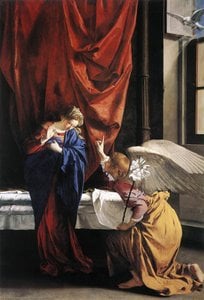
Annunciation

Experience the dramatic chiaroscuro of Matthias Stom's Annunciation, a Baroque masterpiece capturing divine revelation in candlelight; discover this moody Italian Caravaggism today.

Matthias Stom (c.1600-después de 1652) fue un pintor holandés, posiblemente flamenco, conocido por su estilo tenebrista y sus representaciones dramáticas de escenas bíblicas influenciadas por Caravaggio y Ribera, destacando en la escuela caravaggística de Utrecht.

Reproducción al óleo hecha a mano

Óleo sobre lienzo pintado a mano en el tamaño y marco de su elección, realizado por encargo por nuestros artistas.

P118B $10
P118H $10
P118W $10
P438Z $10
P508JH $12
P508YH $12
P805H $10
P805Z $10
P919BZ $10
P919G $10
P919XJ $10
P959ZH $10
P968JZ $12
W106C $8
W218G $10
W218JH $8
W218Y $10
W307PJ $10
W316G $10
W316PJ $8
W316Y $10
W398PJ $8
W4111J $10
W500HY $15
W500JH $15
W692G $12
W849H $8
W940BG $15
W953PJ $8

Standard
custom
CM
INCH

Elija entre nuestros tamaños predefinidos que respetan las proporciones originales de la obra.

ancho
altura

Puede ingresar sus propias dimensiones para adaptarse a un marco o espacio específico. Si el tamaño seleccionado no coincide con las proporciones de la imagen original, recortaremos la obra o extenderemos la pintura con elementos adicionales pintados a mano. Se le enviará una maqueta digital para su aprobación antes de comenzar la producción.
Tenga en cuenta que la vista previa en pantalla no refleja el recorte o la extensión reales. Solo la maqueta mostrará con precisión la composición final.
Si bien existen tamaños personalizados, recomendamos seleccionar una dimensión de la lista predefinida para preservar las proporciones originales.

Ejemplos de lo que se puede personalizar: Reemplace el rostro con una foto del cliente; Agregue una mascota (por ejemplo, cambie un gato por un perro); Incluya un mensaje oculto en el fondo; Cambie el paisaje o los elementos del fondo.
Tras realizar el pedido, el equipo de WahooArt.com enviará un correo electrónico al cliente para solicitar instrucciones y proporcionarle una vista previa del boceto.

Entrega mundial () en 3-4 semanas en lugar de las 5 semanas estándar. (6 julio). Sin compromisos con la calidad.

why_choose_icon
Envío exprés gratuito a todo el mundo
why_choose_icon
Lienzo de lino de alta calidad
why_choose_icon
Seguro de envío total
why_choose_icon
Garantía de reembolso de impuestos aduaneros
why_choose_icon
Garantía de fidelidad de color
why_choose_icon
Política de devolución de 60 días (solo por defectos)
why_choose_icon
Garantía de devolución del 100% del dinero
why_choose_icon
Descuento por pedido múltiple

Precio total

-

reproduction

Annunciation

Técnica de reproducción

Tamaño de la reproducción

-

Precio total final

-

Datos clave

  • Location: Private collection, Italy
  • Title: Annunciation
  • Subject or theme: Biblical scene
  • Artistic style: Religious art
  • Influences: Caravaggio
  • Dimensions: 166 x 113 cm
  • Notable elements or techniques: Dramatic chiaroscuro; realistic depiction

Test de arte

Solo hay una respuesta correcta para cada pregunta.

Pregunta 1:
What is the central biblical narrative depicted in this artwork?
Pregunta 2:
Which artistic movement heavily influenced Matthias Stom's style, characterized by dramatic light and shadow?
Pregunta 3:
In the painting's setting, what element contributes to the atmosphere of reverence and mystery?
Pregunta 4:
What object held by one of the foreground women symbolizes knowledge and divine wisdom?
Pregunta 5:
Where did Matthias Stom spend a significant portion of his career, influencing his style?

Descripción de la obra

Matthias Stom: A Shadowy Master of the Baroque – Unveiling Annunciation

Matthias Stom (c. 1600-after 1652) remains an artist shrouded in mystery, a figure whose legacy is primarily defined by his remarkable output within the crucible of Italian Caravaggism rather than his formative years in Utrecht. Born around 1600, likely in Amersfoort near Utrecht, Stom emerged as a compelling voice amidst the burgeoning artistic fervor of the Baroque era—a movement characterized by dramatic chiaroscuro, an uncompromising devotion to realism, and a profound influence from artists like Caravaggio and Ribera. While definitive biographical details stubbornly resist scholarly scrutiny – some scholars posit possible Flemish roots adding another layer to his enigmatic persona – meticulous stylistic analysis coupled with archival research illuminates a journey marked by artistic exploration and an unwavering commitment to capturing the emotional core of religious experience. The very absence of comprehensive documentation fuels speculation about Stom’s formative influences, prompting ongoing debate amongst art historians.

The Painting's Subject Matter: A Moment of Divine Revelation

“Annunciation” depicts precisely that – a pivotal biblical narrative centered on Mary’s visitation by the angel Gabriel. This scene unfolds within a deliberately austere interior space bathed in subdued candlelight, creating an atmosphere of palpable reverence and fostering contemplation. The composition is meticulously crafted to emphasize the spiritual significance of the event. Two women dominate the foreground, one holding a book—a symbol of knowledge and divine wisdom—while the other gestures upwards towards Gabriel, conveying Mary’s acceptance of God's will. Behind them stands another woman, positioned near a wall, representing humility and piety. Three additional figures inhabit the background, though they are rendered less prominently than the central subjects, contributing to the overall sense of solemn grandeur.

Caravaggism's Dramatic Technique: Mastering Light and Shadow

Stom’s artistic approach is firmly rooted in Caravaggism—a stylistic movement that prioritized intense realism and exploited the expressive power of chiaroscuro – the dramatic interplay between light and dark – to heighten emotional impact. Observe how Stom skillfully manipulates light sources, emanating from a single candle on a table, casting deep shadows across the room’s surfaces. This technique isn't merely decorative; it serves as a conduit for conveying spiritual emotion, mirroring the inner turmoil and profound faith experienced by Mary and Gabriel. The artist’s meticulous attention to detail—evident in the textures of fabrics and the subtle nuances of facial expressions—further underscores Caravaggio’s commitment to portraying human experience with unflinching honesty.

Symbolism Embedded Within Composition

Beyond its masterful execution, “Annunciation” resonates with rich symbolic meaning. The book symbolizes Mary's intellectual understanding of God's plan, while Gabriel’s gesture embodies divine grace and reassurance. The positioning of the figures—particularly Mary’s upward gaze—represents her unwavering devotion to God and her acceptance of His divine providence. Furthermore, the darkened interior space reinforces the atmosphere of mystery and contemplation inherent in the biblical narrative, inviting viewers to engage with themes of faith, humility, and spiritual transformation.

A Legacy Illuminated: The Painting's Enduring Appeal

“Annunciation” exemplifies Stom’s artistic prowess and his profound engagement with Baroque sensibilities—a testament to his ability to capture not only visual beauty but also the emotional depth of religious experience. Its enduring appeal lies in its masterful use of chiaroscuro, its meticulous realism, and its symbolic resonance—elements that continue to inspire artists and collectors alike. The painting’s reproduction offers a captivating glimpse into the artistic spirit of Utrecht Caravaggism and Stom's contribution to Baroque art history.

Obras similares


Biografía del artista

A Shadowy Master of the Baroque: Unveiling Matthias Stom

The name Matthias Stom, or Stomer as he was sometimes known, resonates with a captivating mystery within the annals of 17th-century painting. A Dutch artist whose life remains shrouded in ambiguity, Stom carved a distinctive niche for himself not in his homeland, but amidst the vibrant artistic landscape of Italy. Born around 1600, likely in Amersfoort near Utrecht, he emerged as a compelling figure within the orbit of Caravaggism—a movement defined by its dramatic use of light and shadow, and an unflinching commitment to realism. While definitive biographical details are scarce, piecing together fragmented records and stylistic analysis reveals a journey marked by artistic exploration and a profound engagement with the prevailing Baroque sensibilities. The very uncertainty surrounding his origins – some scholars suggest possible Flemish roots – adds to the enigmatic allure that surrounds his oeuvre.

From Utrecht Influences to Italian Immersion

Stom’s early training remains largely speculative, though it is widely believed he absorbed influences from prominent Utrecht Caravaggists like Gerard van Honthorst, Hendrick ter Brugghen, Paulus Moreelse and Abraham Bloemaert. These artists had embraced the revolutionary style of Michelangelo Merisi da Caravaggio, bringing its tenebrism—the stark contrast between light and dark—and emotionally charged realism to Dutch art. However, Stom’s artistic trajectory diverged from many of his contemporaries who favored genre scenes or allegorical compositions. He gravitated towards biblical narratives, imbuing them with a psychological depth and dramatic intensity that set him apart. Around 1630, he arrived in Rome, documented as living alongside the French painter Nicolas Provost. This marked a pivotal moment in his development, exposing him directly to the source of Caravaggio’s inspiration and allowing him to refine his technique within the heart of the Italian Baroque. His early Roman period culminated in the altarpiece of the Assumption of Mary with three saints, now housed in Chiuduno, showcasing his burgeoning mastery of chiaroscuro and narrative power.

Naples, Sicily, and a Distinctive Artistic Voice

The subsequent chapters of Stom’s artistic life unfolded across the Italian peninsula. From approximately 1635 to 1640, he resided in Naples, a city teeming with artistic energy and under the strong influence of the Spanish painter Jusepe de Ribera. This exposure further honed his dramatic style, adding a heightened sense of realism and emotional intensity to his work. It was during this period that Stom began creating pieces for Capuchin churches, solidifying his reputation as a skilled religious painter. Around 1640, he moved to Sicily, where he would spend the most significant portion of his career. Here, he received commissions for churches in Caccamo, Messina, and Monreale, producing some of his most celebrated works. *The Miracle of Saint Isidore the Labourer* (1641) stands as his only securely dated painting, a testament to his ability to capture both the spiritual fervor and human drama of religious events. Other notable Sicilian creations include *Saint Dominic* in Monreale and, tragically lost during the 1908 Messina earthquake, *The Martyrdom of Saint Cecilia*. Stom’s distinctive “claylike” treatment of flesh tones, coupled with his masterful use of light and shadow, became hallmarks of his style.

Key Characteristics of Stom's Work

  • Dramatic Chiaroscuro: A hallmark of his style, employing strong contrasts between light and dark to create a sense of drama and focus attention.
  • Realistic Depiction: An unflinching commitment to portraying figures and scenes with anatomical accuracy and emotional honesty.
  • Biblical Narratives: Primarily focused on religious subjects, particularly stories from the Bible, imbued with psychological depth.
  • “Claylike” Flesh Tones: A distinctive technique characterized by a warm, earthy palette used to render skin tones.
  • Influence of Caravaggio and Ribera: Demonstrates a clear understanding and adaptation of the styles of these Baroque masters.

Rediscovery and Lasting Legacy

Despite his prolific output during his lifetime, Matthias Stom fell into relative obscurity for centuries after his death, which occurred sometime after 1652, likely in Northern Italy. Many of his works were misattributed to other artists, particularly Gerard van Honthorst, obscuring his individual contribution to the Baroque movement. It wasn’t until the early 20th century that dedicated scholarship began to unravel the mystery surrounding Stom, establishing him as a significant figure within the Utrecht Caravaggist school. His rediscovery revealed an artist of remarkable skill and sensitivity, capable of conveying profound emotional depth through his dramatic compositions. Stom's legacy lies in his ability to synthesize Italian Baroque influences with Northern European sensibilities, creating a unique artistic voice that continues to captivate viewers today. He demonstrated the powerful adaptability of Caravaggio’s style, proving its resonance beyond Italy and inspiring generations of artists with his masterful use of light, shadow, and realistic portrayal of religious subjects.

Matthias Stom

Matthias Stom

1590 - 1670 , Países Bajos

Datos clave

  • Artistic Movement Or Style: Utrecht Caravaggismo
  • Artists Or Movements Influenced By This Artist: ['Barroco tardío']
  • Artists Who Influenced This Artist:
    • Caravaggio
    • Ribera
  • Date Of Birth: c. 1600
  • Date Of Death: después de 1652
  • Full Name: Matthias Stom
  • Nationality: Holandés
  • Notable Artworks:
    • Asunción Virgen
    • Milagro San Isidoro
    • San Dominico
  • Place Of Birth: Amersfoort, Países Bajos