Vista previa Vista previa en RA Cambiar a formato impreso Ver versión en imagen digital Compartir
Ver detalles Guía Añadir a favoritos Descargar Ver artículos similares Radiografía Presentación de diapositivas Estadísticas

Dawn

Experience the serene beauty of 'Dawn' by Martin Johnson Heade, a Luminist masterpiece capturing a tranquil sunrise over water. Explore his evocative landscapes and artistic journey.

Descubre las serenas y luminosas obras de Martin Johnson Heade (1819-1904). Artista americano clave del Luminismo, conocido por paisajes de marismas, flores tropicales y bodegones. ¡Explora sus obras maestras redescubiertas!

Reproducción al óleo hecha a mano

Óleo sobre lienzo pintado a mano en el tamaño y marco de su elección, realizado por encargo por nuestros artistas. ( Cambiar a formato impreso Ver versión en imagen digital)

Corner sample of the P118B picture frame: poliestireno moldeado, 5 cm wide and 3 cm thick
P118B €10
Corner sample of the P118H picture frame: poliestireno moldeado, 5 cm wide and 3 cm thick
P118H €10
Corner sample of the P118W picture frame: poliestireno moldeado, 5 cm wide and 3 cm thick
P118W €10
Corner sample of the P438Z picture frame: poliestireno moldeado, 5.5 cm wide and 3.5 cm thick
P438Z €10
Corner sample of the P508JH picture frame: poliestireno moldeado, 7 cm wide and 3.5 cm thick
P508JH €12
Corner sample of the P508YH picture frame: poliestireno moldeado, 7 cm wide and 3.5 cm thick
P508YH €12
Corner sample of the P805H picture frame: poliestireno moldeado, 5 cm wide and 3.5 cm thick
P805H €10
Corner sample of the P805Z picture frame: poliestireno moldeado, 5 cm wide and 3.5 cm thick
P805Z €10
Corner sample of the P919BZ picture frame: poliestireno moldeado, 7 cm wide and 3.5 cm thick
P919BZ €10
Corner sample of the P919G picture frame: poliestireno moldeado, 7 cm wide and 3.5 cm thick
P919G €10
Corner sample of the P919XJ picture frame: poliestireno moldeado, 7 cm wide and 3.5 cm thick
P919XJ €10
Corner sample of the P959ZH picture frame: poliestireno moldeado, 5 cm wide and 3 cm thick
P959ZH €10
Corner sample of the P968JZ picture frame: poliestireno moldeado, 6 cm wide and 4 cm thick
P968JZ €12
Corner sample of the W106C picture frame: madera maciza, 5 cm wide and 3 cm thick
W106C €8
Corner sample of the W218G picture frame: madera maciza, 5 cm wide and 3 cm thick
W218G €10
Corner sample of the W218JH picture frame: madera maciza, 5 cm wide and 3 cm thick
W218JH €8
Corner sample of the W218Y picture frame: madera maciza, 5 cm wide and 3 cm thick
W218Y €10
Corner sample of the W307PJ picture frame: madera maciza, 6 cm wide and 3 cm thick
W307PJ €10
Corner sample of the W316G picture frame: madera maciza, 6 cm wide and 3 cm thick
W316G €10
Corner sample of the W316PJ picture frame: madera maciza, 6 cm wide and 3 cm thick
W316PJ €8
Corner sample of the W316Y picture frame: madera maciza, 6 cm wide and 3 cm thick
W316Y €10
Corner sample of the W398PJ picture frame: madera maciza, 5 cm wide and 3 cm thick
W398PJ €8
Corner sample of the W4111J picture frame: madera maciza, 6.5 cm wide and 3.5 cm thick
W4111J €10
Corner sample of the W500HY picture frame: madera maciza, 7 cm wide and 5 cm thick
W500HY €15
Corner sample of the W500JH picture frame: madera maciza, 7 cm wide and 5 cm thick
W500JH €15
Corner sample of the W692G picture frame: madera maciza, 8 cm wide and 4 cm thick
W692G €12
Corner sample of the W849H picture frame: madera maciza, 5 cm wide and 3 cm thick
W849H €8
Corner sample of the W940BG picture frame: madera maciza, 7.5 cm wide and 4.5 cm thick
W940BG €15
Corner sample of the W953PJ picture frame: madera maciza, 6 cm wide and 3.5 cm thick
W953PJ €8

Estándar
personalizado
CM
INCH

Elija entre nuestros tamaños predefinidos que respetan las proporciones originales de la obra.

ancho
altura

Escriba el ancho y el alto que necesite para adaptarse a su marco o a su pared. Al ser una obra pintada a mano, para un tamaño con una forma distinta, el artista puede pintar un poco más alrededor de la imagen o recortar un poco; usted elige. Le enviaremos una maqueta digital para su aprobación antes de comenzar la pintura. La imagen que se muestra en esta página no refleja el resultado real; solo la maqueta lo hace.

Ejemplos de lo que se puede personalizar: Reemplace el rostro con una foto del cliente; Agregue una mascota (por ejemplo, cambie un gato por un perro); Incluya un mensaje oculto en el fondo; Cambie el paisaje o los elementos del fondo.
Tras realizar el pedido, el equipo de WahooArt.com enviará un correo electrónico al cliente para solicitar instrucciones y proporcionarle una vista previa del boceto.

Envío a todo el mundo () en 3-4 semanas en lugar de las 5 semanas estándar. (23 octubre). Sin comprometer la calidad.

Envío exprés gratuito a todo el mundo
Lienzo de lino de alta calidad
Seguro de envío completo
Garantía de reembolso de impuestos aduaneros
Garantía de fidelidad cromática exacta
Política de devolución de 100 días (solo por defectos)
Garantía de devolución del 100% del dinero
Oferta por volumen

Precio total

€ 239

Dawn

Técnica de reproducción

Tamaño de la reproducción

-

Precio total

€ 239

Datos clave

  • Influences: Hudson River School
  • Artist: Martin Johnson Heade
  • Medium: Oil on Canvas
  • Artistic style: Quiet Landscape
  • Year: 1862

Cuestionario de arte

Cada pregunta tiene una única respuesta correcta.

Pregunta 1:
What artistic movement is Martin Johnson Heade most closely associated with?
Pregunta 2:
Where was Martin Johnson Heade born?
Pregunta 3:
What is a key characteristic of Heade's painting technique?
Pregunta 4:
The painting ‘Dawn’ primarily aims to evoke which feeling in the viewer?
Pregunta 5:
During his travels in Europe, what influenced Martin Johnson Heade’s artistic style?

A Luminist’s Quiet Vision: The Life and Art of Martin Johnson Heade

Martin Johnson Heade (1819 – 1904), born in the serene Pennsylvania countryside, stands as a quietly influential figure in American art history—a painter whose luminous landscapes and intimate depictions of nature gradually emerged from relative obscurity to claim their rightful place among the nation’s most significant artistic achievements. His formative years in Lumberville, nestled along the Delaware River, instilled within him an enduring reverence for the natural world, an affection nurtured by initial studies under local artists Edward and possibly Thomas Hicks. These foundational lessons provided Heade with the technical skills that would later coalesce into a distinctive style, though his journey to artistic recognition proved anything but straightforward. Initially drawn to portraiture, his early works demonstrate a proficient hand but lack the singular vision that would ultimately characterize his mature oeuvre. A pivotal period of travel in Europe broadened Heade’s artistic perspective, exposing him to Impressionist influences and fostering experimentation with bolder brushstrokes—a deliberate departure from the restrained palette and meticulous detail favored by Luminism, the movement he championed. Luminism, born in the mid-1850s, represented a reaction against Romantic idealism, prioritizing atmospheric effects and capturing fleeting moments of beauty rather than grand narratives or dramatic compositions. Artists like Heade sought to convey not just what they saw but how they *felt*, immersing viewers in the tranquility and majesty of unspoiled wilderness. Heade’s technique was remarkably consistent throughout his prolific career—primarily employing oil paints on canvas, applying thin layers of pigment mixed with linseed oil to achieve a velvety surface texture. This method allowed for subtle gradations of color and luminosity, mirroring the diffused light characteristic of dawn landscapes. Unlike Impressionists who aimed to capture immediate sensory impressions, Heade meticulously built up his paintings over time, patiently blending colors and reworking sections until he achieved the desired tonal harmony. The resulting images possess an ethereal quality—a palpable stillness that invites contemplation and evokes a profound connection with nature’s rhythms. “Dawn,” painted in 1862, exemplifies this Luminist aesthetic perfectly. The canvas depicts a tranquil beach scene bathed in the nascent glow of sunrise. Gentle waves lap against the shore, reflecting the rosy hues of the rising sun—a masterful orchestration of color and light that captures the essence of early morning serenity. Scattered boats bobbing on the water add to the visual richness of the composition, while two figures stand silhouetted against the horizon, seemingly absorbed in observing this sublime spectacle. The artist’s careful attention to detail—the texture of the sand, the ripples on the water surface, and the subtle variations in color—contributes to an immersive experience for the viewer. Symbolically, “Dawn” speaks to themes of renewal and hope—a visual representation of the promise held within each new day. The luminous light symbolizes enlightenment and spiritual awakening, mirroring the Luminist preoccupation with capturing transcendent beauty. Furthermore, the depiction of nature’s undisturbed grandeur underscores the movement's belief in its restorative power, offering solace and inspiration amidst the complexities of Victorian society. Ultimately, “Dawn” transcends mere representation; it aspires to evoke emotion—a feeling of profound peace and wonder at the majesty of creation. Its enduring appeal lies in its ability to transport viewers back to a time when art sought not just to depict reality but to communicate its deepest truths. Reproductions of this masterpiece continue to captivate collectors and interior designers alike, serving as reminders of Luminism’s legacy—a testament to the power of understated beauty and the importance of preserving the unspoiled splendor of our natural world.

Preguntas y respuestas

¿Hay obras similares a "Dawn"?

La página de Similares de "Dawn" de Martin Johnson Heade presenta obras relacionadas.

¿Dónde puedo comprar una lámina de "Dawn" de Martin Johnson Heade?

Puede solicitar una impresión de "Dawn" de Martin Johnson Heade directamente en su página de Impresión de bellas artes: una impresión de bellas artes sobre lienzo de algodón o papel de lienzo de archivo.

¿Quién creó "Dawn" y en qué año?

"Dawn" fue creada por Martin Johnson Heade en 1862.


Biografía del artista

Primeros años y formación

Martin Johnson Heade, pintor estadounidense, nació el 11 de agosto de 1819 en Lumberville, Pensilvania. Su temprana vida estuvo marcada por una fuerte inclinación hacia el arte, lo que lo llevó a estudiar bajo la tutela de Edward Hicks y posiblemente Thomas Hicks. Esta formación fundamental sentó las bases para sus futuros esfuerzos artísticos.

Carrera artística

La carrera artística de Heade se puede clasificar en varias fases, cada una marcada por un cambio distintivo en su tema y estilo. Inicialmente, se centró en el retrato, siendo su obra conocida más temprana un retrato de 1839. Tras esto, viajó a Europa, donde estuvo expuesto a diversas influencias artísticas.
  • Su trabajo comenzó a mostrar un interés marcado por la pintura de paisajes, particularmente después de conocer a artistas de la Escuela del Río Hudson, como John Frederick Kensett y Benjamin Champney.
  • Sus viajes a Brasil (1863-1864) y posteriores viajes a Nicaragua, Colombia, Panamá y Jamaica (1866 y 1870) influyeron profundamente en su trabajo, lo que llevó a una serie de pequeñas pinturas que representaban colibríes.
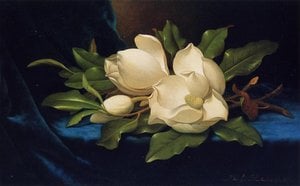
  • Sus años posteriores en St. Augustine, Florida, estuvieron marcados por un mayor enfoque en el bodegón, particularmente las flores de magnolia sobre tela de terciopelo.

Estilo y obras notables

El estilo de Martin Johnson Heade se caracteriza por un enfoque romántico de sus temas, a menudo centrándose en la interacción entre la luz y la sombra. Sus obras más renombradas incluyen representaciones de los marismas costeras de Nueva Inglaterra, lo que ha llevado a algunos historiadores a categorizarlo como pintor luminista.

Influencias y desarrollo artístico

La obra de Heade muestra una evolución significativa a lo largo de su carrera, influenciada por varios factores. Su formación inicial con Edward Hicks le proporcionó una base sólida en las técnicas tradicionales de pintura. Su viaje a Europa expuso a Heade a la estética del arte europeo, mientras que su asociación con artistas de la Escuela del Río Hudson, como Frederic Edwin Church, lo llevó a explorar el paisaje americano y desarrollar un estilo distintivo. La fascinación por los paisajes tropicales, alimentada por *Heart of the Andes* de Church, impulsó sus viajes a Sudamérica y el Caribe, donde capturó la belleza exótica de la flora y fauna locales. Su posterior residencia en St. Augustine, Florida, marcó una transición hacia un enfoque más introspectivo, centrado en las flores y los paisajes costeros del sureste americano.

Legado e importancia histórica

A pesar de no ser ampliamente conocido durante su vida, el trabajo de Martin Johnson Heade ha atraído la atención de académicos y coleccionistas desde la década de 1940. Hoy en día, es reconocido como un importante artista estadounidense, con sus pinturas ocasionalmente descubiertas en lugares inesperados como ventas de garaje y mercadillos. Su contribución al arte americano radica en su capacidad para capturar la belleza serena de los paisajes costeros y la delicadeza de las flores, utilizando una técnica luminista que enfatiza la luz y la atmósfera. Su obra representa un importante capítulo en la historia del arte estadounidense, destacando la diversidad de temas y estilos dentro del movimiento artístico del siglo XIX.

Martin Johnson Heade

Martin Johnson Heade

1819 - 1904 , Estados Unidos de América

Datos clave

  • Artistas Que Influyeron:
    • Edward Hicks
    • Thomas Hicks
    • John Frederick Kensett
    • Benjamin Champney
    • Frederic Edwin Church
  • Fecha De Fallecimiento: 4 de septiembre de 1904
  • Fecha De Nacimiento: 11 de agosto de 1819
  • Lugar De Nacimiento: Lumberville, EE. UU.
  • Movimiento Artístico: Luminismo, Hudson River School
  • Nacionalidad: Estadounidense
  • Nombre Completo: Martin Johnson Heade
  • Obras Notables:
    • Salt Marsh Landscapes
    • Forked Tailed Woodnymph
    • Giant Magnolias on Velvet
Explore obras de arte organizadas por temas, estilos y características.