Vista previa Vista previa en RA Cambiar a formato impreso Ver versión en imagen digital Compartir
Ver detalles Guía Añadir a favoritos Descargar Ver artículos similares Radiografía Presentación de diapositivas Estadísticas

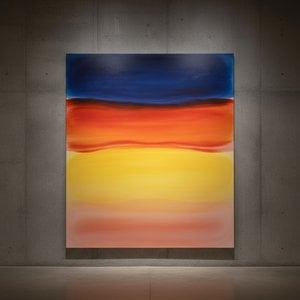
Untitled (man with racket and ball)

Mark Rothko's "Woman Playing Tennis" captures the dynamism of the sport through layered hues of black and two tennis balls, reflecting his exploration of existential themes within the Rothko Chapel’s contemplative setting.

Explore la vida y obra de Mark Rothko (1903-1970), un pintor clave del Expresionismo Abstracto. Descubre sus icónicos cuadros de campo de color, su profundidad emocional e impacto perdurable en el arte moderno. #ExpresionismoAbstracto #CamposDeColor #Rothko #HistoriaDelArte

Reproducción al óleo hecha a mano

Óleo sobre lienzo pintado a mano en el tamaño y marco de su elección, realizado por encargo por nuestros artistas. ( Cambiar a formato impreso Ver versión en imagen digital)

P118B $10
P118H $10
P118W $10
P438Z $10
P508JH $12
P508YH $12
P805H $10
P805Z $10
P919BZ $10
P919G $10
P919XJ $10
P959ZH $10
P968JZ $12
W106C $8
W218G $10
W218JH $8
W218Y $10
W307PJ $10
W316G $10
W316PJ $8
W316Y $10
W398PJ $8
W4111J $10
W500HY $15
W500JH $15
W692G $12
W849H $8
W940BG $15
W953PJ $8

Estándar
personalizado
CM
INCH

Elija entre nuestros tamaños predefinidos que respetan las proporciones originales de la obra.

ancho
altura

Puede ingresar sus propias dimensiones para adaptarse a un marco o espacio específico. Si el tamaño seleccionado no coincide con las proporciones de la imagen original, recortaremos la obra o extenderemos la pintura con elementos adicionales pintados a mano. Se le enviará una maqueta digital para su aprobación antes de comenzar la producción.
Tenga en cuenta que la vista previa en pantalla no refleja el recorte o la extensión reales. Solo la maqueta mostrará con precisión la composición final.
Si bien existen tamaños personalizados, recomendamos seleccionar una dimensión de la lista predefinida para preservar las proporciones originales.

Ejemplos de lo que se puede personalizar: Reemplace el rostro con una foto del cliente; Agregue una mascota (por ejemplo, cambie un gato por un perro); Incluya un mensaje oculto en el fondo; Cambie el paisaje o los elementos del fondo.
Tras realizar el pedido, el equipo de WahooArt.com enviará un correo electrónico al cliente para solicitar instrucciones y proporcionarle una vista previa del boceto.

Envío a todo el mundo () en 3-4 semanas en lugar de las 5 semanas estándar. (26 septiembre). Sin comprometer la calidad.

why_choose_icon
Envío exprés gratuito a todo el mundo
why_choose_icon
Lienzo de lino de alta calidad
why_choose_icon
Seguro de envío completo
why_choose_icon
Garantía de reembolso de impuestos aduaneros
why_choose_icon
Garantía de fidelidad cromática exacta
why_choose_icon
Política de devolución de 100 días (solo por defectos)
why_choose_icon
Garantía de devolución del 100% del dinero
why_choose_icon
Oferta por volumen

Precio total

$ 272

reproduction

Untitled (man with racket and ball)

Técnica de reproducción

Tamaño de la reproducción

-

Precio total

$ 272

Datos clave

  • Title: Untitled (man with racket and ball)
  • Medium: Oil on Canvas
  • Year: 1960
  • Movement: Abstract Expressionism
  • Location: Menil Collection, Houston
  • Dimensions: 72 x 54 in
  • Artist: Mark Rothko

Cuestionario de arte

Cada pregunta tiene una única respuesta correcta.

Pregunta 1:
What is the primary subject depicted in this painting?
Pregunta 2:
The Rothko Chapel, where these paintings are displayed, is known for its distinctive architectural design. What shape is the chapel?
Pregunta 3:
Mark Rothko was born in Dvinsk, Latvia. What was his father’s profession?
Pregunta 4:
What is a key characteristic of Rothko’s painting technique?’
Pregunta 5:
The Rothko Chapel’s location contributes to its artistic significance. Where is it situated?

A Symphony of Motion and Color

In the vast landscape of Abstract Expressionism, few works capture the intersection of physical vitality and existential depth as poignantly as Mark Rothko’s 1968 masterpiece, Untitled (man with racket and ball). While many recognize Rothko for his silent, monumental color fields, this particular work offers a captivating glimpse into a more rhythmic, kinetic dimension of his genius. Often referred to by enthusiasts as the "Tennis Player," the painting transcends the mere depiction of an athletic pastime. It serves as a profound meditation on the human condition, where the boundaries between the physical exertion of sport and the spiritual weight of existence begin to blur. The canvas does not simply show a figure in motion; it invites the viewer into a visual exploration of vulnerability and resilience, framed within the stark, breathtaking beauty of layered pigment.

The composition is a masterclass in the language of color and light. Rothko’s technique during this period was nothing short of alchemical. Eschewing traditional blending, he employed a meticulous process of "incubation," applying thin washes of pigment onto linen to allow the colors to oxidize and deepen over time. This resulted in surfaces that possess an ethereal, inner glow, as if the canvas itself were breathing. In this work, the dominance of crimson, orange, and yellow creates a visual pulse—a rhythmic vibration that mimics the frantic energy of a tennis ball in flight and the muscular intensity of the player. For the discerning collector or interior designer, these luminous blocks of color offer an unparalleled emotional resonance, capable of transforming a space into a sanctuary of contemplative energy.

The Weight of the Moment

To understand this painting is to understand the turbulent era from which it emerged. Created in the late 1960s, a period defined by global social upheaval and profound existential questioning, the work reflects a search for spiritual solace amidst chaos. While the subject matter—a figure engaged in the focused intensity of a game—suggests a moment of earthly activity, Rothko imbues it with a sense of cosmic significance. The way the colors hover and overlap suggests a state of flux, mirroring the anxieties of an era grappling with mortality and change. There is no representational detail to cling to; instead, we are left with the raw, unadultered feeling of presence.

For those seeking to integrate fine art into a modern living environment, this reproduction offers more than mere decoration. It provides a focal point of profound depth. The interplay of light and shadow within the color fields creates a sense of three-dimensional movement that engages the eye from every angle. Whether placed in a minimalist gallery setting or as a bold statement piece in a sophisticated residential study, Untitled (man with racket and ball) acts as a portal to an inner landscape. It is a piece that demands presence, rewarding the viewer with a silent, transformative dialogue that lingers long after the first encounter.


Biografía del artista

vida temprana e influencias

Mark Rothko (Marcus Rothkowitz), un reconocido artista estadounidense, nació el 25 de septiembre de 1903 en Dvinsk, Letonia. Su familia emigró a los Estados Unidos cuando tenía solo diez años. Este cambio cultural influyó más tarde en su estilo artístico.

evolución artística

La obra temprana de Rothko se caracterizó por el **expresionismo abstracto**, un estilo que enfatizaba el proceso de creación del arte más que el producto final. Sus pinturas, como No. 18 (1948) y Untitled (1948), mostraban su enfoque único del color y la forma.
  • **Campo de color:** El uso de campos de color rectangulares audaces por Rothko, a menudo en marcado contraste entre sí, creó una sensación de profundidad y emoción.
  • **Estructura orgánica:** Sus pinturas parecían respirar vida, como si los colores fueran entidades vivientes.

obras notables y exposiciones

  • No. 10 (1950), una pintura que marcó un cambio significativo en el estilo de Rothko, ahora forma parte de la colección del Museo de Arte Moderno.
  • Las murales de Seagram, una serie de pinturas encargadas para el restaurante Four Seasons, mostraron la capacidad de Rothko para adaptar su estilo a diferentes entornos.
  • No. 3 (1950), una pintura que ejemplifica el uso de campos de color rectangulares audaces por Rothko.

vida tardía y legado

La vida de Rothko estuvo marcada por las luchas con la salud mental y un matrimonio tumultuoso. Falleció el 25 de febrero de 1970, a los 66 años. A pesar de sus desafíos, Rothko dejó una huella imborrable en el mundo del arte. Ocre y rojo sobre rojo (campo de color), una pintura que muestra el enfoque único del color de Rothko, se puede encontrar en la colección WahooArt.com. La página de Wikipedia de Mark Rothko proporciona más información sobre su vida y estilo artístico.
Mark Rothko

Mark Rothko

1903 - 1970 , Letonia

Datos clave

  • Artistas Que Influyeron:
    • Edward Hopper
    • Pablo Picasso
  • Fecha De Muerte: 25 de febrero de 1970
  • Fecha De Nacimiento: 25 de septiembre de 1903
  • Influencia En Artistas:
    • Minimalismo
    • Arte contemporáneo
  • Lugar De Nacimiento: Daugavpils, Letonia
  • Movimiento Artístico: Expresionismo Abstracto
  • Nacionalidad: Estadounidense
  • Nombre Completo: Mark Rothko (Marcus Rothkowitz)
  • Obras Notables:
    • No. 18 (1948)
    • No. 10 (1950)
    • Murales Seagram
    • No. 3 (1950)
Explore obras de arte organizadas por temas, estilos y características.