Vista previa Vista previa en RA Encargar reproducción pintada a mano Ver versión en imagen digital Compartir
Ver detalles Guía Añadir a favoritos Descargar Ver artículos similares Radiografía Presentación de diapositivas Estadísticas

Untitled

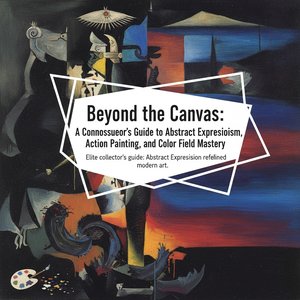
Mark Rothko’s ‘Untitled,’ painted in 1941, showcases two faces juxtaposed with birds scattered across the canvas—a poignant exploration of existential themes and a testament to Rothko's distinctive style.

Explore la vida y obra de Mark Rothko (1903-1970), un pintor clave del Expresionismo Abstracto. Descubre sus icónicos cuadros de campo de color, su profundidad emocional e impacto perdurable en el arte moderno. #ExpresionismoAbstracto #CamposDeColor #Rothko #HistoriaDelArte

La obra de arte que se muestra en esta página está protegida por las leyes de propiedad intelectual, lo que significa que no podemos crear ni vender legalmente una reproducción idéntica. Esta protección se hace cumplir en virtud de acuerdos internacionales como el Convenio de Berna y por las leyes nacionales, incluidas aquellas establecidas por el Ley de derechos de autor de los EE. UU. - Título 17.

Este método cumple plenamente con las normativas de derechos de autor, ya que no implica la copia ni la duplicación de la obra protegida. En su lugar, se trata de una reinterpretación creativa: una nueva pintura influenciada por la original, pero que no es idéntica a ella.

Giclée / Impresión de arte

Impresiones giclée o en lienzo de calidad de museo con producción rápida y opciones de acabado flexibles. ( Encargar reproducción pintada a mano Ver versión en imagen digital)

Corner sample of the P118B picture frame: poliestireno moldeado, 5 cm wide and 3 cm thick
P118B €10
Corner sample of the P118H picture frame: poliestireno moldeado, 5 cm wide and 3 cm thick
P118H €10
Corner sample of the P118W picture frame: poliestireno moldeado, 5 cm wide and 3 cm thick
P118W €10
Corner sample of the P438Z picture frame: poliestireno moldeado, 5.5 cm wide and 3.5 cm thick
P438Z €10
Corner sample of the P508JH picture frame: poliestireno moldeado, 7 cm wide and 3.5 cm thick
P508JH €12
Corner sample of the P508YH picture frame: poliestireno moldeado, 7 cm wide and 3.5 cm thick
P508YH €12
Corner sample of the P805H picture frame: poliestireno moldeado, 5 cm wide and 3.5 cm thick
P805H €10
Corner sample of the P805Z picture frame: poliestireno moldeado, 5 cm wide and 3.5 cm thick
P805Z €10
Corner sample of the P919BZ picture frame: poliestireno moldeado, 7 cm wide and 3.5 cm thick
P919BZ €10
Corner sample of the P919G picture frame: poliestireno moldeado, 7 cm wide and 3.5 cm thick
P919G €10
Corner sample of the P919XJ picture frame: poliestireno moldeado, 7 cm wide and 3.5 cm thick
P919XJ €10
Corner sample of the P959ZH picture frame: poliestireno moldeado, 5 cm wide and 3 cm thick
P959ZH €10
Corner sample of the P968JZ picture frame: poliestireno moldeado, 6 cm wide and 4 cm thick
P968JZ €12
Corner sample of the W106C picture frame: madera maciza, 5 cm wide and 3 cm thick
W106C €8
Corner sample of the W218G picture frame: madera maciza, 5 cm wide and 3 cm thick
W218G €10
Corner sample of the W218JH picture frame: madera maciza, 5 cm wide and 3 cm thick
W218JH €8
Corner sample of the W218Y picture frame: madera maciza, 5 cm wide and 3 cm thick
W218Y €10
Corner sample of the W307PJ picture frame: madera maciza, 6 cm wide and 3 cm thick
W307PJ €10
Corner sample of the W316G picture frame: madera maciza, 6 cm wide and 3 cm thick
W316G €10
Corner sample of the W316PJ picture frame: madera maciza, 6 cm wide and 3 cm thick
W316PJ €8
Corner sample of the W316Y picture frame: madera maciza, 6 cm wide and 3 cm thick
W316Y €10
Corner sample of the W398PJ picture frame: madera maciza, 5 cm wide and 3 cm thick
W398PJ €8
Corner sample of the W4111J picture frame: madera maciza, 6.5 cm wide and 3.5 cm thick
W4111J €10
Corner sample of the W500HY picture frame: madera maciza, 7 cm wide and 5 cm thick
W500HY €15
Corner sample of the W500JH picture frame: madera maciza, 7 cm wide and 5 cm thick
W500JH €15
Corner sample of the W692G picture frame: madera maciza, 8 cm wide and 4 cm thick
W692G €12
Corner sample of the W849H picture frame: madera maciza, 5 cm wide and 3 cm thick
W849H €8
Corner sample of the W940BG picture frame: madera maciza, 7.5 cm wide and 4.5 cm thick
W940BG €15
Corner sample of the W953PJ picture frame: madera maciza, 6 cm wide and 3.5 cm thick
W953PJ €8

Estándar
personalizado
CM
INCH

Elija entre nuestros tamaños predefinidos que respetan las proporciones originales de la obra.

ancho
altura

Puede introducir sus propias dimensiones para adaptarse a un marco o espacio específico. Si el tamaño seleccionado no coincide con las proporciones de la imagen original, recortaremos la obra de arte o extenderemos la imagen con un borde con efecto espejo o de color sólido. Se enviará una maqueta digital para su aprobación antes de que comience la producción.
Tenga en cuenta que la vista previa en pantalla no refleja el recorte o la extensión real. Solo la maqueta mostrará con precisión la composición final.
Aunque existen tamaños personalizados, recomendamos seleccionar una dimensión de la lista predefinida para preservar las proporciones originales.

Envío a todo el mundo () en 2 semanas en lugar de las 4/5 semanas estándar. (13 octubre)

Envío exprés gratuito a todo el mundo
Lienzo de lino de alta calidad
Seguro de envío completo
Garantía de reembolso de impuestos aduaneros
Garantía de fidelidad cromática exacta
Política de devolución de 100 días (solo por defectos)
Garantía de devolución del 100% del dinero
Oferta por volumen

Precio total

€ 59

Untitled

Giclée / Impresión de arte

Tamaño de la reproducción

-

Precio total

€ 59

Datos clave

  • Artist: Mark Rothko
  • Dimensions: 60 x 80 cm
  • Year: 1941
  • Influences: Gestalt Psychology
  • Notable elements or techniques: Color Field Painting
  • Artistic style: Meditative

Cuestionario de arte

Cada pregunta tiene una única respuesta correcta.

Pregunta 1:
What is the primary artistic style of Mark Rothko's painting “Two Faces”?
Pregunta 2:
The painting features birds scattered throughout. What effect do these birds contribute to the overall composition?
Pregunta 3:
In what year was “Two Faces” created?
Pregunta 4:
What is the dominant color palette used in Rothko's painting?
Pregunta 5:
The Rothko Chapel was founded by John and Dominique de Menil. What is the chapel primarily intended for?

A Symphony of Crimson and Light

To stand before Mark Rothko’s “Untitled” (1941) is to enter a realm where the boundaries between the physical canvas and the human soul begin to dissolve. This evocative work, measuring 60 x 80 cm, serves as a profound meditation on the duality of existence—the heavy weight of grief intertwined with the luminous promise of transcendence. Unlike his later, more famous monochromatic color fields, this earlier piece captures a pivotal moment in Rothko’s evolution, where the artist began to strip away the distractions of the material world to uncover the raw, pulsing essence of emotion through the sheer power of pigment.

The composition is a masterclass in atmospheric depth. Rothko employs his signature technique of layering thin, translucent washes of color, allowing hues of deep crimson and vibrant orange to bleed into one another. These warm, energetic tones suggest a heartbeat, a flicker of vitality that refuses to be extinguished. Yet, this warmth is tempered by subtle, darker gradations that creep into the edges of the forms, creating a palpable sense of melancholy. The way the light seems to emanately from within the layers of paint creates an illusion of luminosity, as if the canvas itself were breathing, inviting the viewer to lose themselves in its rhythmic, chromatic pulse.

The Shadow of History and the Language of Color

The historical context of 1941 casts a long, somber shadow over this masterpiece. Created during the tumultuous onset of World War II, the painting vibrates with the collective anxieties of an era defined by displacement and global upheaval. For Rothko, this period was deeply personal; his life was marked by the profound loss of his father and the challenges of navigating a new identity in America. This sense of existential vulnerability is woven into the very fabric of the work. By eschewing recognizable imagery and traditional figures, Rothko bypasses the intellect to speak directly to the primal emotions of the viewer.

In this piece, color functions as the primary protagonist. The reds and oranges are not merely decorative; they are symbols of passion, blood, and life, while the darker, receding tones represent the encroaching void of loss. For the discerning collector or interior designer, "Untitled" offers more than just a visual focal point; it provides an emotional anchor. It is a piece that demands presence, making it an ideal centerpiece for spaces dedicated to contemplation, such as a private study, a quiet library, or a sophisticated gallery setting where art is intended to provoke thought and inspire a sense of profound peace.

An Invitation to Transcendence

For those seeking to bring the transformative power of Abstract Expressionism into their homes, a high-quality reproduction of this Rothko masterpiece offers a gateway to a different state of being. The painting does not merely decorate a wall; it alters the atmosphere of a room, infusing it with a sense of quiet drama and intellectual depth. It serves as a reminder that even within the darkest shades of mourning, there exists a radiant, indestructible light.

Whether you are an art enthusiast drawn to the technical brilliance of the Color Field movement or a designer looking to evoke a mood of sophisticated introspection, this work stands as a testament to the enduring relevance of Rothko’s vision. It is an invitation to look past the surface and encounter the infinite within the finite.

Preguntas y respuestas

¿Para qué estancia se recomienda "Untitled" de Mark Rothko?

Se recomienda "Untitled" de Mark Rothko para un Living Room. Esta sugerencia se basa en el tema, los colores y la atmósfera de la obra.

¿Es "Untitled" una obra famosa del Abstract Expressionism?

"Untitled" de Mark Rothko se clasifica como Iconic y pertenece al movimiento Abstract Expressionism.

¿Es "Untitled" una de las obras más populares de Mark Rothko?

"Untitled" está clasificada como Iconic.

¿Qué alias o nombres alternativos tiene Mark Rothko?

Mark Rothko aparece bajo los nombres alternativos Marcus Rothkowitz.

¿Quién vende copias pintadas a mano de "Untitled" de Mark Rothko?

Puede solicitar una reproducción pintada a mano de "Untitled" de Mark Rothko directamente en esta página: una reproducción al óleo pintada a mano sobre lienzo de lino, realizada bajo pedido.

¿Puedo ver "Untitled" de Mark Rothko bajo diferentes luces?

La página Rayos X de "Untitled" de Mark Rothko es un visor interactivo que permite desplazarse a través de once capas ópticas de la imagen de la obra, incluyendo una vista de estilo radiografía.

¿Cuál es la técnica y la fecha de creación de "Untitled" de Mark Rothko?

La técnica de "Untitled" de Mark Rothko es Oil On Canvas, y la obra data de 1941.

¿Es "Untitled" de Mark Rothko una composición en formato retrato, paisaje o cuadrado?

"Untitled" de Mark Rothko es una composición en Landscape. Se recomienda revisar las proporciones antes de elegir un tamaño de impresión.


Biografía del artista

vida temprana e influencias

Mark Rothko (Marcus Rothkowitz), un reconocido artista estadounidense, nació el 25 de septiembre de 1903 en Dvinsk, Letonia. Su familia emigró a los Estados Unidos cuando tenía solo diez años. Este cambio cultural influyó más tarde en su estilo artístico.

evolución artística

La obra temprana de Rothko se caracterizó por el **expresionismo abstracto**, un estilo que enfatizaba el proceso de creación del arte más que el producto final. Sus pinturas, como No. 18 (1948) y Untitled (1948), mostraban su enfoque único del color y la forma.
  • **Campo de color:** El uso de campos de color rectangulares audaces por Rothko, a menudo en marcado contraste entre sí, creó una sensación de profundidad y emoción.
  • **Estructura orgánica:** Sus pinturas parecían respirar vida, como si los colores fueran entidades vivientes.

obras notables y exposiciones

  • No. 10 (1950), una pintura que marcó un cambio significativo en el estilo de Rothko, ahora forma parte de la colección del Museo de Arte Moderno.
  • Las murales de Seagram, una serie de pinturas encargadas para el restaurante Four Seasons, mostraron la capacidad de Rothko para adaptar su estilo a diferentes entornos.
  • No. 3 (1950), una pintura que ejemplifica el uso de campos de color rectangulares audaces por Rothko.

vida tardía y legado

La vida de Rothko estuvo marcada por las luchas con la salud mental y un matrimonio tumultuoso. Falleció el 25 de febrero de 1970, a los 66 años. A pesar de sus desafíos, Rothko dejó una huella imborrable en el mundo del arte. Ocre y rojo sobre rojo (campo de color), una pintura que muestra el enfoque único del color de Rothko, se puede encontrar en la colección WahooArt.com. La página de Wikipedia de Mark Rothko proporciona más información sobre su vida y estilo artístico.
Mark Rothko

Mark Rothko

1903 - 1970 , Letonia

Datos clave

  • Artistas Que Influyeron:
    • Edward Hopper
    • Pablo Picasso
  • Fecha De Muerte: 25 de febrero de 1970
  • Fecha De Nacimiento: 25 de septiembre de 1903
  • Influencia En Artistas:
    • Minimalismo
    • Arte contemporáneo
  • Lugar De Nacimiento: Daugavpils, Letonia
  • Movimiento Artístico: Expresionismo Abstracto
  • Nacionalidad: Estadounidense
  • Nombre Completo: Mark Rothko (Marcus Rothkowitz)
  • Obras Notables:
    • No. 18 (1948)
    • No. 10 (1950)
    • Murales Seagram
    • No. 3 (1950)
Explore obras de arte organizadas por temas, estilos y características.