Asesoría de arte gratuita

x
Encargar reproducción Encargar reproducciónComprar imagen en alta resolución Comprar imagen en alta resolución EnviarEnviar
DetallesDetalles Añadir a favoritos Añadir a favoritos DescargarDescargar SimilaresSimilares Rayos XRayos X Presentación de diapositivasPresentación de diapositivas

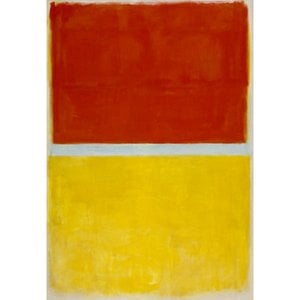
Untitled 36

This untitled piece by Mark Rothko exemplifies Rothko’s signature style: large, rectangular blocks of color designed to elicit profound emotional responses. Painted around 1949-50, it features a dominant red hue contrasted with subtle shades of orange and yellow, punctuated by stylized birds and figures—creating an immersive visual experience rooted in existential themes.

Explore la vida y obra de Mark Rothko (1903-1970), un pintor clave del Expresionismo Abstracto. Descubre sus icónicos cuadros de campo de color, su profundidad emocional e impacto perdurable en el arte moderno. #ExpresionismoAbstracto #CamposDeColor #Rothko #HistoriaDelArte

Giclée / Impresión de arte

Impresión giclée o en lienzo de calidad de museo con producción rápida y opciones de acabado flexibles.

P118B $10
P118H $10
P118W $10
P438Z $10
P508JH $12
P508YH $12
P805H $10
P805Z $10
P919BZ $10
P919G $10
P919XJ $10
P959ZH $10
P968JZ $12
W106C $8
W218G $10
W218JH $8
W218Y $10
W307PJ $10
W316G $10
W316PJ $8
W316Y $10
W398PJ $8
W4111J $10
W500HY $15
W500JH $15
W692G $12
W849H $8
W940BG $15
W953PJ $8

Standard
custom
CM
INCH

Elija entre nuestros tamaños predefinidos que respetan las proporciones originales de la obra.

ancho
altura

Puede introducir sus propias dimensiones para adaptarse a un marco o espacio específico. Si el tamaño seleccionado no coincide con las proporciones de la imagen original, recortaremos la obra de arte o extenderemos la imagen con un borde con efecto espejo o de color sólido. Se enviará una maqueta digital para su aprobación antes de que comience la producción.
Tenga en cuenta que la vista previa en pantalla no refleja el recorte o la extensión real. Solo la maqueta mostrará con precisión la composición final.
Aunque existen tamaños personalizados, recomendamos seleccionar una dimensión de la lista predefinida para preservar las proporciones originales.

Entrega mundial () en 2 semanas en lugar de las 4/5 semanas estándar. (2 julio)

why_choose_icon
Envío exprés gratuito a todo el mundo
why_choose_icon
Lienzo de lino de alta calidad
why_choose_icon
Seguro de envío total
why_choose_icon
Garantía de reembolso de impuestos aduaneros
why_choose_icon
Garantía de fidelidad de color
why_choose_icon
Política de devolución de 60 días (solo por defectos)
why_choose_icon
Garantía de devolución del 100% del dinero
why_choose_icon
Descuento por pedido múltiple

Precio total

-

reproduction

Untitled 36

Giclée / Impresión de arte

Tamaño de la reproducción

-

Precio total final

-

Datos clave

  • Title: Untitled 36
  • Artistic style: Minimalist
  • Location: Private Collection
  • Medium: Acrylic on Canvas
  • Notable elements or techniques: Color Field Painting; Rectangular Blocks of Color
  • Artist: Mark Rothko

Test de arte

Solo hay una respuesta correcta para cada pregunta.

Pregunta 1:
What is the dominant color scheme employed in ‘Untitled 36’?
Pregunta 2:
The painting utilizes a technique known as Color Field Painting, which is characterized by:
Pregunta 3:
Mark Rothko’s artistic background includes a formative experience with displacement and loss, stemming from his early life in Latvia.
Pregunta 4:
The inclusion of birds within ‘Untitled 36’ contributes to which aspect of Rothko's artistic vision?
Pregunta 5:
‘Untitled 36’ exemplifies Rothko's commitment to conveying profound emotional states through simplified forms.

Descripción de la obra

A Symphony of Color: Decoding Mark Rothko’s Untitled 36

The painting “Untitled 36” by Mark Rothko stands as a testament to the power of abstraction and its ability to evoke profound emotional responses. Measuring an unknown dimension, this monumental piece embodies the core tenets of American Abstract Expressionism—a movement that sought to liberate art from representational constraints and delve into the realm of subjective experience. Captured in a striking crimson hue, the canvas is dominated by layered rectangular blocks of color, meticulously crafted with Rothko’s signature technique: thin washes of pigment applied over textured surfaces. This method prioritizes visual sensation above all else, inviting viewers to immerse themselves in the painting's chromatic depths and allowing for individual interpretation.
  • Subject Matter & Composition: While seemingly simple—a dominant red rectangle punctuated by smaller, complementary hues—the composition is remarkably complex. The careful placement of birds, positioned strategically at the upper right corner and near the center, introduces a subtle element of organic life against the backdrop of geometric abstraction. These avian figures aren’t merely decorative; they serve as visual anchors, subtly guiding the eye across the canvas.
  • Technique & Material: Rothko's mastery lay in his painstaking application of pigment—typically oil on linen—creating a velvety surface that absorbs light and diffuses color. This technique is deliberately understated, eschewing brushstrokes for a smooth, almost ethereal quality. The resulting effect is less about depicting an external reality than conveying internal states of feeling.
The painting’s genesis resides firmly within the turbulent artistic landscape of the late 1940s and early 1950s. Rothko emerged as a pivotal figure in Abstract Expressionism alongside artists like Willem de Kooning and Jackson Pollock, reacting against the prevailing formalism of postwar Europe. Influenced by Eastern Orthodox spirituality—Rothko himself was raised Jewish—he sought to express religious contemplation through color alone. The rectangular blocks of crimson are often interpreted as representing the divine presence, while their subtle variations in hue suggest a yearning for transcendence. Symbolism & Emotional Resonance: Rothko’s intention wasn't to convey specific narratives but rather to tap into universal human emotions—fear, grief, joy, and contemplation. Critics have noted that viewing “Untitled 36” can induce feelings of melancholy or awe, mirroring the artist’s own preoccupation with mortality and existential questions. The painting encourages viewers to confront their inner selves and engage in a dialogue with the sublime—that sense of wonder and terror experienced when encountering something beyond comprehension. Ultimately, "Untitled 36" transcends mere visual aesthetics; it's an invitation to participate in a profound emotional journey. Its enduring appeal lies in its ability to bypass intellectual analysis and speak directly to the viewer’s subconscious, cementing Rothko’s legacy as one of the most influential artists of the 20th century. Reproductions crafted with meticulous attention to detail offer collectors and interior designers alike the opportunity to experience this iconic artwork's transformative power within their own spaces.

Obras similares


Biografía del artista

vida temprana e influencias

Mark Rothko (Marcus Rothkowitz), un reconocido artista estadounidense, nació el 25 de septiembre de 1903 en Dvinsk, Letonia. Su familia emigró a los Estados Unidos cuando tenía solo diez años. Este cambio cultural influyó más tarde en su estilo artístico.

evolución artística

La obra temprana de Rothko se caracterizó por el **expresionismo abstracto**, un estilo que enfatizaba el proceso de creación del arte más que el producto final. Sus pinturas, como No. 18 (1948) y Untitled (1948), mostraban su enfoque único del color y la forma.
  • **Campo de color:** El uso de campos de color rectangulares audaces por Rothko, a menudo en marcado contraste entre sí, creó una sensación de profundidad y emoción.
  • **Estructura orgánica:** Sus pinturas parecían respirar vida, como si los colores fueran entidades vivientes.

obras notables y exposiciones

  • No. 10 (1950), una pintura que marcó un cambio significativo en el estilo de Rothko, ahora forma parte de la colección del Museo de Arte Moderno.
  • Las murales de Seagram, una serie de pinturas encargadas para el restaurante Four Seasons, mostraron la capacidad de Rothko para adaptar su estilo a diferentes entornos.
  • No. 3 (1950), una pintura que ejemplifica el uso de campos de color rectangulares audaces por Rothko.

vida tardía y legado

La vida de Rothko estuvo marcada por las luchas con la salud mental y un matrimonio tumultuoso. Falleció el 25 de febrero de 1970, a los 66 años. A pesar de sus desafíos, Rothko dejó una huella imborrable en el mundo del arte. Ocre y rojo sobre rojo (campo de color), una pintura que muestra el enfoque único del color de Rothko, se puede encontrar en la colección WahooArt.com. La página de Wikipedia de Mark Rothko proporciona más información sobre su vida y estilo artístico.
Mark Rothko

Mark Rothko

1903 - 1970 , Letonia

Datos clave

  • Artistas Que Influyeron:
    • Edward Hopper
    • Pablo Picasso
  • Fecha De Muerte: 25 de febrero de 1970
  • Fecha De Nacimiento: 25 de septiembre de 1903
  • Influencia En Artistas:
    • Minimalismo
    • Arte contemporáneo
  • Lugar De Nacimiento: Daugavpils, Letonia
  • Movimiento Artístico: Expresionismo Abstracto
  • Nacionalidad: Estadounidense
  • Nombre Completo: Mark Rothko (Marcus Rothkowitz)
  • Obras Notables:
    • No. 18 (1948)
    • No. 10 (1950)
    • Murales Seagram
    • No. 3 (1950)
Explore obras de arte organizadas por temas, estilos y características.