Vista previa Vista previa en RA Encargar reproducción pintada a mano Ver versión en imagen digital Compartir
Ver detalles Guía Añadir a favoritos Descargar Ver artículos similares Radiografía Presentación de diapositivas Estadísticas

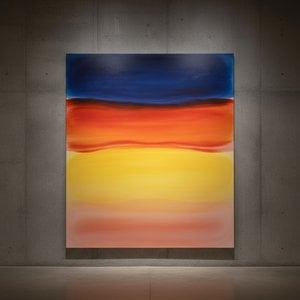
Título traducido: Paisaje Primordial

Descripción atractiva: Este paisaje primigenio de Rothko fusiona elementos cubistas y surrealistas en una obra maestra llena de simbolismo rojo y gris, explorando temas de encuentro y transformación con una textura sorprendente.

Explore la vida y obra de Mark Rothko (1903-1970), un pintor clave del Expresionismo Abstracto. Descubre sus icónicos cuadros de campo de color, su profundidad emocional e impacto perdurable en el arte moderno. #ExpresionismoAbstracto #CamposDeColor #Rothko #HistoriaDelArte

Giclée / Impresión de arte

Impresiones giclée o en lienzo de calidad de museo con producción rápida y opciones de acabado flexibles. ( Encargar reproducción pintada a mano Ver versión en imagen digital)

P118B $10
P118H $10
P118W $10
P438Z $10
P508JH $12
P508YH $12
P805H $10
P805Z $10
P919BZ $10
P919G $10
P919XJ $10
P959ZH $10
P968JZ $12
W106C $8
W218G $10
W218JH $8
W218Y $10
W307PJ $10
W316G $10
W316PJ $8
W316Y $10
W398PJ $8
W4111J $10
W500HY $15
W500JH $15
W692G $12
W849H $8
W940BG $15
W953PJ $8

Estándar
personalizado
CM
INCH

Elija entre nuestros tamaños predefinidos que respetan las proporciones originales de la obra.

ancho
altura

Puede introducir sus propias dimensiones para adaptarse a un marco o espacio específico. Si el tamaño seleccionado no coincide con las proporciones de la imagen original, recortaremos la obra de arte o extenderemos la imagen con un borde con efecto espejo o de color sólido. Se enviará una maqueta digital para su aprobación antes de que comience la producción.
Tenga en cuenta que la vista previa en pantalla no refleja el recorte o la extensión real. Solo la maqueta mostrará con precisión la composición final.
Aunque existen tamaños personalizados, recomendamos seleccionar una dimensión de la lista predefinida para preservar las proporciones originales.

Envío a todo el mundo () en 2 semanas en lugar de las 4/5 semanas estándar. (21 septiembre)

why_choose_icon
Envío exprés gratuito a todo el mundo
why_choose_icon
Lienzo de lino de alta calidad
why_choose_icon
Seguro de envío completo
why_choose_icon
Garantía de reembolso de impuestos aduaneros
why_choose_icon
Garantía de fidelidad cromática exacta
why_choose_icon
Política de devolución de 100 días (solo por defectos)
why_choose_icon
Garantía de devolución del 100% del dinero
why_choose_icon
Oferta por volumen

Precio total

$ 68

reproduction

Título traducido: Paisaje Primordial

Giclée / Impresión de arte

Tamaño de la reproducción

-

Precio total

$ 68

Datos clave

  • artist: Mark Rothko
  • notable elements: Red and grey color palette, angular lines, distorted forms, symbolic representation of figures.
  • title: Primeval Landscape
  • subject: Stylized figures within a fragmented space
  • movement: Abstract Expressionism, Cubism, Surrealism
  • style: Surrealist, Cubist, Abstract

Cuestionario de arte

Cada pregunta tiene una única respuesta correcta.

Pregunta 1:
Which artistic movements most strongly influenced Mark Rothko's 'Primeval Landscape'?
Pregunta 2:
'Primeval Landscape' is characterized by a dominant color scheme of…?
Pregunta 3:
The fragmented, geometric space and distorted figures in 'Primeval Landscape' suggest a focus on which of the following?
Pregunta 4:
Based on Rothko's biography, what early influence likely contributed to his artistic explorations?
Pregunta 5:
The technique used in 'Primeval Landscape' likely involves…?

Primeval Landscape: A Journey Backwards Into Rothko’s Artistic Soul

“Primeval Landscape” isn't merely a painting; it’s a portal into Mark Rothko’s formative years, a pivotal moment where the towering influence of Cubism and Surrealism began to reshape his artistic vision. Painted around 1945, during an era defined by palpable anxiety – the looming shadow of World War II and its aftermath – this artwork represents more than just visual aesthetics; it embodies Rothko’s grappling with existential questions about humanity's place in the cosmos.

  • Subject & Composition: The scene unfolds as a stylized tableau populated by two figures—a woman draped in crimson fabric and a seated male form—positioned within an abstracted geometric space. Unlike Rothko’s later Color Field canvases, which prioritize vast expanses of color, “Primeval Landscape” eschews this approach for a dynamic interplay of intersecting lines and varying planes. This deliberate disruption creates depth without resorting to traditional perspective, hinting at narratives of encounter and contemplation.
  • Style & Technique: Rothko’s stylistic evolution is evident here—a synthesis of Cubist fragmentation and Surrealist symbolism. The fractured forms echo Cubist principles, mirroring Picasso's groundbreaking explorations of multiple viewpoints. Simultaneously, the dreamlike quality and symbolic representation align with Surrealism’s fascination with subconscious imagery. Crucially, Rothko avoids a fully committed embrace of either movement, forging his own distinctive visual language.
  • Materiality & Texture: The artwork’s tactile character stems from visible brushstrokes—a technique reminiscent of dry brush or impasto—that imbue the canvas with roughness and depth. This deliberate textural element combats any sense of sterility, anchoring the geometric structure in a palpable materiality that speaks to Rothko's meticulous craftsmanship.
  • Historical Context & Symbolism: The anxieties of the 1940s permeate “Primeval Landscape,” mirroring Rothko’s preoccupation with mythological themes and fragmented forms. The red figure—likely representing passion or energy—and the seated male form—perhaps embodying stillness and introspection—serve as potent symbols reflecting the artist's internal struggles.

The painting’s diffused lighting contributes to its ethereal atmosphere, emphasizing flatness while simultaneously fostering a sense of mystery. Its muted palette – dominated by shades of grey and punctuated by flashes of crimson – reinforces this contemplative mood. “Primeval Landscape” isn’t simply an image; it's an invitation to delve into the artist’s psyche and contemplate the fundamental questions of existence.

Considered alongside Rothko’s broader oeuvre, this artwork illuminates his artistic trajectory—a journey from Cubist influences toward Surrealist explorations culminating in the monumental Color Field paintings that cemented his legacy as one of the most influential artists of the 20th century. Reproductions offer a remarkable opportunity to experience this seminal piece firsthand.


Biografía del artista

vida temprana e influencias

Mark Rothko (Marcus Rothkowitz), un reconocido artista estadounidense, nació el 25 de septiembre de 1903 en Dvinsk, Letonia. Su familia emigró a los Estados Unidos cuando tenía solo diez años. Este cambio cultural influyó más tarde en su estilo artístico.

evolución artística

La obra temprana de Rothko se caracterizó por el **expresionismo abstracto**, un estilo que enfatizaba el proceso de creación del arte más que el producto final. Sus pinturas, como No. 18 (1948) y Untitled (1948), mostraban su enfoque único del color y la forma.
  • **Campo de color:** El uso de campos de color rectangulares audaces por Rothko, a menudo en marcado contraste entre sí, creó una sensación de profundidad y emoción.
  • **Estructura orgánica:** Sus pinturas parecían respirar vida, como si los colores fueran entidades vivientes.

obras notables y exposiciones

  • No. 10 (1950), una pintura que marcó un cambio significativo en el estilo de Rothko, ahora forma parte de la colección del Museo de Arte Moderno.
  • Las murales de Seagram, una serie de pinturas encargadas para el restaurante Four Seasons, mostraron la capacidad de Rothko para adaptar su estilo a diferentes entornos.
  • No. 3 (1950), una pintura que ejemplifica el uso de campos de color rectangulares audaces por Rothko.

vida tardía y legado

La vida de Rothko estuvo marcada por las luchas con la salud mental y un matrimonio tumultuoso. Falleció el 25 de febrero de 1970, a los 66 años. A pesar de sus desafíos, Rothko dejó una huella imborrable en el mundo del arte. Ocre y rojo sobre rojo (campo de color), una pintura que muestra el enfoque único del color de Rothko, se puede encontrar en la colección WahooArt.com. La página de Wikipedia de Mark Rothko proporciona más información sobre su vida y estilo artístico.
Mark Rothko

Mark Rothko

1903 - 1970 , Letonia

Datos clave

  • Artistas Que Influyeron:
    • Edward Hopper
    • Pablo Picasso
  • Fecha De Muerte: 25 de febrero de 1970
  • Fecha De Nacimiento: 25 de septiembre de 1903
  • Influencia En Artistas:
    • Minimalismo
    • Arte contemporáneo
  • Lugar De Nacimiento: Daugavpils, Letonia
  • Movimiento Artístico: Expresionismo Abstracto
  • Nacionalidad: Estadounidense
  • Nombre Completo: Mark Rothko (Marcus Rothkowitz)
  • Obras Notables:
    • No. 18 (1948)
    • No. 10 (1950)
    • Murales Seagram
    • No. 3 (1950)
Explore obras de arte organizadas por temas, estilos y características.