Vista previa Vista previa en RA Encargar reproducción pintada a mano Ver versión en imagen digital Compartir
Ver detalles Añadir a favoritos Descargar Ver artículos similares Radiografía Presentación de diapositivas Estadísticas

Vestido

Descubre la elegancia de principios del siglo XX con esta reproducción pintada a mano del icónico 'Vestido' de Mariano Fortuny, un símbolo de innovación y moda.

Mariano Fortuny (1871-1949) fue un pintor español reconocido por sus innovadoras telas, el vestido Delphos y diseños de iluminación teatral. Descubre su influencia orientalista, invenciones y legado artístico.

Giclée / Impresión de arte

Impresiones giclée o en lienzo de calidad de museo con producción rápida y opciones de acabado flexibles. ( Encargar reproducción pintada a mano Ver versión en imagen digital)

Estándar
personalizado
CM
INCH

Elija entre nuestros tamaños predefinidos que respetan las proporciones originales de la obra.

ancho
altura

Puede introducir sus propias dimensiones para adaptarse a un marco o espacio específico. Si el tamaño seleccionado no coincide con las proporciones de la imagen original, recortaremos la obra de arte o extenderemos la imagen con un borde con efecto espejo o de color sólido. Se enviará una maqueta digital para su aprobación antes de que comience la producción.
Tenga en cuenta que la vista previa en pantalla no refleja el recorte o la extensión real. Solo la maqueta mostrará con precisión la composición final.
Aunque existen tamaños personalizados, recomendamos seleccionar una dimensión de la lista predefinida para preservar las proporciones originales.

Envío a todo el mundo () en 2 semanas en lugar de las 4/5 semanas estándar. (19 septiembre)

why_choose_icon
Envío exprés gratuito a todo el mundo
why_choose_icon
Lienzo de lino de alta calidad
why_choose_icon
Seguro de envío completo
why_choose_icon
Garantía de reembolso de impuestos aduaneros
why_choose_icon
Garantía de fidelidad cromática exacta
why_choose_icon
Política de devolución de 100 días (solo por defectos)
why_choose_icon
Garantía de devolución del 100% del dinero
why_choose_icon
Oferta por volumen

Precio total

$ 68

reproduction

Vestido

Giclée / Impresión de arte

Tamaño de la reproducción

-

Precio total

$ 68

Datos clave

  • Movement: Art Deco
  • Artistic style: Studio photography
  • Artist: Mariano Fortuny
  • Medium: Photograph (black and white)
  • Title: Dress
  • Influences: Ancient Greece

Cuestionario de arte

Cada pregunta tiene una única respuesta correcta.

Pregunta 1:
What is the most striking characteristic of the image’s color palette?
Pregunta 2:
What is the primary purpose of the mannequin in this photograph?
Pregunta 3:
The technique described as 'painted-on-glass' suggests what about the dress?
Pregunta 4:
What historical context does the dress and photograph evoke?
Pregunta 5:
Who is the artist responsible for this artwork?

Un Vistazo a la Moda del Principio del Siglo XX: "Vestido" de Mariano Fortuny

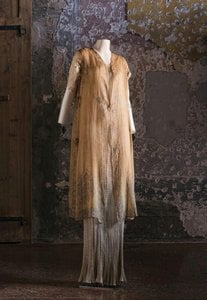
Esta cautivadora fotografía en blanco y negro presenta una reproducción meticulosamente elaborada del icónico “Vestido” de Mariano Fortuny, creado alrededor de 1910. Ofrece una ventana única a la elegancia e innovación que definieron la moda a principios del siglo XX, mostrando el revolucionario enfoque del diseñador hacia el diseño textil y la construcción de prendas.

El Vestido: Diseño y Técnica

En el corazón de esta imagen se encuentra el vestido en sí mismo – un ejemplo primordial del estilo “Delphos” característico de Fortuny. La fotografía captura las líneas fluidas y la curva elegante de la tela mientras se drapea alrededor del maniquí, resaltando su fluidez y movimiento. La técnica empleada para crear esta reproducción imita el proceso fotográfico original, enfatizando los intrincados detalles de la textura del vestido. Aparece como si estuviera pintado sobre vidrio, otorgando una calidad delicada y casi translúcida a la tela. Las líneas verticales inherentes a la forma del maniquí proporcionan un contraste llamativo con las curvas fluidas del vestido, creando interés visual y equilibrio en la composición.

Contexto Histórico y la Visión de Fortuny

Mariano Fortuny (1871-1949), nacido en Reus, España, fue un verdadero polímata – un artista, inventor y diseñador de moda cuya obra trascendió los límites tradicionales. Inspirado por el drapeado griego antiguo e influenciado por la introducción de diversos textiles a su madre durante su infancia en París, Fortuny buscó recrear la belleza etérea de las prendas clásicas utilizando técnicas innovadoras. El “Vestido Delphos”, con su seda permanentemente plisada y silueta fluida, fue una ruptura radical con las modas restrictivas de la Belle Époque. Encarnaba un nuevo ideal de libertad y elegancia femenina, reflejando el cambiante panorama social a principios del siglo XX. Las invenciones de Fortuny en iluminación teatral demuestran aún más su compromiso con la innovación y la expresión artística.

Simbolismo y Resonancia Emocional

El formato en blanco y negro de esta fotografía realza su calidad atemporal, evocando una sensación de nostalgia y significado histórico. La imagen trasciende la mera documentación; captura la esencia de una era definida por una estética refinada y una modernidad naciente. El vestido en sí simboliza elegancia, sofisticación y una ruptura con las convenciones. Al contemplar esta reproducción, uno puede apreciar no solo el arte del diseño de Fortuny, sino también los cambios culturales que moldearon la moda a principios del siglo XX. El maniquí, aunque funcional para exhibir la prenda, añade una capa de distanciamiento, invitando a los espectadores a contemplar el vestido como un objeto de arte y significado histórico.


Biografía del artista

Early Life and Inspiration

Mariano Fortuny y Marsal (Granada, May 11, 1871 – Venice, May 3, 1949) was a Spanish painter, inventor, sculptor, photographer, architect, and theatrical stage lighting designer. His father, Mariano Fortuny y Marsal, was a genre painter who tragically passed away when Mariano was just three years old, profoundly shaping his formative years. This event led to the family’s relocation to Paris, France, where Mariano's mother introduced him to textiles and fabrics—a pivotal influence on his artistic vision. From a young age, Fortuny demonstrated exceptional talent in painting, drawing, and sculpting, showcasing skills that quickly distinguished him from his peers. He studied at the École Supérieure des Beaux-Arts in Paris alongside Jean-Joseph Benjamin-Constant, absorbing stylistic influences that would permeate his subsequent work. His fascination with Richard Wagner’s operas fueled his artistic explorations and inspired him to delve into theatrical design—a passion he pursued relentlessly throughout his life.

Artistic Talents and Inventions

Fortuny's artistic prowess extended beyond painting; he mastered diverse mediums, including photography, sculpture, architecture, etching, and theatrical stage lighting. He revolutionized theater design with the invention of the fortuny cyclorama dome, a quarter dome constructed of plaster or cloth that utilized indirect lighting to create seamless transitions between scenes—a groundbreaking technique that dramatically enhanced visual impact. His treatise “Éclairage scénique” (1904) meticulously documented his discovery of reflecting light off different surfaces, altering its color, intensity, and properties—a scientific breakthrough that underpinned his theatrical innovations. Fortuny’s inventive spirit manifested in over twenty patented inventions between 1901 and 1934, transforming various industries and solidifying his reputation as a visionary innovator. Among his most notable achievements was the creation of the “Delphos gown,” a revolutionary textile design featuring intricate pleats that achieved its characteristic undulating texture through a complex mechanical process—a testament to Fortuny’s meticulous craftsmanship and artistic ingenuity.

Notable Contributions and Collaborations

Fortuny gained international acclaim in the 1920s, collaborating with prominent figures such as Richard Wagner and Marcel Proust. He served as stage designer for Wagner's operas, adapting his dome specifically for La Scala opera house in Milan—a feat of engineering that ensured its structural integrity during performances. His work profoundly impacted theatrical aesthetics, elevating visual storytelling to new heights. Fortuny’s artistic legacy extends beyond theater; he contributed significantly to the revival of classical motifs and techniques in decorative arts, influencing generations of artists. He collaborated closely with his brother-in-law Raimundo de Madrazo on numerous paintings—a testament to their shared artistic sensibilities and creative partnership.

Legacy and Later Life

Mariano Fortuny’s influence resonated throughout his life, culminating in his relocation to Venice in 1911 where he established a studio dedicated to preserving and disseminating his artistic heritage. He continued to experiment with new materials and techniques, pushing the boundaries of artistic expression—a characteristic trait that defined his creative journey. Fortuny's work inspired Marcel Proust’s masterpiece “À la recherche du temps perdu,” capturing the essence of Parisian intellectual life during the Belle Époque. His final years were marked by a dedication to perfecting his craft and honoring his artistic vision—a poignant reminder of his unwavering commitment to excellence. He passed away peacefully in Venice on May 3, 1949, leaving behind an enduring legacy as one of Spain’s most celebrated artists.

Selected Paintings by Mariano Fortuny

  • Teagown (Museum of Fine Arts, Boston)
  • Portrait of Henriette Fortuny
Mariano Fortuny

Mariano Fortuny

1871 - 1949 , España

Datos clave

  • Artistic Movement Or Style: Orientalism art
  • Artists Or Movements Influenced By This Artist: ['Marcel Proust']
  • Artists Who Influenced This Artist: ['Richard Wagner']
  • Date Of Birth: May 11, 1871
  • Date Of Death: May 3, 1949
  • Full Name: Mariano Fortuny y Marsal
  • Nationality: Spanish
  • Notable Artworks:
    • Teagown
    • Portrait of Henriette Fortuny
  • Place Of Birth: Granada, Spain
Explore obras de arte organizadas por temas, estilos y características.