Café Man Ray: A Surrealist Reverie Revisited
The American artist Man Ray (1890-1976) fundamentally reshaped the perception of photography, elevating it from mere documentation to an expressive art form. His artistic journey commenced in New York with paintings—bold explorations of abstraction and symbolism—but a pivotal encounter with Dadaism, spearheaded by Marcel Duchamp in 1915, propelled his conceptual horizons far beyond conventional boundaries. Embracing the ready-made aesthetic championed by Duchamp, Man Ray’s groundbreaking sculptures exemplify this paradigm shift; perhaps most notably, “The Gift,” featuring a flattened iron affixed with tacks (1921), stands as an emblem of artistic innovation. Returning to Paris after World War I, he immersed himself in diverse creative pursuits—portraiture, fashion photography, and filmmaking—activities that solidified his position within the Surrealist movement and cemented his reputation as a visionary innovator.
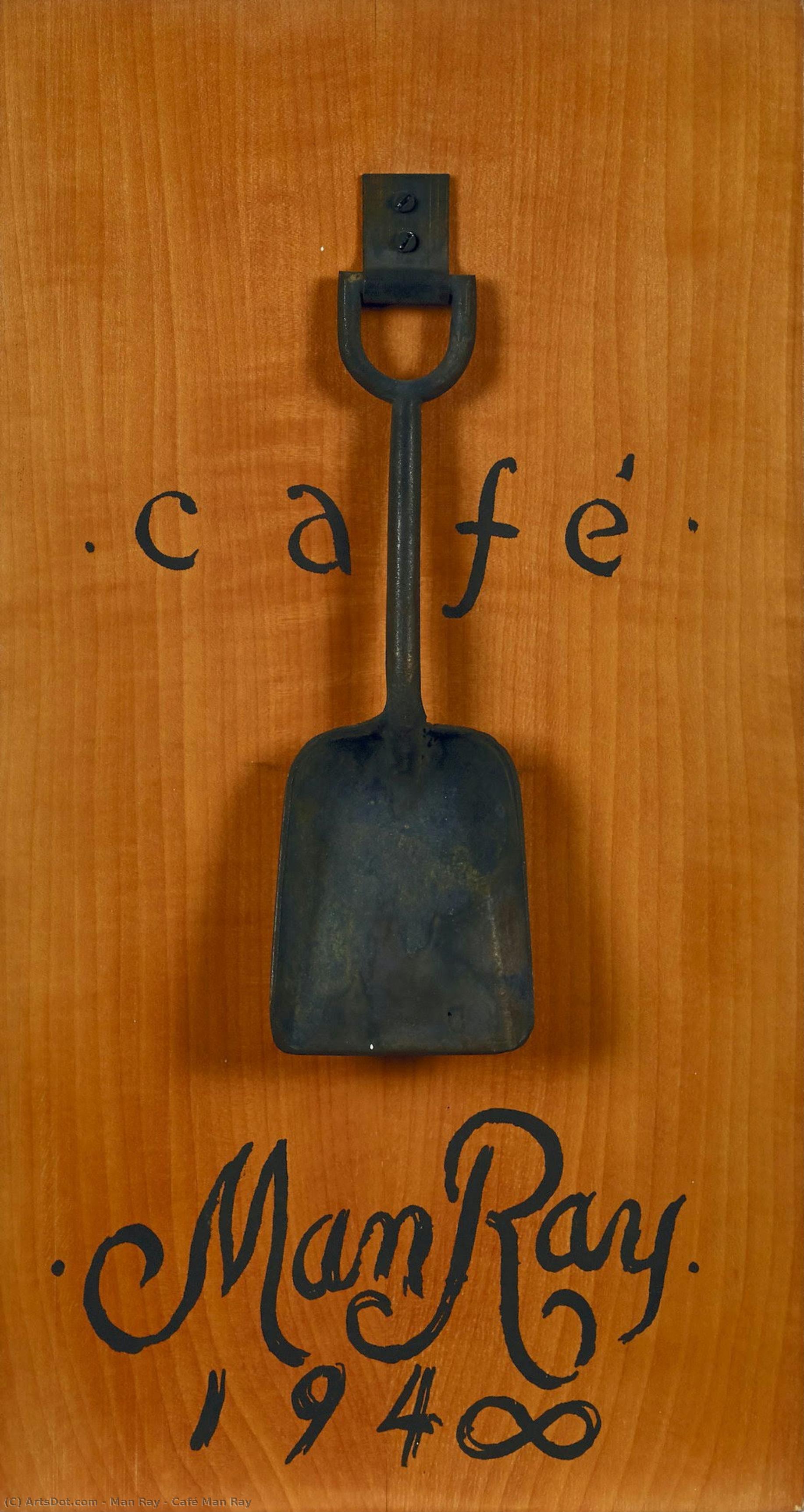
- Subject Matter: The artwork presents a meticulously crafted still life centered around a weathered shovel resting against a richly textured wooden panel. This seemingly unassuming composition belies a profound narrative of time, labor, and perhaps even nostalgia—themes that resonate deeply within the Surrealist tradition.
- Style: Man Ray’s approach leans toward realism infused with stylistic elements characteristic of Surrealism. The deliberate juxtaposition of textures—the rough surface of the shovel contrasted against the smooth grain of the wood—creates visual tension and invites contemplation about materiality and perception.
Technique & Materials: An Impressionistic Dialogue
The artwork’s execution employs oil paint or mixed media, demonstrating a masterful blending of techniques. Layers of pigment are applied with careful consideration to capture the nuances of light and shadow—a hallmark of Impressionism—while simultaneously incorporating textural elements that heighten visual interest. The artist’s meticulous attention to detail—evident in the rendering of the shovel’s contours and the subtle shading on the wooden panel—underscores his commitment to capturing a moment in time with unwavering accuracy.
- Color Palette: Dominant hues consist of deep browns and blacks, punctuated by warm tones derived from the wood grain. This color scheme evokes feelings of warmth, solidity, and understated elegance—a stylistic choice consistent with Surrealist sensibilities.
- Composition: The artwork adopts a centered composition with a slight offset to the right, positioning the shovel slightly off-center to create visual balance. Text – ‘cafe’ and ‘Man Ray 1940’ – are seamlessly integrated into the design in a calligraphic style—a deliberate gesture that emphasizes both subject matter and artistic authorship.
Historical Context & Symbolism: Echoes of Dada & Surrealist Ideals
Born Emmanuel Radnitzky, Man Ray’s artistic trajectory mirrored the turbulent intellectual landscape of the early 20th century—a period marked by radical experimentation and a rejection of traditional conventions. Influenced by Dada’s embrace of chance and absurdity, he sought to challenge established norms and provoke viewers into questioning their assumptions about reality. The shovel itself serves as a potent symbol—representing labor, resilience, and perhaps even the cyclical nature of existence—reflecting core tenets of Surrealist thought.
- Lighting: Directional lighting casts shadows that accentuate the shovel’s form and illuminate the intricate details of the wooden surface—a technique reminiscent of Impressionistic painting and contributing to the artwork's overall atmosphere of quiet contemplation.
Emotional Impact & Artistic Legacy
Ultimately, “Café Man Ray” transcends mere visual representation; it evokes a profound emotional response—one characterized by nostalgia for simpler times and an appreciation for the beauty of understated craftsmanship. Man Ray’s enduring legacy resides in his pioneering spirit—his unwavering dedication to artistic innovation—and his ability to capture fleeting moments of experience with remarkable sensitivity.



 Encargar reproducción
 Enviar
 Compartir
 Detalles

 Descargar
 Similares
 Rayos X
 Presentación de diapositivas

 Ver más






































 La opción de vidrio solo está disponible en tamaños inferiores a 110 cm.





