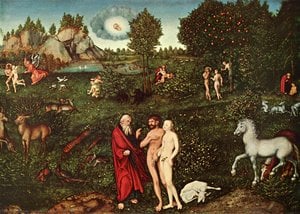
Beardless young man (1500) de Lucas Cranach el Viejo, reproducción al óleo pintada a mano por un maestro artista
Ver en contexto Vista previa en RA Cambiar a impresiones Cambiar a imagen digital Enviar
Detalles Guía Añadir a favoritos Descargar Similares Radiografía Presentación de diapositivas Preguntas y respuestas Estadísticas

Beardless young man Reproducción de pintura al óleo pintada a mano

Dimensiones
46.0 x 33.0 cm

Lucas Cranach the Elder’s ‘Beardless Young Man,’ a captivating 1500 Northern Renaissance portrait, showcases a serious young woman in black with long blonde hair. Admire this masterful oil painting reproduction and discover its rich details.

Descubre a Lucas Cranach el Viejo (1472-1553), pintor renacentista alemán clave, conocido por retratos de reformadores como Lutero y vibrantes escenas bíblicas. ¡Explora su arte influyente!

Reproducción al óleo hecha a mano

Óleo sobre lienzo pintado a mano en el tamaño y marco de su elección, realizado por encargo por nuestros artistas. ( Cambiar a impresiones Cambiar a imagen digital)

Corner sample of the P118B picture frame: poliestireno moldeado, 5 cm wide and 3 cm thick
P118B €10
Corner sample of the P118H picture frame: poliestireno moldeado, 5 cm wide and 3 cm thick
P118H €10
Corner sample of the P118W picture frame: poliestireno moldeado, 5 cm wide and 3 cm thick
P118W €10
Corner sample of the P438Z picture frame: poliestireno moldeado, 5.5 cm wide and 3.5 cm thick
P438Z €10
Corner sample of the P508JH picture frame: poliestireno moldeado, 7 cm wide and 3.5 cm thick
P508JH €12
Corner sample of the P508YH picture frame: poliestireno moldeado, 7 cm wide and 3.5 cm thick
P508YH €12
Corner sample of the P805H picture frame: poliestireno moldeado, 5 cm wide and 3.5 cm thick
P805H €10
Corner sample of the P805Z picture frame: poliestireno moldeado, 5 cm wide and 3.5 cm thick
P805Z €10
Corner sample of the P919BZ picture frame: poliestireno moldeado, 7 cm wide and 3.5 cm thick
P919BZ €10
Corner sample of the P919G picture frame: poliestireno moldeado, 7 cm wide and 3.5 cm thick
P919G €10
Corner sample of the P919XJ picture frame: poliestireno moldeado, 7 cm wide and 3.5 cm thick
P919XJ €10
Corner sample of the P959ZH picture frame: poliestireno moldeado, 5 cm wide and 3 cm thick
P959ZH €10
Corner sample of the P968JZ picture frame: poliestireno moldeado, 6 cm wide and 4 cm thick
P968JZ €12
Corner sample of the W106C picture frame: madera maciza, 5 cm wide and 3 cm thick
W106C €8
Corner sample of the W218G picture frame: madera maciza, 5 cm wide and 3 cm thick
W218G €10
Corner sample of the W218JH picture frame: madera maciza, 5 cm wide and 3 cm thick
W218JH €8
Corner sample of the W218Y picture frame: madera maciza, 5 cm wide and 3 cm thick
W218Y €10
Corner sample of the W307PJ picture frame: madera maciza, 6 cm wide and 3 cm thick
W307PJ €10
Corner sample of the W316G picture frame: madera maciza, 6 cm wide and 3 cm thick
W316G €10
Corner sample of the W316PJ picture frame: madera maciza, 6 cm wide and 3 cm thick
W316PJ €8
Corner sample of the W316Y picture frame: madera maciza, 6 cm wide and 3 cm thick
W316Y €10
Corner sample of the W398PJ picture frame: madera maciza, 5 cm wide and 3 cm thick
W398PJ €8
Corner sample of the W4111J picture frame: madera maciza, 6.5 cm wide and 3.5 cm thick
W4111J €10
Corner sample of the W500HY picture frame: madera maciza, 7 cm wide and 5 cm thick
W500HY €15
Corner sample of the W500JH picture frame: madera maciza, 7 cm wide and 5 cm thick
W500JH €15
Corner sample of the W692G picture frame: madera maciza, 8 cm wide and 4 cm thick
W692G €12
Corner sample of the W849H picture frame: madera maciza, 5 cm wide and 3 cm thick
W849H €8
Corner sample of the W940BG picture frame: madera maciza, 7.5 cm wide and 4.5 cm thick
W940BG €15
Corner sample of the W953PJ picture frame: madera maciza, 6 cm wide and 3.5 cm thick
W953PJ €8

Tamaño estándar
a medida
CM
INCH

Elija entre nuestros tamaños predefinidos que respetan las proporciones originales de la obra.

ancho
altura

Indique el ancho y el alto que necesite para adaptarse a su marco o pared. Al tratarse de una obra pintada a mano, si requiere un tamaño con una proporción distinta, el artista puede pintar un poco más alrededor de la imagen o recortarla ligeramente; usted elige. Le enviaremos una maqueta digital para su aprobación antes de comenzar la pintura. La imagen que se muestra en esta página no refleja el resultado real; solo la maqueta lo hace.

Ejemplos de lo que se puede personalizar: Reemplace el rostro con una foto del cliente; Agregue una mascota (por ejemplo, cambie un gato por un perro); Incluya un mensaje oculto en el fondo; Cambie el paisaje o los elementos del fondo.
Tras realizar el pedido, el equipo de WahooArt.com enviará un correo electrónico al cliente para solicitar instrucciones y proporcionarle una vista previa del boceto.

Envío a todo el mundo () en 3-4 semanas en lugar de las 5 semanas estándar. (3 noviembre). Sin comprometer la calidad.

Envío exprés gratuito a todo el mundo
Lienzo de lino de alta calidad
Seguro de envío total
Garantía de reembolso de aranceles aduaneros
Garantía de fidelidad cromática exacta
Política de devolución de 100 días (solo por defectos)
Garantía de devolución del 100% del dinero
Descuento por cantidad

Precio total

€ 243

Beardless young man

Técnica de reproducción

Dimensiones de la reproducción

-

Precio total final

€ 243

Datos clave

  • Year: 1500
  • Medium: Oil on panel
  • Title: Beardless Young Man
  • Notable elements: Chiaroscuro, detail
  • Location: Stiftung Stadtmuseum Berlin
  • Dimensions: 46 x 33 cm

A Glimpse into the Northern Renaissance: The Enigma of the Beardless Young Man

In the quiet, contemplative depths of Lucas Cranach the Elder’s Beardless Young Man, painted in the year 1500, we encounter more than just a mere portrait; we step into the very soul of the Northern Renaissance. This exquisite oil on panel, measuring a delicate 46 x 33 cm, serves as a profound window into an era defined by both technical mastery and a burgeoning psychological awareness. As one gazes upon the subject, there is an immediate, magnetic pull—an enigmatic expression that seems to hover between a moment of deep introspection and a silent invitation to the viewer. The young man’s face, rendered with breathtaking precision, captures the subtle nuances of human emotion, where every soft contour and delicate feature speaks to Cranach's unparalleled ability to breathe life into pigment and wood.

The artistry of this piece lies in its masterful command of light and shadow. Through a sophisticated use of chiaroscuro, Cranach creates a remarkable sense of volume, allowing the subject to emerge from the darkness with a sculptural presence. This technique does not merely define form; it imbues the composition with a dramatic tension that is both haunting and beautiful. The richness of the oil medium allows for a depth of color that feels almost tactile, inviting the eye to wander through the intricate folds of the subject's clothing. Each detail, from the texture of the fabric to the subtle sheen on the skin, provides a luxurious sensory experience, making this work a cornerstone of German Renaissance portraiture.

Historical Elegance and Timeless Sophistication

To possess or display a reproduction of such a masterpiece is to bring a piece of history into the modern living space. Beyond its aesthetic allure, Beardless Young Man carries the weight of historical significance, originating from the rich cultural tapestry of Germany. As a court painter to the Electors of Saxony, Cranach was at the epicenter of the religious and political shifts of his time. This portrait reflects the refined tastes of the era, where fashion and identity were inextricably linked. The meticulous attention to the subject's attire offers scholars and enthusiasts alike a glimpse into the sartorial elegance of the early 16th century, making it an invaluable reference for anyone captivated by the heritage of European art.

For the discerning collector or interior designer, this painting offers a unique opportunity to introduce a sense of intellectual depth and classical grace to any environment. Whether placed in a sunlit study or a moody, contemporary gallery setting, the painting acts as a focal point that stimulates conversation and evokes emotion. It is not merely a decoration but an atmospheric anchor that lends a sense of permanence and prestige. The interplay between the subject's serious gaze and the masterful technique ensures that the artwork remains eternally relevant, bridging the gap between the year 1500 and the present day with effortless sophistication.

Preguntas y respuestas

¿Qué tan intensos son los colores de "Beardless young man"?

Los colores de "Beardless young man" de Lucas Cranach el Viejo presentan una saturación Subtle Color con una intensidad Balanced.

¿De qué país es la obra del Northern Renaissance "Beardless young man"?

"Beardless young man" fue creada por Lucas Cranach el Viejo, nacido en Alemania, dentro del movimiento Northern Renaissance. El origen del artista vincula la obra al Northern Renaissance tal como lo practicaban los artistas de Alemania.

¿Qué tamaño y orientación se recomiendan para la impresión de "Beardless young man"?

Se recomienda imprimir "Beardless young man" de Lucas Cranach el Viejo en un tamaño de Small con una orientación Portrait.


Biografía del artista

Primeros años y formación

Lucas Cranach el Viejo, un destacado pintor y grabador del Renacimiento alemán, nació en 1472 en Kronach, Alta Franconia. Aunque la fecha exacta de su nacimiento es desconocida, se sabe que aprendió las artes del dibujo de su padre, Hans Maler, y posteriormente desarrolló sus habilidades bajo la tutela de maestros locales del sur alemán.

Carrera y logros destacados

La habilidad de Cranach atrajo la atención del duque Federico III de Sajonia, también conocido como Federico el Sabio. En 1504, se convirtió en pintor de la corte de los electores de Sajonia en Wittenberg, un puesto que ocupó durante la mayor parte de su carrera.
  • Fue reconocido por sus retratos de príncipes alemanes y líderes de la Reforma protestante, incluyendo a Martín Lutero.
  • Cranach también pintó temas religiosos, inicialmente dentro de la tradición católica, pero posteriormente explorando nuevas formas de expresar las preocupaciones luteranas en el arte.
  • Su taller produjo numerosas obras, incluyendo versiones continuadas por su hijo Lucas Cranach el Joven, y otros artistas incluso después de su muerte.

Estilo artístico y evolución

El estilo artístico de Cranach evolucionó a lo largo de su carrera. Inicialmente influenciado por la escuela del Danubio, sus primeras obras muestran un uso poético del paisaje. A medida que se estableció en Wittenberg, desarrolló un estilo distintivo caracterizado por:
  • Retratos expresivos: Sus retratos capturan no solo la apariencia física de los sujetos, sino también su personalidad y estatus social.
  • Temas religiosos innovadores: Cranach introdujo elementos luteranos en sus obras religiosas, desafiando las convenciones artísticas tradicionales.
  • Uso del grabado: Fue un maestro grabador, produciendo numerosas xilografías y aguafortas que difundieron su arte a una audiencia más amplia.

Obras notables y colaboraciones

Entre las obras más destacadas de Lucas Cranach el Viejo se encuentran:
  • La Caza del Ciervo del Elector Federico III el Sabio (1529), una obra maestra que muestra su habilidad para capturar la esencia del estilo renacentista nórdico.
  • Autorretrato, una representación impactante del artista, que exhibe su dominio de la luz y la sombra.
  • El anuncio a Joaquín (1516-18), una escena llena de espíritu alegre, actualmente en el Museo de Bellas Artes de Budapest.

Legado e importancia histórica

El legado de Lucas Cranach el Viejo reside en sus significativas contribuciones al movimiento artístico del Renacimiento alemán. Como figura destacada del Renacimiento nórdico, su obra continúa inspirando a artistas y entusiastas del arte por igual. Su estrecha relación con Martín Lutero y su papel como propagandista visual de la Reforma Protestante lo convierten en una figura clave en la historia del arte y la cultura europea. Cranach no solo fue un artista talentoso, sino también un innovador que desafió las convenciones artísticas tradicionales y contribuyó a la difusión de nuevas ideas religiosas y políticas. Su taller prolífico y el legado artístico transmitido a sus hijos aseguraron su impacto duradero en el mundo del arte.
Lucas Cranach el Viejo

Lucas Cranach el Viejo

1472 - 1553 , Alemania

Datos clave

  • Artistas Que Influyeron: ['Matthias Grünewald']
  • Fecha De Muerte: 1553
  • Fecha De Nacimiento: 1472
  • Lugar De Nacimiento: Kronach, Alemania
  • Movimiento Artístico: Renacimiento alemán
  • Nacionalidad: Alemán
  • Nombre Completo: Lucas Cranach el Mayor
  • Obras Notables:
    • Caza del Ciervo
    • Retrato de Martín Lutero
    • Autorretrato
Explore obras de arte organizadas por temas, estilos y características.