x
Ver en contextoVer en contexto Vista previa en RAVista previa en RA Comprar pintura hecha a mano Comprar pintura hecha a manoComprar imagen Comprar imagen EnviarEnviar
DetallesDetalles Añadir a favoritos Añadir a favoritos DescargarDescargar SimilaresSimilares RadiografíaRadiografía Presentación de diapositivasPresentación de diapositivas

Thomas and Wilhelmine

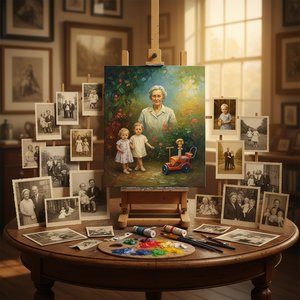
Lovis Corinth's "Thomas and Wilhelmine" (1916) captures two children with poignant realism, reflecting the artist’s journey through Impressionism & Expressionism. Explore this iconic portrait.

Descubre Lovis Corinth (1858-1925), pintor alemán que fusionó Impresionismo y Expresionismo. Retratos, paisajes y obras impactantes como 'En el Matadero'. ¡Explora su legado!

Giclée / Impresión de arte

Impresiones giclée o en lienzo de calidad de museo con producción rápida y opciones de acabado flexibles. (Comprar pintura hecha a mano Comprar pintura hecha a manoComprar imagen Comprar imagen)

P118B $10
P118H $10
P118W $10
P438Z $10
P508JH $12
P508YH $12
P805H $10
P805Z $10
P919BZ $10
P919G $10
P919XJ $10
P959ZH $10
P968JZ $12
W106C $8
W218G $10
W218JH $8
W218Y $10
W307PJ $10
W316G $10
W316PJ $8
W316Y $10
W398PJ $8
W4111J $10
W500HY $15
W500JH $15
W692G $12
W849H $8
W940BG $15
W953PJ $8

Estándar
a medida
CM
INCH

Elija entre nuestros tamaños predefinidos que respetan las proporciones originales de la obra.

ancho
altura

Puede introducir sus propias dimensiones para adaptarse a un marco o espacio específico. Si el tamaño seleccionado no coincide con las proporciones de la imagen original, recortaremos la obra de arte o extenderemos la imagen con un borde con efecto espejo o de color sólido. Se enviará una maqueta digital para su aprobación antes de que comience la producción.
Tenga en cuenta que la vista previa en pantalla no refleja el recorte o la extensión real. Solo la maqueta mostrará con precisión la composición final.
Aunque existen tamaños personalizados, recomendamos seleccionar una dimensión de la lista predefinida para preservar las proporciones originales.

Envío a todo el mundo () en 2 semanas en lugar de las 4/5 semanas estándar. (30 agosto)

why_choose_icon
Envío exprés gratuito a todo el mundo
why_choose_icon
Lienzo de lino de alta calidad
why_choose_icon
Seguro de envío total
why_choose_icon
Garantía de reembolso de impuestos aduaneros
why_choose_icon
Garantía de fidelidad cromática exacta
why_choose_icon
Política de devolución de 60 días (solo por defectos)
why_choose_icon
Garantía de devolución del 100% del dinero
why_choose_icon
Descuento por cantidad

Precio total

$ 68

reproduction

Thomas and Wilhelmine

Giclée / Impresión de arte

Dimensiones de la reproducción

-

Precio total final

$ 68

Datos clave

  • Influences:
    • Impressionism
    • Symbolism
  • Artistic style: Vibrant colors, loose brushwork
  • Subject or theme: Family intimacy, childhood
  • Medium: Oil on canvas
  • Dimensions: 165 x 96 cm
  • Title: Thomas and Wilhelmine
  • Year: 1916

Test de arte

Cada pregunta tiene una única respuesta correcta.

Pregunta 1:
What artistic movement is Lovis Corinth most closely associated with?
Pregunta 2:
In the painting 'Thomas and Wilhelmine', what is most evident about the children's relationship?
Pregunta 3:
What year was the painting 'Thomas and Wilhelmine' created?
Pregunta 4:
Lovis Corinth suffered a stroke in which year, significantly impacting his artistic style?
Pregunta 5:
The painting utilizes strong backlighting. What effect does this primarily create?

The Tender Embrace: Lovis Corinth’s “Thomas and Wilhelmine”

Lovis Corinth's "Thomas and Wilhelmine," painted in 1916, isn’t merely a portrait; it’s a poignant distillation of childhood innocence captured within the burgeoning complexities of early 20th-century Europe. The painting depicts two young siblings – Thomas and Wilhelmine – standing side by side, their postures radiating a quiet intimacy that belies the turbulent era in which it was created. Corinth, a master of capturing fleeting moments and intense emotion, eschews traditional formality for a remarkably candid portrayal, inviting us into a private world of familial connection.

The scene unfolds within what appears to be a modest interior – a glimpse of a wooden chair, a partially visible chest of drawers, and a window offering a soft, diffused light. Corinth’s masterful use of chiaroscuro—the dramatic contrast between light and shadow—draws our attention immediately to the children themselves. Their faces, rendered with remarkable sensitivity, hold an expression of gentle curiosity and shared contentment. Wilhelmine, on the left, gazes downwards, her hand instinctively reaching for Thomas's, a gesture that speaks volumes about their bond. Thomas, positioned slightly further back, turns his head towards the viewer, creating a direct connection with the observer – a subtle invitation to share in this quiet moment.

A Painter’s Evolution: Corinth and the Berlin Secession

Understanding “Thomas and Wilhelmine” requires placing it within the context of Lovis Corinth's artistic journey. Initially associated with the more rigid traditions of Munich’s Academy, Corinth quickly gravitated towards the avant-garde circles of Berlin, becoming a prominent figure in the Berlin Secession. This group challenged established norms, embracing bold colors, expressive brushwork, and a focus on depicting the realities of modern life – often with an emotional intensity that resonated deeply with viewers. His early work was influenced by Courbet’s realism, but Corinth swiftly developed his own distinctive style, characterized by vibrant hues, loose brushstrokes, and a profound empathy for his subjects.

The painting's creation coincided with a period of significant personal transformation for Corinth. Following a debilitating stroke in 1911, he experienced a shift in perspective, moving away from the grand narratives of earlier works towards smaller-scale depictions of everyday life and intimate relationships. This change is powerfully evident in “Thomas and Wilhelmine,” where the focus isn’t on elaborate composition or historical grandeur but rather on the simple beauty of childhood connection.

Symbolism of Innocence and Connection

Beyond its immediate depiction, "Thomas and Wilhelmine" carries a rich symbolic weight. The children's youthful faces represent an unspoiled innocence – a fleeting moment before the complexities and challenges of adulthood intrude upon their lives. Their intertwined hands symbolize not only familial love but also a shared vulnerability and mutual support. Corinth’s deliberate choice to depict them in a domestic setting suggests a reverence for the sanctity of family life, particularly during a time marked by social upheaval and uncertainty.

The muted palette—dominated by earthy tones and soft blues—contributes to the painting's overall atmosphere of quiet contemplation. The light filtering through the window acts as a gentle guide, illuminating the children’s faces and highlighting their connection. Corinth masterfully uses this light to create a sense of warmth and intimacy, drawing the viewer into their world.

A Legacy of Emotional Intensity

"Thomas and Wilhelmine" stands as a testament to Lovis Corinth's extraordinary ability to capture the essence of human emotion through his art. It’s a painting that transcends mere representation, offering instead a glimpse into the heart of familial love and the enduring beauty of childhood innocence. Reproductions of this work retain its power to evoke a sense of nostalgia and quiet contemplation, making it a cherished addition to any collection or interior space. Its timeless appeal lies in Corinth's ability to distill complex emotions into a single, unforgettable image – a tender embrace frozen in time.


Biografía del artista

Primeros años y educación

Lovis Corinth, nacido Franz Heinrich Louis el 21 de julio de 1858 en Tapiau, Prusia, fue un artista y escritor alemán cuya obra madura como pintor y grabador realizó una síntesis del impresionismo y el expresionismo. La vida temprana de Corinth se caracterizó por su talento para dibujar, lo que le llevó a estudiar pintura en la Academia de Königsberg en 1876.

Desarrollo artístico

El desarrollo artístico de Corinth fue influenciado por varias figuras clave y movimientos:
  • El trabajo temprano de Lovis Corinth era naturalista en su enfoque, alentado por su instructor Otto Günther.
  • Estudió bajo Ludwig von Löfftz en la Academia de Bellas Artes de Múnich, que enfatizaba la cuidadosa observación de los colores y los valores.
  • Corinth también fue influenciado por Courbet y la Escuela Barbizon, así como por las obras de Rubens durante su tiempo en Amberes.

Obras notables y estilo

Algunas de las obras notables de Corinth incluyen:
  • En el Matadero (78 x 89 cm, Staatsgalerie Stuttgart, Alemania), que muestra su uso del óleo sobre lienzo.
  • Autorretrato (47 x 53 cm, Kunsthalle Bremen, Alemania), demostrando su habilidad en el dibujo.
  • Semi desnudo femenino con sombrero (283 x 383 cm, Kunstpalast, Düsseldorf, Alemania), destacando su uso del lápiz.

Legado y vida posterior

La vida posterior de Corinth se marcó por su presidencia de la Secesión de Berlín desde 1915 hasta 1925. También publicó numerosos ensayos sobre historia del arte, incluido "Das Erlenen der Malerei" ("Sobre aprender a pintar") en 1908. Corinth falleció el 17 de julio de 1925, después de un derrame cerebral en 1911 que lo había paralizado parcialmente. Enlaces clave:
Lovis Corinth

Lovis Corinth

1858 - 1925 , Países Bajos

Datos clave

  • Artistas Que Influyeron:
    • Courbet
    • Rubens
    • Löfftz
  • Fecha De Fallecimiento: 17 de julio de 1925
  • Fecha De Nacimiento: 21 de julio de 1858
  • Influenciado A Artistas:
    • Kirchner
    • Beckmann
    • Baselitz
  • Lugar De Nacimiento: Tauwade, Países Bajos
  • Movimiento Artístico: Impresionismo y Expresionismo
  • Nacionalidad: Alemán
  • Nombre Completo: Lovis Corinth (Franz Heinrich Louis)
  • Obras Notables:
    • En el Matadero
    • Autorretrato
    • Mujer semi-nuda con sombrero
Explore obras de arte organizadas por temas, estilos y características.