Asesoría de arte gratuita

x
Comprar impresión Comprar impresiónComprar imagen en alta resolución Comprar imagen en alta resolución EnviarEnviar
DetallesDetalles Añadir a favoritos Añadir a favoritos DescargarDescargar SimilaresSimilares Rayos XRayos X Presentación de diapositivasPresentación de diapositivas

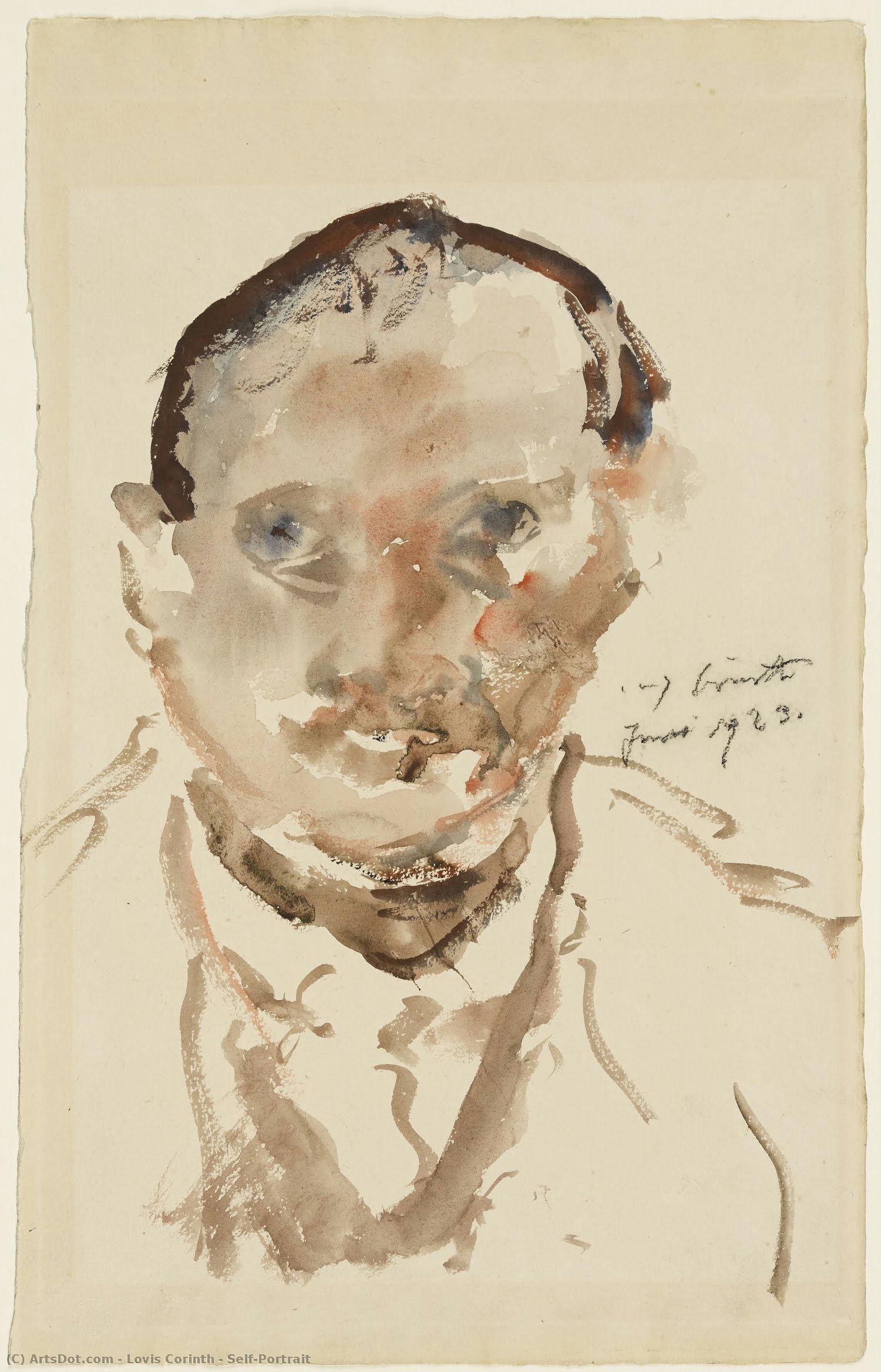
Self-Portrait

Experience Lovis Corinth's expressive 1923 Self-Portrait, a striking blend of Impressionism and Expressionism; discover this masterpiece today.

Descubre la obra maestra de Lovis Corinth (1858-1925), pintor alemán que fusionó Impresionismo y Expresionismo. Retratos expresivos, paisajes dramáticos y escenas bíblicas inspiraron el arte moderno.

Reproducción al óleo hecha a mano

Óleo sobre lienzo pintado a mano en el tamaño y marco de su elección, realizado por encargo por nuestros artistas.

P118B $10
P118H $10
P118W $10
P438Z $10
P508JH $12
P508YH $12
P805H $10
P805Z $10
P919BZ $10
P919G $10
P919XJ $10
P959ZH $10
P968JZ $12
W106C $8
W218G $10
W218JH $8
W218Y $10
W307PJ $10
W316G $10
W316PJ $8
W316Y $10
W398PJ $8
W4111J $10
W500HY $15
W500JH $15
W692G $12
W849H $8
W940BG $15
W953PJ $8

Standard
custom
CM
INCH

Elija entre nuestros tamaños predefinidos que respetan las proporciones originales de la obra.

ancho
altura

Puede ingresar sus propias dimensiones para adaptarse a un marco o espacio específico. Si el tamaño seleccionado no coincide con las proporciones de la imagen original, recortaremos la obra o extenderemos la pintura con elementos adicionales pintados a mano. Se le enviará una maqueta digital para su aprobación antes de comenzar la producción.
Tenga en cuenta que la vista previa en pantalla no refleja el recorte o la extensión reales. Solo la maqueta mostrará con precisión la composición final.
Si bien existen tamaños personalizados, recomendamos seleccionar una dimensión de la lista predefinida para preservar las proporciones originales.

Ejemplos de lo que se puede personalizar: Reemplace el rostro con una foto del cliente; Agregue una mascota (por ejemplo, cambie un gato por un perro); Incluya un mensaje oculto en el fondo; Cambie el paisaje o los elementos del fondo.
Tras realizar el pedido, el equipo de WahooArt.com enviará un correo electrónico al cliente para solicitar instrucciones y proporcionarle una vista previa del boceto.

Entrega mundial () en 3-4 semanas en lugar de las 5 semanas estándar. (3 julio). Sin compromisos con la calidad.

why_choose_icon
Envío exprés gratuito a todo el mundo
why_choose_icon
Lienzo de lino de alta calidad
why_choose_icon
Seguro de envío total
why_choose_icon
Garantía de reembolso de impuestos aduaneros
why_choose_icon
Garantía de fidelidad de color
why_choose_icon
Política de devolución de 60 días (solo por defectos)
why_choose_icon
Garantía de devolución del 100% del dinero
why_choose_icon
Descuento por pedido múltiple

Precio total

-

reproduction

Self-Portrait

Técnica de reproducción

Tamaño de la reproducción

-

Precio total final

-

Datos clave

  • Movement: Expressionism
  • Location: Kunsthalle Bremen
  • Artistic style: Impressionism/Expressionism
  • Artist: Lovis Corinth
  • Notable elements or techniques: Artist's signature visible
  • Year: 1923
  • Medium: Drawing

Test de arte

Solo hay una respuesta correcta para cada pregunta.

Pregunta 1:
Who is the artist of the 'Self-Portrait'?
Pregunta 2:
In what year was Lovis Corinth's 'Self-Portrait' painted?
Pregunta 3:
What artistic movement is Lovis Corinth noted for synthesizing with Impressionism?
Pregunta 4:
What type of medium is the 'Self-Portrait' described as being?
Pregunta 5:
Where is the painting 'Self-Portrait' currently located?

Descripción de la obra

A Glimpse into the Artist's Soul: Lovis Corinth's Self-Portrait

To stand before a self-portrait by an artist of Lovis Corinth’s caliber is not merely to observe a likeness; it is to encounter a direct, unfiltered conversation with the creative spirit itself. This 1923 depiction captures the master at a moment of profound introspection. The subject gazes out from the canvas, framed by the subtle weight of his glasses and the defining sweep of his mustache—details that anchor the viewer in a specific, tangible reality. Corinth, forever navigating the rich currents between Impressionism's luminous observation and Expressionism's raw emotional outcry, offers us here a portrait steeped in both technical mastery and personal vulnerability.

The Synthesis of Style: Bridging Eras on Canvas

Corinth’s artistic journey was one of magnificent evolution. Having absorbed the naturalistic light studies of Impressionism during his formative years in Paris and Munich, he later found himself drawn into the more visceral, emotionally charged landscape of Expressionism. This Self-Portrait serves as a beautiful testament to that synthesis. While the rendering retains a certain observational clarity—a nod to the masters who preceded him—the underlying energy pulses with an expressive intensity. The technique, described as a drawing, suggests immediacy; it feels less like a carefully constructed facade and more like a thought captured before it could dissipate into memory.

Historical Echoes and Emotional Resonance

Created in 1923, this work emerges from a period of immense cultural upheaval. Corinth himself navigated the profound personal shifts that marked his life, including the devastating stroke he suffered. This context imbues the portrait with an added layer of poignant depth. The self-examination visible here transcends mere vanity; it speaks to resilience, to the enduring human need to document one's own existence against the backdrop of a changing world. For the collector or designer, this piece offers more than decoration; it provides a focal point for contemplation—a quiet monument to artistic endurance.

Bringing Corinth Home: Owning a Piece of History

Acquiring a reproduction of this Self-Portrait allows you to integrate a significant piece of art historical dialogue into your own space. The subtle nuances in the line work, the thoughtful gaze, and the palpable sense of history contained within the original make it an unparalleled statement piece. Whether placed in a study where deep thought is encouraged or a gallery wall meant to evoke intellectual depth, this artwork invites viewers to pause, look closer, and engage with the complex interplay between the artist's vision and his own enduring self.

Obras similares


Biografía del artista

Lovis Corinth: Bridging Impressionism and Expressionism

Lovis Corinth (1858-1925) stands as a pivotal figure in German art history, recognized for his distinctive synthesis of Impressionistic sensibilities with the burgeoning fervor of Expressionist ideals. Born Tatapua, Poland, Corinth’s artistic journey began amidst the vibrant cultural landscape of Prussia and culminated in a prolific career marked by groundbreaking paintings, prints, and literary endeavors. His formative years instilled within him an appreciation for naturalism, yet a devastating stroke in 1911 irrevocably altered his stylistic trajectory, propelling him toward bolder colors and emotionally charged compositions characteristic of Expressionism.

Early Influences & Artistic Formation

Corinth’s initial artistic explorations were rooted in the meticulous observation of nature—a hallmark of Impressionist painters like Claude Monet and Jean-Baptiste Millet. Studying diligently in Paris and Munich, he absorbed the stylistic innovations circulating throughout Europe during this period. However, his exposure to artists such as Edvard Munch and Ernst Ludwig Kirchner proved instrumental in shaping his evolving artistic vision. These encounters ignited a passion for conveying psychological depth and emotional intensity—elements that would soon dominate his oeuvre. He meticulously studied the works of Rembrandt and Michelangelo, absorbing their mastery of chiaroscuro and anatomical precision – foundational elements that underpinned his early artistic endeavors.

The Secession Movement & Artistic Breakthrough

Joining the Berlin Secession group in 1907, Corinth collaborated closely with Max Liebermann, establishing a powerful creative partnership that profoundly impacted their artistic development. Liebermann’s influence championed a more psychologically nuanced approach to painting, encouraging Corinth to delve beyond mere visual representation and explore the inner workings of human experience. This collaboration solidified Corinth's commitment to Expressionist principles while retaining his foundational Impressionistic techniques—a harmonious blend that distinguishes his work from many contemporaries. The Secession’s rejection of academic conventions further fueled Corinth’s artistic experimentation and cemented his position as a champion of avant-garde aesthetics. Corinth actively participated in discussions about art theory and social responsibility, reflecting the intellectual dynamism of the era.

Style & Subject Matter: From Naturalism to Emotional Intensity

Corinth's style underwent a dramatic transformation following the stroke of 1911, transitioning from careful realism to expressive abstraction. He embraced vibrant hues—particularly reds and yellows—and employed loose brushstrokes that conveyed palpable emotion. His subjects encompassed a diverse range of themes, including portraits depicting individuals with remarkable psychological complexity, landscapes imbued with atmospheric drama, and evocative depictions of biblical narratives. Paintings like “Lake Lucerne, Afternoon” exemplify his masterful ability to capture fleeting moments of beauty while simultaneously conveying profound emotional resonance. Notable works housed in museums include “Walchensee with Fountain” and “Ecce Homo,” showcasing the enduring legacy of Corinth’s artistic vision. He skillfully blended Impressionistic color palettes with Expressionist compositional techniques—a stylistic hallmark that distinguishes him from many artists of his time.

Legacy & Influence

Lovis Corinth's contribution to German art is undeniable, shaping the trajectory of Expressionism and influencing subsequent generations of artists. His pioneering exploration of psychological realism combined with Impressionistic color palettes established a unique stylistic paradigm—one that continues to inspire admiration and scholarly study. Beyond his paintings, Corinth’s literary pursuits further enriched his artistic persona, demonstrating his multifaceted intellectual curiosity. He penned novels and poems exploring themes of morality, spirituality, and human suffering – reflecting the anxieties of the early 20th century. His enduring influence can be observed in the works of numerous artists who embraced similar expressive techniques and thematic concerns. Corinth’s legacy resides not only in his artistic masterpieces but also in his unwavering dedication to artistic integrity and intellectual engagement—a testament to his profound impact on German cultural history. For more detailed information on Corinth's life and work, please visit https://WahooArt.com/@/lovis-corinth. And for insights into Liebermann’s artistic impact, explore https://en.wikipedia.org/wiki/max_liebermann.
Lovis Corinth

Lovis Corinth

1858 - 1925 , Polonia

Datos clave

  • Artistic Movement Or Style: Impresionismo y Expresionismo
  • Artists Or Movements Influenced By This Artist: ['Expresionismo']
  • Artists Who Influenced This Artist: ['Max Liebermann']
  • Date Of Birth: Tatapua, Polonia (1858)
  • Date Of Death: 1925
  • Full Name: Lovis Corinth
  • Nationality: Alemana
  • Notable Artworks:
    • Lago Lucerna, Tarde
    • El Walchensee con la pendiente del Jochberg
  • Place Of Birth: Prusia Oriental