Vista previa Vista previa en RA Encargar reproducción pintada a mano Ver versión en imagen digital Compartir
Ver detalles Guía Añadir a favoritos Descargar Ver artículos similares Radiografía Presentación de diapositivas Estadísticas

Study sheet (detail)

Study sheet by Leonardo da Vinci showcases detailed profiles and sketches—a glimpse into the master's meticulous process & anatomical studies. Explore this iconic work of art.

¡Explora a Leonardo da Vinci (1452-1519): el genio del Renacimiento detrás de la Mona Lisa y La Última Cena! Descubre su técnica del sfumato, sus estudios anatómicos e invenciones innovadoras. #DaVinci #ArteRenacentista

Giclée / Impresión de arte

Impresiones giclée o en lienzo de calidad de museo con producción rápida y opciones de acabado flexibles. ( Encargar reproducción pintada a mano Ver versión en imagen digital)

P118B $10
P118H $10
P118W $10
P438Z $10
P508JH $12
P508YH $12
P805H $10
P805Z $10
P919BZ $10
P919G $10
P919XJ $10
P959ZH $10
P968JZ $12
W106C $8
W218G $10
W218JH $8
W218Y $10
W307PJ $10
W316G $10
W316PJ $8
W316Y $10
W398PJ $8
W4111J $10
W500HY $15
W500JH $15
W692G $12
W849H $8
W940BG $15
W953PJ $8

Estándar
personalizado
CM
INCH

Elija entre nuestros tamaños predefinidos que respetan las proporciones originales de la obra.

ancho
altura

Puede introducir sus propias dimensiones para adaptarse a un marco o espacio específico. Si el tamaño seleccionado no coincide con las proporciones de la imagen original, recortaremos la obra de arte o extenderemos la imagen con un borde con efecto espejo o de color sólido. Se enviará una maqueta digital para su aprobación antes de que comience la producción.
Tenga en cuenta que la vista previa en pantalla no refleja el recorte o la extensión real. Solo la maqueta mostrará con precisión la composición final.
Aunque existen tamaños personalizados, recomendamos seleccionar una dimensión de la lista predefinida para preservar las proporciones originales.

Envío a todo el mundo () en 2 semanas en lugar de las 4/5 semanas estándar. (23 septiembre)

why_choose_icon
Envío exprés gratuito a todo el mundo
why_choose_icon
Lienzo de lino de alta calidad
why_choose_icon
Seguro de envío completo
why_choose_icon
Garantía de reembolso de impuestos aduaneros
why_choose_icon
Garantía de fidelidad cromática exacta
why_choose_icon
Política de devolución de 100 días (solo por defectos)
why_choose_icon
Garantía de devolución del 100% del dinero
why_choose_icon
Oferta por volumen

Precio total

$ 68

reproduction

Study sheet (detail)

Giclée / Impresión de arte

Tamaño de la reproducción

-

Precio total

$ 68

Datos clave

  • Medium: Ink on paper
  • Title: Study sheet (detail)
  • Movement: High Renaissance
  • Notable elements or techniques: Mirror writing, anatomical study
  • Artistic style: Renaissance sketch
  • Artist: Leonardo da Vinci

Cuestionario de arte

Cada pregunta tiene una única respuesta correcta.

Pregunta 1:
What is the primary subject depicted in Leonardo da Vinci’s ‘Study sheet (detail)’?
Pregunta 2:
Based on the image description, what is one notable element present within the painting’s composition?
Pregunta 3:
Who is the artist credited with creating ‘Study sheet (detail)’?
Pregunta 4:
According to the provided research, what is a characteristic of Leonardo da Vinci’s artistic practice that might explain the limited number of fully completed works attributed to him?
Pregunta 5:
The ‘Study sheet (detail)’ is considered part of which broader category of Leonardo da Vinci’s work?

Study Sheet (Detail) – A Window into Leonardo’s Mind

Leonardo da Vinci's "Study Sheet (Detail)," a remarkably intimate glimpse into the artist’s creative process, transcends mere preparatory sketch; it’s a vibrant tableau of observation, experimentation, and profound human understanding. Dating from around 1478-1480 in Milan, during his formative years under Andrea del Verrocchio's tutelage, this unassuming sheet offers an unparalleled opportunity to witness the genesis of some of art history’s most iconic works. The image itself presents two figures engaged in conversation – a study in gesture and expression, rendered with Leonardo’s signature meticulous detail. The men are not portraits intended for grand display; rather, they appear as subjects for anatomical studies, or perhaps even preliminary sketches for larger compositions. Their relaxed posture and the subtle nuances of their facial expressions suggest an atmosphere of intellectual exchange, hinting at a shared interest in observation and understanding.

Technically, the sheet is executed primarily with pen and ink on paper – a remarkably economical yet expressive medium favored by Leonardo during this period. The lines are not simply delineating form; they’re imbued with a dynamic energy, capturing movement and suggesting underlying musculature. Notice how Leonardo employs rapid, broken strokes to define the contours of the figures, creating an illusion of volume and depth. The shading is subtle yet effective, utilizing cross-hatching to build tone and create areas of light and shadow. This masterful control over line and value demonstrates a deep understanding of perspective and anatomy – skills honed through relentless dissection and observation.

Anatomical Explorations & The Pursuit of Truth

Leonardo’s fascination with the human form was legendary, driven by an insatiable desire to understand its mechanics and beauty. “Study Sheet (Detail)” is a testament to this pursuit, revealing his meticulous anatomical studies that underpinned his artistic achievements. The figures are not idealized representations; they possess a palpable sense of realism, reflecting Leonardo’s commitment to scientific accuracy. The careful rendering of hands, in particular, showcases his deep understanding of skeletal structure and muscle movement – a subject he explored extensively through dissections. This dedication to anatomical truth wasn't merely academic; it was integral to his artistic vision, allowing him to capture the essence of human emotion and experience with unparalleled fidelity.

Interestingly, alongside these studies of the figures themselves, we find evidence of Leonardo’s broader intellectual interests. A clock is depicted in the background, a symbol of time and measurement – reflecting his fascination with engineering and mechanics. A book suggests an engagement with philosophical or literary ideas. These seemingly incidental details enrich the composition, revealing Leonardo as a true Renaissance man—a polymath driven by curiosity and a relentless desire to integrate art, science, and philosophy into a cohesive worldview.

Symbolism & The Human Condition

While ostensibly a preparatory study, “Study Sheet (Detail)” is rich in symbolic potential. The conversation between the two men could represent a dialogue about knowledge, perception, or perhaps even the nature of reality itself. The relaxed setting and informal gestures suggest a sense of camaraderie and intellectual openness – values highly prized during the Renaissance. Leonardo’s ability to capture such subtle nuances of human interaction speaks volumes about his profound understanding of psychology and social dynamics.

Furthermore, the sheet's composition—the figures positioned within a confined space—can be interpreted as a metaphor for the limitations of human perception. Leonardo was acutely aware that our senses can deceive us, and that true knowledge requires careful observation and critical analysis. “Study Sheet (Detail)” invites us to contemplate these themes alongside the artist’s masterful rendering of form and gesture, offering a poignant reflection on the complexities of the human condition.

A Reproduction for the Collector

Reproductions of Leonardo da Vinci's works are prized by collectors worldwide, not merely for their aesthetic beauty but also for their historical significance. A high-quality reproduction of “Study Sheet (Detail)” offers a unique opportunity to bring this intimate glimpse into Leonardo’s mind into your home or office. The meticulous detail and vibrant colors faithfully capture the essence of the original, allowing you to appreciate the artist's genius in exquisite clarity. Consider framing it within an antique wooden frame to further enhance its historical charm – a testament to both the enduring legacy of Leonardo da Vinci and the timeless appeal of his art.


Biografía del artista

Leonardo da Vinci: Vida y Legado

Primeros Años y Aprendizaje (1452-1482)

Leonardo di ser Piero da Vinci (15 de abril de 1452 – 2 de mayo de 1519) nació fuera del matrimonio cerca de Vinci, en la República de Florencia. Su educación temprana incluyó lectura, escritura y aritmética, aunque las instrucciones formales en latín llegaron más tarde. A los catorce años, comenzó un aprendizaje con Andrea del Verrocchio, un destacado artista florentino. Esta formación inmersiva le expuso a la pintura, la escultura y las artes mecánicas, sentando las bases para su genio multifacético.

Primer Periodo Milanés (1482-1499)

En 1482, Leonardo entró al servicio de Ludovico Sforza, Duque de Milán. Él no era solo un artista; funcionó como ingeniero, arquitecto y escultor para la corte. Este período vio que diseñara fortificaciones militares, elaborados decorados escénicos y esculturas (muchas inconclusas). Una comisión monumental durante este tiempo fue La Última Cena, un fresco pintado en el refectorio del monasterio de Santa María delle Grazie – una obra que influiría profundamente en el arte occidental.

Regreso a Florencia y Maestros de la Alta Renacimiento (1500-1506)

Tras la invasión francesa de Milán en 1499, Leonardo regresó a Florencia durante un período álgido del desarrollo artístico. Si bien produjo menos obras que antes, su impacto fue inmenso. Esta época vio el comienzo del trabajo en Mona Lisa (La Gioconda), probablemente la pintura más famosa del mundo, y la refinación de sus técnicas.

Años Tardíos y Patronazgo Francés (1506-1519)

Los años tardíos de Leonardo estuvieron marcados por viajes entre Florencia, Milán y Roma, buscado por su experiencia pero a menudo dejando proyectos inconclusos. En 1516, aceptó la invitación del Rey Francisco I para vivir y trabajar en el Château du Clos Lucé cerca de Amboise en Francia. Murió allí en 1519, dejando atrás un vasto legado de exploración artística y científica.

Influencias y Desarrollo Artístico

  • Las primeras influencias incluyeron a su maestro Verrocchio y la tradición artística florentina más amplia.
  • Un profundo interés en la observación lo llevó a estudiar meticulosamente el mundo natural.
  • Se alejó de la iconografía religiosa tradicional, favoreciendo representaciones realistas de las emociones humanas y la anatomía.
  • Su desarrollo de sfumato – una técnica que utiliza sutiles gradaciones de luz y sombra para crear contornos borrosos y perspectiva atmosférica – revolucionó la pintura y contribuyó significativamente a su estilo distintivo.

Logros Principales

  • Pintura: Mona Lisa, La Última Cena, Virgen de las Rocas, Anunciación
  • Dibujo y Bocetos: Amplios estudios anatómicos, diseños de ingeniería (máquinas voladoras, armas), ilustraciones botánicas.
  • Ciencia e Ingeniería: Trabajo pionero en anatomía, óptica, hidráulica, geología y cartografía. Conceptualizó invenciones siglos por delante de su tiempo.

Significado Histórico

El impacto de Leonardo da Vinci en la historia del arte es inmensurable. Sus pinturas son celebradas por su realismo, profundidad psicológica y técnicas innovadoras. Elevaron el estatus de los artistas de hábiles artesanos a figuras intelectuales. Más allá de sus logros artísticos, sus investigaciones científicas e invenciones prefiguraron muchos descubrimientos modernos. Sigue siendo un símbolo de la curiosidad humana, la creatividad y la búsqueda del conocimiento – una verdadera encarnación del espíritu renacentista. Su legado continúa inspirando asombro y fascinación siglos después de su muerte, consolidando su lugar como una de las figuras más notables de la historia.

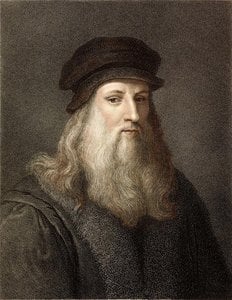
Leonardo da Vinci

Leonardo da Vinci

1452 - 1519 , Italia

Datos clave

  • Artistas Que Influyeron: ['Andrea del Verrocchio']
  • Fecha De Muerte: 2 de mayo de 1519
  • Fecha De Nacimiento: 15 de abril de 1452
  • Lugar De Nacimiento: Vicenza, Italia
  • Movimiento Artístico: Alto Renacimiento
  • Nacionalidad: Italiano
  • Nombre Completo: Leonardo da Vinci
  • Obras Notables:
    • Mona Lisa (La Gioconda)
    • La Última Cena
    • Virgen de las Rocas
    • Anunciación
Explore obras de arte organizadas por temas, estilos y características.