The Enigma of Genius: Leonardo da Vinci’s Life and Legacy
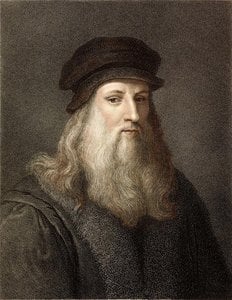
Leonardo di ser Piero da Vinci, born in 1452 near the Tuscan village of Vinci, remains arguably the most universally recognized figure of the Renaissance—a true polymath whose insatiable curiosity propelled him across disciplines, leaving an indelible mark on art, science, and engineering. His very name has become synonymous with genius, a testament to his extraordinary breadth of talent and visionary thinking. Born out of wedlock to Piero da Vinci, a notary, and Caterina, a peasant woman, Leonardo’s early life was unconventional, yet provided him with access to both the practical world and an appreciation for nature that would profoundly shape his artistic vision. He received a basic education in reading, writing, and arithmetic, but it was his apprenticeship under Andrea del Verrocchio in Florence that truly ignited his creative spark. Within Verrocchio’s workshop, Leonardo wasn't merely learning to paint or sculpt; he absorbed the master’s meticulous observation skills and embraced experimentation—a foundation for his lifelong pursuit of knowledge and artistic innovation.
A Study of Movement and Anatomy
The “Rearing Horse,” housed within the esteemed Royal Library of Windsor, United Kingdom, stands as a testament to the unparalleled genius of Leonardo Da Vinci. This chalk drawing, meticulously crafted in 1503 and measuring an impressive 153 x 142 cm, offers a glimpse into the mind of one of history’s most celebrated polymaths. It's not merely a depiction; it is a profound study—a cornerstone of Da Vinci’s artistic process and intellectual exploration. The artist’s choice of brown chalk lends an earthy quality to the animal, while the composition directs our gaze towards the left side where the horse’s body is positioned. Visible back legs on the right suggest a forward lean, emphasizing the motion. Da Vinci’s mastery lies not only in representing form but also in conveying movement with remarkable accuracy. His deep understanding of equine anatomy, honed through studies in both art and science, shines through every line. The drawing reveals his fascination with musculature, skeletal structure, and the mechanics of locomotion—a hallmark of Renaissance scientific inquiry.
Historical Significance and Context within the High Renaissance
This artwork is part of Da Vinci’s extensive collection of preparatory drawings, many now residing in the Royal Library of Windsor. These sketches were crucial to his artistic process, serving as explorations for larger works and demonstrating his meticulous approach. Created during the High Renaissance (roughly 1490-1527), a period characterized by renewed interest in classical art and humanism, Da Vinci’s work exemplified the era's innovative spirit. As a polymath—excelling in painting, engineering, science, and architecture—he embodied the ideal of the “Renaissance man.” His notebooks, filled with observations and sketches, remain invaluable resources for understanding his creative process and intellectual pursuits. The commission to depict the Battle of Anghiari was ambitious, reflecting the grandeur of Florentine patronage during this transformative period.
Symbolism and Emotional Resonance
While seemingly straightforward as an anatomical study, the “Rearing Horse” evokes a sense of power, energy, and controlled force. The rearing pose itself is symbolic—representing strength, defiance, and potential unleashed. Da Vinci’s masterful use of chalk allows for subtle gradations of tone that create depth and volume, imbuing the horse with a palpable presence. Though lacking overt narrative elements, the drawing resonates with an emotional intensity born from its meticulous observation and skillful execution. The image speaks to the beauty and power of nature, reflecting Da Vinci’s profound respect for the natural world. It captures not just the physical form of the horse but also its spirit—a testament to Da Vinci's ability to translate scientific understanding into artistic expression.
Relevance for Modern Art Enthusiasts & Reproduction Opportunities
The “Rearing Horse” continues to captivate audiences today, offering a window into Da Vinci’s artistic process and his enduring fascination with movement and anatomy. For modern art enthusiasts, it serves as a reminder of the importance of studying the masters and appreciating the historical context that shaped their creations. At WahooArt, we are dedicated to preserving this legacy by offering meticulously crafted, handmade oil painting reproductions of Da Vinci’s “Rearing Horse.” Our skilled artists faithfully recreate every detail, ensuring an authentic representation of this iconic masterpiece for art lovers and collectors alike.
Photo Description: --Overall Impression-- The artwork is a detailed sketch of a rearing horse, rendered in shades of brown and sepia tones. It’s a study of anatomy and movement, characteristic of Leonardo da Vinci's preparatory drawings. The composition is dynamic, with the horse positioned diagonally across the frame, emphasizing its upward leap. Lines are loose and expressive, capturing the musculature and flow of the animal’s body. Shapes are primarily organic, defined by curved lines representing the horse’s form and flowing mane. Texture appears to be achieved through hatching and cross-hatching techniques, creating a sense of volume and depth. Lighting is implied rather than explicitly depicted; it seems to originate from above, casting subtle shadows that define the contours of the horse. Perspective is somewhat flattened, typical of preparatory sketches, prioritizing anatomical accuracy over realistic spatial representation. Depth is suggested through variations in line density and shading. The subject matter is a horse in motion, likely intended as a study for a larger painting or sculpture. Symbolic elements are minimal; the image primarily conveys power, energy, and the beauty of animal movement. The style aligns with Renaissance naturalistic drawing, emphasizing observation and anatomical precision. The technique involves meticulous hatching and cross-hatching to build form and texture. Materials appear to be brown ink on paper. --
Size: 153 x 142 cm
Date: 1503
ARTIST INFORMATION:
==================
Artist: Leonardo da Vinci
Birth Year: 1452
Death Year: 1519
Birth City: Vicenza
Birth Country: Italy
Biography: Leonardo di ser Piero da Vinci (1452–1519) was an Italian polymath of the High Renaissance who was active as a painter, draughtsman, engineer, theorist, sculptor, and architect. He is widely regarded as one of the greatest artists of all time and the quintessential embodiment of the “Renaissance man.” His prodigious talent spanned numerous disciplines—from anatomy and botany to geology and hydraulics—demonstrating an unparalleled curiosity and intellectual rigor. Da Vinci’s artistic legacy includes iconic masterpieces such as The Mona Lisa, The Last Supper, and Virgin of the Rocks, which continue to inspire awe and admiration centuries later. He meticulously documented his observations and experiments in notebooks filled with sketches, diagrams, and detailed descriptions—providing invaluable insights into his creative process and scientific pursuits. His influence extended far beyond the realm of art, shaping advancements in engineering, architecture, and science, cementing his place as a pivotal figure in European history."



 Ver en contexto
 Comprar impresión
 Enviar
 Compartir
 Detalles

 Descargar
 Similares
 Radiografía
 Presentación de diapositivas


 Ver más