Asesoría de arte gratuita

x
Encargar reproducción Encargar reproducciónComprar imagen en alta resolución Comprar imagen en alta resolución EnviarEnviar
DetallesDetalles Añadir a favoritos Añadir a favoritos DescargarDescargar SimilaresSimilares Rayos XRayos X Presentación de diapositivasPresentación de diapositivas

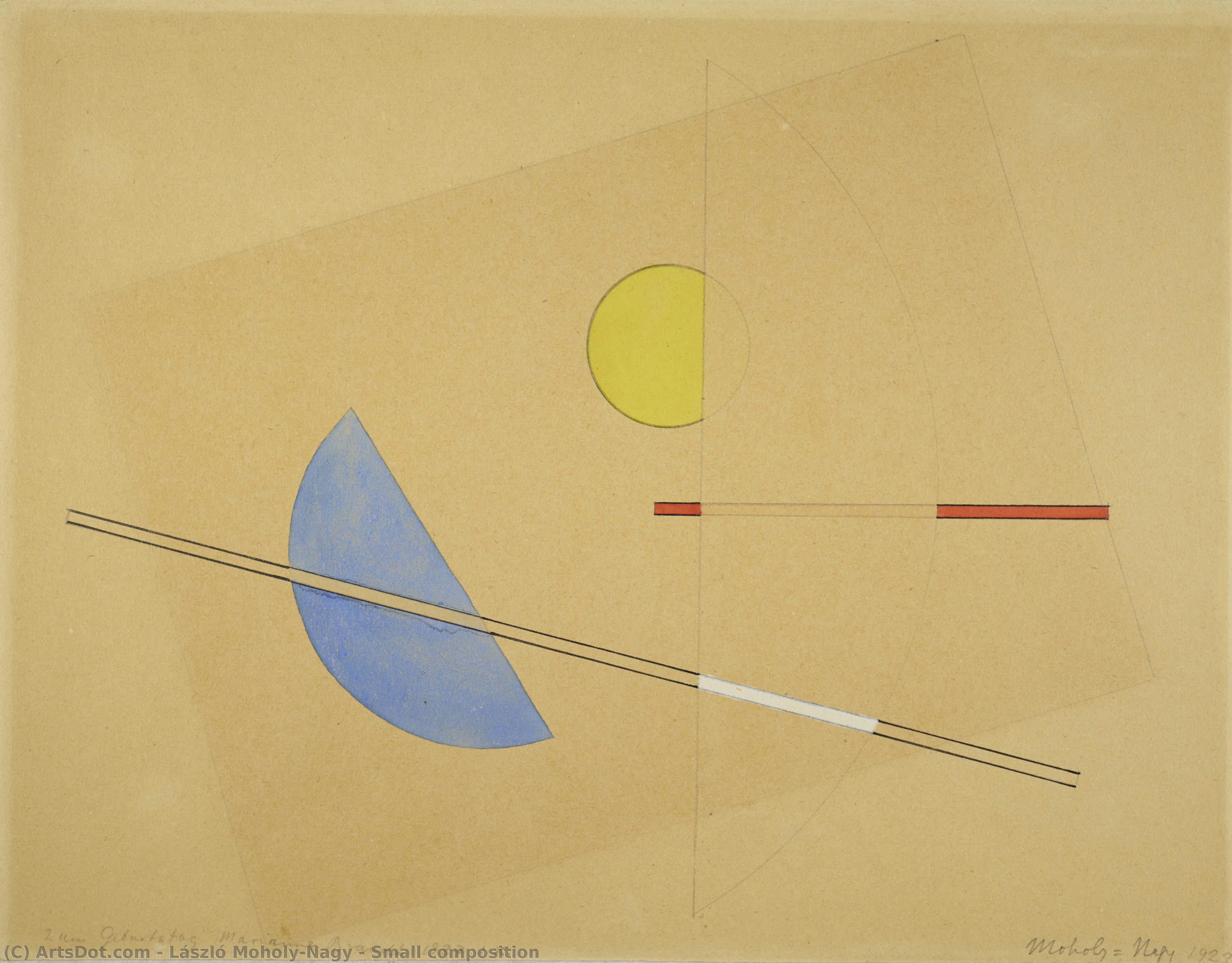
Small composition

Explore Laszlo Moholy Nagy’s ‘Small Composition’ (1923). A dynamic geometric abstraction in watercolor/gouache, influenced by Constructivism & Suprematism. Discover its balanced forms and unique style.

László Moholy-Nagy (1895-1946): Pionero húngaro del Bauhaus, Constructivismo y fotografía. Fusionó arte y tecnología con su innovadora 'Nueva Visión'. Descubre su legado.

Giclée / Impresión de arte

Impresión giclée o en lienzo de calidad de museo con producción rápida y opciones de acabado flexibles.

P118B $10
P118H $10
P118W $10
P438Z $10
P508JH $12
P508YH $12
P805H $10
P805Z $10
P919BZ $10
P919G $10
P919XJ $10
P959ZH $10
P968JZ $12
W106C $8
W218G $10
W218JH $8
W218Y $10
W307PJ $10
W316G $10
W316PJ $8
W316Y $10
W398PJ $8
W4111J $10
W500HY $15
W500JH $15
W692G $12
W849H $8
W940BG $15
W953PJ $8

Standard
custom
CM
INCH

Elija entre nuestros tamaños predefinidos que respetan las proporciones originales de la obra.

ancho
altura

Puede introducir sus propias dimensiones para adaptarse a un marco o espacio específico. Si el tamaño seleccionado no coincide con las proporciones de la imagen original, recortaremos la obra de arte o extenderemos la imagen con un borde con efecto espejo o de color sólido. Se enviará una maqueta digital para su aprobación antes de que comience la producción.
Tenga en cuenta que la vista previa en pantalla no refleja el recorte o la extensión real. Solo la maqueta mostrará con precisión la composición final.
Aunque existen tamaños personalizados, recomendamos seleccionar una dimensión de la lista predefinida para preservar las proporciones originales.

Entrega mundial () en 2 semanas en lugar de las 4/5 semanas estándar. (2 julio)

why_choose_icon
Envío exprés gratuito a todo el mundo
why_choose_icon
Lienzo de lino de alta calidad
why_choose_icon
Seguro de envío total
why_choose_icon
Garantía de reembolso de impuestos aduaneros
why_choose_icon
Garantía de fidelidad de color
why_choose_icon
Política de devolución de 60 días (solo por defectos)
why_choose_icon
Garantía de devolución del 100% del dinero
why_choose_icon
Descuento por pedido múltiple

Precio total

-

reproduction

Small composition

Giclée / Impresión de arte

Tamaño de la reproducción

-

Precio total final

-

Datos clave

  • Influences:
    • Bauhaus
    • Modernism
  • Notable elements: Geometric abstraction
  • Artist: László Moholy-Nagy
  • Medium: Watercolor/gouache
  • Subject or theme: Compositional study
  • Dimensions: 24 x 30 cm
  • Year: 1923

Test de arte

Solo hay una respuesta correcta para cada pregunta.

Pregunta 1:
What artistic movement is most closely associated with László Moholy-Nagy’s ‘Small Composition’?
Pregunta 2:
The color blue in 'Small Composition' represents which element?
Pregunta 3:
In what year was ‘Small Composition’ created?
Pregunta 4:
What material is most likely used in the creation of ‘Small Composition’?
Pregunta 5:
László Moholy-Nagy was a pioneer in which field besides painting?

Descripción de la obra

László Moholy-Nagy’s “Small Composition”: A Pioneering Leap into Abstract Form

“Small Composition,” created in 1923 by László Moholy-Nagy, isn't merely a painting; it’s a crystallized moment of artistic revolution. Emerging from the fertile ground of Constructivism and deeply influenced by the radical experimentation of the Bauhaus school, this work represents a pivotal shift in how artists approached representation – moving beyond mimetic accuracy to explore the inherent power of form, line, and color as autonomous elements of visual language. The piece, rendered in watercolor and gouache on paper, immediately captivates with its dynamic geometry, a carefully orchestrated balance between order and chaos that speaks volumes about the artist’s evolving philosophy.

At first glance, “Small Composition” appears strikingly abstract, yet closer inspection reveals a sophisticated system of relationships. A central axis line bisects the canvas, acting as a silent guide to the placement of several key shapes: a vibrant blue crescent moon, a bold yellow circle, and a striking red rectangle. These aren’t simply decorative elements; they are deliberately positioned to create a sense of spatial depth and visual tension. The overlapping forms suggest movement and interaction, inviting the viewer to actively engage with the composition and decipher its underlying structure. The flatness of the medium – watercolor and gouache on paper – further emphasizes this interplay of form, creating an illusion of three-dimensionality through careful layering and line weight.

The Bauhaus Legacy and the Embrace of Technology

To fully appreciate “Small Composition,” it’s crucial to understand its context within the broader artistic landscape of the early 20th century. Moholy-Nagy's time at the Bauhaus in Weimar was transformative, exposing him to a radical new approach to design that sought to integrate art with industry and technology. The Bauhaus championed functionalism, believing that art should serve a purpose beyond mere aesthetics – it should improve people’s lives through innovative design solutions. This ethos is powerfully reflected in “Small Composition,” which can be seen as an exploration of the principles of geometric abstraction, a technique favored by Constructivist artists like Piet Mondrian and Kazimir Malevich.

However, Moholy-Nagy wasn't simply replicating these movements; he was pushing them forward. He recognized the potential of photography – a relatively new medium at the time – to challenge traditional notions of representation. His early experiments with photograms (photographs created without a camera) demonstrated his fascination with chance and accident, suggesting that art could emerge from unexpected combinations of light and shadow. “Small Composition” can be interpreted as an extension of this exploration, utilizing the principles of photography—particularly its ability to capture fleeting moments and manipulate perception—to create a dynamic and visually arresting composition.

Symbolism and Emotional Resonance

While ostensibly abstract, "Small Composition" is rich in subtle symbolism. The dominant blue crescent moon could represent intuition or dreams, while the bold yellow circle might symbolize energy or enlightenment. The red rectangle, often associated with stability and structure, provides a grounding element to the composition. The deliberate use of color—each hue carefully chosen for its emotional impact—further enhances the work’s expressive power. It's not about depicting recognizable objects; it’s about evoking feelings and ideas through pure form and color.

Beyond these specific symbols, “Small Composition” resonates with a sense of dynamism and forward momentum. The intersecting lines and overlapping shapes create a feeling of movement and transformation, suggesting that the artwork is constantly evolving before the viewer's eyes. It’s a testament to Moholy-Nagy’s belief that art should be an active force—capable of stimulating thought, provoking emotion, and ultimately transforming our perception of the world.

A Reproduction Worthy of Display

Reproductions of “Small Composition” offer a remarkable opportunity to bring this pioneering artwork into any interior space. The vibrant colors and dynamic composition will add a touch of modern sophistication while simultaneously evoking the spirit of artistic innovation. Consider framing the reproduction in a minimalist style to allow the artwork’s inherent beauty to shine through, or opt for a bold statement piece that commands attention. “Small Composition” is more than just a print; it's an invitation to engage with the transformative power of abstract art.

Obras similares


Biografía del artista

László Moholy-Nagy: Pionero del Arte Moderno y el Bauhaus

  • Nacido: Bacs-Kajala, Hungría (1895)
  • Fallecido: 1946

László Moholy-Nagy fue un influyente pintor, fotógrafo, escultor y diseñador húngaro. Es conocido por sus significativas contribuciones a la escuela Bauhaus y su trabajo pionero en Constructivismo, tipografía, fotografía y arte cinético. Su filosofía artística se centró en integrar la tecnología y la industria en las artes, abogando por una nueva visión de la creatividad que abrazara el mundo moderno.

Primeros Años e Influencias

  • Primeros años y familia: Nacido László Weisz en Bacsborsód, Hungría, en una familia judía, más tarde adoptó el apellido Moholy-Nagy. Su primo fue el renombrado director de orquesta Sir Georg Solti.

  • Educación y servicio militar: Inicialmente estudió derecho en Budapest antes de servir en la Primera Guerra Mundial, sufriendo una lesión grave. Este período lo expuso a movimientos de vanguardia a través de revistas como "Jelenkor" y el círculo “activista” alrededor de la revista "Ma" de Lajos Kassák.
  • Formación artística temprana: Tras su servicio militar, estudió con el artista fauvista húngaro Róbert Berény, demostrando un interés temprano en las tendencias artísticas modernas. Brevemente apoyó la República Soviética Húngara.
  • Influencias clave: Moholy-Nagy estuvo fuertemente influenciado por el Constructivismo y el Suprematismo, movimientos que enfatizaban la abstracción geométrica y los materiales industriales. Estas influencias son evidentes en sus obras posteriores.

Los Años Bauhaus y "Nueva Visión"

  • Ingreso al Bauhaus: En 1923, Moholy-Nagy se unió a la escuela Bauhaus en Weimar, Alemania, inicialmente co-enseñando el curso preliminar con Josef Albers y eventualmente reemplazando a Johannes Itten como jefe del taller de metal.
  • Cambio de dirección del Bauhaus: Su llegada marcó un cambio alejándose del Expresionismo hacia un enfoque más constructivista y orientado al diseño, alineándose con los objetivos originales de la escuela.
  • "Nueva Visión" (Neues Sehen): Moholy-Nagy es más famoso por acuñar el término "Nueva Visión", que defendía la capacidad de la cámara para revelar aspectos de la realidad invisibles al ojo humano. Este concepto sustentó su experimentación fotográfica y artística.
  • Fotogramas: Pionero en la técnica del fotograma – creando imágenes colocando objetos directamente sobre papel fotosensible, sin una cámara – demostrando enfoques innovadores a la fotografía.
  • Experimentación con materiales y tecnología: Moholy-Nagy abrazó materiales industriales como metal, plexiglás e iluminación eléctrica en sus esculturas y diseños, reflejando su creencia en la integración del arte y la tecnología.

Logros e Innovaciones Principales

  • "Lichtrequisit einer elektrischen bühne" (Modulador de luz-espacio): Completada en 1930, esta escultura cinética utilizaba piezas móviles y luz proyectada para crear patrones dinámicos en las superficies circundantes, considerada una precursora tanto del arte cinético como del arte lumínico.
  • Fotografía y cine: Su trabajo fotográfico exploró la abstracción, la textura y el movimiento, a menudo utilizando técnicas no convencionales como el fotomontaje y la iluminación experimental. También se aventuró en el cine.
  • Legado docente: Como educador en el Bauhaus y más tarde en el New Bauhaus en Chicago (que fundó), Moholy-Nagy influyó profundamente en generaciones de artistas y diseñadores.
  • Diseño escénico y publicidad: Más allá de su práctica artística, diseñó escenarios para producciones teatrales y creó campañas publicitarias, demostrando una versatilidad que reflejaba su filosofía de diseño.

Significado Histórico

  • Pionero del arte moderno: László Moholy-Nagy se erige como una figura clave en el arte moderno del siglo XX, uniendo la brecha entre pintura, escultura, fotografía y diseño industrial.
  • Influencia en el diseño Bauhaus: Sus contribuciones a la escuela Bauhaus fueron fundamentales para dar forma a su plan de estudios y estética, dejando un impacto duradero en la educación en diseño en todo el mundo.
  • Defensor de la integración tecnológica: El énfasis de Moholy-Nagy en integrar la tecnología en el arte anticipó muchos desarrollos en las prácticas artísticas contemporáneas.
  • Legado de "Nueva Visión": Su concepto de “Nueva Visión” continúa inspirando a artistas y fotógrafos a explorar las posibilidades de la percepción y la representación a través de técnicas innovadoras.
László Moholy-Nagy

László Moholy-Nagy

1895 - 1946 , Hungría

Datos clave

  • Artistas Influenciados:
    • Marianne Brandt
    • György Kepes
    • Andor Weininger
  • Artistas Que Influyeron: ['Robert Berény']
  • Fecha De Fallecimiento: 24 de noviembre de 1946
  • Fecha De Nacimiento: 20 de julio de 1895
  • Lugar De Nacimiento: Bacs-Kajala, Hungría
  • Movimiento Artístico: Constructivismo, Bauhaus
  • Nacionalidad: Húngaro
  • Nombre Completo: László Moholy-Nagy
  • Obras Notables:
    • Pequeña Composición
    • Flor
    • Psicosis Masiva
    • Sin título
    • La Tormenta
    • Fotograma