x
Ver en contextoVer en contexto Vista previa en RAVista previa en RA Comprar pintura hecha a mano Comprar pintura hecha a manoComprar imagen Comprar imagen EnviarEnviar
DetallesDetalles Añadir a favoritos Añadir a favoritos DescargarDescargar SimilaresSimilares RadiografíaRadiografía Presentación de diapositivasPresentación de diapositivas

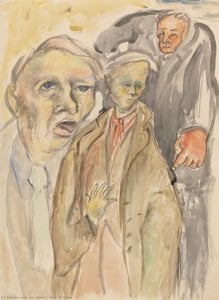
Mujer desnuda reclinada

Joy Hester's 'Mujer desnuda reclinada' (1955) is an emotionally charged Expressionist ink drawing capturing vulnerability and introspection through fluid lines & earthy tones, reflecting her unique vision.

Joy St Clair Hester (1920-1960): Artista australiana modernista conocida por audaces dibujos a tinta que exploran la mortalidad, el amor y el psicoanalisis. Miembro clave de Angry Penguins/Heide Circle.

Giclée / Impresión de arte

Impresiones giclée o en lienzo de calidad de museo con producción rápida y opciones de acabado flexibles. (Comprar pintura hecha a mano Comprar pintura hecha a manoComprar imagen Comprar imagen)

P118B $10
P118H $10
P118W $10
P438Z $10
P508JH $12
P508YH $12
P805H $10
P805Z $10
P919BZ $10
P919G $10
P919XJ $10
P959ZH $10
P968JZ $12
W106C $8
W218G $10
W218JH $8
W218Y $10
W307PJ $10
W316G $10
W316PJ $8
W316Y $10
W398PJ $8
W4111J $10
W500HY $15
W500JH $15
W692G $12
W849H $8
W940BG $15
W953PJ $8

Estándar
a medida
CM
INCH

Elija entre nuestros tamaños predefinidos que respetan las proporciones originales de la obra.

ancho
altura

Puede introducir sus propias dimensiones para adaptarse a un marco o espacio específico. Si el tamaño seleccionado no coincide con las proporciones de la imagen original, recortaremos la obra de arte o extenderemos la imagen con un borde con efecto espejo o de color sólido. Se enviará una maqueta digital para su aprobación antes de que comience la producción.
Tenga en cuenta que la vista previa en pantalla no refleja el recorte o la extensión real. Solo la maqueta mostrará con precisión la composición final.
Aunque existen tamaños personalizados, recomendamos seleccionar una dimensión de la lista predefinida para preservar las proporciones originales.

Envío a todo el mundo () en 2 semanas en lugar de las 4/5 semanas estándar. (4 septiembre)

why_choose_icon
Envío exprés gratuito a todo el mundo
why_choose_icon
Lienzo de lino de alta calidad
why_choose_icon
Seguro de envío total
why_choose_icon
Garantía de reembolso de impuestos aduaneros
why_choose_icon
Garantía de fidelidad cromática exacta
why_choose_icon
Política de devolución de 60 días (solo por defectos)
why_choose_icon
Garantía de devolución del 100% del dinero
why_choose_icon
Descuento por cantidad

Precio total

$ 68

reproduction

Mujer desnuda reclinada

Giclée / Impresión de arte

Dimensiones de la reproducción

-

Precio total final

$ 68

Datos clave

  • Artist: Joy St Clair Hester
  • Influences:
    • Hester
    • O'Connor
  • Location: Art Gallery NSW
  • Movement: Expressionism
  • Medium: Ink wash/Watercolor
  • Artistic style: Modernist
  • Year: 1955

Test de arte

Cada pregunta tiene una única respuesta correcta.

Pregunta 1:
What is the primary medium used in Joy St Clair Hester’s ‘Mujer desnuda reclinada’?
Pregunta 2:
The artwork primarily focuses on:
Pregunta 3:
Joy St Clair Hester was associated with which artistic movement?
Pregunta 4:
What is the dominant color palette of ‘Mujer desnuda reclinada’?
Pregunta 5:
According to the provided information, what influenced Joy Hester’s artistic style?

A Portrait of Introspection: Joy St Clair Hester’s *Mujer Desnuda Reclinada*

Joy St Clair Hester's *Mujer Desnuda Reclinada*, painted in 1955, is not merely a depiction of the human form; it’s an intimate exploration of vulnerability, loss, and the quiet power of observation. This arresting work, rendered primarily in shades of white, cream, and charcoal against a profound dark background, embodies the core tenets of Hester's distinctive Expressionist style – a language born from personal experience and imbued with a haunting emotional resonance.

The subject, a reclining nude female figure, is presented with an arresting directness. Her pose, relaxed yet subtly alert, suggests both vulnerability and a quiet strength. The artist’s masterful use of fluid, almost hesitant lines defines the contours of her body, avoiding any overtly sensual portrayal. Instead, Hester focuses on capturing the essence of the form – its curves, its weight, its inherent dignity – through a deliberate restraint that amplifies the emotional impact. The simplicity of the palette and the emphasis on line create an atmosphere of profound introspection, inviting the viewer to contemplate the figure’s inner world.

Echoes of the Heide Circle and Australian Modernism

To fully appreciate *Mujer Desnuda Reclinada*, it's crucial to understand its context within the vibrant artistic circles of 1950s Australia. Hester was a key member of both the Heide Circle, centered around the Reed family’s home, and the Angry Penguins group – movements that challenged traditional art practices and sought to forge a distinctly Australian modern identity. The influence of these groups is evident in Hester's willingness to break free from academic constraints and embrace a more personal, emotionally charged approach to her work.

Her early life, marked by the loss of her father at a young age, profoundly shaped her artistic vision. This experience, coupled with the anxieties surrounding World War II and her own battle with Hodgkin’s disease, fueled a deep exploration of mortality and the human psyche – themes that resonate powerfully in *Mujer Desnuda Reclinada*. The painting can be seen as a meditation on fragility, resilience, and the enduring beauty found within moments of quiet contemplation.

The Language of Line: Technique and Style

Hester’s technique is characterized by a remarkable economy of line. She eschews detailed rendering in favor of bold, expressive strokes that define form and convey emotion with exceptional subtlety. The varying weights of the lines – thick for outlining major contours, thinner for suggesting texture and shadow – create a dynamic interplay of visual elements. The predominantly monochromatic palette further emphasizes this linear approach, allowing the lines themselves to carry the weight of meaning.

The painting’s flatness—a deliberate choice by Hester—contributes to its immediate impact. There's no illusion of depth or spatial perspective; instead, the viewer is drawn into a close encounter with the subject, invited to engage with her presence on an emotional level. The dark background serves not as a mere backdrop but as a crucial element in defining the figure’s luminosity and emphasizing her vulnerability.

Symbolism and Emotional Resonance

*Mujer Desnuda Reclinada* transcends a simple depiction of a nude form; it's a potent symbol of introspection, resilience, and the quiet dignity of the human spirit. The reclining pose itself suggests surrender, acceptance, and a willingness to confront one’s own vulnerabilities. The figure’s averted gaze invites the viewer to share in her silent contemplation, fostering a sense of empathy and connection.

Ultimately, this painting is a testament to Hester's extraordinary ability to distill complex emotions into simple, yet profoundly moving forms. It remains a powerful example of Australian Modernism—a poignant exploration of the human condition rendered with remarkable grace and emotional depth.


Biografía del artista

Joy St Clair Hester: Una Vida en el Arte Moderno Australiano

Infancia y Educación Temprana

  • Nacida el 21 de agosto de 1920 en Elwood, Australia, Joy St Clair Hester experimentó una infancia formativa marcada por la temprana pérdida de su padre.
  • Asistió a St Michael's Grammar School de 1933 a 1937, comenzando su formación artística a una edad temprana.
  • En 1938, se matriculó en Arte Comercial en Brighton Technical School antes de pasar al National Gallery School en Melbourne, donde afinó sus habilidades y comenzó a liberarse de las limitaciones tradicionales.
  • Hester demostró un talento temprano, ganando el premio "Dibujo al Vivo" en la Escuela de Galería en 1938.

El Círculo de Heide y los Angry Penguins

  • En 1938, Hester conoció a Albert Tucker, comenzando una relación personal y artística significativa.
  • Se convirtió en miembro fundador de la Contemporary Art Society (CAS) y se conectó con Sunday Reed, una mecenas clave del arte en Australia.
  • Hester se sumergió en el Círculo de Heide, junto a artistas como Sidney Nolan, Arthur Boyd y Charles Blackman, fomentando un ambiente de experimentación artística y colaboración.
  • Como miembro de los Angry Penguins, contribuyó a un cambio radical en el arte australiano hacia el modernismo. Ella fue la única mujer destacada en la publicación Angry Penguins.

Desarrollo Artístico y Estilo

  • Las primeras obras mostraban influencias tradicionales, pero evolucionaron rápidamente hacia formas más audaces y líneas expresivas.

  • En la década de 1940, Hester comenzó a centrarse en representar la vida cotidiana a través de dibujos a tinta de escenas callejeras y trabajadores de fábrica.
  • A mediados de la década de 1940, abandonó la pintura al óleo en favor del agua y las tintas, desarrollando un estilo distintivo caracterizado por líneas negras fluidas e intensidad emocional.
  • Su obra exploraba cada vez más temas de horror psicológico influenciado por la Segunda Guerra Mundial.

Obras Principales y Temas

  • Hester es mejor conocida por su serie Face, Sleep, and Love (1948–49), que profundiza en las complejidades de la emoción y las relaciones humanas.
  • Sus obras posteriores, incluyendo The Lovers (1956–58), continuaron explorando temas de amor, pérdida y mortalidad con una calidad cruda y expresiva.
  • Motivos recurrentes en su obra incluyen rostros, a menudo representados con intensidad inquietante, y elementos florales simbólicos.
  • Una mayor conciencia de la mortalidad – derivada de experiencias personales incluyendo la muerte de su padre y posteriormente el diagnóstico de linfoma de Hodgkin – dio forma profundamente a su visión artística.

Influencias y Legado

  • Hester fue influenciada por artistas como Ailsa O'Connor y Danila Vassilieff, quienes compartían sus preocupaciones con la profundidad psicológica e integración del arte y la vida.
  • A pesar de enfrentar desafíos para obtener reconocimiento durante su vida, el trabajo de Hester se ha celebrado cada vez más por su poder emocional y su contribución al modernismo australiano.
  • Su uso audaz de la línea y estilo expresivo allanó el camino para las futuras generaciones de artistas australianos.
  • El legado de Hester reside en su capacidad para transmitir experiencias humanas profundas a través de un lenguaje visual único y evocador.

Vida Tardía y Muerte

  • Diagnosticada con linfoma de Hodgkin en 1947, Hester continuó creando arte a pesar de su enfermedad.
  • Organizó exposiciones individuales en 1950, 1955 y 1956, pero luchó financieramente y críticamente.
  • Joy St Clair Hester falleció el 4 de diciembre de 1960, dejando atrás un poderoso cuerpo de trabajo que sigue resonando con el público actual.
joy st clair hester

joy st clair hester

1920 - 1960 , Australia

Datos clave

  • Artistic Movement Or Style: Modernismo, Expresionismo
  • Artists Or Movements Influenced By This Artist: ['Australian Modernism']
  • Artists Who Influenced This Artist:
    • Ailsa O'Connor
    • Danila Vassilieff
  • Date Of Birth: August 21, 1920
  • Date Of Death: December 4, 1960
  • Full Name: Joy St Clair Hester
  • Nationality: Australiana
  • Notable Artworks:
    • Face series
    • Love series
    • The Lovers
  • Place Of Birth: Elwood, Australia