Primeros años, familia y formación
Los inicios de John William Waterhouse estuvieron arraigados en la atmósfera clásica de Roma, donde nació en 1849 en el seno de una familia inglesa. Su padre, William, y su madre, Isabella, eran ambos pintores, lo que garantizó que el lenguaje del arte fuera su primera herencia. Tras su bautismo el 6 de abril de 1849, sus primeros años se vieron moldeados por esta inmersión en un hogar creativo. Con el tiempo, la familia se trasladó a Inglaterra, estableciéndose en la zona de South Kensington, en Londres, una ubicación que lo situó en estrecha proximidad a las grandes colecciones de la época.
Su educación formal comenzó en 1870, cuando ingresó en la Royal Academy of Art Schools de Londres. Su formación inicial no se centró en el medio que más tarde definiría su carrera; por el contrario, comenzó sus estudios como estudiante de escultura. Este enfoque temprano en la forma y la estructura tridimensional proporcionó la base para su posterior transición hacia la pintura. Finalmente, volcó su atención hacia el lienzo, alejándose del cincel para desarrollar el enfoque pictórico que caracterizaría su vida profesional.
Técnica y Estilo Artístico
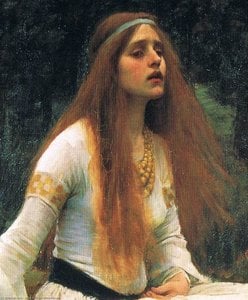
John William Waterhouse trabajó principalmente con óleos, creando lienzos que favorecían una sensibilidad romántica. Su enfoque se caracterizaba por una técnica meticulosa que se apoyaba en un profundo conocimiento del simbolismo para transmitir significado. Con frecuencia, situaba a personajes femeninos intensos y sensuales dentro de entornos oníricos, creando una atmósfera que se sentía a la vez introspectiva y distante. Este sentido de desapego se lograba mediante un manejo específico de la luz y la sombra, lo que ayudaba a definir las formas de sus sujetos mientras mantenía una cierta cualidad etérea.
La paleta del artista estaba definida por esquemas de colores vibrantes y un enfoque particular en la luminosidad de la piel. Con frecuencia, representaba las figuras con una claridad similar a la porcelana, un detalle que contrastaba con la pincelada más fluida y suelta utilizada en sus fondos. Esta tensión entre la representación precisa de la forma humana y el tratamiento más amplio y atmosférico del entorno circundante contribuía a la cualidad de ensueño de sus composiciones. Su habilidad para utilizar los drapeados para sugerir movimiento y peso añadía una presencia física a sus figuras mitológicas e históricas.
Temas Mitológicos y Literarios
John William Waterhouse encontró sus temas más perdurables en las páginas de la literatura clásica y romántica. Se nutrió profundamente de las narrativas de Homero y Ovidio, traduciendo a menudo los mitos de la antigua Grecia en estudios visuales de la forma femenina. Sus lienzos se centraron frecuentemente en mujeres de estas mitologías, retratándolas en momentos de un profundo peso psicológico. Existía un sentido recurrente de melancolía y anhelo en estas figuras, una tristeza silenciosa que parecía definir su enfoque de la experiencia femenina. No se limitaba a ilustrar historias; buscaba capturar el estado emocional interno de los personajes que representaba.
La influencia de la poesía y el drama ingleses aportó una capa secundaria, pero igualmente significativa, a sus intereses temáticos. Se volcó hacia las obras de Tennyson y Keats, encontrando en sus versos un paisaje para sus sensibilidades románticas. Las leyendas arturianas también ocuparon un lugar central en su imaginación, permitiéndole explorar temas de caballería y romance trágico. Este enfoque literario se extendió a las obras de Shakespeare, donde halló tensión dramática y profundidad histórica. Al entrelazar estas diversas fuentes, creó un lenguaje visual que tendió un puente entre la antigüedad clásica y el romanticismo de la era victoriana.
Obras Maestras y Pinturas Icónicas
La reputación del artista se consolidó, en gran medida, gracias a su extraordinaria capacidad para capturar a un personaje en el preciso instante en que su destino da un giro irreversible. Su pintura de 1888, The Lady of Shalott, permanece como su contribución más significativa al estilo prerrafaelita, traduciendo los versos de Tennyson en una narrativa visual de aislamiento y melancolía. Esta inclinación por los momentos literarios y dramáticos persistió a lo largo del cambio de siglo. En 1896, dio vida tanto a Hylas and the Nymphs como a Pandora, obras que se sumergieron profundamente en el peso psicológico del mito. Estas piezas a menudo presentaban a una única y hermosa mujer situada contra un telón de fondo onírico, un motivo recurrente que definió su periodo más exitoso.
A medida que su carrera progresaba, sus temas se centraron cada vez más en la intersección entre el mito y la emoción humana. El año 1900 fue testigo de la culminación de A Mermaid, mientras que 1903 llevó Echo and Narcissus al lienzo. Estas obras emplearon una pincelada suelta y un manejo específico de la luz para crear una sensación de intimidad con el sujeto. Incluso en sus años de madurez, el artista mantuvo este enfoque en la figura femenina, como se observa en The Soul of the Rose en 1908. Su habilidad para retratar la vida interior de estas figuras, a través de expresiones sutiles y detalles simbólicos, aseguró su lugar de honor en la escena artística victoriana.
- The Lady of Shalott (1888)
- Hylas and the Nymphs (1896)
- Pandora (1896)
- A Mermaid (1900)
- Echo and Narcissus (1903)
- The Soul of the Rose (1908)
Últimos años y muerte
En sus años finales, John William Waterhouse se sintió atraído nuevamente por las narrativas apasionadas que alguna vez definieron a los primeros prerrafaelitas. Esta fascinación de su última etapa se manifestó en obras que exploraban los paisajes emocionales intensos, y a menudo trágicos, de los poetas que tanto admiraba. Su enfoque se desplazó hacia el amor profundo y espiritualizado que se encuentra en las obras de Dante Alighieri, como se observa en sus estudios tardíos de Il Decameron de Boccaccio. Incluso cuando su fortaleza física flaqueaba, su pincel continuó navegando por las complejidades de la pasión humana y el mito.
La salud del artista finalmente sucumbió al cáncer de hígado. Falleció en Londres el 10 de febrero de 1917. Sus últimos esfuerzos creativos incluyeron varios lienzos de gran formato y bocetos al óleo que reflejaban un profundo compromiso con los temas dramáticos de su juventud. Fue sepultado en el cementerio de Kensal Green, en Londres.
Legado e Influencia Duradera
John William Waterhouse ocupó una posición única en la escena artística de finales del siglo XIX, actuando como un puente entre distintas eras. Logró transportar con éxito los principios del movimiento prerrafaelita hacia el siglo XX, asegurando que su sensibilidad estética mantuviera su relevancia mientras la era victoriana cedía el paso a nuevos movimientos artísticos. Su capacidad para adaptar estos ideales permitió que su obra mantuviera una presencia constante en el cambiante panorama de la pintura británica.
Su ascenso profesional dentro del mundo artístico institucional estuvo marcado por un reconocimiento constante. Fue nombrado Asociado de la Royal Academy en 1885, una distinción que precedió a su elección como Académico de pleno derecho en 1895. Esta progresión reflejó su prestigio entre sus contemporáneos y su integración en las estructuras formales del establecimiento artístico de Londres. Más allá de su propio estudio, contribuyó a la continuidad de su oficio mediante la enseñanza en la St. John's Wood Art School, transmitiendo su conocimiento técnico a una nueva generación de pintores.
La naturaleza perdurable de su temática continúa despertando el interés de coleccionistas e historiadores. Su enfoque en la interioridad psicológica de las figuras mitológicas y literarias sigue siendo una parte central de su reputación. Si bien su popularidad fluctuó tras la Primera Guerra Mundial, el reciente resurgimiento del interés por su enfoque específico de la figura femenina y los escenarios históricos ha reafirmado su importancia en el estudio del arte victoriano y prerrafaelita.
Dónde ver sus obras hoy en día
La presencia física de los lienzos de John William Waterhouse puede encontrarse en varios de los principales museos de arte y galerías en todo el Reino Unido y más allá. En Londres, la Tate Britain alberga obras que reflejan su compromiso con el estilo prerrafaelita. Sus pinturas también forman parte de las colecciones de la Manchester Art Gallery y la Walker Art Gallery en Liverpool.
Más allá de las Islas Británicas, su alcance se extiende hasta la Art Gallery of South Australia en Adelaida. Estas diversas instituciones preservan el registro visual de su interés por la mitología y la literatura, manteniendo las obras que definieron su carrera durante finales del siglo XIX y principios del XX.
- The Lady of Shalott (1888)
- Hylas and the Nymphs (1896)
- A Mermaid (1900)
- Echo and Narcissus (1903)
- The Soul of the Rose (1908)


 Ver en contexto
 Enviar
 Compartir
 Detalles
 Guía
Guía

 Descargar
 Similares
 Radiografía
 Presentación de diapositivas
 Preguntas y respuestas
 Estadísticas

 Ver más
 Cambiar a impresiones





































 La opción de vidrio solo está disponible en tamaños inferiores a 110 cm.