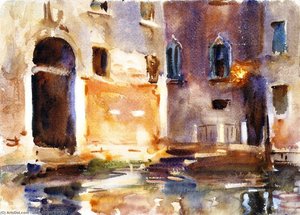
Venice (1880) de John Singer Sargent, reproducción al óleo pintada a mano por un maestro artista
Ver en contexto Vista previa en RA Cambiar a impresiones Cambiar a imagen digital Enviar
Detalles Guía Añadir a favoritos Descargar Similares Radiografía Presentación de diapositivas Preguntas y respuestas Descargar presentación Estadísticas

Venice Reproducción de pintura al óleo pintada a mano

John Singer Sargent's watercolor captures the enchanting atmosphere of Venice’s narrow streets in 1880, showcasing a vibrant scene with pedestrians and a bicycle amidst soft light. Discover this beautiful artwork and bring its timeless charm into your space.

¡Explora las obras maestras de John Singer Sargent! Conocido como impresionista americano por sus retratos como 'Madame X', paisajes y por capturar la elegancia de la Época Dorada. ¡Descubre su arte hoy mismo!

Reproducción al óleo hecha a mano

Óleo sobre lienzo pintado a mano en el tamaño y marco de su elección, realizado por encargo por nuestros artistas. ( Cambiar a impresiones Cambiar a imagen digital)

Corner sample of the P118B picture frame: poliestireno moldeado, 5 cm wide and 3 cm thick
P118B €10
Corner sample of the P118H picture frame: poliestireno moldeado, 5 cm wide and 3 cm thick
P118H €10
Corner sample of the P118W picture frame: poliestireno moldeado, 5 cm wide and 3 cm thick
P118W €10
Corner sample of the P438Z picture frame: poliestireno moldeado, 5.5 cm wide and 3.5 cm thick
P438Z €10
Corner sample of the P508JH picture frame: poliestireno moldeado, 7 cm wide and 3.5 cm thick
P508JH €12
Corner sample of the P508YH picture frame: poliestireno moldeado, 7 cm wide and 3.5 cm thick
P508YH €12
Corner sample of the P805H picture frame: poliestireno moldeado, 5 cm wide and 3.5 cm thick
P805H €10
Corner sample of the P805Z picture frame: poliestireno moldeado, 5 cm wide and 3.5 cm thick
P805Z €10
Corner sample of the P919BZ picture frame: poliestireno moldeado, 7 cm wide and 3.5 cm thick
P919BZ €10
Corner sample of the P919G picture frame: poliestireno moldeado, 7 cm wide and 3.5 cm thick
P919G €10
Corner sample of the P919XJ picture frame: poliestireno moldeado, 7 cm wide and 3.5 cm thick
P919XJ €10
Corner sample of the P959ZH picture frame: poliestireno moldeado, 5 cm wide and 3 cm thick
P959ZH €10
Corner sample of the P968JZ picture frame: poliestireno moldeado, 6 cm wide and 4 cm thick
P968JZ €12
Corner sample of the W106C picture frame: madera maciza, 5 cm wide and 3 cm thick
W106C €8
Corner sample of the W218G picture frame: madera maciza, 5 cm wide and 3 cm thick
W218G €10
Corner sample of the W218JH picture frame: madera maciza, 5 cm wide and 3 cm thick
W218JH €8
Corner sample of the W218Y picture frame: madera maciza, 5 cm wide and 3 cm thick
W218Y €10
Corner sample of the W307PJ picture frame: madera maciza, 6 cm wide and 3 cm thick
W307PJ €10
Corner sample of the W316G picture frame: madera maciza, 6 cm wide and 3 cm thick
W316G €10
Corner sample of the W316PJ picture frame: madera maciza, 6 cm wide and 3 cm thick
W316PJ €8
Corner sample of the W316Y picture frame: madera maciza, 6 cm wide and 3 cm thick
W316Y €10
Corner sample of the W398PJ picture frame: madera maciza, 5 cm wide and 3 cm thick
W398PJ €8
Corner sample of the W4111J picture frame: madera maciza, 6.5 cm wide and 3.5 cm thick
W4111J €10
Corner sample of the W500HY picture frame: madera maciza, 7 cm wide and 5 cm thick
W500HY €15
Corner sample of the W500JH picture frame: madera maciza, 7 cm wide and 5 cm thick
W500JH €15
Corner sample of the W692G picture frame: madera maciza, 8 cm wide and 4 cm thick
W692G €12
Corner sample of the W849H picture frame: madera maciza, 5 cm wide and 3 cm thick
W849H €8
Corner sample of the W940BG picture frame: madera maciza, 7.5 cm wide and 4.5 cm thick
W940BG €15
Corner sample of the W953PJ picture frame: madera maciza, 6 cm wide and 3.5 cm thick
W953PJ €8

Tamaño estándar
a medida
CM
INCH

Elija entre nuestros tamaños predefinidos que respetan las proporciones originales de la obra.

ancho
altura

Indique el ancho y el alto que necesite para adaptarse a su marco o pared. Al tratarse de una obra pintada a mano, si requiere un tamaño con una proporción distinta, el artista puede pintar un poco más alrededor de la imagen o recortarla ligeramente; usted elige. Le enviaremos una maqueta digital para su aprobación antes de comenzar la pintura. La imagen que se muestra en esta página no refleja el resultado real; solo la maqueta lo hace.

Ejemplos de lo que se puede personalizar: Reemplace el rostro con una foto del cliente; Agregue una mascota (por ejemplo, cambie un gato por un perro); Incluya un mensaje oculto en el fondo; Cambie el paisaje o los elementos del fondo.
Tras realizar el pedido, el equipo de WahooArt.com enviará un correo electrónico al cliente para solicitar instrucciones y proporcionarle una vista previa del boceto.

Envío a todo el mundo () en 3-4 semanas en lugar de las 5 semanas estándar. (8 noviembre). Sin comprometer la calidad.

Envío exprés gratuito a todo el mundo
Lienzo de lino de alta calidad
Seguro de envío total
Garantía de reembolso de aranceles aduaneros
Garantía de fidelidad cromática exacta
Política de devolución de 100 días (solo por defectos)
Garantía de devolución del 100% del dinero
Descuento por cantidad

Precio total

€ 243

Venice

Técnica de reproducción

Dimensiones de la reproducción

-

Precio total final

€ 243

Datos clave

  • Movement: Impressionism
  • Artist: John Singer Sargent
  • Notable elements: Narrow alley, light
  • Influences: European art
  • Medium: Watercolor

A Glimpse of Venetian Life: John Singer Sargent’s “Venice”

John Singer Sargent's "Venice," painted in 1880, is more than just a depiction of a canal-side street; it’s a masterful distillation of atmosphere and human experience. This watercolor captures the very soul of Venice – its labyrinthine alleys, the play of light on water, and the quiet rhythm of daily life. The painting immediately draws the viewer into a scene brimming with understated elegance and a palpable sense of place. Sargent's ability to convey not just what he saw but *how* it felt is evident in every brushstroke.

  • Subject Matter: A quintessential Venetian streetscape, focusing on a narrow passage illuminated by dappled sunlight.
  • Artist: John Singer Sargent, renowned for his evocative portraits and masterful use of light and color.
  • Date: 1880 – a period in Sargent’s career marked by increasing confidence and experimentation with watercolor techniques.

Technique and Style: The Impressionist Influence

Sargent's approach to "Venice" is deeply rooted in the burgeoning Impressionist movement, though he retains his distinctly personal style. He employs a loose, fluid technique characteristic of watercolor, prioritizing the effects of light and shadow over precise detail. Notice how he builds up layers of color – subtle washes of blues, greens, and browns – to create a shimmering effect on the water and a sense of depth within the alleyway. The use of broken brushstrokes adds to this dynamism, capturing the fleeting quality of sunlight filtering through the buildings. This technique was heavily influenced by his time spent studying Claude Monet and other Impressionist masters during his travels across Europe.

Historical Context: Venice at the Turn of the Century

"Venice" offers a poignant glimpse into a city undergoing significant transformation in the late 19th century. While still retaining its romantic allure, Venice was grappling with economic challenges and the pressures of modernization. Sargent’s choice to depict a seemingly ordinary street scene speaks to his interest in capturing authentic moments of everyday life – a theme prevalent in much of his work. The presence of pedestrians and a bicycle reinforces this connection to the city's residents and their activities. This painting reflects a time when Venice was still largely untouched by mass tourism, offering a rare opportunity for artists like Sargent to portray its unique character with remarkable fidelity.

Symbolism and Emotional Impact

Beyond its technical brilliance, "Venice" resonates with a profound sense of tranquility and nostalgia. The muted color palette and the soft focus contribute to an atmosphere of quiet contemplation. The figures walking along the path – seemingly oblivious to the viewer’s presence – invite us to step into the scene and share in their experience. There's a subtle suggestion of timelessness, as if this street has existed for centuries, unchanged by the passage of time. The painting evokes a feeling of serenity and invites the viewer to contemplate the beauty and fragility of Venice, a city that continues to captivate imaginations worldwide.

Preguntas y respuestas

¿Qué relevancia tiene "Venice" dentro de Impressionist Realism?

"Venice" de John Singer Sargent se clasifica como Recognized y pertenece al movimiento Impressionist Realism.

¿Qué nivel de contraste presenta "Venice" de John Singer Sargent?

El nivel de contraste de "Venice" de John Singer Sargent es Bold.

¿Cómo se puede integrar "Venice" de John Singer Sargent en la decoración del hogar?

Se sugiere "Venice" para Reflective, y el espacio recomendado es un Living Room.


Biografía del artista

John Singer Sargent: Una Vida en el Arte

John Singer Sargent (1856-1925) fue un artista expatriado estadounidense considerado el “pintor de retratos líder” de su generación, para la sociedad de la clase alta eduardiana. Su obra encarna una mezcla única de brillantez técnica, influencias impresionistas e insight psicológico.

Vida Temprana y Formación

Nacido el 12 de enero de 1856 en Florencia, Italia, de padres estadounidenses Fitzwilliam y Mary Newbold Sargent, John Singer Sargent experimentó una infancia nómada. Sus padres eran expatriados que se mudaban con frecuencia entre Francia, Alemania, Italia y Suiza. Este estilo de vida fomentó una amplia conciencia cultural, pero significó una educación menos convencional. En lugar de escolarización formal, la educación temprana de Sargent se centró en visitar museos e iglesias por toda Europa.

En 1874, Sargent comenzó a estudiar con el artista francés de retratos Carolus-Duran en París. Esta mentoría resultó fundamental. Duran enfatizó la pintura directa – una técnica de aplicación de pintura sin bocetos preliminares – que afinó la notable destreza técnica de Sargent y su capacidad para capturar rasgos con asombrosa rapidez y precisión.

Carrera Artística y Estilo

La producción artística de Sargent se puede dividir ampliamente en dos categorías: retratos encargados e estudios informales. Su retrato formal, a menudo representando a las ricas y prominentes figuras de su tiempo, se adhería a la tradición del “estilo grandioso” – enfatizando la elegancia, el estatus y la profundidad psicológica.

Sin embargo, Sargent también persiguió un estilo más personal en sus paisajes y estudios al aire libre. Estas obras demuestran una clara afinidad con el Impresionismo, caracterizado por pinceladas sueltas, paletas de colores vibrantes y un énfasis en capturar momentos fugaces de luz y atmósfera.

Obras Maestras y Logros

  • Madame X (1884): Quizás la obra más famosa de Sargent, este retrato causó controversia por su audaz representación de la socialite Virginie Amélie Avegno Gautreau.
  • El Jaleo (1882): Una escena dinámica y colorida que captura una danza flamenca española, mostrando el dominio de Sargent del movimiento y la luz.
  • Carnación, Lily, Lily, Rose (1886): Un cuadro sereno e evocador que representa a dos jóvenes chicas encendiendo faroles en un jardín inglés.
  • Una Mesa de Cena por la Noche (1882-83): Una composición innovadora que captura la atmósfera íntima de una cena utilizando luz artificial.

Influencias

Sargent fue influenciado por una diversa gama de artistas y movimientos:

  • Carolus-Duran: Su maestro, quien le inculcó una técnica de pintura directa.
  • Diego Velázquez: Sargent admiró el magistral uso de luz y pincelada de Velázquez.
  • Impresionismo: La énfasis de los impresionistas en capturar momentos fugaces y efectos atmosféricos impactó profundamente en sus pinturas de paisajes.

Significado Histórico y Legado

Inicialmente, Sargent enfrentó críticas por su enfoque poco convencional del retrato y su disposición a desafiar las normas artísticas tradicionales. Sin embargo, a principios del siglo XX, se había establecido como uno de los principales artistas de su tiempo.

En la década de 1980, hubo una reevaluación significativa de la obra de Sargent, particularmente sus desnudos masculinos previamente desatendidos. Esta redescubrimiento reveló un artista más complejo y matizado de lo que se había entendido anteriormente. Hoy en día, John Singer Sargent es celebrado por su virtuosismo técnico, su capacidad para capturar el espíritu de su época y su contribución perdurable al arte estadounidense.

Sus pinturas ofrecen una ventana fascinante a la lujos y las dinámicas sociales de la era eduardiana, mientras que también reflejan su propia visión artística personal. Su obra continúa inspirando a artistas y cautivando a audiencias en todo el mundo.

John Singer Sargent

John Singer Sargent

1856 - 1925 , Italia

Datos clave

  • Artistas Que Influyeron:
    • Carolus-Duran
    • Diego Velázquez
  • Fecha De Muerte: 1925
  • Fecha De Nacimiento: 12 de enero de 1856
  • Lugar De Nacimiento: Florencia, Italia
  • Movimiento Artístico: Impresionismo
  • Nacionalidad: Estadounidense
  • Nombre Completo: John Singer Sargent
  • Obras Notables:
    • Madame X
    • El Jaleo
    • Carnación, Lily, Lily, Rose
    • Una Mesa de Cena por la Noche
Explore obras de arte organizadas por temas, estilos y características.