Vista previa Vista previa en RA Encargar reproducción pintada a mano Ver versión en imagen digital Compartir
Ver detalles Añadir a favoritos Descargar Ver artículos similares Radiografía Presentación de diapositivas Estadísticas

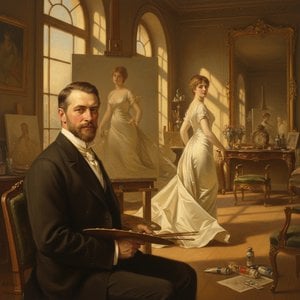
Mrs. William Playfair

John Singer Sargent's elegant 1887 portrait, "Mrs. William Playfair," captures a woman in prayerful contemplation within a richly detailed interior scene, showcasing the artist’s mastery of light and social realism during the Gilded Age – discover this exquisite masterpiece.

¡Explora las obras maestras de John Singer Sargent! Conocido como impresionista americano por sus retratos como 'Madame X', paisajes y por capturar la elegancia de la Época Dorada. ¡Descubre su arte hoy mismo!

Giclée / Impresión de arte

Impresiones giclée o en lienzo de calidad de museo con producción rápida y opciones de acabado flexibles. ( Encargar reproducción pintada a mano Ver versión en imagen digital)

P118B $10
P118H $10
P118W $10
P438Z $10
P508JH $12
P508YH $12
P805H $10
P805Z $10
P919BZ $10
P919G $10
P919XJ $10
P959ZH $10
P968JZ $12
W106C $8
W218G $10
W218JH $8
W218Y $10
W307PJ $10
W316G $10
W316PJ $8
W316Y $10
W398PJ $8
W4111J $10
W500HY $15
W500JH $15
W692G $12
W849H $8
W940BG $15
W953PJ $8

Estándar
personalizado
CM
INCH

Elija entre nuestros tamaños predefinidos que respetan las proporciones originales de la obra.

ancho
altura

Puede introducir sus propias dimensiones para adaptarse a un marco o espacio específico. Si el tamaño seleccionado no coincide con las proporciones de la imagen original, recortaremos la obra de arte o extenderemos la imagen con un borde con efecto espejo o de color sólido. Se enviará una maqueta digital para su aprobación antes de que comience la producción.
Tenga en cuenta que la vista previa en pantalla no refleja el recorte o la extensión real. Solo la maqueta mostrará con precisión la composición final.
Aunque existen tamaños personalizados, recomendamos seleccionar una dimensión de la lista predefinida para preservar las proporciones originales.

Envío a todo el mundo () en 2 semanas en lugar de las 4/5 semanas estándar. (16 septiembre)

why_choose_icon
Envío exprés gratuito a todo el mundo
why_choose_icon
Lienzo de lino de alta calidad
why_choose_icon
Seguro de envío completo
why_choose_icon
Garantía de reembolso de impuestos aduaneros
why_choose_icon
Garantía de fidelidad cromática exacta
why_choose_icon
Política de devolución de 100 días (solo por defectos)
why_choose_icon
Garantía de devolución del 100% del dinero
why_choose_icon
Oferta por volumen

Precio total

$ 68

reproduction

Mrs. William Playfair

Giclée / Impresión de arte

Tamaño de la reproducción

-

Precio total

$ 68

Datos clave

  • Artist: John Singer Sargent
  • Year: 1887
  • Subject or theme: Domestic portrait
  • Movement: Impressionism
  • Dimensions: 153 x 99 cm
  • Notable elements: Prayer pose, figures
  • Title: Mrs. William Playfair

A Portrait of Quiet Contemplation: John Singer Sargent’s “Mrs. William Playfair”

John Singer Sargent's "Mrs. William Playfair," painted in 1887, is more than just a portrait; it’s a carefully constructed tableau of Victorian sensibility and understated emotion. Measuring 153 x 99 cm, this work immediately draws the viewer into a scene of quiet intimacy, capturing the essence of a woman lost in thought within the refined confines of her domestic space. Sargent's masterful handling of light and shadow, coupled with his keen observation of human expression, elevates the painting beyond a simple likeness to a powerful study of character.

  • Subject & Composition: The central figure, Mrs. William Playfair, is presented in a three-quarter pose, her hands clasped together – a gesture universally understood as representing prayer or deep reflection. This posture immediately invites the viewer to share in her private moment of contemplation. The inclusion of two secondary figures—one on the left and another receding into the background on the right—adds layers of narrative complexity, suggesting a family scene and hinting at the social dynamics of the era.
  • Technical Brilliance: Sargent’s technique is characterized by his loose, almost impressionistic brushwork layered over a meticulously constructed underpainting. He employs rapid strokes to capture the play of light on fabric – particularly evident in the folds of Mrs. Playfair's dress and coat – creating a shimmering effect that imbues the scene with a sense of luxuriousness. The subtle gradations of tone contribute significantly to the painting’s atmospheric quality, drawing the eye deeper into the composition.

The Gilded Age and Portraiture

"Mrs. William Playfair" is firmly rooted in the context of the late 19th-century Gilded Age, a period marked by immense wealth, social upheaval, and a burgeoning interest in portraiture as a means of establishing status and identity. Sargent was at the forefront of this trend, producing numerous commissions for wealthy American families who sought to immortalize themselves within the opulent aesthetic of the time. The painting’s restrained elegance reflects the Victorian ideal of feminine grace and decorum, while simultaneously capturing the subtle anxieties and complexities of women navigating a rapidly changing social landscape.

  • Social Context: Portraits during this era were not merely representations of individuals; they were carefully crafted statements about family lineage, wealth, and social standing. Sargent skillfully navigated these expectations, creating works that were both flattering to his subjects and reflective of the broader cultural trends of the period.
  • Sargent’s Style: Sargent's style was evolving rapidly during this time, moving away from the more formal and rigid portraiture of earlier generations towards a looser, more expressive approach. This is evident in "Mrs. Playfair," where he prioritizes capturing the sitter’s personality and mood over strict adherence to convention.

Symbolism and Emotional Resonance

Beyond its technical merits, “Mrs. William Playfair” resonates with a profound sense of emotional depth. The woman's closed-hand gesture suggests vulnerability and introspection, inviting the viewer to empathize with her private thoughts. The neutral color palette – dominated by browns, creams, and subtle blues – contributes to the painting’s contemplative mood. The carefully arranged chair in the background further reinforces this feeling of stillness and solitude.

  • Color Palette: Sargent's use of muted colors creates a sense of quiet dignity and restraint, reflecting the subject's character and the era's aesthetic sensibilities.
  • Gesture & Expression: The subtle nuances in Mrs. Playfair’s expression – a hint of melancholy perhaps, or simply a moment of peaceful reflection – are rendered with remarkable sensitivity by Sargent, making her an instantly relatable figure.

A Timeless Masterpiece for Your Collection

This hand-painted reproduction of John Singer Sargent's “Mrs. William Playfair” offers a unique opportunity to own a piece of art history. Its exquisite detail and evocative atmosphere will undoubtedly enhance any interior space, bringing a touch of Victorian elegance and quiet contemplation into your home or office. Perfect for collectors, interior designers, and anyone seeking a timeless work of art that speaks volumes about human emotion and artistic skill.


Biografía del artista

John Singer Sargent: Una Vida en el Arte

John Singer Sargent (1856-1925) fue un artista expatriado estadounidense considerado el “pintor de retratos líder” de su generación, para la sociedad de la clase alta eduardiana. Su obra encarna una mezcla única de brillantez técnica, influencias impresionistas e insight psicológico.

Vida Temprana y Formación

Nacido el 12 de enero de 1856 en Florencia, Italia, de padres estadounidenses Fitzwilliam y Mary Newbold Sargent, John Singer Sargent experimentó una infancia nómada. Sus padres eran expatriados que se mudaban con frecuencia entre Francia, Alemania, Italia y Suiza. Este estilo de vida fomentó una amplia conciencia cultural, pero significó una educación menos convencional. En lugar de escolarización formal, la educación temprana de Sargent se centró en visitar museos e iglesias por toda Europa.

En 1874, Sargent comenzó a estudiar con el artista francés de retratos Carolus-Duran en París. Esta mentoría resultó fundamental. Duran enfatizó la pintura directa – una técnica de aplicación de pintura sin bocetos preliminares – que afinó la notable destreza técnica de Sargent y su capacidad para capturar rasgos con asombrosa rapidez y precisión.

Carrera Artística y Estilo

La producción artística de Sargent se puede dividir ampliamente en dos categorías: retratos encargados e estudios informales. Su retrato formal, a menudo representando a las ricas y prominentes figuras de su tiempo, se adhería a la tradición del “estilo grandioso” – enfatizando la elegancia, el estatus y la profundidad psicológica.

Sin embargo, Sargent también persiguió un estilo más personal en sus paisajes y estudios al aire libre. Estas obras demuestran una clara afinidad con el Impresionismo, caracterizado por pinceladas sueltas, paletas de colores vibrantes y un énfasis en capturar momentos fugaces de luz y atmósfera.

Obras Maestras y Logros

  • Madame X (1884): Quizás la obra más famosa de Sargent, este retrato causó controversia por su audaz representación de la socialite Virginie Amélie Avegno Gautreau.
  • El Jaleo (1882): Una escena dinámica y colorida que captura una danza flamenca española, mostrando el dominio de Sargent del movimiento y la luz.
  • Carnación, Lily, Lily, Rose (1886): Un cuadro sereno e evocador que representa a dos jóvenes chicas encendiendo faroles en un jardín inglés.
  • Una Mesa de Cena por la Noche (1882-83): Una composición innovadora que captura la atmósfera íntima de una cena utilizando luz artificial.

Influencias

Sargent fue influenciado por una diversa gama de artistas y movimientos:

  • Carolus-Duran: Su maestro, quien le inculcó una técnica de pintura directa.
  • Diego Velázquez: Sargent admiró el magistral uso de luz y pincelada de Velázquez.
  • Impresionismo: La énfasis de los impresionistas en capturar momentos fugaces y efectos atmosféricos impactó profundamente en sus pinturas de paisajes.

Significado Histórico y Legado

Inicialmente, Sargent enfrentó críticas por su enfoque poco convencional del retrato y su disposición a desafiar las normas artísticas tradicionales. Sin embargo, a principios del siglo XX, se había establecido como uno de los principales artistas de su tiempo.

En la década de 1980, hubo una reevaluación significativa de la obra de Sargent, particularmente sus desnudos masculinos previamente desatendidos. Esta redescubrimiento reveló un artista más complejo y matizado de lo que se había entendido anteriormente. Hoy en día, John Singer Sargent es celebrado por su virtuosismo técnico, su capacidad para capturar el espíritu de su época y su contribución perdurable al arte estadounidense.

Sus pinturas ofrecen una ventana fascinante a la lujos y las dinámicas sociales de la era eduardiana, mientras que también reflejan su propia visión artística personal. Su obra continúa inspirando a artistas y cautivando a audiencias en todo el mundo.

John Singer Sargent

John Singer Sargent

1856 - 1925 , Italia

Datos clave

  • Artistas Que Influyeron:
    • Carolus-Duran
    • Diego Velázquez
  • Fecha De Muerte: 1925
  • Fecha De Nacimiento: 12 de enero de 1856
  • Lugar De Nacimiento: Florencia, Italia
  • Movimiento Artístico: Impresionismo
  • Nacionalidad: Estadounidense
  • Nombre Completo: John Singer Sargent
  • Obras Notables:
    • Madame X
    • El Jaleo
    • Carnación, Lily, Lily, Rose
    • Una Mesa de Cena por la Noche
Explore obras de arte organizadas por temas, estilos y características.