A Vision of Edwardian Grace
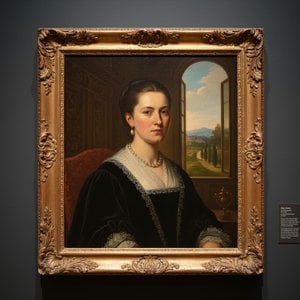
In the grand tapestry of the Gilded Age, few threads shine as brightly as the portraiture of John Singer Sargent. His masterpiece, Mrs. Leopold Hirsch, serves as a breathtaking window into an era defined by opulence, poise, and a profound sense of social ceremony. The painting captures a woman of remarkable distinction, standing with a quiet yet commanding presence that immediately arrests the viewer's attention. As she gazes outward, there is a palpable sense of poised contemplation; she is not merely a subject being observed, but an active participant in a silent dialogue with the artist. This subtle awareness—the way her posture suggests a confident engagement with the painter’s gaze—is a hallmark of Sargent’s ability to breathe life into his sitters, transforming a formal commission into a living, breathing moment of psychological depth.
The composition is masterfully balanced, utilizing a rich palette that evokes the luxurious atmosphere of 1902 England. The sitter is framed by a deep, crimson curtain, an element that does far more than provide a splash of color. This theatrical backdrop acts as a symbolic boundary, suggesting the privacy and grandeur of high society while elevating Mrs. Hirsch’s presence to something almost monumental. The interplay between the heavy texture of the drapery and the delicate, luminous skin tones creates a visual tension that keeps the eye moving across the canvas, discovering new details in every fold and shadow.
Luminous Realism and Technical Mastery
To behold this work is to witness the pinnacle of luminous realism. Sargent, having been shaped by the light-filled influences of Impressionism and Post-Impressionism, moved beyond the mere imitation of form to capture the very essence of light itself. His technique in Mrs. Leopold Hirsch is nothing short of extraordinary. Through a meticulous process of layering thin, translucent glazes over carefully prepared underpaintings, Sargent achieved a tonal depth that seems to glow from within. This painstaking method allows the light to penetrate the layers of oil, mimicking the way light interacts with real silk, pearls, and human skin.
Every brushstroke serves a purpose in this technical symphony. One can observe the incredible dexterity in his rendering of the elaborate gown; the fabric does not merely look like cloth, but possesses a weight and luster that feels tactile. The artist’s ability to "draw with a brush" allows him to navigate between broad, confident strokes that define the movement of the drapery and fine, delicate touches that capture the subtle glint in an eye or the softness of a hand. For the collector or the interior designer, this level of detail ensures that a high-quality reproduction remains a captivating focal point, offering a sense of movement and vitality to any sophisticated space.
An Enduring Legacy for the Modern Collector
Beyond its technical brilliance, the painting carries an emotional weight that transcends its historical moment. It is a study in self-assurance and composure—qualities that were highly prized in Victorian and Edwardian society, yet remain universally admired today. The portrait does not rely on hollow idealization; instead, it offers an honest portrayal of character, capturing the inner spirit of a woman who moved through the world with grace and certainty.
For those looking to curate a collection or design an environment steeped in elegance, Mrs. Leopold Hirsch offers unparalleled inspiration. It brings with it the prestige of the Belle Époque, injecting a sense of historical narrative and timeless luxury into a room. Whether placed in a grand salon or a quiet study, this work serves as a testament to the enduring power of fine art to evoke beauty, status, and a profound connection to the human experience.



 Vista previa
 Cambiar a formato impreso
 Compartir
 Compartir
 Ver detalles
 Guía
Guía

 Descargar
 Ver artículos similares
 Radiografía
 Presentación de diapositivas
 Estadísticas


 Leer más






































 La opción de vidrio solo está disponible en tamaños inferiores a 110 cm.