Vista previa Vista previa en RA Encargar reproducción pintada a mano Ver versión en imagen digital Compartir
Ver detalles Añadir a favoritos Descargar Ver artículos similares Radiografía Presentación de diapositivas Estadísticas

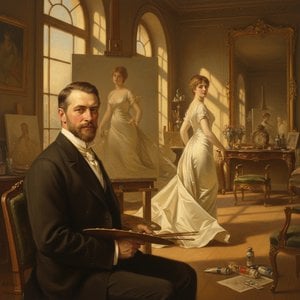
Artist in the Simplon

“Artist in the Simplon” was created in c.1909 by John Singer Sargent in Impressionism style. Find more prominent pieces of genre painting at Wikiart.org – best visual art database. Impressive watercolor capturing a hiker amidst snowy peaks; a masterpiece by Sargent reflecting European artistic heritage.

¡Explora las obras maestras de John Singer Sargent! Conocido como impresionista americano por sus retratos como 'Madame X', paisajes y por capturar la elegancia de la Época Dorada. ¡Descubre su arte hoy mismo!

Giclée / Impresión de arte

Impresiones giclée o en lienzo de calidad de museo con producción rápida y opciones de acabado flexibles. ( Encargar reproducción pintada a mano Ver versión en imagen digital)

P118B $10
P118H $10
P118W $10
P438Z $10
P508JH $12
P508YH $12
P805H $10
P805Z $10
P919BZ $10
P919G $10
P919XJ $10
P959ZH $10
P968JZ $12
W106C $8
W218G $10
W218JH $8
W218Y $10
W307PJ $10
W316G $10
W316PJ $8
W316Y $10
W398PJ $8
W4111J $10
W500HY $15
W500JH $15
W692G $12
W849H $8
W940BG $15
W953PJ $8

Estándar
personalizado
CM
INCH

Elija entre nuestros tamaños predefinidos que respetan las proporciones originales de la obra.

ancho
altura

Puede introducir sus propias dimensiones para adaptarse a un marco o espacio específico. Si el tamaño seleccionado no coincide con las proporciones de la imagen original, recortaremos la obra de arte o extenderemos la imagen con un borde con efecto espejo o de color sólido. Se enviará una maqueta digital para su aprobación antes de que comience la producción.
Tenga en cuenta que la vista previa en pantalla no refleja el recorte o la extensión real. Solo la maqueta mostrará con precisión la composición final.
Aunque existen tamaños personalizados, recomendamos seleccionar una dimensión de la lista predefinida para preservar las proporciones originales.

Envío a todo el mundo () en 2 semanas en lugar de las 4/5 semanas estándar. (19 septiembre)

why_choose_icon
Envío exprés gratuito a todo el mundo
why_choose_icon
Lienzo de lino de alta calidad
why_choose_icon
Seguro de envío completo
why_choose_icon
Garantía de reembolso de impuestos aduaneros
why_choose_icon
Garantía de fidelidad cromática exacta
why_choose_icon
Política de devolución de 100 días (solo por defectos)
why_choose_icon
Garantía de devolución del 100% del dinero
why_choose_icon
Oferta por volumen

Precio total

$ 68

reproduction

Artist in the Simplon

Giclée / Impresión de arte

Tamaño de la reproducción

-

Precio total

$ 68

Datos clave

  • Notable elements or techniques: Loose brushstrokes, blending colors
  • Dimensions: 40 x 52 cm
  • Year: 1909
  • Artist: John Singer Sargent
  • Movement: Impressionism
  • Title: Artist in the Simplon
  • Medium: Watercolor

Cuestionario de arte

Cada pregunta tiene una única respuesta correcta.

Pregunta 1:
What artistic style is “Artist in the Simplon” primarily characterized by?
Pregunta 2:
In what year was John Singer Sargent’s painting “Artist in the Simplon” completed?
Pregunta 3:
What prominent feature is depicted in the image description – adding to the natural beauty of the landscape?
Pregunta 4:
The painting utilizes what technique to create a sense of spontaneity and immediacy?
Pregunta 5:
Which artistic movement does “Artist in the Simplon” exemplify, emphasizing capturing fleeting moments of modern life?

A Portrait Steeped in Alpine Majesty: Exploring John Singer Sargent’s ‘Artist in the Simplon’

The painting “Artist in the Simplon,” created by John Singer Sargent around 1909, transcends mere representation; it embodies the spirit of Impressionism and captures a moment of profound contemplation amidst breathtaking natural beauty. More than just depicting a man on a mountain peak—though that alone is striking—Sargent’s masterpiece delves into themes of artistic observation, solitude, and the sublime experience of confronting grandeur. This essay seeks to illuminate these layers of meaning and analyze Sargent's masterful technique within its historical context.

The Impressionist Vision: Capturing Fleeting Light

Sargent firmly established himself as a leading figure in the Impressionist movement, aligning his artistic sensibilities with luminaries like Monet and Renoir. Unlike academic painting’s meticulous realism—focused on precise detail and idealized forms—Impressionism prioritized capturing the ephemeral qualities of light and atmosphere. Sargent achieved this goal through a deliberate rejection of harsh outlines and blending colors to create soft, luminous surfaces. The watercolor medium itself was ideally suited for conveying these effects, allowing for subtle gradations and washes that mimic the way sunlight dances across snow-capped peaks. Consider how Sargent’s brushstrokes—loose, expressive, and seemingly spontaneous—suggest movement and immediacy, mirroring the artist's own engagement with his surroundings.

A Symbol of Artistic Pursuit: Composition and Detail

The composition of “Artist in the Simplon” is carefully considered to heighten its emotional impact. The central figure stands confidently atop a mountain slope, gazing outwards towards the distant snow-covered mountains—a deliberate gesture mirroring the artist’s own role as an observer and interpreter of nature. His posture exudes composure and thoughtfulness, conveying a sense of quiet contemplation. Notice the inclusion of skis resting on the slope – hinting at both preparation for activity and perhaps a reflection on the challenges inherent in artistic endeavor. Smaller figures populate the landscape, emphasizing the vastness of the mountain environment and reinforcing the feeling of solitude. Sargent’s meticulous attention to detail—the subtle shading of the rocks, the delicate rendering of the snow textures, and even the inclusion of a bird soaring overhead—further enhances the painting's realism while simultaneously serving as conduits for symbolic meaning.

Historical Context: The Aesthetic Turn of Early 20th Century Europe

“Artist in the Simplon” emerged during a period of significant artistic transformation in Europe. Following the Impressionist breakthroughs, artists increasingly sought to express subjective experience and emotion rather than simply documenting objective reality. Sargent’s work reflects this broader aesthetic turn—a move away from traditional conventions toward a more psychologically nuanced approach. The painting aligns with the burgeoning interest in Romantic ideals of sublime beauty—the awe-inspiring grandeur of nature that inspires contemplation and elevates the human spirit. Furthermore, it speaks to the anxieties of modernity—the rapid pace of industrialization and urbanization—as artists attempted to grapple with these changes through artistic exploration.

Emotional Resonance: Beauty and Reflection

Ultimately, “Artist in the Simplon” succeeds in conveying a powerful emotional resonance. The painting’s serene palette—dominated by blues and whites—evokes feelings of tranquility and majesty. Yet, beneath this surface calm lies a deeper current of reflection—a recognition of the artist's own vulnerability within the face of overwhelming beauty. Sargent invites viewers to contemplate their relationship with nature and to consider the transformative potential of artistic observation. It remains a testament to the enduring power of Impressionism’s ability to capture not just what we see, but also what we feel.
  • Artist: John Singer Sargent
  • Year Created: c.1909
  • Style: Impressionism
  • Medium: Watercolor
  • Dimensions: 40 x 52 cm

Biografía del artista

John Singer Sargent: Una Vida en el Arte

John Singer Sargent (1856-1925) fue un artista expatriado estadounidense considerado el “pintor de retratos líder” de su generación, para la sociedad de la clase alta eduardiana. Su obra encarna una mezcla única de brillantez técnica, influencias impresionistas e insight psicológico.

Vida Temprana y Formación

Nacido el 12 de enero de 1856 en Florencia, Italia, de padres estadounidenses Fitzwilliam y Mary Newbold Sargent, John Singer Sargent experimentó una infancia nómada. Sus padres eran expatriados que se mudaban con frecuencia entre Francia, Alemania, Italia y Suiza. Este estilo de vida fomentó una amplia conciencia cultural, pero significó una educación menos convencional. En lugar de escolarización formal, la educación temprana de Sargent se centró en visitar museos e iglesias por toda Europa.

En 1874, Sargent comenzó a estudiar con el artista francés de retratos Carolus-Duran en París. Esta mentoría resultó fundamental. Duran enfatizó la pintura directa – una técnica de aplicación de pintura sin bocetos preliminares – que afinó la notable destreza técnica de Sargent y su capacidad para capturar rasgos con asombrosa rapidez y precisión.

Carrera Artística y Estilo

La producción artística de Sargent se puede dividir ampliamente en dos categorías: retratos encargados e estudios informales. Su retrato formal, a menudo representando a las ricas y prominentes figuras de su tiempo, se adhería a la tradición del “estilo grandioso” – enfatizando la elegancia, el estatus y la profundidad psicológica.

Sin embargo, Sargent también persiguió un estilo más personal en sus paisajes y estudios al aire libre. Estas obras demuestran una clara afinidad con el Impresionismo, caracterizado por pinceladas sueltas, paletas de colores vibrantes y un énfasis en capturar momentos fugaces de luz y atmósfera.

Obras Maestras y Logros

  • Madame X (1884): Quizás la obra más famosa de Sargent, este retrato causó controversia por su audaz representación de la socialite Virginie Amélie Avegno Gautreau.
  • El Jaleo (1882): Una escena dinámica y colorida que captura una danza flamenca española, mostrando el dominio de Sargent del movimiento y la luz.
  • Carnación, Lily, Lily, Rose (1886): Un cuadro sereno e evocador que representa a dos jóvenes chicas encendiendo faroles en un jardín inglés.
  • Una Mesa de Cena por la Noche (1882-83): Una composición innovadora que captura la atmósfera íntima de una cena utilizando luz artificial.

Influencias

Sargent fue influenciado por una diversa gama de artistas y movimientos:

  • Carolus-Duran: Su maestro, quien le inculcó una técnica de pintura directa.
  • Diego Velázquez: Sargent admiró el magistral uso de luz y pincelada de Velázquez.
  • Impresionismo: La énfasis de los impresionistas en capturar momentos fugaces y efectos atmosféricos impactó profundamente en sus pinturas de paisajes.

Significado Histórico y Legado

Inicialmente, Sargent enfrentó críticas por su enfoque poco convencional del retrato y su disposición a desafiar las normas artísticas tradicionales. Sin embargo, a principios del siglo XX, se había establecido como uno de los principales artistas de su tiempo.

En la década de 1980, hubo una reevaluación significativa de la obra de Sargent, particularmente sus desnudos masculinos previamente desatendidos. Esta redescubrimiento reveló un artista más complejo y matizado de lo que se había entendido anteriormente. Hoy en día, John Singer Sargent es celebrado por su virtuosismo técnico, su capacidad para capturar el espíritu de su época y su contribución perdurable al arte estadounidense.

Sus pinturas ofrecen una ventana fascinante a la lujos y las dinámicas sociales de la era eduardiana, mientras que también reflejan su propia visión artística personal. Su obra continúa inspirando a artistas y cautivando a audiencias en todo el mundo.

John Singer Sargent

John Singer Sargent

1856 - 1925 , Italia

Datos clave

  • Artistas Que Influyeron:
    • Carolus-Duran
    • Diego Velázquez
  • Fecha De Muerte: 1925
  • Fecha De Nacimiento: 12 de enero de 1856
  • Lugar De Nacimiento: Florencia, Italia
  • Movimiento Artístico: Impresionismo
  • Nacionalidad: Estadounidense
  • Nombre Completo: John Singer Sargent
  • Obras Notables:
    • Madame X
    • El Jaleo
    • Carnación, Lily, Lily, Rose
    • Una Mesa de Cena por la Noche
Explore obras de arte organizadas por temas, estilos y características.