Biografía del artista
John Nost Sartorius: The Quintessential Sporting Artist
John Nost Sartorius (1759–1828) occupies a unique position in British art history—a virtuoso of equine painting who immortalized the aristocratic pleasures and spirited traditions of his time with unparalleled precision. Born into an artistic lineage, Sartorius’s enduring legacy resides in his prolific canvases depicting horses, racing events, and hunting expeditions, securing his place among the foremost animal painters of the eighteenth century. Despite limited biographical data, his unwavering dedication to mastering his craft speaks volumes about his formative years and underscores the importance of mentorship within the artistic milieu of London during that period.
Early Life & Artistic Training
Details concerning Sartorius’s early life remain shrouded in obscurity; however, he emerged from relative anonymity as a descendant of artists who had established themselves prominently within London's burgeoning art world. His father, John Sartorius Sr., was a respected portrait painter—a profession that instilled within him an innate understanding of visual representation and undoubtedly nurtured his artistic inclinations. Similarly, William Sartorius, his grandfather, possessed considerable artistic talent—a familial heritage that cemented the groundwork for Sartorius’s own artistic pursuits. While biographical information remains sparse, scholarly conjecture suggests that Sartorius undertook a rigorous apprenticeship under esteemed masters—a crucial step in cultivating the distinctive style that would characterize his oeuvre and distinguish him from contemporaries.
A Career Dedicated to Equestrian Art
Sartorius commenced his professional life around 1781 when he debuted as an exhibitor at the Royal Academy, marking the commencement of a sustained artistic career spanning four decades—a period marked by unwavering commitment to portraying animals with remarkable realism and sensitivity. Walter Gilbey’s seminal work, “Animal Painters of England from the Year 1650,” meticulously documented Sartorius’s contributions to the Academy's exhibitions, highlighting his steadfast devotion to equine subjects. Notably, he presented seventy-four paintings—a testament to his prolific output and unwavering passion for capturing the essence of equestrian art. Collaborations with engravers such as J. Walker and J. Webb further disseminated Sartorius’s artistic achievements through engraved plates featuring scenes from racing and hunting—reaching a vast audience eager to appreciate his masterful depictions.
Notable Paintings & Artistic Style
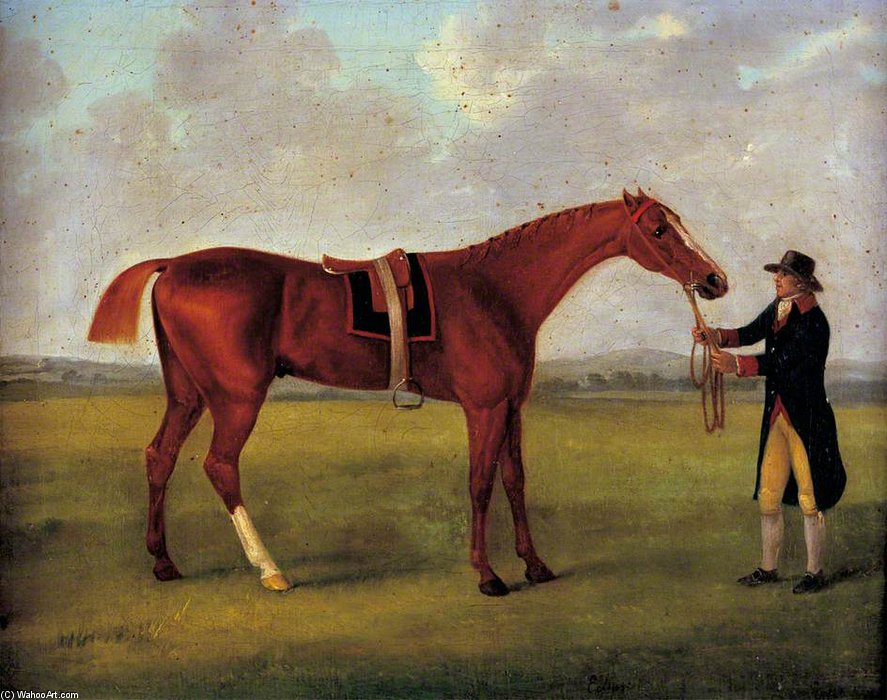
Sartorius achieved renown primarily through portraits of racehorses—particularly “Eclipse,” a legendary thoroughbred whose likeness he painstakingly recreated from a drawing by his father, John Sartorius Sr.—a feat demonstrating Sartorius’s exceptional technical skill and artistic vision. These paintings exemplify Sartorius’s distinctive style: characterized by Neoclassical influences subtly interwoven with Romantic sensibilities. He skillfully employed chiaroscuro—the dramatic interplay of light and shadow—to sculpt form, conveying texture and movement with breathtaking accuracy. Furthermore, he demonstrated an astute understanding of color palettes, utilizing muted tones to evoke atmosphere and enhancing the emotional resonance of his compositions. His meticulous attention to detail—evident in every brushstroke—underscores Sartorius’s unwavering dedication to capturing the sublime beauty of the equine world.
Legacy & Influence
The publication of “A Set of Four Hunting Pieces” in 1790—featuring plates engraved by Peltro William Tomkins and James Neagle—served as another pivotal moment in Sartorius’s artistic trajectory, establishing him as a respected artist within the broader artistic community. His sons, John Francis Sartorius and Francis Sartorius Jr., continued the family tradition of equine painting—demonstrating Sartorius's enduring influence on subsequent generations of artists who embraced his stylistic innovations. Today, John Nost Sartorius remains revered as one of Britain’s most accomplished animal painters—a figure whose canvases continue to inspire admiration for their timeless beauty and masterful execution—a testament to an era defined by aristocratic leisure and the profound appreciation for nature expressed through art.