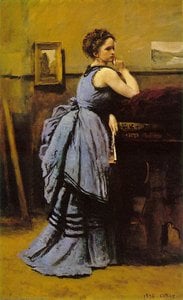
Óleo sobre lienzo pintado a mano en el tamaño y marco de su elección, realizado por encargo por nuestros artistas. ( Comprar impresión Comprar imagen)





























Elija entre nuestros tamaños predefinidos que respetan las proporciones originales de la obra.

Puede ingresar sus propias dimensiones para adaptarse a un marco o espacio específico. Si el tamaño seleccionado no coincide con las proporciones de la imagen original, recortaremos la obra o extenderemos la pintura con elementos adicionales pintados a mano. Se le enviará una maqueta digital para su aprobación antes de comenzar la producción.
Tenga en cuenta que la vista previa en pantalla no refleja el recorte o la extensión reales. Solo la maqueta mostrará con precisión la composición final.
Si bien existen tamaños personalizados, recomendamos seleccionar una dimensión de la lista predefinida para preservar las proporciones originales.
Envío a todo el mundo () en 3-4 semanas en lugar de las 5 semanas estándar. (7 septiembre). Sin comprometer la calidad.


The Harpist
Dimensiones de la reproducción
John George Brown's "The Harpist," painted in 1870, is more than just a portrait; it’s a carefully constructed tableau of Victorian sensibilities and burgeoning American artistic aspirations. This evocative work, depicting a woman lost in the delicate strains of two harps, immediately draws the viewer into a world of quiet contemplation and musical beauty. Brown, an English immigrant who established himself as a successful artist in America during this period, masterfully captures a mood – one of wistful reflection and perhaps even a touch of sadness – that resonates deeply with the era’s fascination with romanticism and the burgeoning interest in classical music.
Brown’s technique is characterized by meticulous detail and a refined understanding of light and shadow, hallmarks of his training in England and honed through years of observation within the American art market. He employs smooth brushwork and subtle gradations of tone to create a remarkably realistic depiction of the woman's features and clothing. The use of pink hues – both in the subject’s attire and the background – contributes significantly to the painting’s overall mood, evoking feelings of tenderness and serenity. The artist demonstrates a clear command of color theory, utilizing complementary colors (pink and green/brown) to create visual harmony and depth.
"The Harpist" reflects several key trends of the 1870s. The harp itself was a potent symbol of both ancient Greece and burgeoning Romantic musical movements, representing beauty, harmony, and emotional expression. The inclusion of the violin further emphasizes this connection to music. Furthermore, Brown’s work aligns with the Victorian fascination with childhood innocence and the portrayal of women as muses or artistic inspiration – a common theme in 19th-century art. The date of 1870 places the painting squarely within a period of significant social and economic change in America, marked by industrialization and urbanization, yet Brown’s work offers a poignant counterpoint to this rapid transformation, focusing on a moment of quiet beauty and introspection.
Ultimately, “The Harpist” transcends its technical merits to evoke a powerful emotional response. The painting's subdued palette, coupled with the subject’s contemplative pose, creates an atmosphere of profound stillness and melancholy. It is a work that invites viewers to pause, reflect, and perhaps even contemplate their own relationship with music and beauty. John George Brown’s legacy lies not only in his technical skill but also in his ability to capture fleeting moments of human emotion with sensitivity and grace – a quality that continues to resonate with audiences today. This hand-painted reproduction offers an exceptional opportunity to experience the full impact of this remarkable artwork.

John George Brown fue un artista británico-estadounidense reconocido por sus pinturas de género que representan la vida de los niños en Estados Unidos durante el siglo XIX. Su obra ofrece una visión conmovedora de la sociedad victoriana, centrándose particularmente en las experiencias de los niños callejeros y la juventud rural.

1831 - 1913 , Reino Unido
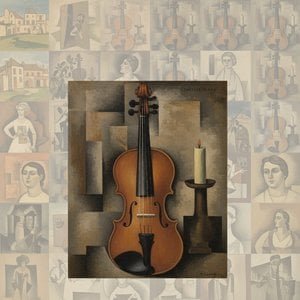
Descubre las 25 obras maestras de Georges Braque, pionero del cubismo. Explora su innovadora técnica, colores y el legado del arte moderno francés. Reproducciones de alta calidad en WahooArt.com. ¡Encuentra tu inspiración!
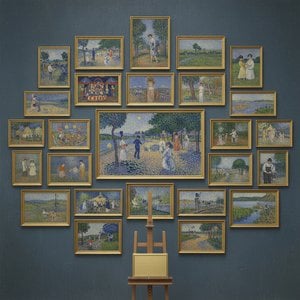
Descubre las 25 obras maestras de Georges Seurat, el innovador del puntillismo. Explora su técnica única, colores vibrantes y legado artístico en WahooArt.com. Reproducciones de arte de museo para tu hogar.
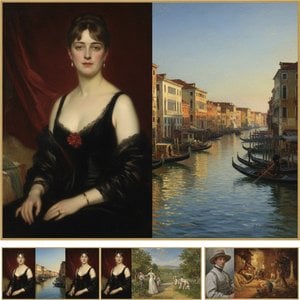
Descubre las 25 obras maestras de John Singer Sargent, el maestro del retrato y la Belle Époque. Explora su técnica impresionista, historias fascinantes y encuentra reproducciones de arte exclusivas para decorar tu hogar con elegancia en WahooArt.com.

Descubre las 25 obras maestras de John Constable, el pintor romántico inglés que capturó la belleza del paisaje. Explora su técnica, historia y significado en WahooArt.com. Reproducciones de arte de alta calidad para tu hogar.
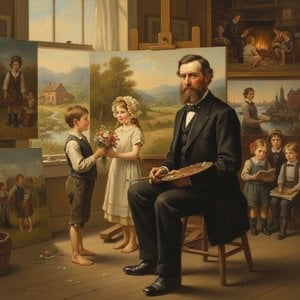
Explore the captivating genre paintings of John George Brown, celebrated for his realistic depictions of 19th-century American life. Discover his legacy & find museum-quality reproductions at WahooArt.

 Ver en contexto
 Enviar
 Compartir
 Detalles

 Descargar
 Similares
 Radiografía
 Presentación de diapositivas


 Ver más







 La opción de vidrio solo está disponible en tamaños inferiores a 110 cm.