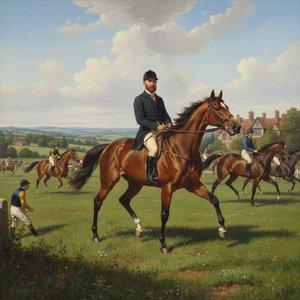
A Glimpse of Victorian Opulence: John Frederick Lewis’s “Lilium Auratum”
John Frederick Lewis's "Lilium Auratum," painted in 1871, is more than just a depiction of two women amidst a profusion of flowers; it’s a meticulously crafted window into the opulent sensibilities and burgeoning Orientalist movement of Victorian England. This captivating work, housed within the broader context of Lewis’s extensive travels through the Mediterranean and North Africa, offers a rare glimpse into a world of leisure, beauty, and carefully constructed narratives. The painting immediately draws the eye with its vibrant palette – rich reds, deep greens, and luminous yellows dominate, creating an atmosphere both luxurious and subtly melancholic.
The Subject and Setting: A Scene of Refined Companionship
At first glance, the scene presents a simple tableau: two elegantly dressed women positioned before a riotous display of lilies and roses. However, closer observation reveals a carefully orchestrated composition designed to evoke a sense of refined companionship. The figures are not merely present; they actively engage with their surroundings, suggesting an intimate conversation or shared enjoyment of the floral abundance. The positioning of the women – one slightly to the left, the other towards the right – creates a dynamic balance within the frame, guiding the viewer’s eye through the scene. Note the delicate fabrics of their gowns, hinting at wealth and status, while their relaxed postures suggest an atmosphere of ease and contentment.
Lewis's Technique: Watercolor and Oil - A Hybrid Approach
Lewis was a master of multiple mediums, and “Lilium Auratum” exemplifies his skill in blending watercolor with oil. The initial groundwork appears to be executed primarily in watercolor, capturing the delicate textures of the flowers and the soft light filtering through the scene. This technique lends an ethereal quality to the painting, emphasizing the beauty of the natural world. Subsequently, he applied layers of oil paint to build up depth, richness, and detail – particularly evident in the rendering of the women’s clothing and the intricate patterns within the floral arrangements. This hybrid approach allowed him to achieve both a luminous, atmospheric effect and a level of precision rarely seen in purely watercolor works.
Symbolism and Context: Orientalist Visions of Leisure
“Lilium Auratum” is firmly rooted within the broader context of Orientalism – an artistic movement that romanticized and often exoticized depictions of the East. Lewis’s travels through Spain, Morocco, and Egypt profoundly shaped his artistic vision, leading him to portray scenes of leisure, hospitality, and cultural exchange. The lilies themselves carry symbolic weight; associated with purity, innocence, and rebirth, they represent a longing for an idealized past or a connection to nature's beauty. The setting, though seemingly idyllic, subtly hints at the constructed nature of such experiences – a carefully curated vision of the East designed for European consumption.
Emotional Resonance: A Moment of Quiet Contemplation
Beyond its technical brilliance and historical context, “Lilium Auratum” possesses a quiet emotional resonance. The painting doesn’t shout with drama; instead, it invites the viewer to pause and contemplate a fleeting moment of connection between two women amidst a world of beauty. There's an underlying sense of wistfulness – perhaps a reflection on lost opportunities or the transient nature of pleasure. The soft lighting, the delicate details, and the carefully chosen composition all contribute to this subtle yet powerful emotional impact. It’s a painting that speaks not just to the eye but also to the heart, offering a glimpse into the refined sensibilities and contemplative spirit of Victorian England.



 Vista previa
 Cambiar a formato impreso
 Compartir
 Compartir
 Ver detalles

 Descargar
 Ver artículos similares
 Radiografía
 Presentación de diapositivas
 Estadísticas


 Leer más






































 La opción de vidrio solo está disponible en tamaños inferiores a 110 cm.