


Impresiones giclée o en lienzo de calidad de museo con producción rápida y opciones de acabado flexibles. ( Comprar pintura hecha a mano Cambiar a imagen digital)





























Elija entre nuestros tamaños predefinidos que respetan las proporciones originales de la obra.

Introduzca el ancho y el alto que necesite para adaptarse a su marco o pared. Una impresión solo puede recortarse, nunca hacerse más grande que la imagen original, por lo que un tamaño con una forma distinta perderá parte de la obra. Le enviaremos una maqueta digital para su aprobación antes de realizar cualquier impresión. La imagen que se muestra en esta página no refleja el recorte real; solo la maqueta lo hace.
Envío a todo el mundo () en 2 semanas en lugar de las 4/5 semanas estándar. (8 noviembre)
Interior
Dimensiones de la reproducción
Jean-Édouard Vuillard’s "Interior," painted in 1902, transports us immediately into the hushed, warmly lit embrace of a private Parisian dwelling. This is not merely a depiction of furniture and figures; it is an immersion into a moment suspended in time—a tableau vivant of quiet companionship. The composition centers around two figures settled within the room, their presence lending an immediate sense of intimacy to the scene. One person occupies a chair near the left edge, while another rests closer to the heart of the picture plane. The arrangement suggests conversation, shared contemplation, and the deep comfort found in familiar company.
To understand this work is to understand the revolutionary spirit of Les Nabis. As a key member of this avant-garde collective, Vuillard moved beyond the fleeting light captured by his predecessors. Instead, he focused on the decorative potential inherent in everyday life. In "Interior," we see this philosophy manifest through flattened planes of color and pattern. The room itself becomes an active participant in the narrative; patterned wallpaper, draped fabrics, and the arrangement of objects—the dining table set with a book, the nearby bowl, the two elegant vases—all contribute to a rich tapestry of visual texture. Vuillard masterfully uses these decorative elements not just for beauty, but to build up the very structure of the pictorial space.
The technique employed here is characteristic of post-impressionism’s turn toward interiority. The light filtering in from an unseen source, perhaps near the window view glimpsed beyond, does not illuminate sharply; rather, it permeates, softening edges and deepening shadows into rich, velvety tones. This careful handling of color creates a palpable atmosphere—one that is both cozy and slightly melancholic. For those who appreciate interior design, the painting offers a profound study in domestic harmony. The inclusion of the couch on the right, alongside the structured dining area, suggests a life lived richly within these walls.
Beyond the visible objects, "Interior" resonates with deeper symbolic currents. The gathering of people and possessions speaks to the human need for connection against the backdrop of modern urbanity. The stillness captured by Vuillard is itself a statement—a celebration of the quiet moments that define a life well-lived. Owning a reproduction of this piece allows one to bring not just a painting, but an entire mood into your own space: one of cultured repose and deep, enveloping warmth.
El tono emocional registrado para "Interior" de Jean-Édouard Vuillard es Comforting. Este resume el sentimiento que expresa la obra.
"Interior" cuenta con una vista previa en realidad aumentada: la página de Vista previa en RA de la obra permite visualizarla en su propio espacio mediante un dispositivo compatible.
Jean-Édouard Vuillard tenía 34 años cuando creó "Interior" en 1902. La edad se calcula a partir del año de nacimiento del artista, 1868.

Jean-Édouard Vuillard (1868–1940) was a french painter, decorative artist, and printmaker. His life's work would later become a cornerstone of the avant-garde artistic group les nabis, alongside fellow visionaries like Maurice Denis and Édouard Vuillard. This collective would revolutionize the art world with their innovative approach to color and form.
Vuillard was born on november 11, 1868, in cuiseaux, france. His father was a civil servant, and his mother, a seamstress. He showed an early aptitude for drawing and painting, studying art from 1886 to 1888 at the Académie Julian and the École des Beaux-Arts in paris.
In 1889 he joined a group of art students that included Maurice Denis, Pierre Bonnard, Paul Sérusier, Ker-Xavier Roussel, and Félix Vallotton. They called themselves les Nabis (Hebrew for “Prophets”), and they drew their inspiration from the Synthetist paintings of Paul Gauguin’s Pont-Aven period.
Like Gauguin, the Nabis advocated a symbolic, rather than a naturalistic, approach to color, and they usually applied their paint in ways that emphasized the flat surface of the canvas. Their admiration of japanese woodcuts, which were then in vogue in europe, inspired them to use simplified shapes and strong contours.
Les nabis, a group of young french artists active in paris from 1888 until 1900, played a large part in the transition from impressionism and academic art to abstract art, symbolism, and the other early movements of modernism. Their philosophy was based upon the philosophy of positivism, and the writings of auguste comte and hippolyte taine.
After 1900, when les nabis disbanded, Vuillard adopted a more realistic style, approaching landscapes and interiors with greater detail and vivid colors. He continued to produce paintings that explored domestic scenes and portraits of individuals from the intellectual and artistic circles of paris.
Vuillard’s distinctive style—characterized by muted palettes, flattened perspectives, and meticulous attention to texture—established him as one of the most important figures in french art at the turn of the century. His work anticipates many developments in cubism and fauvism, demonstrating a profound understanding of visual perception.
Vuillard’s paintings can be found in various museums, including the musée de la révolution française (france), which boasts a rich collection of artworks, documents, and objects related to the revolutionary period. Some of his notable works include “Woman Sweeping” by Maurice Denis and “Jean de la Barre” by Jean Clouet, which depict a young man condemned to death for blasphemy during the ancien régime.
Vuillard’s later work, such as his portraits of french industry and arts figures, can be seen in various galleries, including those at intimism art movement and jean-édouard vuillard's page on WahooArt.
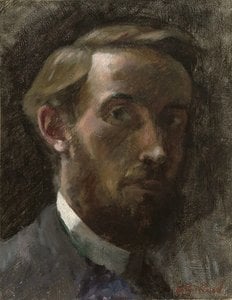
1868 - 1940 , Francia

Descubra la distinción entre el Impresionismo y el Postimpresionismo. Explore la maestría de la luz y la emoción a través de nuestras exclusivas reproducciones al óleo hechas a mano, diseñadas para coleccionistas que buscan autenticidad, técnica y elegancia atemporal.

Explore the transformative era of Post-Impressionism. Discover how masters like Cézanne and Matisse revolutionized color and form, moving beyond Impressionism to shape modern art history through structural innovation and expressive emotion.
 Ver en contexto
 Enviar
 Compartir
 Detalles
 Guía
Guía

 Descargar
 Similares
 Radiografía
 Presentación de diapositivas
 Preguntas y respuestas
 Estadísticas

 Ver más









 La opción de vidrio solo está disponible en tamaños inferiores a 110 cm.


