Vista previa Vista previa en RA Encargar reproducción pintada a mano Ver versión en imagen digital Compartir
Ver detalles Guía Añadir a favoritos Descargar Ver artículos similares Radiografía Presentación de diapositivas Estadísticas

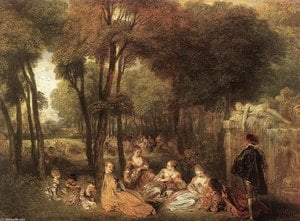
Reunión al aire libre

Admira la obra maestra de Jean Antoine Watteau: Reunión al aire libre (1719). Descubre el estilo Rocóco, su composición elegante y cómo este cuadro refleja la sociedad francesa del siglo XVIII.

Descubra a Jean-Antoine Watteau (1684-1721), el maestro francés del Rococó! Explore sus idílicos 'fêtes galantes', escenas teatrales e influencia en el arte del siglo XVIII. Admire obras maestras como 'El Baile Campesino' y aprenda sobre su legado.

Giclée / Impresión de arte

Impresiones giclée o en lienzo de calidad de museo con producción rápida y opciones de acabado flexibles. ( Encargar reproducción pintada a mano Ver versión en imagen digital)

P118B $10
P118H $10
P118W $10
P438Z $10
P508JH $12
P508YH $12
P805H $10
P805Z $10
P919BZ $10
P919G $10
P919XJ $10
P959ZH $10
P968JZ $12
W106C $8
W218G $10
W218JH $8
W218Y $10
W307PJ $10
W316G $10
W316PJ $8
W316Y $10
W398PJ $8
W4111J $10
W500HY $15
W500JH $15
W692G $12
W849H $8
W940BG $15
W953PJ $8

Estándar
personalizado
CM
INCH

Elija entre nuestros tamaños predefinidos que respetan las proporciones originales de la obra.

ancho
altura

Puede introducir sus propias dimensiones para adaptarse a un marco o espacio específico. Si el tamaño seleccionado no coincide con las proporciones de la imagen original, recortaremos la obra de arte o extenderemos la imagen con un borde con efecto espejo o de color sólido. Se enviará una maqueta digital para su aprobación antes de que comience la producción.
Tenga en cuenta que la vista previa en pantalla no refleja el recorte o la extensión real. Solo la maqueta mostrará con precisión la composición final.
Aunque existen tamaños personalizados, recomendamos seleccionar una dimensión de la lista predefinida para preservar las proporciones originales.

Envío a todo el mundo () en 2 semanas en lugar de las 4/5 semanas estándar. (25 septiembre)

why_choose_icon
Envío exprés gratuito a todo el mundo
why_choose_icon
Lienzo de lino de alta calidad
why_choose_icon
Seguro de envío completo
why_choose_icon
Garantía de reembolso de impuestos aduaneros
why_choose_icon
Garantía de fidelidad cromática exacta
why_choose_icon
Política de devolución de 100 días (solo por defectos)
why_choose_icon
Garantía de devolución del 100% del dinero
why_choose_icon
Oferta por volumen

Precio total

$ 68

reproduction

Reunión al aire libre

Giclée / Impresión de arte

Tamaño de la reproducción

-

Precio total

$ 68

Datos clave

  • Movement: Rococo
  • Medium: Oil on Canvas
  • Artist: Jean Antoine Watteau
  • Notable elements or techniques: Soft colors & delicate brushstrokes
  • Influences:
    • Correggio
    • Rubens
  • Location: Staatliche Kunstsammlungen Dresden, Germany
  • Subject or theme: Social gathering

Meeting in the Open Air

Jean Antoine Watteau, a luminary of French Baroque’s twilight years, stands as one of the most celebrated artists of his era—a figure whose delicate brushstrokes and evocative compositions continue to captivate audiences centuries later. His magnum opus, Meeting in the Open Air (1719), housed at the Staatliche Kunstsammlungen in Dresden, Germany, embodies the very essence of Rococo artistry—a style characterized by grace, frivolity, and an idealized vision of pastoral life.

The Painting's Composition

Measuring 60 x 75 cm, Meeting in the Open Air is executed with meticulous detail on canvas using oil paint—a technique that allowed Watteau to achieve unparalleled luminosity and textural nuance. The scene unfolds within a meticulously rendered park landscape, populated by at least twelve individuals engaged in various activities. These figures are dressed in opulent attire reflecting the fashions of their time—silk gowns adorned with floral embroidery, powdered wigs, and richly embroidered jackets—creating a tableau of aristocratic leisure. Scattered amongst the trees and bushes are benches where guests repose, while others stroll leisurely, engaging in animated conversation or simply enjoying the beauty of the surroundings. Watteau’s masterful use of perspective subtly guides the viewer's gaze across the canvas, enhancing the sense of depth and atmosphere.

Artistic Significance

Watteau’s genius lay in his ability to fuse realism with idealism—a hallmark of Rococo aesthetics. Unlike the grand narratives favored by Baroque painters, Watteau eschewed dramatic action for a portrayal of refined social interaction. He skillfully captures the fleeting moments of joy and camaraderie experienced during these gatherings, conveying an emotional resonance that transcends mere visual representation. The soft pastel hues employed throughout the painting contribute to its serene ambiance—a deliberate contrast to the darker palettes prevalent in earlier artistic movements. Watteau’s brushstrokes are remarkably delicate, layering thin glazes of color to achieve a velvety surface texture and subtle gradations of tone—a technique that exemplifies the Rococo preoccupation with beauty and sensual pleasure.

Contextualizing Watteau's Work

Jean Antoine Watteau emerged during a pivotal period in French history—the reign of Louis XIV—marking the decline of Baroque grandeur and the ascendancy of aristocratic taste. His paintings reflected the shifting social dynamics of the era, depicting scenes frequented by members of the nobility and intelligentsia—individuals who embraced intellectual pursuits alongside opulent entertainment. Watteau’s influence extended far beyond his own lifetime, inspiring subsequent generations of artists to explore themes of pastoral idyll and aristocratic leisure. He championed a new artistic idiom—one that prioritized elegance and subtlety over theatrical grandeur—establishing himself as a pioneer of the Rococo style.

Relevance Today

Meeting in the Open Air remains an enduring testament to Watteau’s artistic vision—a masterpiece that continues to fascinate art historians and connoisseurs alike. Its delicate beauty and evocative atmosphere offer a glimpse into the cultural sensibilities of 18th-century France, prompting contemplation on themes of social harmony and idealized perception. For those seeking inspiration or considering acquiring a reproduction of this iconic artwork, Meeting in the Open Air stands as an exemplar of Rococo artistry—a timeless celebration of beauty and grace. Additionally, the Doddington Hall Art Museum in Lincoln, United States, presents a valuable opportunity to experience Watteau’s influence firsthand.

Biografía del artista

vida temprana y formación

Jean Antoine Watteau, un pintor francés, nació en Valenciennes, Francia, en 1684. Hay poco conocimiento sobre su vida temprana, pero se cree que recibió formación del artista Julien en Valenciennes antes de mudarse a París en 1702.

ascenso a la prominencia

El estilo único de Watteau, que combinaba elementos de los estilos barroco y rococó emergente, rápidamente ganó popularidad. Su obra se caracterizó por su calidad luminosa y onírica, a menudo presentando escenas de la vida cotidiana y representaciones teatrales. Obras notables de este período incluyen:
  • El baile campestre (1718-1721), una pintura que muestra su dominio para capturar la esencia de la vida rústica y despreocupada.
  • Ceres (Verano) (1705), un ejemplo de su habilidad para representar la belleza de la naturaleza y la experiencia humana.
  • El contrato matrimonial (1710), una obra que destaca su capacidad para equilibrar la intimidad de las escenas domésticas con la formalidad de los acuerdos contractuales.

influencia y legado

El impacto de Watteau en el mundo del arte fue significativo, influyendo en el desarrollo del estilo rococó. Su obra se puede encontrar en varios museos, incluyendo el Galería Nacional de Arte (Washington, Estados Unidos) y el Museo del Prado (España). A pesar de su fallecimiento prematuro a los 37 años, Watteau dejó una marca indeleble en la historia del arte.

explora más

Para profundizar en el mundo de Watteau, visite [https://WahooArt.com/@/jean-antoine-watteau](https://WahooArt.com/@/jean-antoine-watteau) y descubra la extensa colección de sus obras, incluyendo: Estas obras, junto con muchas otras, se pueden encontrar en WahooArt, ofreciendo una oportunidad única para experimentar el arte de Watteau en reproducciones de alta calidad. [https://WahooArt.com/@@/d4nphw-jean-antoine-watteau-retrato-de-una-niña-con-sombrero](https://WahooArt.com/@@/d4nphw-jean-antoine-watteau-retrato-de-una-niña-con-sombrero) y [https://WahooArt.com/@@/8y3ltr-jean-antoine-watteau-ceres-(verano)](https://WahooArt.com/@@/8y3ltr-jean-antoine-watteau-ceres-(verano)) son solo algunos ejemplos de las obras maestras disponibles.
Jean-Antoine Watteau

Jean-Antoine Watteau

1684 - 1721 , Francia

Datos clave

  • Artistas Influenciados:
    • Fragonard
    • Boucher
  • Artistas Que Influyeron:
    • Tiziano
    • Rubens
  • Fecha De Muerte: 1721
  • Fecha De Nacimiento: 1684
  • Lugar De Nacimiento: Valenciennes, Francia
  • Movimiento Artístico: Rococó
  • Nacionalidad: Francés
  • Nombre Completo: Jean-Antoine Watteau
  • Obras Notables:
    • El baile campestre
    • Ceres (Verano)
    • El contrato matrimonial
    • Gilles
    • Embarque a Citera
    • Peregrinación a Citera
Explore obras de arte organizadas por temas, estilos y características.