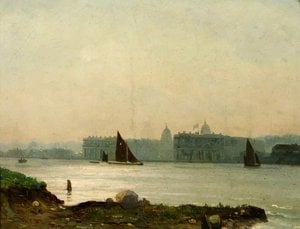
A Window Into Romantic Intensity: James Francis Danby’s “The Golden Age (Study)”
James Francis Danby's "The Golden Age (Study)," painted in 1827, isn’t merely a landscape; it’s a visceral plunge into the heart of the Romantic movement. This evocative work, rendered in meticulous black and white photography, offers a tantalizing glimpse into the artist’s creative process – a preparatory study for what would become a monumental canvas brimming with dramatic light and shadowed emotion. The photograph itself, a testament to early photographic techniques, captures the essence of Danby's vision with remarkable clarity, revealing the subtle brushstrokes and layered composition that define his unique style.
The Artist and His Vision: A Romantic Soul
Born in County Wexford, Ireland, in 1793, James Francis Danby’s life was shaped by both privilege and profound loss. The sudden death of his father at a young age propelled him to Dublin, where he received rigorous training under the tutelage of esteemed landscape artists like James Arthur O’Connor and George Petrie. This formative period instilled in him not just technical proficiency but also a deep appreciation for landscape as a conduit for expressing intense emotion – a core tenet of Romanticism. Danby's work frequently explored themes of sublime beauty, dramatic weather, and the power of nature to evoke both awe and terror, drawing inspiration from the rugged Irish coastline and the vastness of the European wilderness.
A Study in Light and Shadow: Technique and Composition
“The Golden Age (Study)” exemplifies Danby’s masterful command of atmospheric perspective and dramatic lighting. The composition is carefully constructed to draw the viewer into a scene teeming with figures amidst a sprawling, wooded landscape. Notice how he utilizes light – a diffused, almost ethereal glow – to sculpt the forms of the trees and the human subjects, creating a sense of depth and mystery. The loose brushwork visible in the photograph hints at the energetic application of paint characteristic of Danby’s finished works. The placement of figures, seemingly caught in a moment of contemplation or perhaps even apprehension, adds a layer of narrative complexity to the scene. It's clear that this wasn’t simply a depiction of scenery; it was an attempt to capture a specific mood and feeling.
Symbolism and Emotional Resonance
The title itself, “The Golden Age,” evokes a sense of nostalgia and perhaps even melancholy – a yearning for a lost ideal. While the exact meaning remains open to interpretation, it’s likely referencing a period of prosperity and beauty now fading into memory. The presence of figures within the landscape suggests humanity's relationship with nature: are they masters or subjects? The animal figure, partially obscured in the background, could represent instinct, wildness, or perhaps even a connection to the ancient past. More broadly, the painting speaks to the Romantic fascination with the sublime – that feeling of awe and terror inspired by the overwhelming power of nature. Danby’s work invites us to contemplate our place within this grand, untamed world.
A Legacy in Reproduction: Bringing Danby's Vision Home
Reproductions of “The Golden Age (Study)” offer a remarkable opportunity to bring the intensity and beauty of Danby’s Romantic vision into your home or office. Whether adorning a grand salon or adding character to a more intimate space, this artwork serves as a powerful reminder of the enduring appeal of landscape painting and the profound emotional impact of art. Consider commissioning a hand-painted reproduction – a faithful recreation that captures not only the visual details but also the spirit and atmosphere of this iconic work.



 Vista previa
 Encargar reproducción pintada a mano
 Compartir
 Compartir
 Ver detalles
 Guía
Guía

 Descargar
 Ver artículos similares
 Radiografía
 Presentación de diapositivas
 Estadísticas


 Leer más






































 La opción de vidrio solo está disponible en tamaños inferiores a 110 cm.