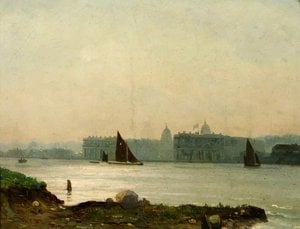
Óleo sobre lienzo pintado a mano en el tamaño y marco de su elección, realizado por encargo por nuestros artistas. ( Comprar impresión Comprar imagen)





























Elija entre nuestros tamaños predefinidos que respetan las proporciones originales de la obra.

Puede ingresar sus propias dimensiones para adaptarse a un marco o espacio específico. Si el tamaño seleccionado no coincide con las proporciones de la imagen original, recortaremos la obra o extenderemos la pintura con elementos adicionales pintados a mano. Se le enviará una maqueta digital para su aprobación antes de comenzar la producción.
Tenga en cuenta que la vista previa en pantalla no refleja el recorte o la extensión reales. Solo la maqueta mostrará con precisión la composición final.
Si bien existen tamaños personalizados, recomendamos seleccionar una dimensión de la lista predefinida para preservar las proporciones originales.
Envío a todo el mundo () en 3-4 semanas en lugar de las 5 semanas estándar. (7 septiembre). Sin comprometer la calidad.


The Ferry
Dimensiones de la reproducción
James Francis Danby’s “The Ferry,” rendered in a strikingly restrained monochrome pencil, isn't merely a depiction of a river crossing; it’s a profound meditation on human activity and its relationship to the natural world. Completed around 1840, this sketch, now meticulously reproduced as part of WahooArt’s collection, possesses an immediate power born from Danby’s mastery of line and his deep engagement with the Romantic sensibility. The scene unfolds with a quiet intensity – figures laboring in a small boat on a broad expanse of water, their forms subtly defined against the hazy backdrop of a distant shoreline. There's no dramatic storm or heroic gesture here; instead, we witness a commonplace event elevated to an almost spiritual level through Danby’s careful observation and artistic interpretation.
The drawing’s strength lies in its deliberate simplicity. Danby eschews the lavish use of shading typical of his contemporaries, relying instead on variations in line weight – thick strokes for the boat's structure, delicate lines for the receding shoreline – to create an illusion of depth and volume. The composition is deliberately flattened, avoiding strong vanishing points that would pull the viewer into a traditional landscape perspective. This flattening emphasizes the two-dimensionality of the sketch, lending it a timeless quality reminiscent of Renaissance drawings, while simultaneously intensifying the sense of immediacy and observation.
To fully appreciate “The Ferry,” one must understand Danby’s place within the Bristol School of landscape painting. Emerging in the early 19th century, this group of artists – including Edward Dayes, George Petrie, and crucially, Danby himself – sought to move beyond the purely topographical depictions favored by earlier generations. They were deeply influenced by the Romantic movement's emphasis on emotion, imagination, and the sublime power of nature. Danby’s work embodies these principles perfectly; he doesn’t simply record a scene but attempts to capture its emotional essence, imbuing it with a sense of melancholy and quiet contemplation.
Danby’s background as an art teacher further informs his approach. He was trained in the classical tradition, yet he embraced the Romantic spirit, incorporating elements of dramatic lighting, atmospheric perspective, and a heightened sense of drama into his work. His early life in Ireland, marked by upheaval and loss, undoubtedly contributed to this emotional intensity – a sensitivity that permeates every line of “The Ferry.” The sketch feels less like a detached observation and more like a deeply felt response to the scene before him.
Beyond its technical merits, "The Ferry" is rich in symbolic meaning. The figures working on the boat represent not just transportation but also labor – a fundamental aspect of human existence. Their activity connects them directly to the river, to the land, and to each other. The water itself acts as a unifying element, subtly linking the foreground figures with the distant horizon. This subtle connection speaks to the enduring relationship between humanity and nature, a theme central to Romantic thought.
Furthermore, the scene evokes a sense of journey – both literal and metaphorical. The ferry represents movement, transition, and perhaps even escape. The muted palette reinforces this feeling of quiet contemplation, inviting the viewer to reflect on their own journeys and connections within the world around them. It’s a powerful image that transcends its simple subject matter, offering a glimpse into the complexities of human experience.
WahooArt's faithful reproduction captures the essence of Danby’s original sketch with remarkable fidelity. The subtle nuances of line and tone are meticulously preserved, allowing viewers to appreciate the artist’s extraordinary skill and sensitivity. Whether displayed as a statement piece in a contemporary interior or studied for its historical significance, “The Ferry” remains a compelling testament to the power of Romantic art – a timeless image that continues to resonate with audiences today.

Francis Danby ARA fue un pintor irlandés de la era romántica. Sus imaginativos y dramáticos paisajes eran comparables a los de John Martin. Se erige como una figura significativa en la historia del arte británico, puenteando la pintura tradicional de paisajes con el énfasis emergente del movimiento Romántico en la emoción, la imaginación y la grandeza.
Nacido en el Condado de Wexford, Irlanda, James Francis Danby era uno de los gemelos; su padre cultivaba una pequeña propiedad. Tras la muerte de su padre en 1807, la familia se trasladó a Dublín. Comenzó a estudiar dibujo en las escuelas de la Royal Dublin Society, recibiendo instrucción temprana de James Arthur O’Connor y formando un conocimiento con George Petrie. En 1813, Danby, junto con O’Connor y Petrie, se aventuró a Londres. Esta expedición inicial resultó financieramente desafiante, lo que llevó a una pausa en Bristol donde Danby encontró éxito vendiendo dibujos de acuarela. Este período en Bristol (alrededor de 1818/19) fue crucial para su desarrollo ya que se convirtió en una figura central dentro del grupo informal conocido como la Escuela de Bristol.
La asociación de Danby con la Escuela de Bristol moldeó significativamente su trayectoria artística. Este grupo, inicialmente centrado alrededor de Edward Bird, fomentó un entorno de excursiones compartidas de bocetos e influencia mutua. Danby sucedió a Bird como figura central de la escuela. El estilo naturalista y los colores frescos de Bird influyeron en Danby, evidente en obras como “Niños Navegando en un Pequeño Barco” (c. 1821) y "La Entrega de Israel Fuera de Egipto" (1825). Otras figuras influyentes dentro de este círculo incluyeron a Edward Villiers Rippingille y al artista aficionado Francis Gold, quien animó a Danby a moverse hacia temas más imaginativos y poéticos. George Cumberland, un amigo de William Blake, también jugó un papel vital, sugiriendo temas para las pinturas de Danby e introduciéndolo potencialmente al estilo visionario de Blake.
El estilo de Danby se caracteriza por vastas telas ilusionistas que representan sujetos grandiosos, sombríos y fantásticos – temas que resonaron con el gusto Byronic de la década de 1820. Sus pinturas a menudo presentan cielos dramáticos, mares turbulentos y paisajes evocadores imbuídos de una sensación de misterio y asombro.
Tras un período viviendo en las orillas del lago Ginebra en Suiza y una breve estancia en París, Danby regresó a Inglaterra en 1840. Continuó exhibiendo su trabajo, incluyendo "La Edad de Oro" (c. 1827) y “Ricas y Raras Eran las Gemas que Llevaba” (1837). Si bien algunas obras posteriores como "El Himno de la Ninfa del Bosque al Sol Naciente" (1845) mostraron un estilo más tranquilo, regresó a su modo dramático anterior con pinturas como "El Naufragio" (1859). El legado de Danby se basa en su contribución significativa al arte romántico británico. Junto con John Martin y J.M.W. Turner, es considerado entre los principales artistas de esa era, celebrado por sus paisajes imaginativos y su capacidad para evocar emociones poderosas a través de sus pinturas.

1793 - 1861 , Irlanda

Explore the profound artistry of graphite drawing. Discover professional techniques for mastering depth, texture, and detail through a lens of art history, from classical sketches to modern masterpieces. Elevate your understanding of the pencil medium with our expert guide.
Explore the profound elegance of pencil and charcoal sketching. Discover how masters use line, shadow, and chiaroscuro to capture light and texture, bridging the gap between preparatory studies and timeless fine art masterpieces.

Discover the sophisticated mastery of graphite drawing. Explore expert techniques for achieving profound depth, intricate texture, and hyper-realistic detail through the alchemy of carbon, curated for the discerning art enthusiast and professional collector.

Elevate your artistic practice with this expert guide to mastering the line. Discover advanced techniques in graphite, charcoal, and contour drawing designed for art students seeking technical precision and expressive depth in their fine art studies.

Explore the profound beauty of the sketch. Discover how masters use charcoal and graphite to capture raw emotion, anatomical precision, and fluid movement, bridging the gap between ephemeral marks and eternal oil masterpieces.

 Ver en contexto
 Enviar
 Compartir
 Detalles

 Descargar
 Similares
 Radiografía
 Presentación de diapositivas


 Ver más







 La opción de vidrio solo está disponible en tamaños inferiores a 110 cm.


![Vida De San Francisco - [04] - Muerte Y Ascensión De San Francisco — Giotto Di Bondone, Renacimiento Italiano](/media/artworks/images-thumb/08/8b/088b102b13c1a379233690905590f156.jpg)