Impresiones giclée o en lienzo de calidad de museo con producción rápida y opciones de acabado flexibles. ( Comprar pintura hecha a mano Cambiar a imagen digital)





























Elija entre nuestros tamaños predefinidos que respetan las proporciones originales de la obra.

Introduzca el ancho y el alto que necesite para adaptarse a su marco o pared. Una impresión solo puede recortarse, nunca hacerse más grande que la imagen original, por lo que un tamaño con una forma distinta perderá parte de la obra. Le enviaremos una maqueta digital para su aprobación antes de realizar cualquier impresión. La imagen que se muestra en esta página no refleja el recorte real; solo la maqueta lo hace.
Envío a todo el mundo () en 2 semanas en lugar de las 4/5 semanas estándar. (23 noviembre)
Sin título 8
Dimensiones de la reproducción
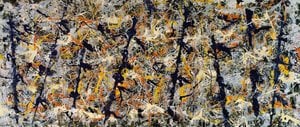
El aire se siente cargado con la energía inquieta de Jackson Pollock mientras se enfrenta a la vastedad de "Sin título 8". Esta pintura monumental emerge de un periodo de profunda incertidumbre, capturando un espíritu que se siente a la vez turbulento y profundamente buscador. Aunque el momento exacto de su nacimiento permanece perdido en el tiempo, el lienzo mismo habla de una urgencia específica y apremiante. Es una presencia de gran escala que exige espacio, negándose a asentarse en la quietud de las formas tradicionales.
En esta obra, Jackson Pollock canaliza la esencia pura y desenfrenada del Expresionismo Abstracto. La escala de la pieza invita a un encuentro físico, arrastrando al espectador hacia un espacio donde los límites del mundo conocido parecen disolverse. Existe una sensación de movimiento capturado en pleno aire, una colisión de instinto e impulso que define el núcleo mismo de esta creación. La pintura no se limita a estar colgada en la pared; ocupa la habitación con un peso que se siente casi palpable.
Cada centímetro de la superficie lleva la marca de una lucha interna y profunda. La obra existe como el registro de un momento en el que el caos interior del artista se encuentra con la realidad física del medio. Es una presencia masiva y dominante que refleja el paisaje cambiante e inestable de mediados del siglo XX. A través de "Sin título 8", el espectador es testigo del resultado inmediato y visceral de una mente que intenta traducir ansiedades existenciales complejas en una realidad tangible y expansiva.
Una figura esquelética cabalga sobre un caballo, desplazándose a través de un paisaje de símbolos inquietantes. Esta figura central se aferra a una cruz que se eleva en el fondo, creando una tensión palpable entre lo físico y lo espiritual. Cerca de allí, otros caballos aparecen en la escena, algunos derivando hacia la esquina superior izquierda mientras otros permanecen hacia la derecha. La atmósfera se siente misteriosa y extraña, como si el espectador se hubiera topado con una procesión fantasmal y privada. En la esquina inferior derecha, una segunda figura esquelética aguarda en silencio, intensificando la sensación de un inframundo poblado pero mudo.
Dispersos por toda esta composición inquieta se encuentran instrumentos musicales que parecen haber caído de un reino celestial o de un mundo olvidado. Un arpa, un laúd y un violín yacen entre el caos, y su presencia sugiere una armonía silenciosa en medio de los elementos más macabros. Estos objetos coexisten con las cruces, creando una paradoja visual donde las herramientas de la melodía se encuentran con los símbolos de la mortalidad. El orden de estos elementos no sigue una estructura tradicional, sino que se siente como una colección de fragmentos atrapados en un momento de profunda quietud.
El lienzo yace extendido sobre el suelo, despojado del caballete tradicional y de las restricciones de la verticalidad. Aquí, el acto de la creación se convierte en una auténtica performance física. La pintura no se aplica simplemente; se deja caer, se vierte, se lanza y se salpica desde diversas alturas, atravesando el aire para encontrarse con la superficie en patrones impredecibles. Este método, que el artista denomina "drip" o salpicadura, transforma el estudio en un espacio de puro movimiento. Cada gesto es una liberación directa de energía inquieta, una danza rítmica donde la gravedad y el azar dictan la composición final.
Las herramientas utilizadas son tan poco convencionales como el proceso mismo. En lugar de los pinceles estándar, se emplean palos, cuchillos e incluso jeringas para manipular el medio fluido. Estos instrumentos permiten un caos controlado, guiando el líquido mientras impacta contra la tela. El resultado es una superficie que se siente viva, caracterizada por una cualidad densa, texturizada y estratificada. Cada salpicadura y cada charco de color construyen un relieve táctil, creando una compleja red de líneas que parece pulsar con el ímpetu de su propia creación.
La imaginería contenida en la obra posee un profundo peso simbólico que arrastra al espectador hacia un confrontamiento con la existencia misma. Una figura esquelética cabalga un caballo, creando una paradoja visual sobrecogedora. El esqueleto representa la mortalidad, un recordatorio contundente de la vulnerabilidad humana y la inevitabilidad de la muerte. Sin embargo, el caballo ofrece un contrapunto, encarnando la fuerza, la nobleza y la capacidad de perseverancia. En medio de esta tensión, emergen cruces prominentes como emblemas de fe y redención, ofreciendo una sensación de consuelo frente a la desolación de la escena. Los instrumentos musicales dispersos —un arpa, un laúd y un violín— introducen una sutil capa de armonía y belleza, sugiriendo que, incluso ante el final, existe un espacio para la contemplación y la expresión artística.
El paisaje emocional de la pieza está moldeado por una energía visceral e inquieta. Salpicaduras caóticas de color, principalmente rojos y negros, crean una sensación inmediata de inquietud y desorientación. Este desorden es un espejo de la ansiedad que supone enfrentarse a la propia mortalidad. No obstante, bajo el caos late un pulso rítmico. En medio de la aparente turbulencia, la pintura ofrece destellos de trascendencia y belleza. La obra fuerza un compromiso directo con verdades incómodas mientras, simultáneamente, busca alcanzar algo superior, dejando al espectador atrapado entre el terror del vacío y la promesa de la gracia espiritual.
La atmósfera de la era de la posguerra conlleva una energía densa e inquieta que encuentra su camino hacia el lienzo. Este periodo marca un cambio profundo en la manera en que los creadores se aproximan al vacío. El Expresionismo Abstracto surge no como un mero estilo, sino como una poderosa reacción contra las estructuras establecidas del Surrealismo y el Cubismo europeos. La lógica rígida de la representación racional comienza a fracturarse. En su lugar, se impone una nueva prioridad, una que favorece la emoción pura y la intuición profunda por encima de la descripción ordenada del mundo exterior.
Este movimiento no se queda confinado a los bordes de un marco. Su influencia se expande como ondas, tocando las líneas angulares de la escultura, el flujo rítmico de la literatura y las sombras parpadeantes del cine. Se trata de un cambio cultural generalizado que busca la liberación de las viejas restricciones. El espíritu de esta era queda capturado en la esencia misma de "Sin título 8", donde el caos del medio refleja a un mundo que lucha por encontrar su propia identidad. La pintura existe como una pieza de este momento histórico, más amplio y turbulento.
El contraste entre luces y sombras de "Sin título 8" se registra como Contraste máximo. El contraste describe la intensidad con la que difieren las zonas claras y oscuras.
En "Sin título 8", los colores de Tonos neutros acompañan a un sentimiento Tenso y perturbador.
Puede descargar "Sin título 8" de Jackson Pollock desde la página de Descargar imagen digital de la obra, como descarga de una imagen digital en alta resolución.

La historia de Paul Jackson Pollock comienza en el accidentado paisaje de Cody, Wyoming, donde nació el 28 de enero de 1912. Fue el menor de cinco hermanos, hijo de Stella May McClure y LeRoy Pollock. Su padre trabajaba como agrimensor, una profesión que exigía un movimiento constante a través de la vasta geografía del oeste americano. Esta existencia nómada significó que los primeros años del joven estuvieron marcados por frecuentes traslados, una inquietud que parecía reflejar los horizontes cambiantes del trabajo de su padre. Estos viajes tempranos por el Oeste le proporcionaron un encuentro directo y sin intermediarios con el mundo natural y la resonancia espiritual del arte de los nativos americanos, impresiones que se asentarían silenciosamente en su subconsciente mucho antes de que tomara un pincel por primera vez.
A medida que crecía, la búsqueda de un sentido de pertenencia lo condujo hacia la energía urbana de la costa. Se matriculó en la Manual Arts High School en Los Ángeles, buscando una estructura formal para sus impulsos emergentes. Sin embargo, la verdadera formación de su destreza ocurrió mucho después, cuando se trasladó a la ciudad de Nueva York. Fue allí, en la Art Students League, donde comenzó un largo y transformador periodo de estudio. Desde 1929 hasta 1942, trabajó bajo la tutela de Thomas Hart Benton. Mientras que Benton enfatizaba las composiciones rítmicas y el peso narrativo de la vida estadounidense, el joven estudiante ya comenzaba a derivar hacia sus propias verdades internas, mucho más abstractas.
Hacia 1947, un cambio profundo se había apoderado de la manera en que abordaba el lienzo. Se alejó del caballete tradicional, optando en su lugar por colocar sus lienzos directamente sobre el suelo. Este cambio le permitió situarse sobre su obra, convirtiéndose en parte del acto creativo mismo. No se limitaba a aplicar pintura; goteaba, salpicaba y lanzaba el pigmento desde arriba, dejando que el líquido cayera en patrones impredecibles. Este método transformó el acto de pintar en una performance física, donde la gravedad y el gesto dictaban la forma final.
Sus herramientas eran tan poco convencionales como sus métodos. Utilizaba palos, cuchillos e incluso jeringuillas para manipular el fluido medio. En ocasiones, empleaba llana o pintura líquida para lograr texturas específicas. A menudo arañaba la superficie o utilizaba objetos extraños para construir una gruesa costra de pintura, añadiendo una cualidad táctil y escultórica a la obra. Este proceso no consistía tanto en un pincelado controlado, sino en una liberación rítmica, casi primitiva, de energía sobre la superficie.
Al alejarse de las restricciones del caballete, sus lienzos comenzaron a reflejar un compromiso mucho más visceral con el medio. En 1943, produjo Mural, una obra monumental de 2,4 por 6,1 metros que demostró su capacidad para dominar una superficie vasta. Durante este periodo, sus exploraciones en el subconsciente y el acto mismo de pintar lo condujeron a obras como Eyes in the Heat, creada alrededor de 1946. Estas piezas no eran meramente imágenes, sino registros de una presencia física, donde el movimiento de todo su cuerpo dictaba la ubicación de cada salpicadura y cada mancha de color.
Los años siguientes lo vieron perfeccionar las composiciones rítmicas de estilo "all-over" que definirían su reputación. Buscaba crear una sensación de espacio infinito, donde ningún punto individual dominara sobre el resto. Este enfoque es evidente en Number 1, 1949, una obra que captura un torrente de energía pura, y en Lavender Mist, Number 1, 1950, que permanece como una pieza fundamental de su producción. En estas obras, el juego entre el control y el azar crea un equilibrio delicado, como si la pintura fuera liberada en lugar de simplemente aplicada.
Sus experimentos tardíos continuaron desafiando los límites de cómo se podía manipular la pintura sobre una superficie horizontal. A menudo utilizaba palos, cuchillos o incluso los propios botes para lanzar el pigmento, dando como resultado complejas redes de líneas. Este método se aprecia claramente en Blue Poles, Number 11, 1952 y en la enérgica Convergence. A través de estas obras, Jackson Pollock alcanzó un estado en el que la pintura parecía poseer vida propia, emergiendo de una profunda inmersión en su propia imaginación.
El camino de su carrera fue moldeado tanto por la necesidad pública como por la generosidad de unos pocos y vitales colaboradores. Entre 1938 y 1942, encontró un trabajo estable como pintor para el WPA Federal Art Project, un periodo que aportó un ritmo necesario a su práctica en desarrollo. Esta estabilidad dio paso a una alianza más personal y transformadora cuando Peggy Guggenheim le ofreció un contrato de galería en julio de 1943. Su apoyo resultó ser algo más que profesional; en 1945, ella le proporcionó un pago inicial de 2.000 dólares para ayudarle a asegurar un hogar, un gesto que entrelazó profundamente su vida personal con su supervivencia artística.
Su vida creativa acabó encontrando su centro en East Hampton, Nueva York. Allí, en la Casa y Estudio Pollock-Krasner, vivió y trabajó junto a su esposa, Lee Krasner. El estudio era un lugar de intenso movimiento físico, donde los límites entre el artista y el lienzo se disolvían. A menudo se alejaba del caballete tradicional, prefiriendo extender sus lienzos sobre el suelo para interactuar con la pintura desde todos los ángulos. Este espacio de trabajo no era simplemente una sala de producción, sino un escenario de una energía profunda e inquieta donde tuvieron lugar sus experimentos más radicales.
La vida personal del artista estuvo profundamente entrelazada con sus luchas creativas. En 1945, se casó con la artista Lee Krasner, una unión que supuso una presencia significativa en su vida durante sus años más transformadores. Sin embargo, bajo la superficie de su ascenso profesional, persistía una sombra constante. Jackson Pollock luchó contra la adicción al alcohol durante toda su vida, una batalla que a menudo complicaba su existencia y su capacidad para navegar las presiones de su creciente fama.
Esta turbulencia, tanto interna como externa, alcanzó un final trágico en East Hampton, Nueva York, EE. UU. El 11 de agosto de 1956, a la edad de 44 años, su vida se vio truncada en un repentino y violento accidente. Mientras conducía, se vio involucrado en una colisión de un solo vehículo causada por el alcohol. El choque resultó fatal, dejando tras de sí un legado tan tumultuoso como la pintura que lanzaba sobre sus lienzos.
Las ondas expansivas de sus métodos radicales alcanzaron mucho más allá de las paredes de su estudio en East Hampton. Al romper el vínculo tradicional entre el pincel y el caballete, Jackson Pollock se convirtió en una figura central del movimiento Expresionista Abstracto, un cambio que alteró fundamentalmente la trayectoria de la creatividad estadounidense. Su presencia ayudó a consolidar la posición de la ciudad de Nueva York como un centro global para el arte moderno, desplazando el corazón de la vanguardia del dominio europeo. Fue uno de los primeros pintores estadounidenses en ser reconocido como un igual de los grandes maestros europeos del siglo XX, demostrando que un lenguaje nuevo y visceral podía emerger de la tierra de los Estados Unidos.
Su influencia actuó como un catalizador para muchos de los movimientos artísticos posteriores que siguieron su estela. La forma en que se involucró con el lienzo —tratándolo como una arena para la acción física en lugar de una mera superficie para la representación— abrió puertas para muchos que buscaban expresar el subconsciente a través del gesto. Este énfasis en el proceso de creación mismo dejó una huella permanente en la historia del arte moderno, asegurando que lo espontáneo y lo imprevisto ocuparan para siempre un lugar en el arsenal del artista.
Para ser testigos de los rastros físicos de su movimiento, es necesario viajar hacia las grandes instituciones que preservaron su energía radical. En la ciudad de Nueva York, el Museum of Modern Art alberga varios de sus lienzos, permitiendo a los espectadores erguirse ante las vastas composiciones descentradas que definieron su era. La National Gallery of Art en Washington D.C. también conserva sus obras, ofreciendo un espacio para observar las intrincadas redes de color que logró a través de sus métodos únicos. Al otro lado del Atlántico, la Tate Gallery en Londres mantiene viva su presencia dentro de sus colecciones, asegurando que su influencia alcance mucho más allá de las costas americanas.
Para aquellos que buscan una conexión más íntima con su proceso, la Pollock-Krasner House and Studio en East Hampton ofrece un profundo sentido de pertenencia. Este sitio, declarado Monumento Histórico Nacional, fue el espacio donde él y su esposa, Lee Krasner, vivieron y trabajaron. La propiedad sigue siendo un vínculo vital con su vida, preservando el entorno que nutrió su transición desde las formas tradicionales hacia los métodos espontáneos sobre el suelo que cambiaron el curso de la pintura moderna. Recorrer estos espacios proporciona una sensación de la escala y la realidad física de su lucha creativa.

1912 - 1956 , Estados Unidos

Explore the profound beauty of equestrian art. From the realism of Meissonier to impressionistic studies, discover how master techniques capture the noble spirit of the horse in fine oil reproductions and custom commissions.

Explore the raw power of gestural abstraction through masterworks by Baziotes and Brown. Dive into the physics of paint today.

Explora 10 obras maestras del arte abstracto que definieron la historia. Desde el caos de Pollock hasta la geometría de Kandinsky. Encuentra reproducciones al óleo de calidad museo para tu colección o decoración en WahooArt.com. ¡Descubre toda la colección online!

Descubre las 10 obras maestras del arte contemporáneo (2008-actualidad): Jeff Koons, Banksy y más. Explora la historia, técnica y significado de cada pieza. Reproducciones de alta calidad en WahooArt.com.
Descubre la esencia del expresionismo abstracto y sus maestros. Explora el poder del gesto y el color ahora.
 Ver en contexto
 Enviar
 Compartir
 Detalles
 Guía
Guía

 Descargar
 Similares
 Radiografía
 Presentación de diapositivas
 Preguntas y respuestas
 Estadísticas

 Ver más









 La opción de vidrio solo está disponible en tamaños inferiores a 110 cm.