Vista previa Vista previa en RA Cambiar a formato impreso Ver versión en imagen digital Compartir
Ver detalles Guía Añadir a favoritos Descargar Ver artículos similares Radiografía Presentación de diapositivas Estadísticas

Gótico

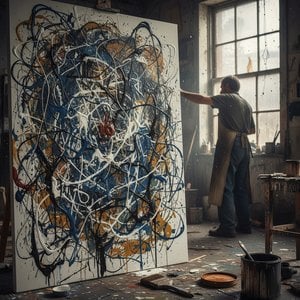
Descubre la vibrante obra maestra de Paul Jackson Pollock, 'Gótico'. Esta pintura captura la energía del movimiento humano y el colorido paisaje americano con una composición dinámica y detallada.

¿Quién fue Jackson Pollock? Descubre el artista pionero del expresionismo abstracto y la técnica del goteo que revolucionó el arte moderno. Análisis de su obra más famosa y legado artístico.

Reproducción al óleo hecha a mano

Óleo sobre lienzo pintado a mano en el tamaño y marco de su elección, realizado por encargo por nuestros artistas. ( Cambiar a formato impreso Ver versión en imagen digital)

Corner sample of the P118B picture frame: poliestireno moldeado, 5 cm wide and 3 cm thick
P118B €10
Corner sample of the P118H picture frame: poliestireno moldeado, 5 cm wide and 3 cm thick
P118H €10
Corner sample of the P118W picture frame: poliestireno moldeado, 5 cm wide and 3 cm thick
P118W €10
Corner sample of the P438Z picture frame: poliestireno moldeado, 5.5 cm wide and 3.5 cm thick
P438Z €10
Corner sample of the P508JH picture frame: poliestireno moldeado, 7 cm wide and 3.5 cm thick
P508JH €12
Corner sample of the P508YH picture frame: poliestireno moldeado, 7 cm wide and 3.5 cm thick
P508YH €12
Corner sample of the P805H picture frame: poliestireno moldeado, 5 cm wide and 3.5 cm thick
P805H €10
Corner sample of the P805Z picture frame: poliestireno moldeado, 5 cm wide and 3.5 cm thick
P805Z €10
Corner sample of the P919BZ picture frame: poliestireno moldeado, 7 cm wide and 3.5 cm thick
P919BZ €10
Corner sample of the P919G picture frame: poliestireno moldeado, 7 cm wide and 3.5 cm thick
P919G €10
Corner sample of the P919XJ picture frame: poliestireno moldeado, 7 cm wide and 3.5 cm thick
P919XJ €10
Corner sample of the P959ZH picture frame: poliestireno moldeado, 5 cm wide and 3 cm thick
P959ZH €10
Corner sample of the P968JZ picture frame: poliestireno moldeado, 6 cm wide and 4 cm thick
P968JZ €12
Corner sample of the W106C picture frame: madera maciza, 5 cm wide and 3 cm thick
W106C €8
Corner sample of the W218G picture frame: madera maciza, 5 cm wide and 3 cm thick
W218G €10
Corner sample of the W218JH picture frame: madera maciza, 5 cm wide and 3 cm thick
W218JH €8
Corner sample of the W218Y picture frame: madera maciza, 5 cm wide and 3 cm thick
W218Y €10
Corner sample of the W307PJ picture frame: madera maciza, 6 cm wide and 3 cm thick
W307PJ €10
Corner sample of the W316G picture frame: madera maciza, 6 cm wide and 3 cm thick
W316G €10
Corner sample of the W316PJ picture frame: madera maciza, 6 cm wide and 3 cm thick
W316PJ €8
Corner sample of the W316Y picture frame: madera maciza, 6 cm wide and 3 cm thick
W316Y €10
Corner sample of the W398PJ picture frame: madera maciza, 5 cm wide and 3 cm thick
W398PJ €8
Corner sample of the W4111J picture frame: madera maciza, 6.5 cm wide and 3.5 cm thick
W4111J €10
Corner sample of the W500HY picture frame: madera maciza, 7 cm wide and 5 cm thick
W500HY €15
Corner sample of the W500JH picture frame: madera maciza, 7 cm wide and 5 cm thick
W500JH €15
Corner sample of the W692G picture frame: madera maciza, 8 cm wide and 4 cm thick
W692G €12
Corner sample of the W849H picture frame: madera maciza, 5 cm wide and 3 cm thick
W849H €8
Corner sample of the W940BG picture frame: madera maciza, 7.5 cm wide and 4.5 cm thick
W940BG €15
Corner sample of the W953PJ picture frame: madera maciza, 6 cm wide and 3.5 cm thick
W953PJ €8

Estándar
personalizado
CM
INCH

Elija entre nuestros tamaños predefinidos que respetan las proporciones originales de la obra.

ancho
altura

Escriba el ancho y el alto que necesite para adaptarse a su marco o a su pared. Al ser una obra pintada a mano, para un tamaño con una forma distinta, el artista puede pintar un poco más alrededor de la imagen o recortar un poco; usted elige. Le enviaremos una maqueta digital para su aprobación antes de comenzar la pintura. La imagen que se muestra en esta página no refleja el resultado real; solo la maqueta lo hace.

Ejemplos de lo que se puede personalizar: Reemplace el rostro con una foto del cliente; Agregue una mascota (por ejemplo, cambie un gato por un perro); Incluya un mensaje oculto en el fondo; Cambie el paisaje o los elementos del fondo.
Tras realizar el pedido, el equipo de WahooArt.com enviará un correo electrónico al cliente para solicitar instrucciones y proporcionarle una vista previa del boceto.

Envío a todo el mundo () en 3-4 semanas en lugar de las 5 semanas estándar. (24 octubre). Sin comprometer la calidad.

Envío exprés gratuito a todo el mundo
Lienzo de lino de alta calidad
Seguro de envío completo
Garantía de reembolso de impuestos aduaneros
Garantía de fidelidad cromática exacta
Política de devolución de 100 días (solo por defectos)
Garantía de devolución del 100% del dinero
Oferta por volumen

Precio total

€ 239

Gótico

Técnica de reproducción

Tamaño de la reproducción

-

Precio total

€ 239

Datos clave

  • Dimensiones: Desconocidas
  • Medio: Pintura
  • Título: Gótico
  • Elementos destacados o técnicas: Salpicaduras aleatorias
  • Ubicación: Colección Privada

Cuestionario de arte

Cada pregunta tiene una única respuesta correcta.

Pregunta 1:
¿Qué elementos visuales destacan en la imagen del cuadro?
Pregunta 2:
¿Cómo se caracteriza la representación de las personas en el cuadro?
Pregunta 3:
¿Qué influencia tuvo la exposición temprana al arte indígena americano en el desarrollo artístico posterior de Pollock?
Pregunta 4:
¿Qué técnica artística utilizó Pollock para crear esta obra?

Un Estudio Sobre la Energía Vital y el Movimiento en la Pintura Abstracta

La obra de Paul Jackson Pollock, conocida simplemente como “Gothic”, representa un punto culminante en la trayectoria artística del pintor estadounidense nacido en Cody, Wyoming, en 1912. Aunque su vida temprana estuvo marcada por constantes desplazamientos familiares debido al trabajo de su padre como ingeniero jefe de caminos y carreteras, estos viajes por el oeste americano fueron fundamentales para formar su sensibilidad estética y comprender la importancia de las tradiciones culturales indígenas – una influencia que se reflejaría posteriormente en su lenguaje artístico único. Pollock recibió formación artística inicial en el Manual Arts High School de Los Ángeles y luego estudió bajo la guía del reconocido pintor regionalista Thomas Hart Benton en Nueva York, donde aprendió a valorar la composición dinámica y la narrativa como elementos esenciales para comunicar emociones profundas.
  • Estilo: El estilo de Pollock pertenece al movimiento expresionista abstracto estadounidense, aunque con características distintivas que lo diferencian de otros artistas contemporáneos. Esta corriente artística rechazaba las convenciones tradicionales de representación figurativa en favor de la exploración libre del lenguaje pictórico, buscando transmitir sentimientos y estados mentales directamente a través del lienzo.
  • Técnica: La técnica empleada por Pollock fue revolucionaria para su época: el dripping technique, también conocido como “goteo”. Esta innovadora metodología consistía en extender pintura sobre una superficie plana y dejar que gotas y chorros de pintura fluyeran libremente desde varios puntos hacia abajo, creando patrones complejos y aparentemente aleatorios. Este proceso meticulosamente controlado permitía al artista obtener resultados sorprendentes y generar una sensación de movimiento constante.
El cuadro captura un momento de intensa actividad visual y emocional. Los colores vibrantes – rojos profundos mezclados con azules brillantes y amarillos cálidos, acompañados por verdes apagados – crean una atmósfera cargada de energía que invita al espectador a experimentar la obra como una fuerza dinámica. Esta paleta cromática no solo aporta belleza estética sino también simbolismo profundo: el rojo puede representar pasión y fuerza vital, mientras que el azul evoca calma y reflexión, generando un contraste interesante que refuerza el mensaje artístico del cuadro. La composición aparentemente desordenada refleja la complejidad de la experiencia humana y la dificultad para expresar sentimientos complejos en términos visuales tradicionales. Consideraciones adicionales para coleccionistas e interior diseñadores:
  • Reproducción de alta calidad: Una reproducción meticulosamente elaborada permite apreciar los detalles originales del cuadro, capturando la esencia del dripping technique y transmitiendo la energía emocional inherente a la obra maestra de Pollock.
  • Integración en espacios interiores: Los colores utilizados en “Gothic” pueden aportar un toque sofisticado y expresivo a cualquier entorno residencial o comercial, creando una atmósfera vibrante y estimulante que refleja el espíritu creativo del artista.
  • Valor artístico e histórico: Esta obra representa un testimonio de la innovación artística estadounidense durante los años veinte y treinta, ofreciendo una ventana al pensamiento estético y emocional de una época clave en la historia del arte moderno.
En definitiva, “Gothic” es más que una simple pintura; es una invitación a contemplar el universo interno del artista y a conectar con las emociones fundamentales que impulsan la creación artística. Una reproducción excepcional permite llevar este mensaje inspirador al hogar de aquellos amantes del arte que buscan piezas originales y significativas.

Preguntas y respuestas

¿Hacia qué tono se inclina "Gótico"?

El tono dominante de "Gótico" de Jackson Pollock es Del ocre al sepia. El tono es la base cromática de la paleta.

¿Dónde puedo comprar una reproducción pintada a mano de "Gótico" de Jackson Pollock?

Las copias pintadas a mano de "Gótico" de Jackson Pollock se venden en este sitio web: una reproducción al óleo pintada a mano sobre lienzo de lino, las cuales pueden solicitarse desde su página de Reproducción pintada a mano.

¿Es "Gótico" de Jackson Pollock de dominio público?

La información sobre los derechos de autor de "Gótico" de Jackson Pollock: la obra es en el dominio público: sus derechos de autor han expirado. Esto determina si las reproducciones de la imagen pueden realizarse libremente.


Biografía del artista

Early Life and the Seeds of Innovation

Paul Jackson Pollock, born in Cody, Wyoming, in 1912, was a restless spirit from the outset. His early life was marked by frequent relocation as his father pursued work as a land surveyor across the vast landscapes of the American West. This itinerant existence instilled in young Pollock a deep connection to the natural world and an exposure to diverse cultures, particularly through encounters with Native American art during those surveying trips – impressions that would subtly permeate his artistic vision later in life.

Pollock’s formal artistic training began at the Manual Arts High School in Los Angeles, followed by studies at the Art Students League of New York under the tutelage of Thomas Hart Benton. Benton, a prominent figure in the Regionalist movement, emphasized rhythmic composition and narrative themes rooted in American life. While Pollock initially absorbed these lessons, his inherent inclination leaned toward more abstract explorations. He was also profoundly impacted by Mexican muralists like José Clemente Orozco, whose powerful depictions of social struggle resonated deeply with him. These early influences laid a foundation, but it was the burgeoning world of Surrealism that truly unlocked Pollock’s artistic potential.

The Birth of Action Painting and a Revolutionary Technique

The 1930s saw Pollock experimenting with various techniques, seeking alternatives to traditional brushwork. He began pouring paint, exploring its fluidity and unpredictable nature. However, it was around 1947 that his artistic trajectory underwent a radical transformation. Abandoning the easel altogether, Pollock laid canvases directly on the floor, initiating what would become known as his “drip painting.” He then proceeded to drip, splash, and fling paint onto the canvas from above, orchestrating a dynamic dance between artist, medium, and surface.

This wasn’t merely about applying paint; it was about embodying the act of creation itself. Pollock's canvases became arenas for physical expression, capturing the immediacy of his gestures and emotions. The resulting paintings are characterized by their “all-over” composition – a lack of central focus that invites the viewer to explore the entire surface as a unified field of energy. Intricate networks of lines and colors intertwine, creating a visual complexity that is both captivating and challenging. He employed unconventional tools—sticks, knives, even syringes—to manipulate the paint in unpredictable ways, further emphasizing the spontaneous nature of his process.

This innovative approach positioned Pollock as a central figure in the burgeoning Abstract Expressionist movement, which emerged in post-World War II New York City. Abstract Expressionism prioritized spontaneous gesture, large scale, and non-representational imagery, reflecting a broader cultural shift away from traditional artistic conventions. His marriage to fellow artist Lee Krasner was also pivotal; she provided unwavering emotional support and actively encouraged his artistic development, recognizing the groundbreaking nature of his work.

Iconic Works and Lasting Legacy

Pollock’s most celebrated works—such as Number 1, 1950 (Lavender Mist), One: Number 31, 1950, Blue Poles: Number 11, 1952, and Convergence—are testaments to his revolutionary technique. These paintings are not simply images; they are records of a performance, imbued with the artist’s physical presence and emotional intensity. The dynamic energy that emanates from these canvases is palpable, drawing viewers into a world of pure abstraction.

His style transcends mere aesthetics; it's an exploration of process over product. Pollock sought to capture the immediacy of his actions and emotions on canvas, rejecting traditional notions of composition and representation. He delved into Jungian psychology, exploring archetypes and the subconscious in his art, seeking to tap into universal symbols and primal energies.

Pollock’s impact on the history of art is immeasurable. He fundamentally altered the way artists approached painting, breaking free from easel-based methods and embracing a more performative approach. His work helped solidify New York City's position as a global center for modern art, shifting the focus away from European dominance. His influence can be seen in the work of countless artists who followed, including those associated with Color Field painting and later forms of abstract expressionism.

Though initially met with mixed reviews—some critics dismissed his work as chaotic or lacking skill—Pollock’s reputation grew steadily after his untimely death in 1956 at the age of 44. Today, he is universally recognized as one of the most important and influential artists of the 20th century, a visionary who dared to challenge conventions and redefine the boundaries of artistic expression.

Jackson Pollock

Jackson Pollock

1912 - 1956 , Estados Unidos

Datos clave

  • Artistic Movement Or Style: Abstract Expressionismo
  • Artists Or Movements Influenced By This Artist: ['Color Field painting']
  • Artists Who Influenced This Artist:
    • José Clemente Orozco
    • Thomas Hart Benton
  • Date Of Birth: 28 enero 1912
  • Date Of Death: 11 agosto 1956
  • Full Name: Paul Jackson Pollock
  • Nationality: American
  • Notable Artworks: ['Número 1, 1950 (Lavanda Vapor']
  • Place Of Birth: Cody, Estados Unidos
Explore obras de arte organizadas por temas, estilos y características.