Vista previa Vista previa en RA Encargar reproducción pintada a mano Ver versión en imagen digital Compartir
Ver detalles Guía Añadir a favoritos Descargar Ver artículos similares Radiografía Presentación de diapositivas Estadísticas

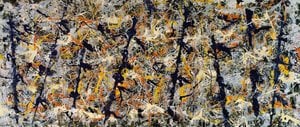
El arco iris gris

Jackson Pollock revolucionó el expresionismo abstracto con su técnica de goteo, creando obras maestras como "El Arco Iris Gris" que exploran movimiento y color de manera innovadora. Descubre este icono del arte moderno.

¿Quién fue Jackson Pollock? Descubre el artista pionero del expresionismo abstracto y la técnica del goteo que revolucionó el arte moderno. Análisis de su obra más famosa y legado artístico.

Giclée / Impresión de arte

Impresiones giclée o en lienzo de calidad de museo con producción rápida y opciones de acabado flexibles. ( Encargar reproducción pintada a mano Ver versión en imagen digital)

Corner sample of the P118B picture frame: poliestireno moldeado, 5 cm wide and 3 cm thick
P118B €10
Corner sample of the P118H picture frame: poliestireno moldeado, 5 cm wide and 3 cm thick
P118H €10
Corner sample of the P118W picture frame: poliestireno moldeado, 5 cm wide and 3 cm thick
P118W €10
Corner sample of the P438Z picture frame: poliestireno moldeado, 5.5 cm wide and 3.5 cm thick
P438Z €10
Corner sample of the P508JH picture frame: poliestireno moldeado, 7 cm wide and 3.5 cm thick
P508JH €12
Corner sample of the P508YH picture frame: poliestireno moldeado, 7 cm wide and 3.5 cm thick
P508YH €12
Corner sample of the P805H picture frame: poliestireno moldeado, 5 cm wide and 3.5 cm thick
P805H €10
Corner sample of the P805Z picture frame: poliestireno moldeado, 5 cm wide and 3.5 cm thick
P805Z €10
Corner sample of the P919BZ picture frame: poliestireno moldeado, 7 cm wide and 3.5 cm thick
P919BZ €10
Corner sample of the P919G picture frame: poliestireno moldeado, 7 cm wide and 3.5 cm thick
P919G €10
Corner sample of the P919XJ picture frame: poliestireno moldeado, 7 cm wide and 3.5 cm thick
P919XJ €10
Corner sample of the P959ZH picture frame: poliestireno moldeado, 5 cm wide and 3 cm thick
P959ZH €10
Corner sample of the P968JZ picture frame: poliestireno moldeado, 6 cm wide and 4 cm thick
P968JZ €12
Corner sample of the W106C picture frame: madera maciza, 5 cm wide and 3 cm thick
W106C €8
Corner sample of the W218G picture frame: madera maciza, 5 cm wide and 3 cm thick
W218G €10
Corner sample of the W218JH picture frame: madera maciza, 5 cm wide and 3 cm thick
W218JH €8
Corner sample of the W218Y picture frame: madera maciza, 5 cm wide and 3 cm thick
W218Y €10
Corner sample of the W307PJ picture frame: madera maciza, 6 cm wide and 3 cm thick
W307PJ €10
Corner sample of the W316G picture frame: madera maciza, 6 cm wide and 3 cm thick
W316G €10
Corner sample of the W316PJ picture frame: madera maciza, 6 cm wide and 3 cm thick
W316PJ €8
Corner sample of the W316Y picture frame: madera maciza, 6 cm wide and 3 cm thick
W316Y €10
Corner sample of the W398PJ picture frame: madera maciza, 5 cm wide and 3 cm thick
W398PJ €8
Corner sample of the W4111J picture frame: madera maciza, 6.5 cm wide and 3.5 cm thick
W4111J €10
Corner sample of the W500HY picture frame: madera maciza, 7 cm wide and 5 cm thick
W500HY €15
Corner sample of the W500JH picture frame: madera maciza, 7 cm wide and 5 cm thick
W500JH €15
Corner sample of the W692G picture frame: madera maciza, 8 cm wide and 4 cm thick
W692G €12
Corner sample of the W849H picture frame: madera maciza, 5 cm wide and 3 cm thick
W849H €8
Corner sample of the W940BG picture frame: madera maciza, 7.5 cm wide and 4.5 cm thick
W940BG €15
Corner sample of the W953PJ picture frame: madera maciza, 6 cm wide and 3.5 cm thick
W953PJ €8

Estándar
personalizado
CM
INCH

Elija entre nuestros tamaños predefinidos que respetan las proporciones originales de la obra.

ancho
altura

Introduzca el ancho y el alto que necesite para adaptarse a su marco o pared. Una impresión solo puede recortarse, nunca hacerse más grande que la imagen original, por lo que un tamaño con una forma distinta perderá parte de la obra. Le enviaremos una maqueta digital para su aprobación antes de realizar cualquier impresión. La imagen que se muestra en esta página no refleja el recorte real; solo la maqueta lo hace.

Envío a todo el mundo () en 2 semanas en lugar de las 4/5 semanas estándar. (18 octubre)

Envío exprés gratuito a todo el mundo
Lienzo de lino de alta calidad
Seguro de envío completo
Garantía de reembolso de impuestos aduaneros
Garantía de fidelidad cromática exacta
Política de devolución de 100 días (solo por defectos)
Garantía de devolución del 100% del dinero
Oferta por volumen

Precio total

€ 59

El arco iris gris

Giclée / Impresión de arte

Tamaño de la reproducción

-

Precio total

€ 59

Datos clave

  • Location: Instituto de Arte de Chicago
  • Influences: Surrealismo
  • Dimensions: 68 x 104 pulgadas
  • Artist: Jackson Pollock
  • Title: Grayed Rainbow
  • Subject or theme: Paisaje abstracto

Cuestionario de arte

Cada pregunta tiene una única respuesta correcta.

Pregunta 1:
¿Quién fue Jackson Pollock?
Pregunta 2:
¿Cuál es la técnica más destacada utilizada por Pollock en esta obra?
Pregunta 3:
¿Dónde se encuentra actualmente la obra "Grayed Rainbow"?
Pregunta 4:
¿Qué movimiento artístico influyó en Pollock?
Pregunta 5:
¿Cuál es el significado principal de la obra "Grayed Rainbow" según los críticos?

Grayed Rainbow: A Symphony of Color and Gesture

Jackson Pollock’s *Grayed Rainbow*, painted in 1953, stands as an emblem of Abstract Expressionism—a movement that irrevocably altered the landscape of twentieth-century art. More than just pigment on canvas; it embodies a radical reimagining of artistic process and perception, reflecting Pollock's profound engagement with both the natural world and the psychological depths of human experience. This monumental work, measuring 68 x 104 inches, immediately captivates the viewer with its dominant palette—a subdued tapestry of grays punctuated by flashes of vibrant hues hidden beneath a deceptively calm surface.
  • The Artist’s Vision: Pollock, born Paul Jackson Pollock in Cody, Wyoming, on January 28, 1912, embarked on an artistic journey marked by restless exploration and experimentation. Influenced initially by regionalist painters like Thomas Hart Benton and David Alfaro Siqueiros, he swiftly embraced Surrealism's dreamlike imagery and found inspiration in the primal rhythms of Native American art—a fusion that would characterize his distinctive style.
  • Action Painting: Pollock’s groundbreaking technique—dubbed “action painting”—challenged conventional notions of artistic creation. Rejecting easel painting and brushes, he transformed his studio into a dynamic arena where paint dripped, splashed, and flowed onto canvases laid horizontally on the floor or secured to walls. This process wasn't merely about applying color; it was an embodiment of emotion and impulse—a visceral response to the artist’s inner state.

Decoding the Composition: Layers of Color and Texture

The painting’s visual complexity derives from Pollock’s meticulous layering of pigment, achieved through a series of controlled drips and splatters. Thick chunks of paint emerge directly from tubes, while thinner streams pour from containers equipped with small holes—a deliberate orchestration of movement and gesture. This technique generates an astonishing array of textures—from smooth expanses to jagged ridges—creating a palpable sense of dynamism that invites contemplation. Notably, Pollock concealed orange, yellow, green, blue, and violet hues beneath the gray background, subtly hinting at hidden depths within the seemingly monochrome surface.
  • Symbolism: The “rainbow” motif itself carries symbolic resonance, representing hope amidst darkness—a theme consistent with Pollock’s exploration of psychological states and his fascination with archetypal imagery.
  • The Butler Institute of American Art: A remarkable collection of American art can be found at The Butler Institute of American Art in Youngstown, Ohio, where visitors can admire masterpieces by Jackson Pollock alongside other influential figures of the Abstract Expressionist movement.

A Legacy Beyond Technique

*Grayed Rainbow* transcends mere stylistic innovation; it represents a fundamental shift in artistic consciousness—a rejection of representational illusion and an embrace of pure expression. Its enduring appeal lies not only in its visual splendor but also in its ability to provoke introspection and stimulate emotional response. Pollock’s work continues to inspire artists and collectors alike, cementing his place as one of the most transformative voices of the twentieth century.

Discover More About Jackson Pollock

To delve deeper into the life and artistic achievements of Jackson Pollock, visit WahooArt.com for comprehensive biographical information and detailed analyses of his oeuvre. Explore his groundbreaking techniques and consider how *Grayed Rainbow* embodies the spirit of Abstract Expressionism—a movement that redefined art history forever.

Preguntas y respuestas

¿A qué época pertenece "El arco iris gris"?

El periodo histórico de "El arco iris gris" de Jackson Pollock es Moderno. Esta clasificación sitúa la obra en la historia del arte.

¿Es "El arco iris gris" de Jackson Pollock una obra de tonos claros u oscuros?

La luminosidad percibida de "El arco iris gris" de Jackson Pollock es brillante. Puede armonizarse con la luz del espacio destinado.

¿Qué color destaca más en "El arco iris gris"?

El color dominante de "El arco iris gris" de Jackson Pollock es Marrón rosado (#b3a596).


Biografía del artista

Early Life and the Seeds of Innovation

Paul Jackson Pollock, born in Cody, Wyoming, in 1912, was a restless spirit from the outset. His early life was marked by frequent relocation as his father pursued work as a land surveyor across the vast landscapes of the American West. This itinerant existence instilled in young Pollock a deep connection to the natural world and an exposure to diverse cultures, particularly through encounters with Native American art during those surveying trips – impressions that would subtly permeate his artistic vision later in life.

Pollock’s formal artistic training began at the Manual Arts High School in Los Angeles, followed by studies at the Art Students League of New York under the tutelage of Thomas Hart Benton. Benton, a prominent figure in the Regionalist movement, emphasized rhythmic composition and narrative themes rooted in American life. While Pollock initially absorbed these lessons, his inherent inclination leaned toward more abstract explorations. He was also profoundly impacted by Mexican muralists like José Clemente Orozco, whose powerful depictions of social struggle resonated deeply with him. These early influences laid a foundation, but it was the burgeoning world of Surrealism that truly unlocked Pollock’s artistic potential.

The Birth of Action Painting and a Revolutionary Technique

The 1930s saw Pollock experimenting with various techniques, seeking alternatives to traditional brushwork. He began pouring paint, exploring its fluidity and unpredictable nature. However, it was around 1947 that his artistic trajectory underwent a radical transformation. Abandoning the easel altogether, Pollock laid canvases directly on the floor, initiating what would become known as his “drip painting.” He then proceeded to drip, splash, and fling paint onto the canvas from above, orchestrating a dynamic dance between artist, medium, and surface.

This wasn’t merely about applying paint; it was about embodying the act of creation itself. Pollock's canvases became arenas for physical expression, capturing the immediacy of his gestures and emotions. The resulting paintings are characterized by their “all-over” composition – a lack of central focus that invites the viewer to explore the entire surface as a unified field of energy. Intricate networks of lines and colors intertwine, creating a visual complexity that is both captivating and challenging. He employed unconventional tools—sticks, knives, even syringes—to manipulate the paint in unpredictable ways, further emphasizing the spontaneous nature of his process.

This innovative approach positioned Pollock as a central figure in the burgeoning Abstract Expressionist movement, which emerged in post-World War II New York City. Abstract Expressionism prioritized spontaneous gesture, large scale, and non-representational imagery, reflecting a broader cultural shift away from traditional artistic conventions. His marriage to fellow artist Lee Krasner was also pivotal; she provided unwavering emotional support and actively encouraged his artistic development, recognizing the groundbreaking nature of his work.

Iconic Works and Lasting Legacy

Pollock’s most celebrated works—such as Number 1, 1950 (Lavender Mist), One: Number 31, 1950, Blue Poles: Number 11, 1952, and Convergence—are testaments to his revolutionary technique. These paintings are not simply images; they are records of a performance, imbued with the artist’s physical presence and emotional intensity. The dynamic energy that emanates from these canvases is palpable, drawing viewers into a world of pure abstraction.

His style transcends mere aesthetics; it's an exploration of process over product. Pollock sought to capture the immediacy of his actions and emotions on canvas, rejecting traditional notions of composition and representation. He delved into Jungian psychology, exploring archetypes and the subconscious in his art, seeking to tap into universal symbols and primal energies.

Pollock’s impact on the history of art is immeasurable. He fundamentally altered the way artists approached painting, breaking free from easel-based methods and embracing a more performative approach. His work helped solidify New York City's position as a global center for modern art, shifting the focus away from European dominance. His influence can be seen in the work of countless artists who followed, including those associated with Color Field painting and later forms of abstract expressionism.

Though initially met with mixed reviews—some critics dismissed his work as chaotic or lacking skill—Pollock’s reputation grew steadily after his untimely death in 1956 at the age of 44. Today, he is universally recognized as one of the most important and influential artists of the 20th century, a visionary who dared to challenge conventions and redefine the boundaries of artistic expression.

Jackson Pollock

Jackson Pollock

1912 - 1956 , Estados Unidos

Datos clave

  • Artistic Movement Or Style: Abstract Expressionismo
  • Artists Or Movements Influenced By This Artist: ['Color Field painting']
  • Artists Who Influenced This Artist:
    • José Clemente Orozco
    • Thomas Hart Benton
  • Date Of Birth: 28 enero 1912
  • Date Of Death: 11 agosto 1956
  • Full Name: Paul Jackson Pollock
  • Nationality: American
  • Notable Artworks: ['Número 1, 1950 (Lavanda Vapor']
  • Place Of Birth: Cody, Estados Unidos
Explore obras de arte organizadas por temas, estilos y características.