Ver en contextoVer en contexto Vista previa en RAVista previa en RA Comprar pintura hecha a mano Comprar pintura hecha a manoCambiar a imagen digital Cambiar a imagen digital EnviarEnviar
DetallesDetalles Añadir a favoritos Añadir a favoritos DescargarDescargar SimilaresSimilares RadiografíaRadiografía Presentación de diapositivasPresentación de diapositivas EstadísticasEstadísticas

The Defender

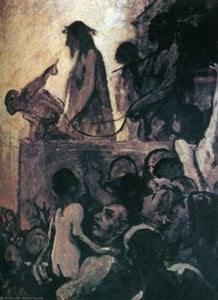
Experience the dramatic realism of Daumier's The Defender (c. 1865), capturing courtroom tension with expressive lines and muted tones; discover this masterpiece today.

Descubre Honoré Daumier (1808-1879), maestro francés del realismo y la sátira. Explora sus litografías, pinturas y esculturas que critican la sociedad del siglo XIX.

Giclée / Impresión de arte

Impresiones giclée o en lienzo de calidad de museo con producción rápida y opciones de acabado flexibles. (Comprar pintura hecha a mano Comprar pintura hecha a manoCambiar a imagen digital Cambiar a imagen digital)

P118B $10
P118H $10
P118W $10
P438Z $10
P508JH $12
P508YH $12
P805H $10
P805Z $10
P919BZ $10
P919G $10
P919XJ $10
P959ZH $10
P968JZ $12
W106C $8
W218G $10
W218JH $8
W218Y $10
W307PJ $10
W316G $10
W316PJ $8
W316Y $10
W398PJ $8
W4111J $10
W500HY $15
W500JH $15
W692G $12
W849H $8
W940BG $15
W953PJ $8

Estándar
a medida
CM
INCH

Elija entre nuestros tamaños predefinidos que respetan las proporciones originales de la obra.

ancho
altura

Puede introducir sus propias dimensiones para adaptarse a un marco o espacio específico. Si el tamaño seleccionado no coincide con las proporciones de la imagen original, recortaremos la obra de arte o extenderemos la imagen con un borde con efecto espejo o de color sólido. Se enviará una maqueta digital para su aprobación antes de que comience la producción.
Tenga en cuenta que la vista previa en pantalla no refleja el recorte o la extensión real. Solo la maqueta mostrará con precisión la composición final.
Aunque existen tamaños personalizados, recomendamos seleccionar una dimensión de la lista predefinida para preservar las proporciones originales.

Envío a todo el mundo () en 2 semanas en lugar de las 4/5 semanas estándar. (12 septiembre)

why_choose_icon
Envío exprés gratuito a todo el mundo
why_choose_icon
Lienzo de lino de alta calidad
why_choose_icon
Seguro de envío total
why_choose_icon
Garantía de reembolso de impuestos aduaneros
why_choose_icon
Garantía de fidelidad cromática exacta
why_choose_icon
Política de devolución de 100 días (solo por defectos)
why_choose_icon
Garantía de devolución del 100% del dinero
why_choose_icon
Descuento por cantidad

Precio total

$ 68

reproduction

The Defender

Giclée / Impresión de arte

Dimensiones de la reproducción

-

Precio total final

$ 68

Datos clave

  • Movement: Realism
  • Title: The Defender
  • Influences: Rubens
  • Artist: Honoré Daumier
  • Artistic style: Social Commentary
  • Year: 1865
  • Notable elements or techniques: Expressive lines; Hatching & Crosshatching

Test de arte

Cada pregunta tiene una única respuesta correcta.

Pregunta 1:
What artistic style is Honoré Daumier’s "The Defender" primarily characterized by?
Pregunta 2:
Describe the predominant color palette used in "The Defender".
Pregunta 3:
What technique is Daumier primarily employing to create texture in the lithograph?
Pregunta 4:
The blurred background of "The Defender" serves what purpose?
Pregunta 5:
What is Daumier’s reputation for in terms of artistic expression?

A Theater of Justice: The Soul of Daumier’s Realism

In the quiet, somber depths of Honoré Daumier’s "The Defender," created around 1865, we are not merely spectators to a courtroom scene, but witnesses to a profound human drama. This masterful work, a cornerstone of the Realist movement, eschews the polished romanticism of its era to present an unflinching look at the psychological weight of the legal system. The composition immediately draws the eye toward a central, electric tension: a lawyer, captured in a moment of fervent advocacy, gestures with an outstretched arm that seems to vibrate with conviction. Beside him sits a woman, her posture etched with the heavy mantle of anxiety and dread. Through this intimate encounter, Daumier transcends simple reportage, inviting us into a space where the stakes are nothing less than human liberty and dignity.

The technical brilliance of "The Defender" lies in its ability to sculpt emotion through line and tone. Utilizing the lithographic medium, Daumier employs a sophisticated interplay of hatching and cross-hatching to breathe life into the figures. The lawyer’s hand and forearm are rendered with dynamic, expressive strokes that convey the urgency of his plea, while the subtle textures of the paper create a sense of atmospheric depth. The color palette is intentionally restrained—a melancholic symphony of browns, grays, beiges, and blacks. This monochromatic approach does not diminish the work; rather, it heightens the gravity of the scene, stripping away distractions to focus our attention on the raw, unadorned truth of the subjects' expressions.

Historical Echoes and Symbolic Depth

To understand "The Defender" is to understand the turbulent heart of 19th-century France. Daumier lived through the social upheavals of the Second Empire, a period where he used his sharpened satirical wit to expose the hypocrisies of the political and judicial elite. This artwork serves as a silent but powerful critique of the legal apparatus; it questions the impartiality of justice and highlights the vulnerability of the individual caught within its gears. The blurred, indistinct crowd in the background acts as a haunting symbol of the impersonal nature of the law—a sea of onlookers whose presence provides context but offers no sanctuary to the accused.

Every element of the piece is steeped in symbolic resonance. The woman’s averted gaze and hunched shoulders are masterclasses in conveying silent suffering, making her a universal icon of those facing judgment. For the discerning collector or interior designer, this piece offers more than just aesthetic beauty; it provides a profound intellectual anchor for a space. A high-quality reproduction of "The Defender" brings with it an aura of historical significance and emotional complexity, making it an ideal centerpiece for a study, a library, or a gallery wall where one wishes to evoke themes of resilience, truth, and the enduring human spirit.


Biografía del artista

Una Vida de Arte y Activismo

Honoré-Victorin Daumier, un grabador, caricaturista, pintor y escultor francés, dejó una huella imborrable en la escena artística del siglo XIX. Nacido en Marsella el 26 de febrero de 1808 y fallecido en París el 10 de febrero de 1879, la vida de Daumier fue un testimonio de su inquebrantable dedicación a capturar la esencia de la sociedad francesa.

Primeros Años e Influencias

La primera infancia de Daumier se vio marcada por las aspiraciones poéticas de su padre, lo que llevó a la familia a mudarse a París en 1814. Esta exposición a la vibrante escena artística de la ciudad influyó en su inclinación hacia el arte. Comenzó su aprendizaje con Alexandre Lenoir y luego ingresó a la Académie Suisse.

Trayectoria Artística

La prolífica carrera de Daumier abarcó múltiples medios, incluyendo la litografía, la pintura y la escultura. Su trabajo temprano se caracterizó por contribuciones anónimas a editoriales, emulando el estilo de Charlet y mostrando un ferviente entusiasmo por la leyenda napoleónica. Tras la revolución de 1830, su arte se volvió más abiertamente político.

  • Le Charivari, un periódico cómico lanzado por Charles Philipon, proporcionó una plataforma para el trabajo satírico de Daumier, apuntando a la burguesía y la incompetencia del gobierno.
  • Sus caricaturas de figuras políticas y sátiras sobre el comportamiento social le valieron tanto elogios como controversias, incluyendo un encarcelamiento de seis meses en 1832.

Obras Destacadas y Legado

  • Rue Transnonain, 15 de abril de 1834: Una conmovedora litografía que representa la masacre en la rue Transnoin, parte de los disturbios de abril de 1834 en París.
  • Les Gens de Justice: Una satíra mordaz sobre la profesión legal, que muestra la maestría de Daumier en la caricatura.
El impacto de Daumier en la historia del arte El compromiso inquebrantable de Daumier con capturar la verdad de la sociedad francesa ha influenciado a generaciones de artistas. Su trabajo se puede encontrar en varios museos y colecciones, incluyendo los que se presentan en WahooArt, que ofrece una visión general completa de su producción artística.
  • Explore las litografías y pinturas de Daumier en WahooArt.
  • Descubra más sobre los movimientos artísticos franceses, incluyendo el realismo, en Wikipedia.

Conclusión

La vida de Daumier fue un testimonio de su inquebrantable dedicación a capturar la esencia de la sociedad francesa. A través de su arte, continúa inspirando y provocando, ofreciendo una ventana única al siglo XIX francés.
  • El Musée d'Orsay en París exhibe algunas de las esculturas de arcilla sin cocer restauradas de Daumier.
  • Aprenda más sobre la vida y obra de Daumier en WahooArt.
Honoré Daumier

Honoré Daumier

1808 - 1879 , Francia

Datos clave

  • Artistas Que Influyeron:
    • Alexandre Lenoir
    • Charlet
  • Fecha De Fallecimiento: 10 de febrero de 1879
  • Fecha De Nacimiento: 26 de febrero de 1808
  • Influenciado A Artistas: ['Generaciones de artistas']
  • Lugar De Nacimiento: Marsella, Francia
  • Movimiento Artístico: Realismo, caricatura
  • Nacionalidad: Francesa
  • Nombre Completo: Honoré Victorin Daumier
  • Obras Notables:
    • Rue Transnonain, 15 de abril de 1834
    • Les Gens de Justice
    • Nous voulons Barabbas (Ecce Homo)
Explore obras de arte organizadas por temas, estilos y características.