Ver en contexto Vista previa en RA Comprar pintura hecha a mano Cambiar a imagen digital Enviar
Detalles Guía Añadir a favoritos Descargar Similares Radiografía Presentación de diapositivas Estadísticas

Under Boots

A man in distress lies on the ground in this evocative 1928 painting by Hermann Erneste Abeking that captures a somber atmosphere through expressive early 20th-century German artistry, perfect for your private collection.

Explore las cautivadoras obras de Hermann Ernst Abeking, pintor e ilustrador alemán conocido por sus caricaturas, ilustraciones de libros y expresiones del arte de principios del siglo XX.

Giclée / Impresión de arte

Impresiones giclée o en lienzo de calidad de museo con producción rápida y opciones de acabado flexibles. ( Comprar pintura hecha a mano Cambiar a imagen digital)

Corner sample of the P118B picture frame: poliestireno moldeado, 5 cm wide and 3 cm thick
P118B €10
Corner sample of the P118H picture frame: poliestireno moldeado, 5 cm wide and 3 cm thick
P118H €10
Corner sample of the P118W picture frame: poliestireno moldeado, 5 cm wide and 3 cm thick
P118W €10
Corner sample of the P438Z picture frame: poliestireno moldeado, 5.5 cm wide and 3.5 cm thick
P438Z €10
Corner sample of the P508JH picture frame: poliestireno moldeado, 7 cm wide and 3.5 cm thick
P508JH €12
Corner sample of the P508YH picture frame: poliestireno moldeado, 7 cm wide and 3.5 cm thick
P508YH €12
Corner sample of the P805H picture frame: poliestireno moldeado, 5 cm wide and 3.5 cm thick
P805H €10
Corner sample of the P805Z picture frame: poliestireno moldeado, 5 cm wide and 3.5 cm thick
P805Z €10
Corner sample of the P919BZ picture frame: poliestireno moldeado, 7 cm wide and 3.5 cm thick
P919BZ €10
Corner sample of the P919G picture frame: poliestireno moldeado, 7 cm wide and 3.5 cm thick
P919G €10
Corner sample of the P919XJ picture frame: poliestireno moldeado, 7 cm wide and 3.5 cm thick
P919XJ €10
Corner sample of the P959ZH picture frame: poliestireno moldeado, 5 cm wide and 3 cm thick
P959ZH €10
Corner sample of the P968JZ picture frame: poliestireno moldeado, 6 cm wide and 4 cm thick
P968JZ €12
Corner sample of the W106C picture frame: madera maciza, 5 cm wide and 3 cm thick
W106C €8
Corner sample of the W218G picture frame: madera maciza, 5 cm wide and 3 cm thick
W218G €10
Corner sample of the W218JH picture frame: madera maciza, 5 cm wide and 3 cm thick
W218JH €8
Corner sample of the W218Y picture frame: madera maciza, 5 cm wide and 3 cm thick
W218Y €10
Corner sample of the W307PJ picture frame: madera maciza, 6 cm wide and 3 cm thick
W307PJ €10
Corner sample of the W316G picture frame: madera maciza, 6 cm wide and 3 cm thick
W316G €10
Corner sample of the W316PJ picture frame: madera maciza, 6 cm wide and 3 cm thick
W316PJ €8
Corner sample of the W316Y picture frame: madera maciza, 6 cm wide and 3 cm thick
W316Y €10
Corner sample of the W398PJ picture frame: madera maciza, 5 cm wide and 3 cm thick
W398PJ €8
Corner sample of the W4111J picture frame: madera maciza, 6.5 cm wide and 3.5 cm thick
W4111J €10
Corner sample of the W500HY picture frame: madera maciza, 7 cm wide and 5 cm thick
W500HY €15
Corner sample of the W500JH picture frame: madera maciza, 7 cm wide and 5 cm thick
W500JH €15
Corner sample of the W692G picture frame: madera maciza, 8 cm wide and 4 cm thick
W692G €12
Corner sample of the W849H picture frame: madera maciza, 5 cm wide and 3 cm thick
W849H €8
Corner sample of the W940BG picture frame: madera maciza, 7.5 cm wide and 4.5 cm thick
W940BG €15
Corner sample of the W953PJ picture frame: madera maciza, 6 cm wide and 3.5 cm thick
W953PJ €8

Tamaño estándar
a medida
CM
INCH

Elija entre nuestros tamaños predefinidos que respetan las proporciones originales de la obra.

ancho
altura

Introduzca el ancho y el alto que necesite para adaptarse a su marco o pared. Una impresión solo puede recortarse, nunca hacerse más grande que la imagen original, por lo que un tamaño con una forma distinta perderá parte de la obra. Le enviaremos una maqueta digital para su aprobación antes de realizar cualquier impresión. La imagen que se muestra en esta página no refleja el recorte real; solo la maqueta lo hace.

Envío a todo el mundo () en 2 semanas en lugar de las 4/5 semanas estándar. (26 octubre)

Envío exprés gratuito a todo el mundo
Lienzo de lino de alta calidad
Seguro de envío total
Garantía de reembolso de aranceles aduaneros
Garantía de fidelidad cromática exacta
Política de devolución de 100 días (solo por defectos)
Garantía de devolución del 100% del dinero
Descuento por cantidad

Precio total

€ 60

Under Boots

Giclée / Impresión de arte

Dimensiones de la reproducción

-

Precio total final

€ 60

Datos clave

  • Artist: Hermann Erneste Abeking
  • Year: 1928
  • Title: Under Boots

A Study in Solitude: The Haunting Depths of Under Boots

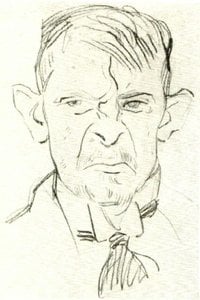
In the evocative realm of early 20th-century German art, few works capture the psychological tension of the era as poignantly as Hermann Abeking’s 1928 masterpiece, Under Boots. At first glance, the viewer is drawn into a somber, shadowed interior where the weight of existence seems to press down upon the canvas. The painting depicts a solitary figure reclined on the ground, his head buried in his hands in a gesture of profound despair or perhaps deep introspection. Clad in striking yellow trousers that pierce through the surrounding gloom, the man becomes a focal point of vulnerability amidst a dark, claustrophobic setting. The presence of indistinct figures in the background and the suggestion of heavy boots looming near the subject create an atmosphere of palpable discomfort, as if the very air is thick with the anxiety of a world on the brink of transformation.

Abeking, a versatile talent who moved fluidly between the worlds of fine art and commercial illustration, brings a unique graphic sensibility to this piece. His training in the prestigious academies of Dresden and Berlin allowed him to master a technique that balances representational clarity with an expressive, almost theatrical use of light and shadow. In Under Boots, the interplay of darkness and sudden bursts of color serves not just to define form, but to direct the emotional narrative. The heavy, somber tones evoke the influence of German Expressionism—a movement that sought to strip away academic pretension to reveal the raw, unadulterated truths of human suffering and isolation. Every brushstroke contributes to a sense of mounting pressure, making the viewer feel like an intruder in this private moment of distress.

Historical Resonance and Symbolic Depth

To understand the profound impact of this work, one must consider the historical landscape of 1928 Germany. This was a period of intense social upheaval and psychological fragmentation. Abeking, while deeply connected to the vibrant publishing scene in Berlin, often infused his work with a sense of the existential. The title itself, Under Boots, serves as a powerful metaphor for the crushing weight of societal expectations, political instability, or perhaps the inescapable march of time and authority. The figure’s posture—collapsed and retreating into himself—mirrors the collective fatigue of a generation navigating the turbulent waters between the memory of the Great War and the approaching shadows of another global conflict.

For the discerning collector or interior designer, this painting offers more than mere decoration; it provides a profound conversational centerpiece. The composition’s ability to command attention through its dramatic chiaroscuro makes it an ideal acquisition for spaces that value depth, intellect, and emotional resonance. Whether placed in a quiet study or a contemporary gallery setting, a high-quality reproduction of this work invites contemplation. It serves as a window into a pivotal moment in art history, where the boundaries between illustration and fine art blurred to create something deeply human, hauntingly beautiful, and eternally relevant.

Preguntas y respuestas

¿Qué orientación tiene "Under Boots" de Hermann Ernst Abeking?

"Under Boots" de Hermann Ernst Abeking tiene un formato Landscape. El formato describe las proporciones de la composición.

¿Qué estado de ánimo y emoción se entrelazan en "Under Boots"?

"Under Boots" de Hermann Ernst Abeking transmite una sensación Somber dentro de un ambiente general Dramatic.

¿De qué manera "Under Boots" de Hermann Ernst Abeking vincula el Expressionism con el país de origen del artista?

"Under Boots" vincula el movimiento Expressionism con Alemania a través del lugar de nacimiento de su creador.


Biografía del artista

un pintor, artista gráfico e ilustrador alemán en ciernes

hermann erneste abeking, una figura prominente del arte alemán de principios del siglo XX, dejó una huella indeleble en el mundo de la pintura, el arte gráfico y la ilustración. Nacido en Berlín en 1882 como el segundo hijo de hermann george louis abeking y clara dinglinger, estaba destinado a la grandeza artística.

primeros años y formación

Los años formativos de abeking transcurrieron entre los estudios en las prestigiosas academias de arte de Dresde y Berlín, donde perfeccionación sus habilidades junto a algunos de los artistas más talentosos de su época. Este periodo fundacional no solo moldeó su técnica, sino que también le inculcó un profundo aprecio por los diversos estilos artísticos que más tarde influirían en su obra.

trayectoria artística

  • hugdietrichs brautfahrt, un libro que recibió el encargo de ilustrar a la edad de veinte años, catapultó a abeking hacia el primer plano como un exitoso caricaturista.
  • Su asociación con el brücke-museum berlin, aunque no fue miembro oficial, influyó en su trabajo temprano, reflejando el énfasis del movimiento die brücke (el puente) en el expresionismo y el primitivismo.
  • Como ilustrador de libros para ullstein verlag, la versatilidad de abeking como artista quedó demostrada una vez más.
  • Sus caricaturas en lustigen blätter, the true jacob y lachen links demuestran su capacidad para equilibrar el humor con la integridad artística.
  • Su pertenencia a la asociación de ilustradores alemanes consolidó su posición dentro de la comunidad artística germana.

vida personal y últimos años

En 1903, abeking contrajo matrimonio con elly grube, una pintora con méritos propios. La residencia de verano de la pareja en althagen, en fischland, adquirida en 1904, sirvió como un escenario sereno para su vida familiar, que incluyó a dos hijos, ortrud (nacida en 1904) y thomas (nacido en 1909). Tras participar en la Primera Guerra Mundial, abeking se dedicó plenamente a la pintura, dejando tras de sí un legado de diversas expresiones artísticas. El fallecimiento de abeking en Berlín en 1939 marcó el fin de una era, pero también aseguró su lugar en los anales de la historia del arte alemán. Hoy en día, su obra puede encontrarse en diversas colecciones y museos, incluyendo aquellos presentados en la página de hermann erneste abeking en WahooArt, un testimonio de su influencia perdurable. descubra más sobre la vida y obra de hermann ernste abeking a través de la extensa colección de WahooArt: explore el proceso de pintura de WahooArt akademie der bildenden künste wien (viena, austria) - una guía completa
Hermann Ernst Abeking

Hermann Ernst Abeking

1882 - 1939 , Alemania