Vista previa Vista previa en RA Encargar reproducción pintada a mano Ver versión en imagen digital Compartir
Ver detalles Guía Añadir a favoritos Descargar Ver artículos similares Radiografía Presentación de diapositivas Estadísticas

Cabinet table

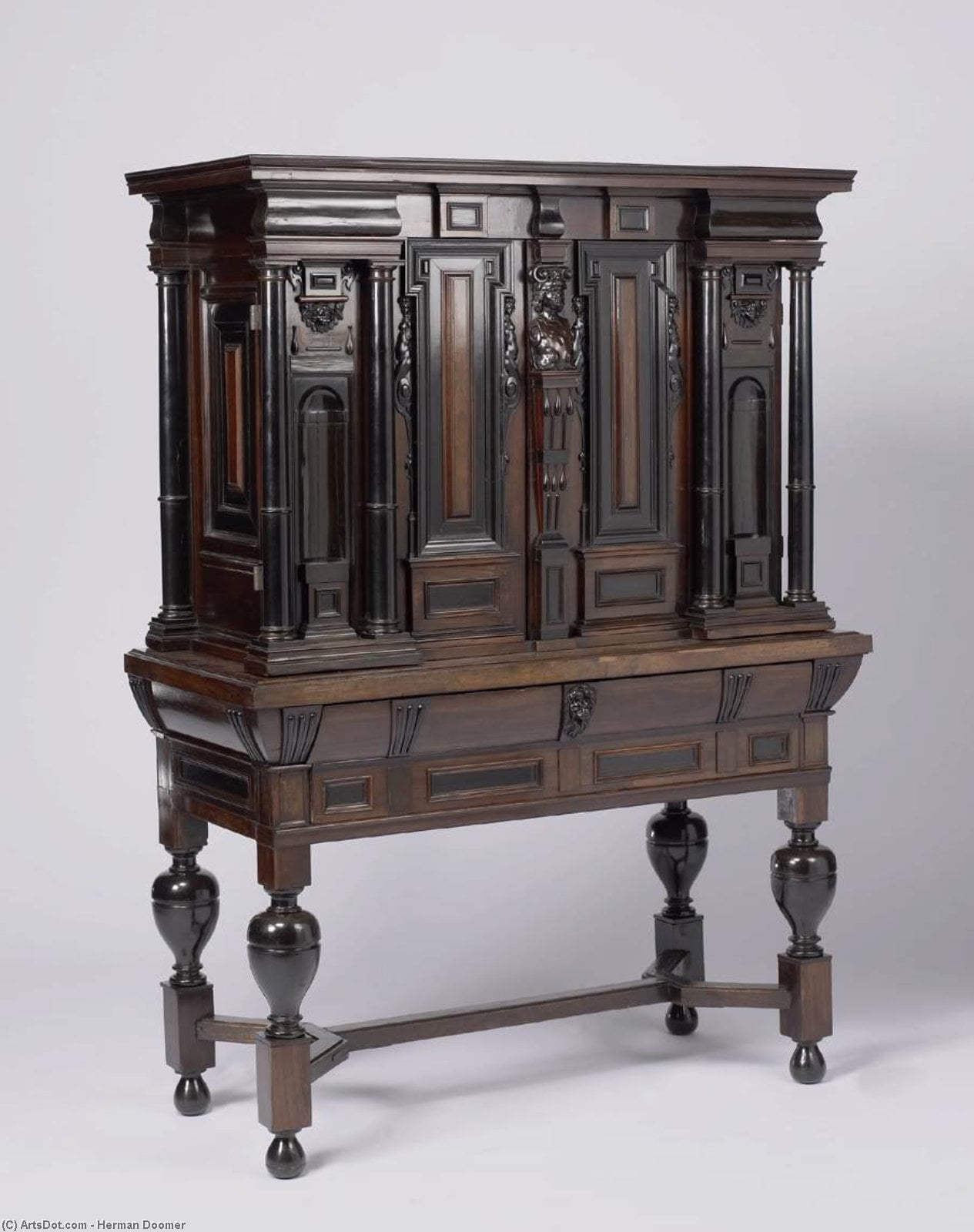
Marvel at the intricate beauty of 'Cabinet Table' (1635) by Herman Doomer – a stunning German Baroque masterpiece showcasing elaborate wood carvings and masterful craftsmanship from the early 17th century.

Un destacado artesano de la Edad de Oro holandesa, conocido por sus exquisitos muebles de chapa de ébano y el célebre Armario (Interior); descubre el intrincado arte que definió una era de opulenta artesanía.

Giclée / Impresión de arte

Impresiones giclée o en lienzo de calidad de museo con producción rápida y opciones de acabado flexibles. ( Encargar reproducción pintada a mano Ver versión en imagen digital)

Corner sample of the P118B picture frame: poliestireno moldeado, 5 cm wide and 3 cm thick
P118B €10
Corner sample of the P118H picture frame: poliestireno moldeado, 5 cm wide and 3 cm thick
P118H €10
Corner sample of the P118W picture frame: poliestireno moldeado, 5 cm wide and 3 cm thick
P118W €10
Corner sample of the P438Z picture frame: poliestireno moldeado, 5.5 cm wide and 3.5 cm thick
P438Z €10
Corner sample of the P508JH picture frame: poliestireno moldeado, 7 cm wide and 3.5 cm thick
P508JH €12
Corner sample of the P508YH picture frame: poliestireno moldeado, 7 cm wide and 3.5 cm thick
P508YH €12
Corner sample of the P805H picture frame: poliestireno moldeado, 5 cm wide and 3.5 cm thick
P805H €10
Corner sample of the P805Z picture frame: poliestireno moldeado, 5 cm wide and 3.5 cm thick
P805Z €10
Corner sample of the P919BZ picture frame: poliestireno moldeado, 7 cm wide and 3.5 cm thick
P919BZ €10
Corner sample of the P919G picture frame: poliestireno moldeado, 7 cm wide and 3.5 cm thick
P919G €10
Corner sample of the P919XJ picture frame: poliestireno moldeado, 7 cm wide and 3.5 cm thick
P919XJ €10
Corner sample of the P959ZH picture frame: poliestireno moldeado, 5 cm wide and 3 cm thick
P959ZH €10
Corner sample of the P968JZ picture frame: poliestireno moldeado, 6 cm wide and 4 cm thick
P968JZ €12
Corner sample of the W106C picture frame: madera maciza, 5 cm wide and 3 cm thick
W106C €8
Corner sample of the W218G picture frame: madera maciza, 5 cm wide and 3 cm thick
W218G €10
Corner sample of the W218JH picture frame: madera maciza, 5 cm wide and 3 cm thick
W218JH €8
Corner sample of the W218Y picture frame: madera maciza, 5 cm wide and 3 cm thick
W218Y €10
Corner sample of the W307PJ picture frame: madera maciza, 6 cm wide and 3 cm thick
W307PJ €10
Corner sample of the W316G picture frame: madera maciza, 6 cm wide and 3 cm thick
W316G €10
Corner sample of the W316PJ picture frame: madera maciza, 6 cm wide and 3 cm thick
W316PJ €8
Corner sample of the W316Y picture frame: madera maciza, 6 cm wide and 3 cm thick
W316Y €10
Corner sample of the W398PJ picture frame: madera maciza, 5 cm wide and 3 cm thick
W398PJ €8
Corner sample of the W4111J picture frame: madera maciza, 6.5 cm wide and 3.5 cm thick
W4111J €10
Corner sample of the W500HY picture frame: madera maciza, 7 cm wide and 5 cm thick
W500HY €15
Corner sample of the W500JH picture frame: madera maciza, 7 cm wide and 5 cm thick
W500JH €15
Corner sample of the W692G picture frame: madera maciza, 8 cm wide and 4 cm thick
W692G €12
Corner sample of the W849H picture frame: madera maciza, 5 cm wide and 3 cm thick
W849H €8
Corner sample of the W940BG picture frame: madera maciza, 7.5 cm wide and 4.5 cm thick
W940BG €15
Corner sample of the W953PJ picture frame: madera maciza, 6 cm wide and 3.5 cm thick
W953PJ €8

Estándar
personalizado
CM
INCH

Elija entre nuestros tamaños predefinidos que respetan las proporciones originales de la obra.

ancho
altura

Introduzca el ancho y el alto que necesite para adaptarse a su marco o pared. Una impresión solo puede recortarse, nunca hacerse más grande que la imagen original, por lo que un tamaño con una forma distinta perderá parte de la obra. Le enviaremos una maqueta digital para su aprobación antes de realizar cualquier impresión. La imagen que se muestra en esta página no refleja el recorte real; solo la maqueta lo hace.

Envío a todo el mundo () en 2 semanas en lugar de las 4/5 semanas estándar. (23 octubre)

Envío exprés gratuito a todo el mundo
Lienzo de lino de alta calidad
Seguro de envío completo
Garantía de reembolso de impuestos aduaneros
Garantía de fidelidad cromática exacta
Política de devolución de 100 días (solo por defectos)
Garantía de devolución del 100% del dinero
Oferta por volumen

Precio total

€ 60

Cabinet table

Giclée / Impresión de arte

Tamaño de la reproducción

-

Precio total

€ 60

Datos clave

  • Artist: herman doomer
  • Influences: Caravaggio
  • Year: 1635
  • Dimensions: 176 x 130 cm
  • Medium: Wood carving

Cuestionario de arte

Cada pregunta tiene una única respuesta correcta.

Pregunta 1:
What is the primary material used to create this cabinet table?
Pregunta 2:
The date provided (1635) refers to:
Pregunta 3:
What type of decorative elements are prominently featured on the doors and drawers of the cabinet?
Pregunta 4:
The style of the image suggests it is primarily intended for:
Pregunta 5:
The presence of ball-and-claw feet on the table legs is characteristic of:

A Glimpse into the Dutch Golden Age: The Cabinet Table by Herman Doomer

The image before us presents more than just a piece of furniture; it’s a portal into 17th-century Germany, a tangible echo of a period defined by both artistic flourishing and profound social upheaval. This imposing cabinet table, attributed to the hand of Herman Doomer, offers a captivating study in craftsmanship, symbolism, and the evolving aesthetics of the Dutch Golden Age. Doomer’s work, though relatively obscure today, reflects a fascinating confluence of influences – the meticulous detail of Flemish masters, the burgeoning naturalism of Caravaggio, and the distinctly German tradition of intricate wood carving.

The table itself is a testament to the skill of its creator. Constructed from dark-stained oak, it exudes an air of quiet authority, its substantial size suggesting a piece intended for a prominent location within a wealthy household. The multiple doors and drawers are not merely functional; they’re meticulously sculpted with a profusion of floral motifs – roses, lilies, and forget-me-nots – interwoven with scenes depicting figures engaged in everyday life. These aren't idealized portraits but rather glimpses into the realities of the time: a farmer tending his fields, a woman gathering herbs, and even hints of mythological creatures subtly integrated into the decorative scheme. The level of detail is astonishing; one can almost feel the texture of the petals or discern the individual strands of hair on the carved figures.

The Shadowed Influence of Caravaggio

While Doomer’s style ultimately leans towards the restrained elegance favored in Dutch interiors, a clear influence from Michelangelo Merisi da Caravaggio is discernible. Like Caravaggio, Doomer masterfully employs dramatic chiaroscuro – the interplay of light and shadow – to draw attention to specific elements within the carving. Notice how the light catches on the folds of fabric or highlights the intricate details of a face, creating a sense of depth and immediacy. This technique, borrowed from the Italian painter’s signature style, elevates the cabinet table beyond mere decoration, imbuing it with a palpable sense of drama and emotional resonance. The use of strong contrasts also serves to emphasize the richness and texture of the wood itself.

A Window into 17th-Century German Life

The date – 1635 – places this cabinet table firmly within the tumultuous period following the Thirty Years’ War. Germany, ravaged by conflict and political fragmentation, experienced a remarkable cultural resurgence during this era, often referred to as the Dutch Golden Age's sister movement. Furniture from this time reflects both the desire for opulent display and a subtle resistance to the devastation of war – a celebration of beauty amidst hardship. The scenes depicted on the cabinet table offer glimpses into the lives of ordinary people, reminding us that even in times of conflict, life continued, marked by routines, traditions, and a deep connection to the natural world.

Symbolism and the Language of Form

Beyond its decorative elements, the cabinet table is rich with symbolic meaning. The abundance of floral motifs speaks to themes of fertility, prosperity, and the cyclical nature of life. The figures depicted – farmers, women, mythical creatures – represent a complex interplay between earthly concerns and spiritual aspirations. The turned legs and ball-and-claw feet, a common feature in traditional German furniture design, ground the piece firmly in its regional context while adding an element of visual stability and elegance. The overall composition suggests a harmonious balance between order and chaos, restraint and exuberance – reflecting the complexities of the era in which it was created.

A Timeless Piece for the Connoisseur

Reproductions of this cabinet table offer a remarkable opportunity to bring a touch of 17th-century German artistry into any interior space. The intricate carvings, combined with the rich dark wood finish, create a statement piece that is both visually stunning and historically significant. Whether displayed in a grand hall or a more intimate setting, this cabinet table serves as a reminder of the enduring power of craftsmanship and the captivating beauty of a bygone era. Its presence evokes a sense of quiet contemplation, inviting viewers to reflect on the stories embedded within its intricate details.

Preguntas y respuestas

¿Cuál es el formato y las dimensiones de "Cabinet table"?

El formato de "Cabinet table" es Portrait y la obra original mide 176 x 130 cm. Ambos datos son útiles al planificar una reproducción.

¿Para qué estancia se recomienda "Cabinet table" de Herman Doomer?

Se recomienda "Cabinet table" de Herman Doomer para un Living Room. Esta sugerencia se basa en el tema, los colores y la atmósfera de la obra.

¿Quién es el autor de "Cabinet table" y a qué movimiento pertenece?

"Cabinet table" fue creada por Herman Doomer con el estilo Baroque Painting. El artista y el movimiento identifican la tradición de la obra.


Biografía del artista

El artesano de la Edad de Oro

Si bien la historia suele reservar sus reflectores más luminosos para los pintores que capturaron la luz de la Edad de Oro holandesa, la historia de Herman Doomer ofrece una mirada profunda a las manos expertas que enmarcaron y construyeron esa misma era. Nacido en Anrath, cerca de Venlo, Doomer no fue un artista visual en el sentido tradicional, sino más bien un maestro artesano cuya vida estuvo definida por la belleza táctil del ébano y la madera. Como exitoso fabricante de muebles y marcos, su trabajo proporcionó la estructura física para la floreciente cultura de la Ámsterdam del siglo XVII. Dirigió un próspero negocio especializado en muebles con chapa de ébano e intrincados marcos, recorriendo las bulliciosas calles de Kalverstraat, Gasantehuismolensteeg y Hartenstraat con la confianza de un hombre situado en el corazón de un centro de comercio global.

Maestría y Conexión

El legado de Herman Doomer está inextricablemente ligado a los gigantes artísticos de su tiempo. Su dominio de materiales como el ébano y la ballena coloreada le permitió contribuir a la opulencia estética de la República Holandesa, creando piezas que reflejaban la riqueza y el gusto de una nueva clase media. Su red profesional estaba profundamente integrada en los círculos más altos de la comunidad creativa de Ámsterdam; se sabe que colaboró con figuras como Pieter Quast y Johannes Lutma. Quizás lo más significativo fue su papel como proveedor de marcos, lo que lo situó en contacto directo con Rembrandt van Rijn. Esta conexión dio lugar a uno de los retratos más perdurables de la época, donde Rembrandt capturó a Doomer no simplemente como un sujeto, sino como un profesional digno, inmortalizando la fuerza silenciosa del artesano que se encuentra detrás del lienzo.

Un legado material perdurable

Aunque su nombre no se encuentre en las firmas de los lienzos, la influencia de Doomer persiste a través de los objetos físicos y duraderos que creó. Su obra, como el extraordinario Cupboard (Interior) que se conserva en el Rijksmuseum, sirve como una ventana a los gustos suntuosos y a la meticulosa maestría de aquel periodo. Estas piezas eran más que mera utilidad; eran encarnaciones de la innovación y la destreza holandesa. A través de su oficio especializado, Doomer ayudó a moldear el entorno visual del siglo XVII, dejando tras de sí una historia material que continúa hablando de una era definida por la prosperidad, el detalle intrincado y una devoción inigualable por la belleza de la alta artesanía.
Herman Doomer

Herman Doomer

1595 - 1650 , Italia

Datos clave

  • Fecha De Fallecimiento: 1650
  • Fecha De Nacimiento: 1595
  • Lugar De Nacimiento: Anrath, Alemania
  • Movimiento O Estilo Artístico: Edad de Oro holandesa
  • Nacionalidad: Holandesa
  • Nombre Completo: Herman Doomer
  • Obras Notables:
    • Alacena (Interior)
    • Mesa de gabinete