A Tender Encounter in the Heart of Bavaria
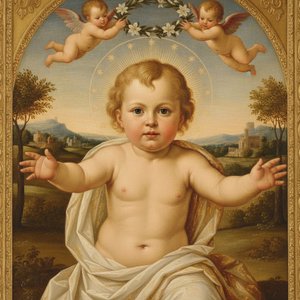
In the quiet, luminous depths of Hans Baldung Grien’s 1516 masterpiece, Madonna and Child, we encounter more than a mere religious icon; we enter a profound meditation on the sanctity of life and the vulnerability of love. Set against the backdrop of the burgeoning High Renaissance in Bavaria, this painting serves as a breathtaking bridge between the structured traditions of the Northern German Gothic and the expressive, psychological complexities of the emerging Mannerist movement. The scene is one of intimate devotion, where the Virgin Mary cradles her infant son with a tenderness that feels startlingly human. Unlike the distant, idealized figures often found in contemporary Italian works, Baldung presents a Mary whose presence is palpable, her maternal instinct rendered with an emotional resonance that transcends the boundaries of time and medium.
The composition draws the viewer into a nurturing sanctuary, where the central figures are surrounded by a soft, atmospheric warmth. As one gazes upon the painting, the eye is led through a delicate arrangement of figures—other children linger near the mother, their presence adding layers of familial depth to the divine narrative. Small, symbolic details are woven into the fabric of the scene, such as the subtle placement of an apple or a book, which serve as quiet reminders of the theological weight carried by the Christ child. These elements do not merely decorate; they anchor the spiritual significance of the moment, inviting collectors and enthusiasts to contemplate the intersection of the earthly and the divine.
Mastery of Light and Texture
Technically, Baldung’s work is a triumph of oil on panel, showcasing a level of meticulous craftsmanship that remains awe-inspiring centuries later. The artist utilized sophisticated layering and glazing techniques to achieve a remarkable luminosity, allowing light to seem as though it is emanating from within the skin of the holy figures themselves. This brilliance is particularly evident in the rendering of Mary’s drapery, where intricate folds and deep shadows create a sense of weight, movement, and tactile richness. The use of chiaroscuro—the dramatic interplay between light and shadow—is employed not just for structural depth, but to heighten the emotional impact of the scene, casting a soft glow upon the serene expression of the infant Jesus.
For the discerning interior designer or art lover, this painting offers an unparalleled sense of prestige and soulful elegance. The way Baldung manipulates texture—from the softness of a child's cheek to the heavy, woven quality of liturgical cloth—provides a visual feast that commands attention in any curated space. A high-quality reproduction of this work brings with it a sense of historical gravity and an atmosphere of peace, making it an ideal centerpiece for those seeking to infuse their surroundings with classical beauty and intellectual depth.
A Legacy of Expression and Emotion
To understand this painting is to understand the unique spirit of Hans Baldung Grien, an artist who dared to move beyond the polished perfection of his peers to embrace a more expressive, sometimes unsettling, psychological truth. His ability to blend the meticulous detail of the Northern tradition with the dramatic tension of Mannerism creates a work that is both comforting and deeply moving. The Madonna and Child stands as a testament to a period of immense cultural transformation, capturing the very essence of humanist thought through the lens of maternal grace.
Whether viewed as a historical artifact or a stunning piece of decorative art, the painting continues to resonate with its ability to evoke empathy. It invites the viewer to pause, to breathe, and to reconnect with the universal themes of protection, faith, and the enduring bond between parent and child. Owning a reproduction of such a significant work is not merely an acquisition of decor; it is an invitation to live alongside a masterpiece that celebrates the most profound aspects of the human experience.



 Ver en contexto
 Cambiar a Impresión
 Enviar
 Compartir
 Detalles

 Descargar
 Similares
 Radiografía
 Presentación de diapositivas
 Estadísticas


 Ver más






































 La opción de vidrio solo está disponible en tamaños inferiores a 110 cm.