Moïse exposé sur le Nil: A Descent into Mythic Symbolism
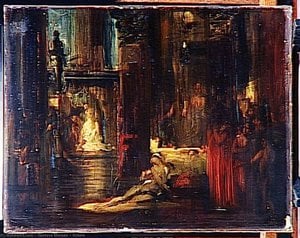
Gustave Moreau’s “Moïse exposé sur le Nil” (Moses Exposed on the Nile) is not merely a depiction of a biblical narrative; it's an immersion into a world of potent symbolism and dreamlike atmosphere, characteristic of the artist’s profound engagement with the tenets of Symbolism. Painted during a period of intense intellectual and artistic ferment in late 19th-century Paris, this work exemplifies Moreau’s deliberate rejection of Realist and Impressionistic trends, opting instead to delve into the realms of myth, religion, and the subconscious. The painting's power resides not in photographic accuracy but in its ability to evoke a deeply felt emotional response through carefully constructed imagery and an almost hallucinatory quality.
- Subject Matter: The scene portrays the pivotal moment from the Old Testament – Moses’ birth, miraculously occurring when Pharaoh’s daughter discovered him floating in a basket on the Nile.
- Style & Technique: Moreau's style is immediately recognizable for its opulent detail and richly layered composition. He employs a meticulous technique, building up surfaces with countless brushstrokes to create an effect of shimmering texture and luminous color. The use of gold leaf and iridescent pigments further enhances this otherworldly quality.
A Symphony of Symbolism
Moreau’s artistic vision was deeply rooted in the Symbolist movement, a reaction against the perceived materialism and superficiality of academic art. He sought to represent not what he *saw*, but what he *felt* – the spiritual and emotional resonance of biblical stories. The figures within “Moïse exposé sur le Nil” are rendered with an almost classical grace, yet their expressions are ambiguous, hinting at a deeper psychological complexity. The horse in the background, a recurring motif in Moreau’s work, symbolizes power, chaos, and perhaps even the destructive forces of the world, providing a stark contrast to the serene image of the infant Moses.
- Color Palette: Dominated by rich blues, golds, and browns, the color scheme contributes significantly to the painting’s dreamlike quality. The deep blue of the Nile evokes both mystery and divinity, while the gold symbolizes royalty, wealth, and spiritual illumination.
- Compositional Elements: The dynamic arrangement of figures creates a sense of movement and narrative tension, drawing the viewer into the scene's unfolding drama. The use of foreshortening and perspective adds to the illusionistic depth, further enhancing the painting’s immersive effect.
Historical Context & Moreau’s Vision
Created between 1890 and 1894, “Moïse exposé sur le Nil” reflects the broader cultural anxieties of the late 19th century – a period marked by rapid industrialization, social upheaval, and a growing interest in psychology and spirituality. Moreau’s work can be seen as an attempt to grapple with these complex issues through the lens of myth and symbolism. His meticulous research into ancient Egyptian art and religion informed his artistic choices, adding another layer of meaning to the painting's already rich iconography.
Artist Biography Snippet: Gustave Moreau (1826-1898) was a pivotal figure in the Symbolist movement, known for his evocative depictions of mythological and religious subjects. His work profoundly influenced subsequent generations of artists, including Maurice Denis and Odilon Redon.
Emotional Impact & Artistic Value
"Moïse exposé sur le Nil" transcends a simple biblical illustration; it’s an intensely emotional experience. The painting's evocative atmosphere, combined with Moreau’s masterful technique, creates a powerful sense of wonder and mystery. A hand-painted reproduction offers the opportunity to bring this extraordinary artwork into your home or office, adding a touch of timeless beauty and intellectual depth to any space. This piece is not just decoration; it’s an investment in art history and a testament to Gustave Moreau's visionary genius.



 Vista previa
 Encargar reproducción pintada a mano
 Compartir
 Compartir
 Ver detalles
 Guía
Guía

 Descargar
 Ver artículos similares
 Radiografía
 Presentación de diapositivas
 Estadísticas
 Leer más






































 La opción de vidrio solo está disponible en tamaños inferiores a 110 cm.